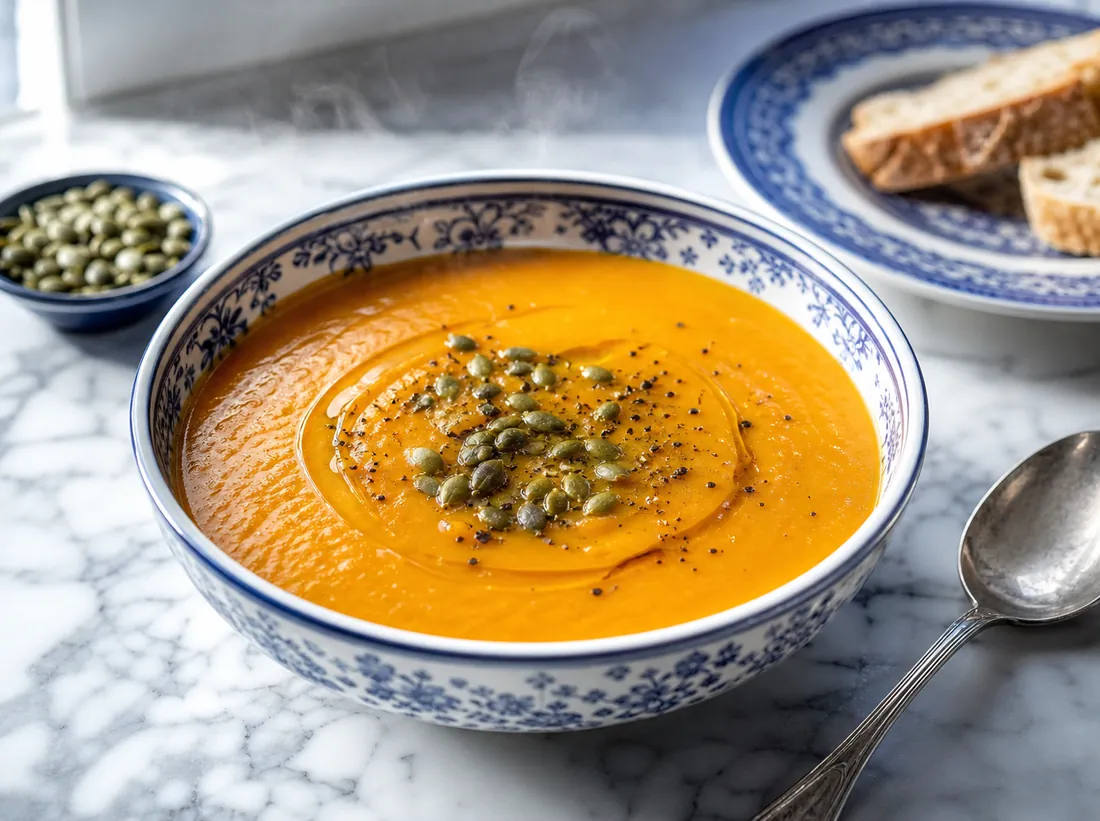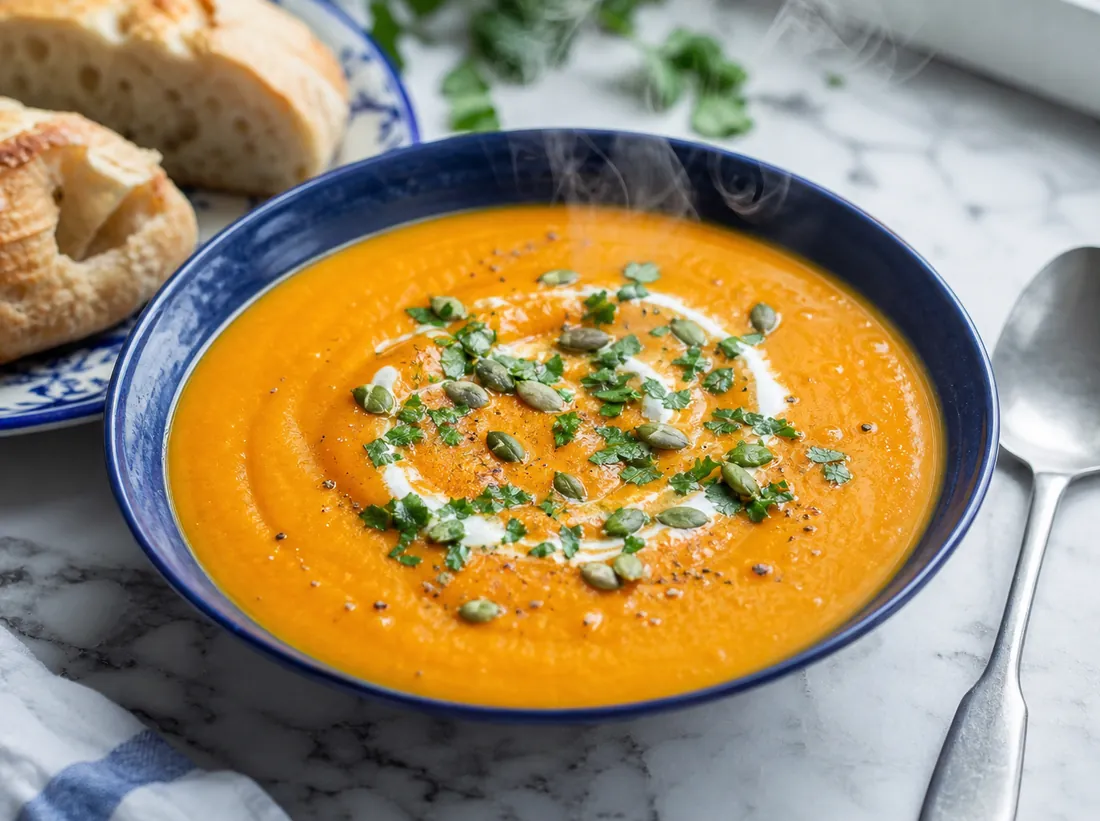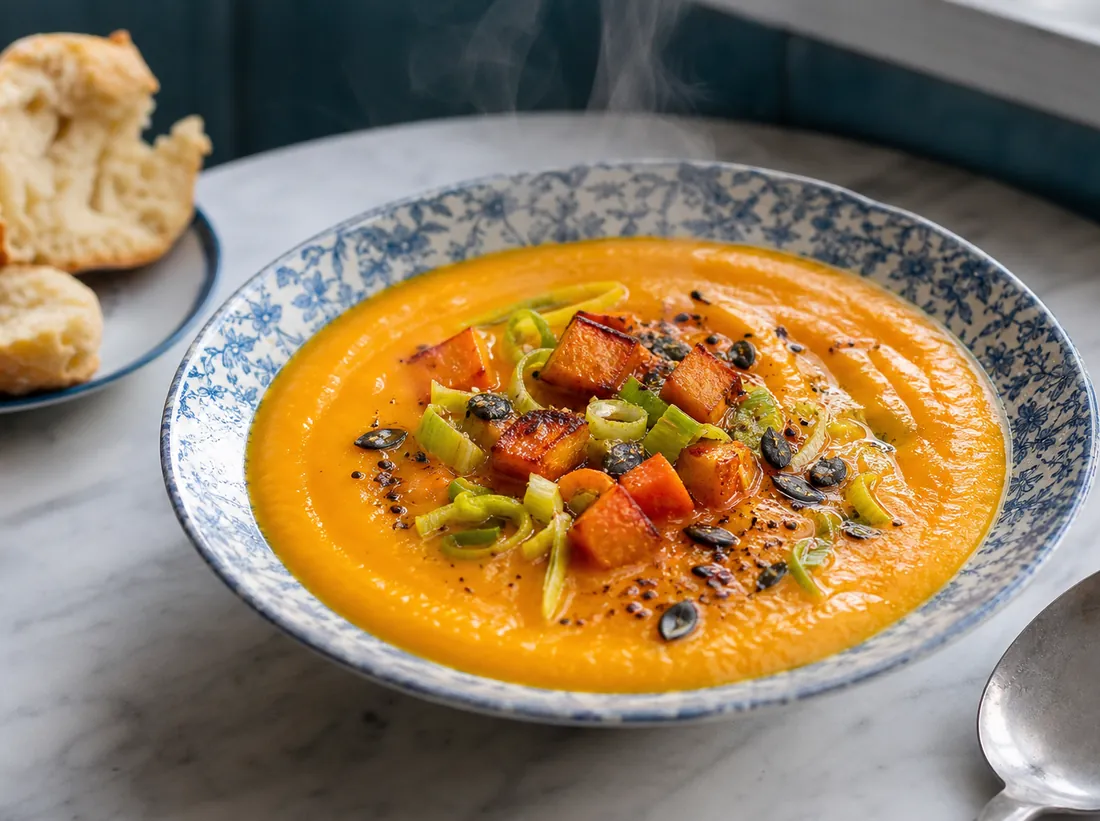
The story of Pumpkin soup
Pumpkin reached the Mediterranean from the Americas after the voyages of discovery, and soon found its way into the kitchens of the Jews of North Africa, Iraq and the Balkans. At Rosh Hashanah it is one of the symbolic foods eaten at the start of the meal, and many Sephardi and Mizrahi homes turn it into jam, stews and soups. Among the Jews of Iraq and Kurdistan a sweet and sour pumpkin broth is one of the classic homes for kubbeh.
Israeli markets sell three main kinds. The big pumpkin sold in wedges, with orange, fairly watery flesh. The chestnut pumpkin, small and round, with dense, dry, sweet flesh. And butternut, pear-shaped, with a long neck that is easy to cut. Any of them works for soup, but each needs a different amount of water, and that is what separates a thick soup from a thin one.
What makes Pumpkin soup itself
What sets pumpkin soup apart from orange soup is the clean taste of a single vegetable. There is no carrot or sweet potato to cover up, so the depth has to come from the pumpkin itself: from roasting, from onion and leek softened slowly, from a little nutmeg and from acidity at the end. Leek gives the gentle sweetness of onion without its bite, and roasting turns some of the pumpkin's sugars into caramel and nutty flavours.