Kubbeh

Kubbeh is a dumpling of grain dough, semolina, bulgur or rice, wrapped around a filling of ground meat, onion and spices. It is simmered in soup, fried or baked, and the kubbeh family is one of the largest in the cooking of the Jews of Iraq, Kurdistan and Syria.

KubbehIllustration
Kinds10for soup, fried and baked
Kubbeh soups5each on its own page
One kubbeh40 gdough and filling
CuisinesIraqi, Kurdishand Syrian, Lebanese

The story of kubbeh

The word kubbeh comes from the Arabic kubba, a ball, and that is exactly what it is: a ball of dough around a filling. From Iraq to Lebanon and from Kurdistan to Syria, almost every kitchen in the region developed its own kubbeh, and quite a few cities gave it their names: kubbeh halab after Aleppo, kubbeh mosul after Mosul, and nabulsieh after Nablus.

In Israel kubbeh took a path of its own. Jews from Iraq and Kurdistan brought semolina kubbeh in soup, which became a Friday dish and moved from there to market stalls and into every home. Alongside it, fried nabulsieh settled in as an almost national starter. Today someone who says kubbeh might mean a soft semolina ball in beet soup or a crisp bulgur torpedo from the pan, and both are right.
The kinds of kubbeh

Jews of Iraq and Kurdistan

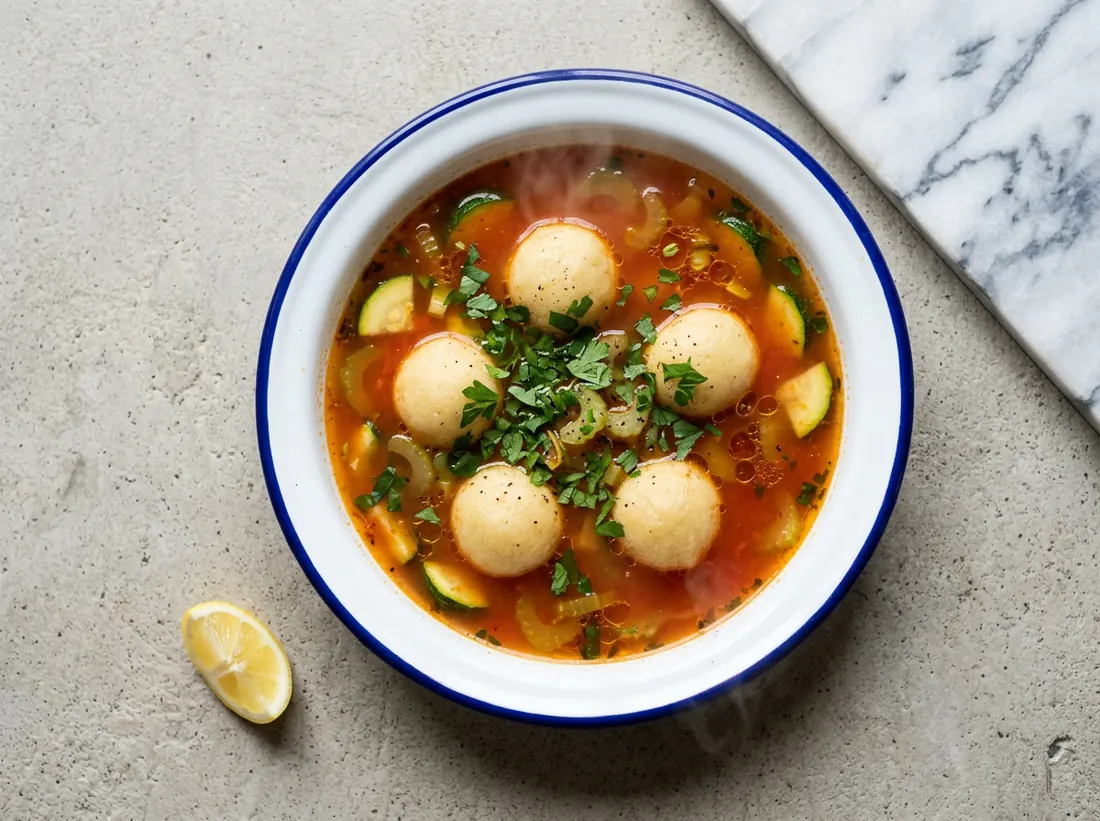
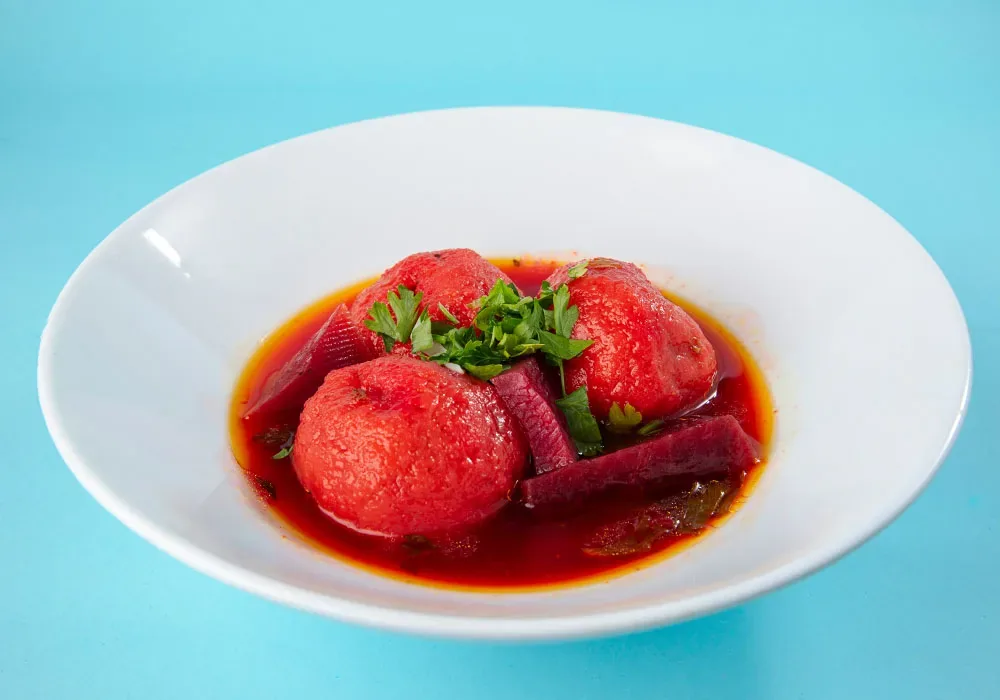
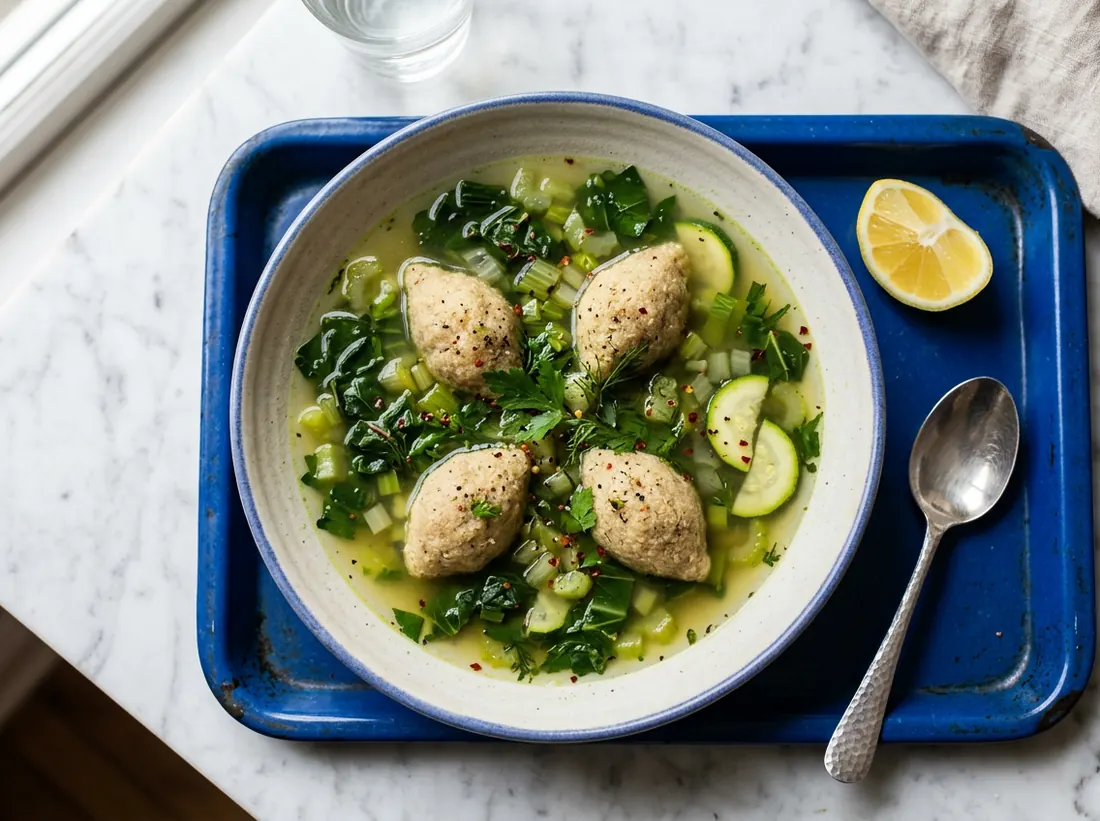
Semolina soup kubbeh

Israel's home kubbeh: a ball of about 40 g with a thin shell that turns soft and semi translucent as it cooks. It is the base of every kubbeh soup.

  • Dough: Semolina, water and salt
  • Filling: Ground beef, onion, parsley or celery leaves, baharat
  • Cooking: Simmered for 30 to 40 minutes in the soup
Kurdish homes, and the kitchens of Syria and Lebanon

Bulgur soup kubbeh

A rougher shell with a nutty wheat flavour. Kurdish cooks sometimes combine bulgur or cracked wheat with semolina for a texture in between.

  • Dough: Soaked fine bulgur, sometimes with a little semolina or flour
  • Filling: Beef, lamb or chicken with onion and spices
  • Cooking: Simmered in soup
Nablus and the Levant, and in Israel everywhere

Kubbeh nabulsieh

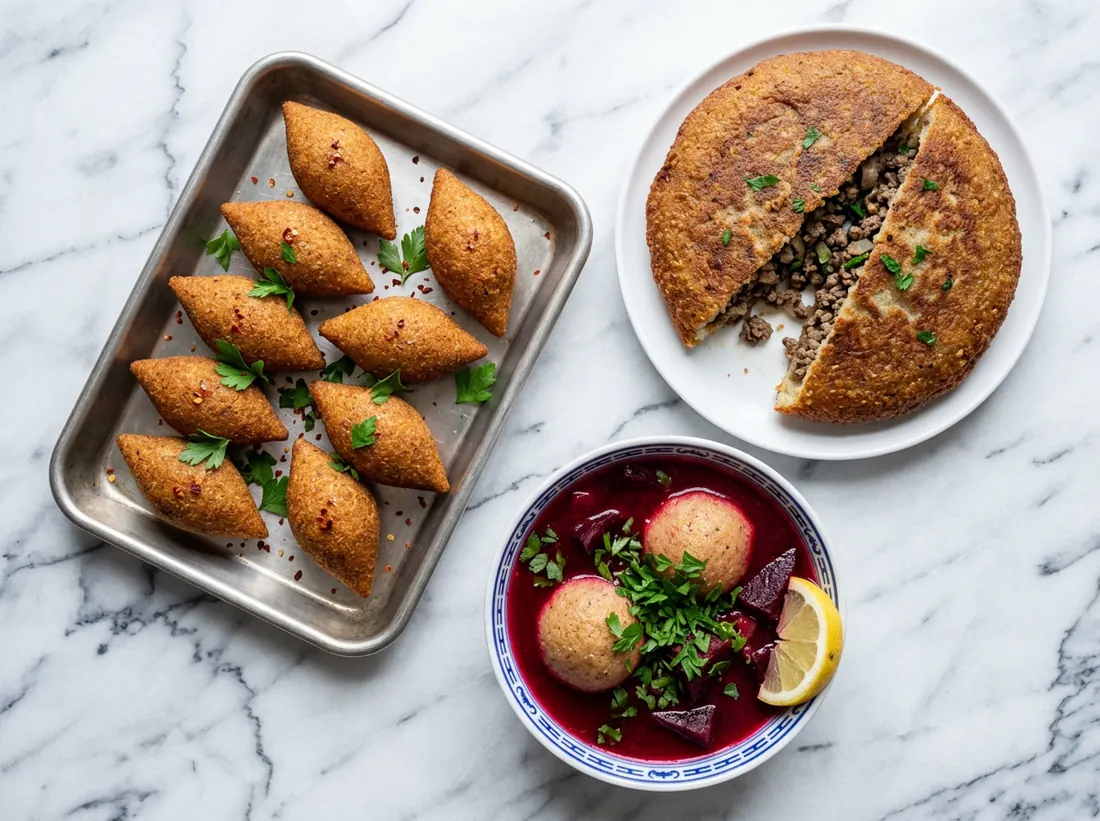
The torpedo shaped kubbeh with pointed ends, crisp outside and juicy inside. The name comes from the city of Nablus.

  • Dough: Fine bulgur, sometimes with a little semolina and flour
  • Filling: Beef or lamb with onion, sometimes pine nuts
  • Cooking: Deep fried
Jews of Iraq

Kubbeh halab

Despite the name, which refers to the Syrian city of Aleppo, this is a thoroughly Iraqi kubbeh. The rice shell makes it yellow, thin and crisp.

  • Dough: Rice cooked soft with turmeric and kneaded into a dough
  • Filling: Ground meat, onion, parsley and spices
  • Cooking: Fried
Mosul in northern Iraq

Kubbeh mosul

A flat round kubbeh: a large disc of two layers of dough with the filling between them. It looks more like a small pie than a ball.

  • Dough: Fine bulgur, sometimes with a little meat or semolina
  • Filling: Ground meat, onion and spices
  • Cooking: Boiled, fried or baked, each family its own way
Jews of Iraq

Kubbeh batata

Batata is Arabic for potato, not the orange sweet potato that Israelis call batata. A soft mashed potato shell, fried until golden.

  • Dough: Boiled, mashed potatoes
  • Filling: Ground meat, onion, parsley and spices
  • Cooking: Fried
Lebanon and Syria

Kubbeh siniyeh

Kubbeh in a tray: a layer of dough, a layer of filling and dough again, cut into diamonds before baking. All the flavour of kubbeh without shaping a single ball.

  • Dough: Fine bulgur with finely ground lean meat
  • Filling: Ground meat fried with onion, sometimes pine nuts
  • Cooking: Baked in a tray
Jews of Iraq and Kurdistan

The kubbeh soup family

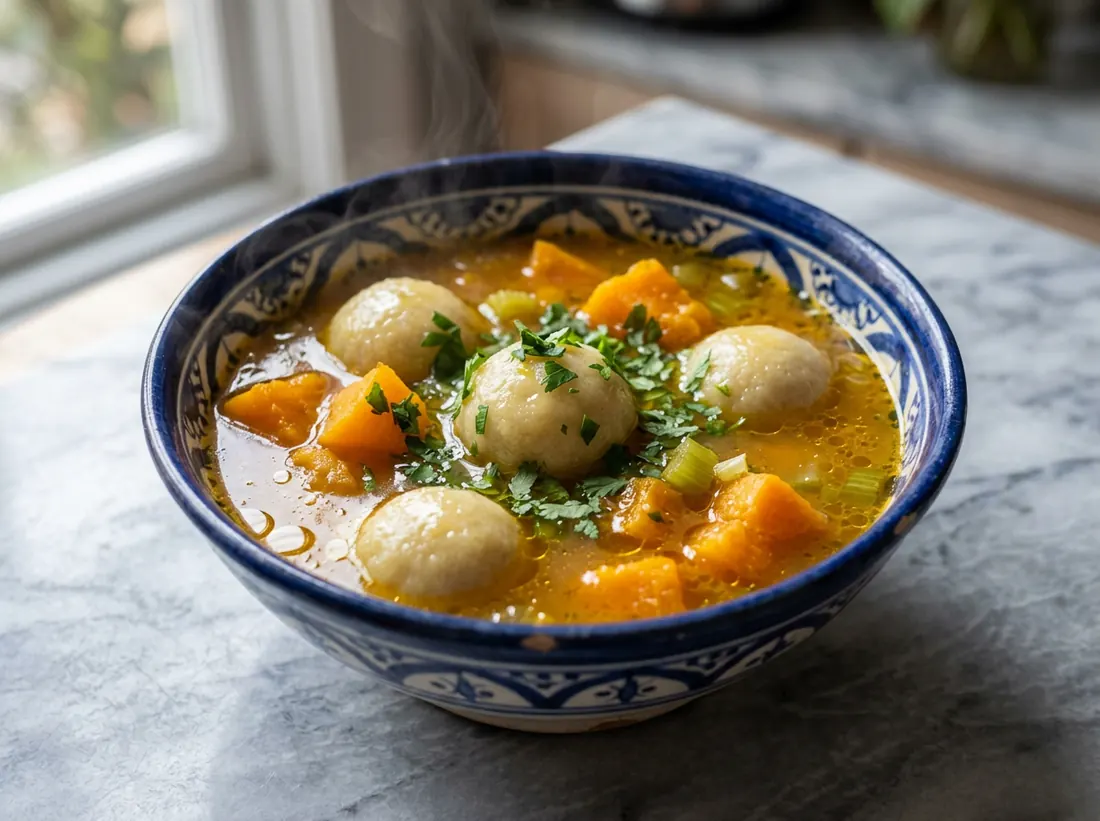
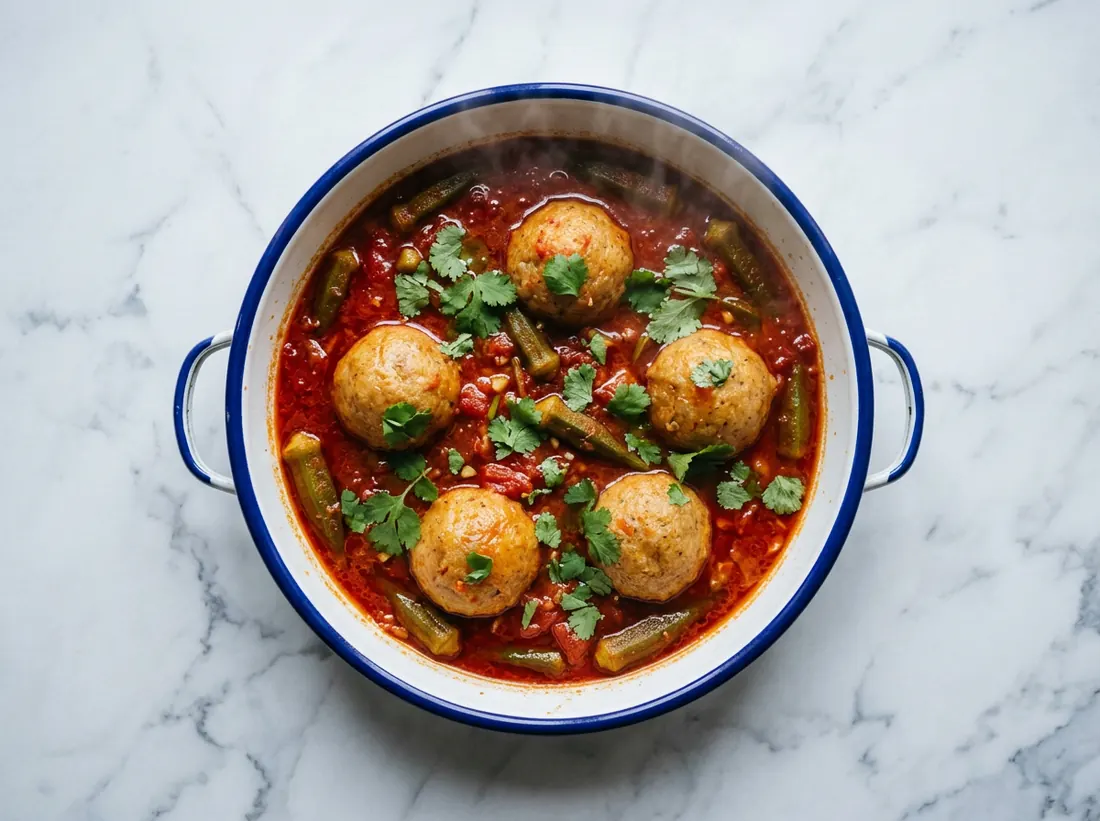
The same semolina kubbeh, five soups: red, sweet and sour beet kubbeh; green, sour kubbeh hamusta; red kubbeh of tomato and paprika; sweet pumpkin kubbeh; and thick okra kubbeh.

  • Dough: Semolina, sometimes with a little bulgur
  • Filling: Ground beef with onion and herbs
  • Cooking: Simmered in a sour soup
Many Israeli homes

Chicken filled kubbeh

A lighter, paler filling than beef that suits the sour soups especially well. Cook the chicken until completely dry before filling, because chicken releases a lot of liquid.

  • Dough: Semolina or bulgur
  • Filling: Ground chicken with onion, herbs and spices
  • Cooking: Simmered in soup
Today's Israeli kitchen

Vegetarian kubbeh

A parve kubbeh that also fits a dairy meal. The secret is drying the mushrooms completely; otherwise their steam tears the shell.

  • Dough: Semolina or bulgur
  • Filling: Mushrooms, onion and herbs, fried until dry
  • Cooking: In soup or fried

Kubbeh soup

Kubbeh soup is not one soup but a method: cook a sour vegetable soup and drop in beef filled semolina kubbeh, which simmer in it until the dough is soft and semi translucent. In Iraqi and Kurdish Jewish homes the soup changes with the season: beets in winter, pumpkin in autumn, okra in summer, and Swiss chard with zucchini almost all year. What stays constant is the sourness, from lemon, tomatoes or tamarind, and the kubbeh themselves.

A good kubbeh soup needs three things: a soup seasoned a little too strongly before the kubbeh go in, because the dough absorbs salt and acid; a wide pot where the kubbeh float in a single layer; and a gentle simmer with no spoon stirring. Four kubbeh per bowl make a portion, and a wide 6 litre pot holds 32 kubbeh and soup for eight.

Dough and filling ratios

DoughIngredientAmount
Semolina dough for soupSemolina500 g
Semolina dough for soupLukewarm water300 to 340 ml
Semolina dough for soupSalt6 g
Semolina dough for soupMakes32 kubbeh of 26 g dough
Semolina and bulgur doughSemolina450 g
Semolina and bulgur doughFine bulgur60 g, soaked in the dough water for 20 minutes
Semolina and bulgur doughLukewarm water330 ml
Semolina and bulgur doughSalt6 g
Bulgur dough for nabulsiehFine bulgur400 g
Bulgur dough for nabulsiehLukewarm waterTo cover by 1 cm, 30 to 40 minutes, then squeeze well
Bulgur dough for nabulsiehFlour30 g
Bulgur dough for nabulsiehSalt5 g
Beef filling for kubbehGround beef350 g
Beef filling for kubbehOnion150 g
Beef filling for kubbehOil15 ml
Beef filling for kubbehParsley and celery leaves30 g
Beef filling for kubbehBaharat3 g
Beef filling for kubbehSalt5 g
Beef filling for kubbehMakesAbout 450 g cooked, 14 g per kubbeh
One soup kubbehDough26 g
One soup kubbehFilling14 g
One soup kubbehDiameter4 to 5 cm
One soup kubbehPer bowl4 kubbeh

How much dough and filling for how many kubbeh

Each kubbeh: 26 g of dough and 14 g of filling.

KubbehSemolina, gDough, gMeat, gFilling, g
10140260110170
20280530220350
30420790330520
405601,060440700
608401,5906601,040
801,1202,1208801,390

The science of kubbeh dough

Kitchen science

Why kubbeh dough needs to rest

Semolina is coarsely milled durum wheat, and its particles absorb water slowly. Right after kneading the dough looks wet and smeary; after 20 to 30 minutes the water has worked into the particles and the dough becomes pliable and pleasant to handle. Add semolina before the rest and you will have a dry, cracking dough after it.

Kitchen science

What turns dough into a shell

In the pot, above roughly 60 °C, the starch in semolina gelatinises: the granules absorb water, swell and bind to each other. That is how a crumbly dough becomes a soft, semi translucent shell. Dough that is too dry does not have enough water for this, so it comes out hard and cracked.

Kitchen science

Bulgur versus semolina

Bulgur is wheat that has been boiled, dried and cracked, so its starch is already partly cooked. It softens with soaking alone, gives a rough texture and a nutty flavour, and holds up well in frying. Semolina gives a smooth, soft shell that suits long cooking in soup. A little bulgur in semolina dough gets the best of both.

Kitchen science

Rice and potato doughs

Rice and potatoes have no gluten, so the dough relies only on cooked starch to glue the particles together. It is softer and more fragile, and needs gentle hands and a dry filling. Cook the rice or potatoes thoroughly before kneading, because only cooked starch holds a dough together.

Kitchen science

Why kubbeh are frozen before cooking

Semolina dough holds little water, so the ice crystals that form when it freezes are small and do little damage. Frozen kubbeh go into boiling soup with a hard shell: the outer layer cooks and sets before the inside thaws, and the kubbeh keep their shape. Cook them straight from the freezer, because thawing coats them in moisture and makes them sticky.

Kubbeh problems and how to fix them

My kubbeh fall apart in the soup

Dough too dry and cracking while shaping, air left inside, a wet filling releasing steam, or a hard boil in a crowded pot. A soft dough that does not crack, pressing out the air, a cool dry filling and a gentle simmer in one layer solve almost everything.

The dough sticks to my hands

The dough is too wet or your hands are too dry. Wet your hands between balls, and if the dough still smears, add a spoonful of semolina and rest it another 10 minutes.

The kubbeh came out hard

A shell that is too thick, dough that is too dry, or cooking that was too short. Kubbeh from the fridge firm up too, because starch recrystallises in the cold, and gentle reheating in the soup brings back the softness.

The dough cracks when I seal the kubbeh

It needs more water, or it sat uncovered and dried out. Keep the bowl under a damp towel, and if the dough cracks, knead it again with a spoonful of water.

There is a gap full of liquid inside the kubbeh

Raw meat shrinks as it cooks and leaves a gap, and a wet filling releases juice. Cook the filling until the liquid evaporates, cool it, and press the dough snugly around the filling before sealing.

Nabulsieh fall apart in the fryer

The oil was not hot enough, the bulgur was not squeezed well, or the kubbeh were not chilled. Chill the shaped kubbeh for half an hour and fry in oil at 175 to 180 °C, a few at a time.

Frequently asked questions

What is kubbeh?

A dumpling of semolina, bulgur or rice dough with a filling of ground meat, onion and spices. It is simmered in soup, fried or baked. The name comes from the Arabic word for ball.

What is kubbeh dough made of?

For soup kubbeh: semolina, water and salt, 500 g of semolina to about 320 ml of water and 6 g of salt. For fried kubbeh: soaked and squeezed fine bulgur with a little flour.

What is the difference between semolina and bulgur kubbeh?

Semolina kubbeh are soft and smooth and suit soup. Bulgur kubbeh are rougher and nuttier, hold up well in frying, and are the base of nabulsieh.

How do I keep kubbeh from falling apart?

A soft dough that does not crack, wet hands, a cooked and dry filling, pressing out the air, and a gentle simmer in a wide pot without stirring with a spoon. Freezing before cooking helps even more.

Can you freeze kubbeh?

Yes, and it is best before cooking. Freeze on a tray in one layer, bag them once they are hard, and cook straight from the freezer, for up to 3 months.

How long do kubbeh cook in soup?

30 to 40 minutes over low heat from the moment the soup returns to a gentle boil, and 10 minutes more for frozen kubbeh. The dough should be soft right to the filling.

What is kubbeh nabulsieh?

A torpedo shaped bulgur kubbeh filled with meat and onion and deep fried. The name comes from the city of Nablus.

What is the difference between the kubbeh soups?

Beet kubbeh is red and sweet and sour, hamusta green and very sour, red kubbeh tomatoey and balanced, pumpkin kubbeh sweet, and okra kubbeh thick and sweet and sour. The kubbeh themselves are almost the same in all of them.

Every soup in Israel

75 soups, each with a pot calculator, a price list and the science. Search by community, time, calories or cost.

All the soups