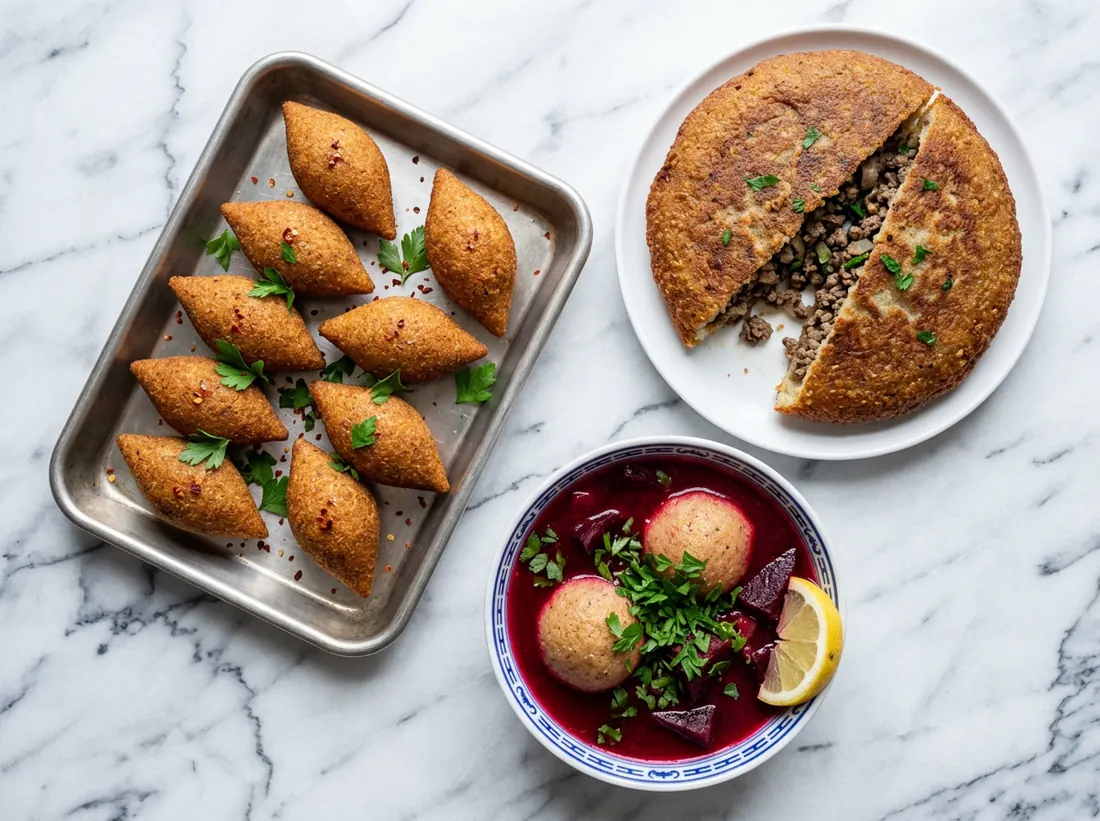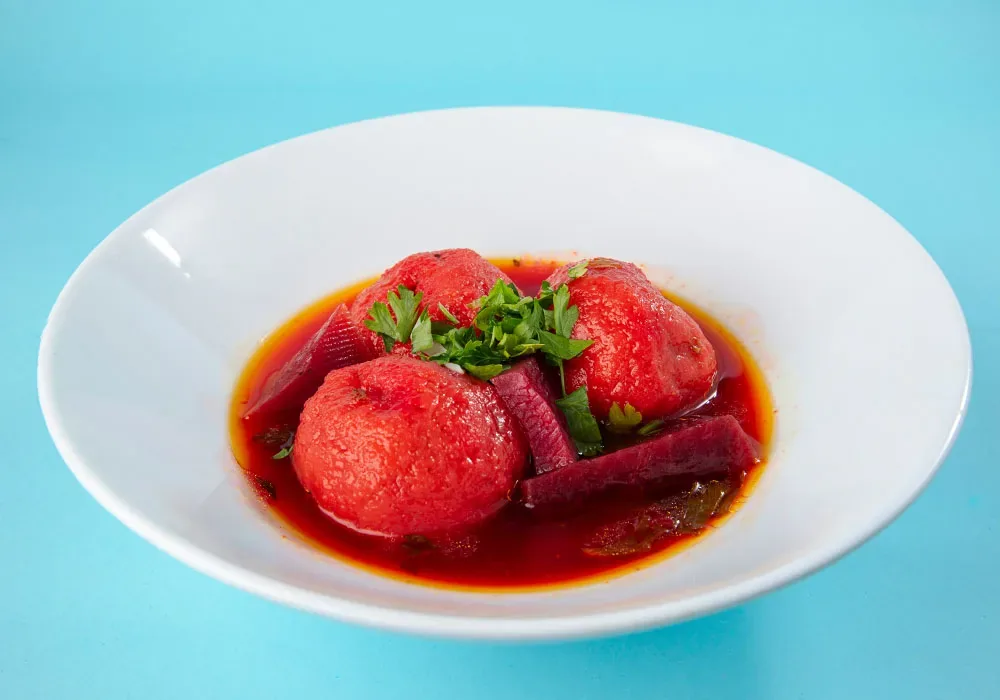
The story of Kubbeh hamusta
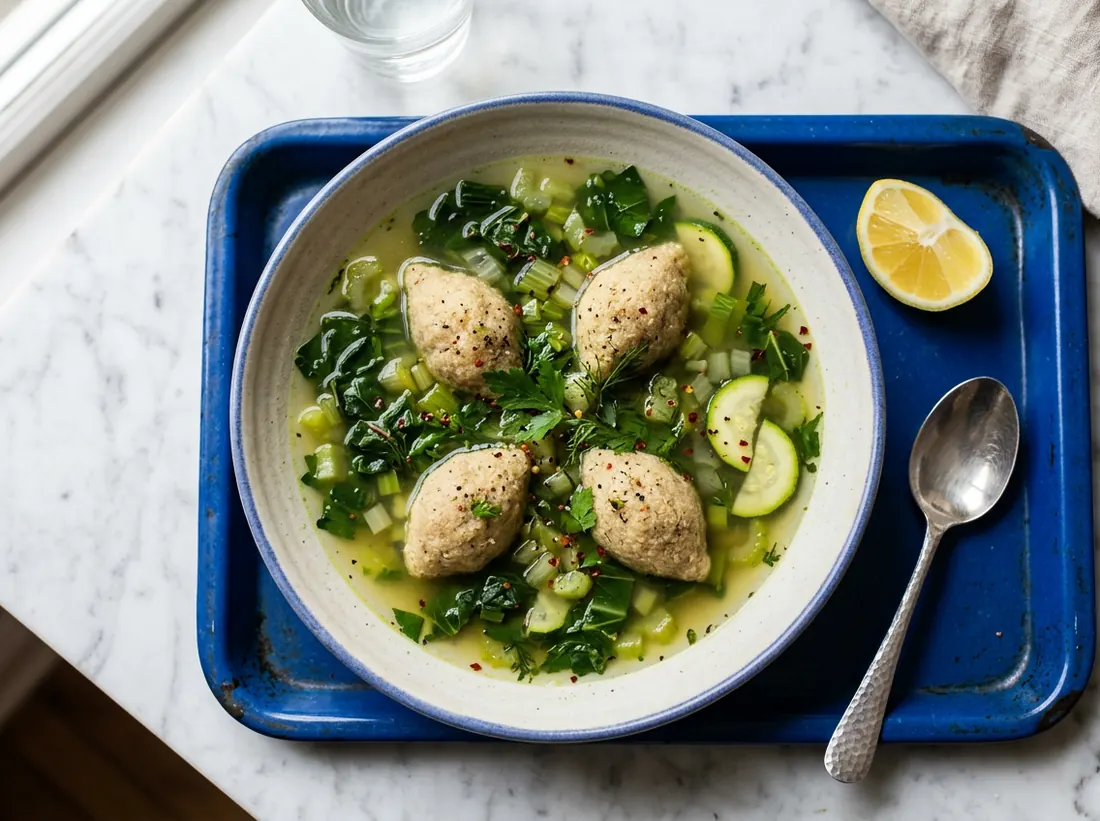
Hamusta means sour in the Aramaic spoken by the Jews of Kurdistan, and the name says it all. Kurdish families brought this green soup to Israel, and in Jerusalem, where many of them settled, it became almost an institution: a big pot on the stove every Friday, and neighbours arguing about whose grandmother makes the thinnest kubbeh.
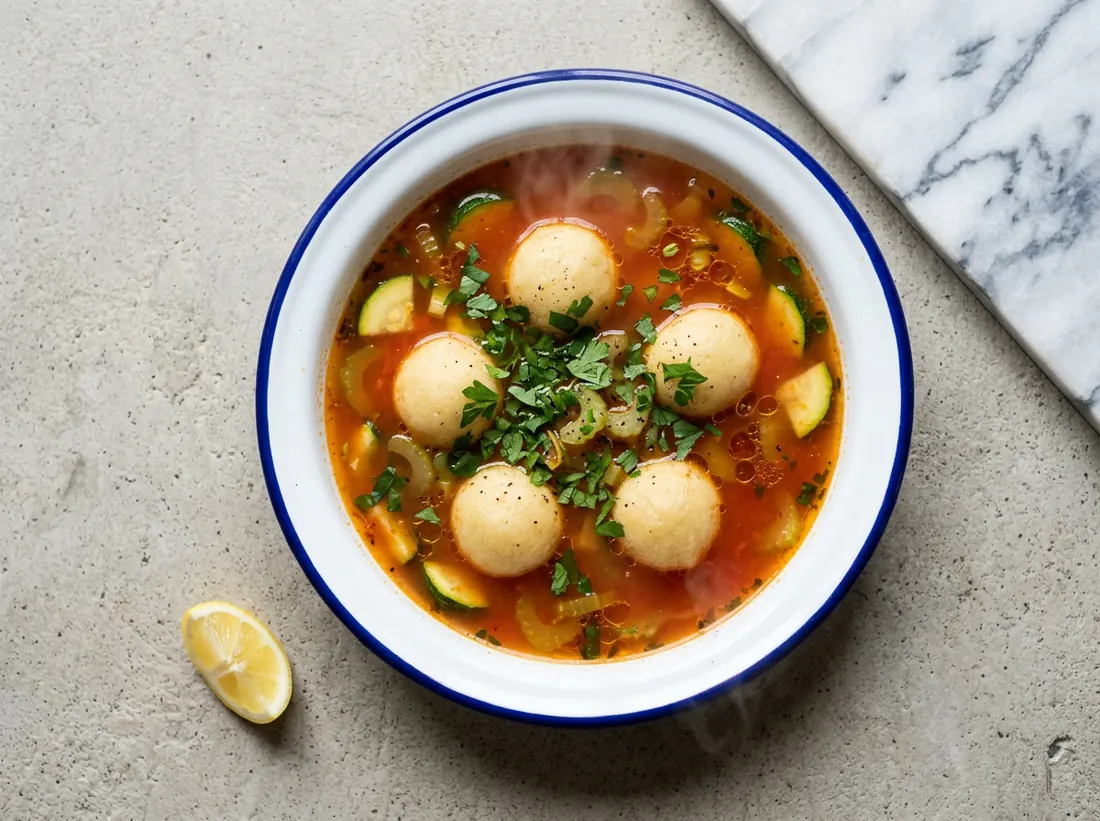
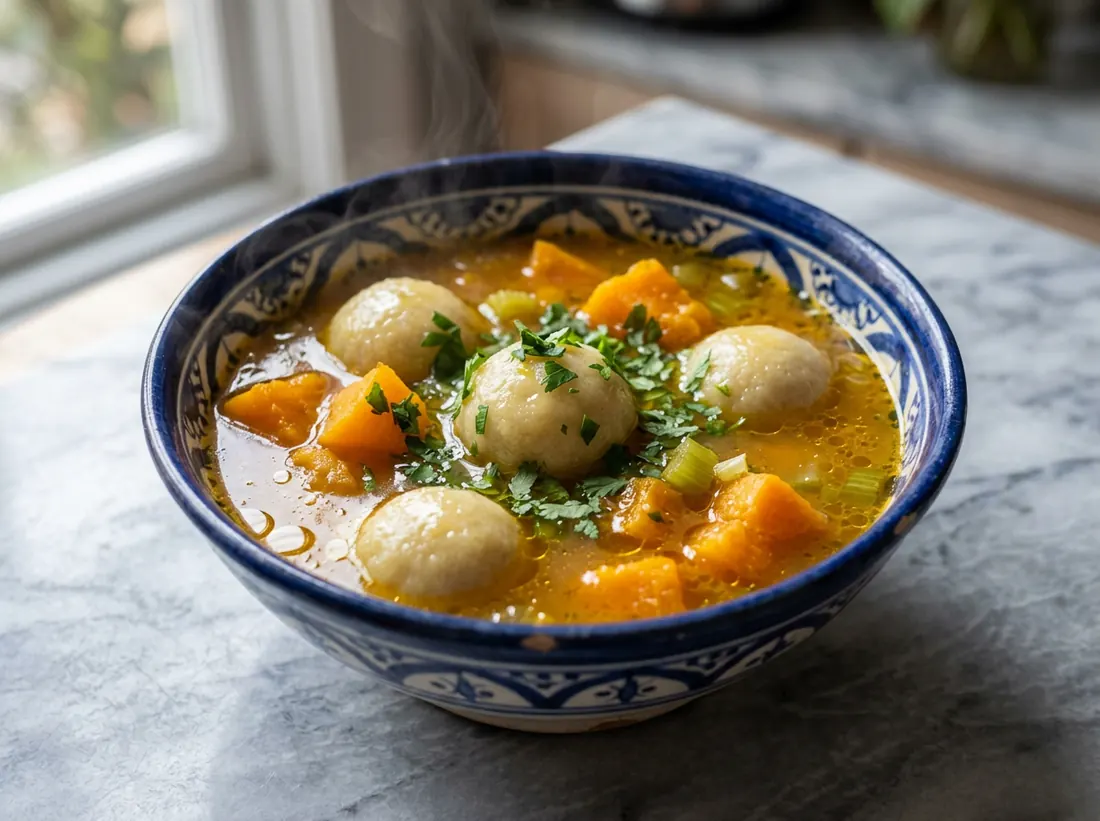
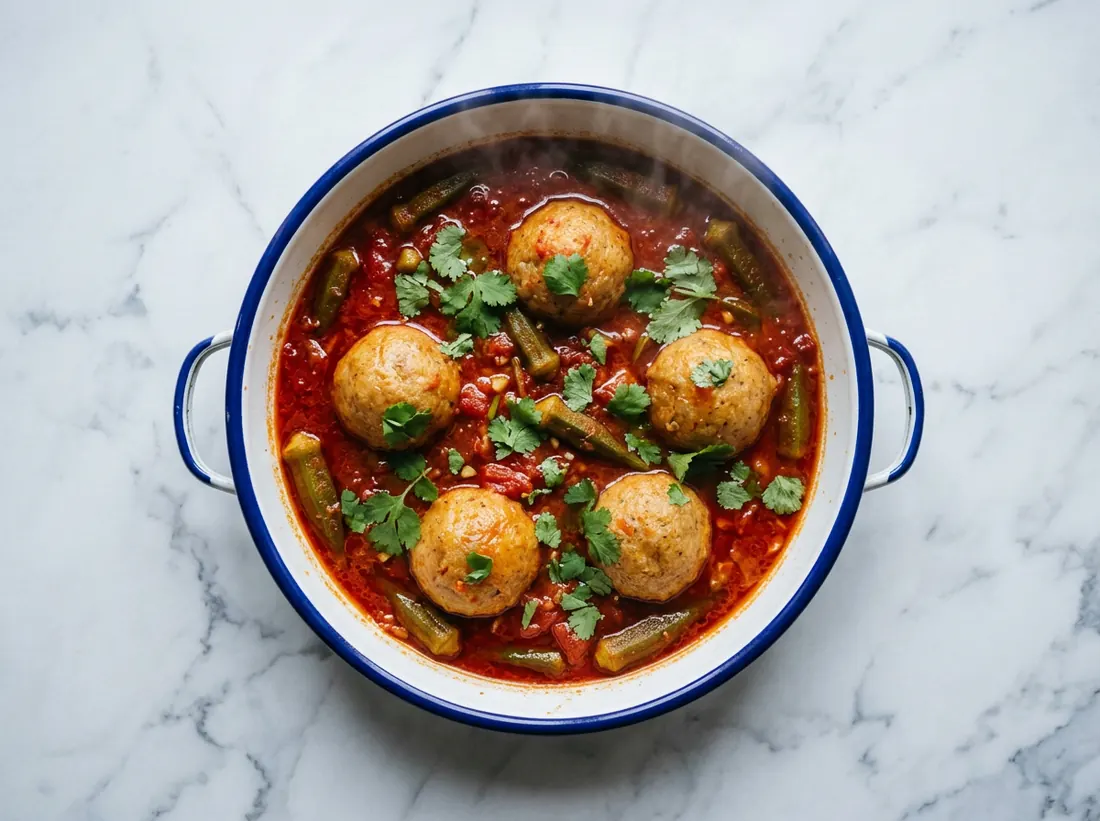
Iraqi Jews have a close relative, kubbeh hamudh, a sour soup with turnip and Swiss chard next to the lemon, and sometimes chickpeas. In Israel the two soups have drifted together, and today hamusta is the familiar name for the green, sour kubbeh soup: zucchini and chard in almost every home, kohlrabi, turnip or chickpeas only in some.
What makes Kubbeh hamusta itself
In hamusta the lemon is not a seasoning, it is the foundation. There is almost no sugar to round it off, and the greens have to stay green despite the acid, which is exactly the challenge. Swiss chard (silka in Israeli kitchens), celery and zucchini cook only until tender, and half the chard goes in blended at the end for a vivid colour and a fresh taste. The dough often has a little fine bulgur, which gives the shell a pleasantly rougher bite than semolina alone.