Beet kubbeh

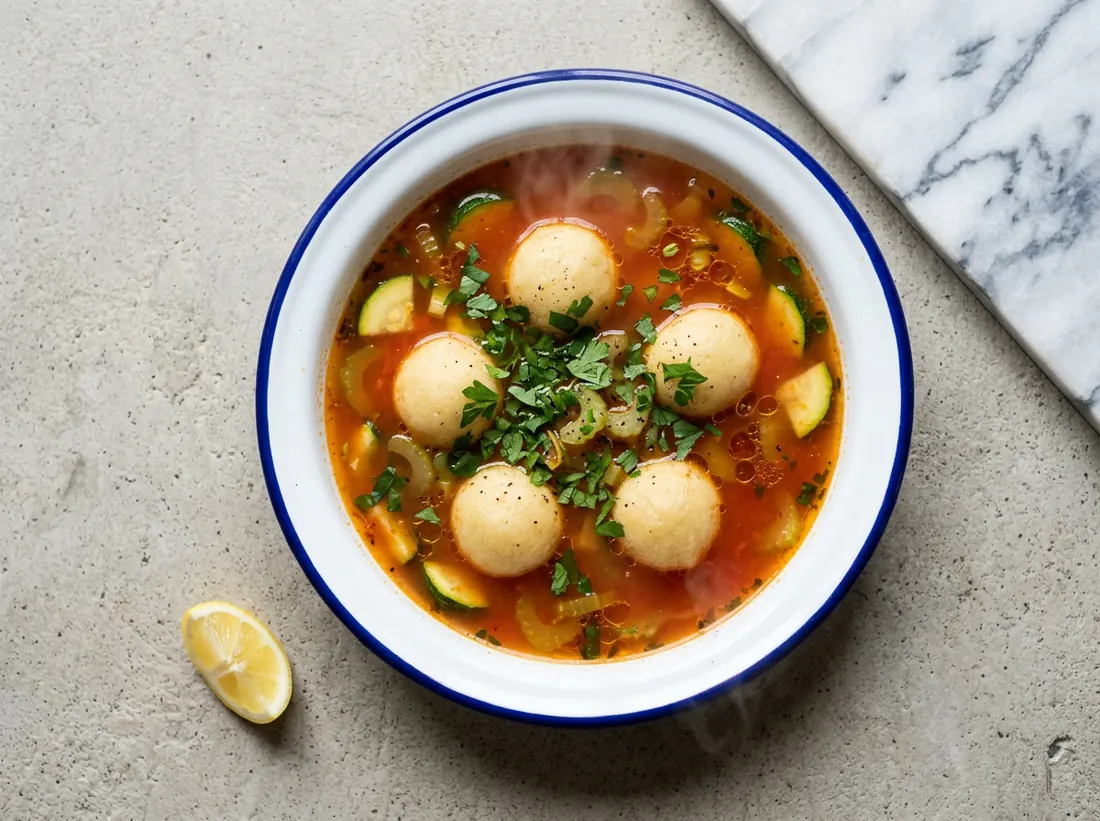
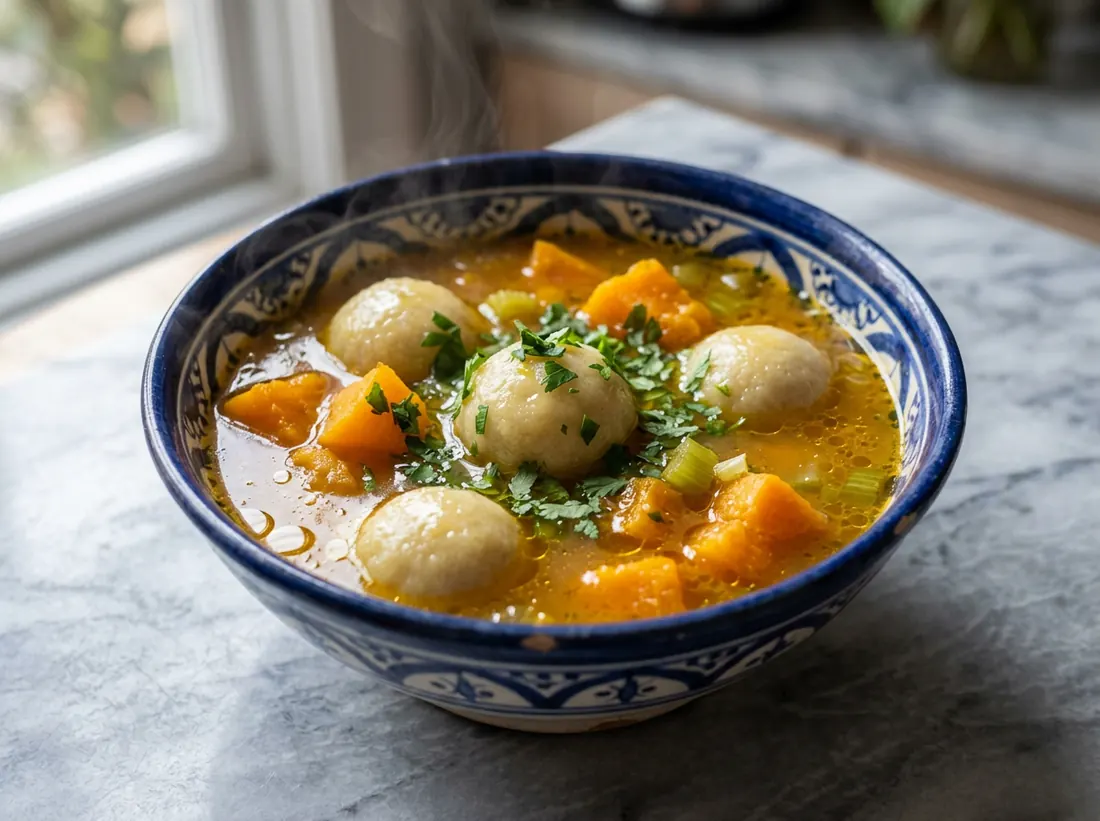
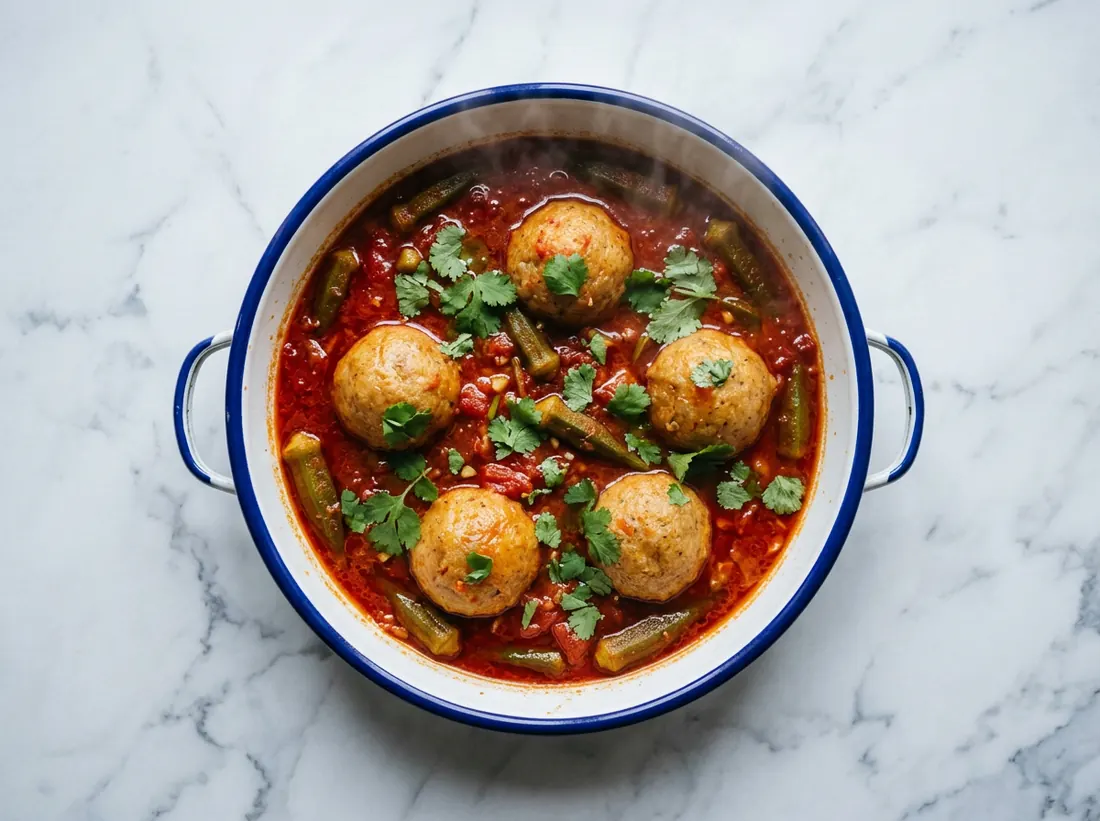
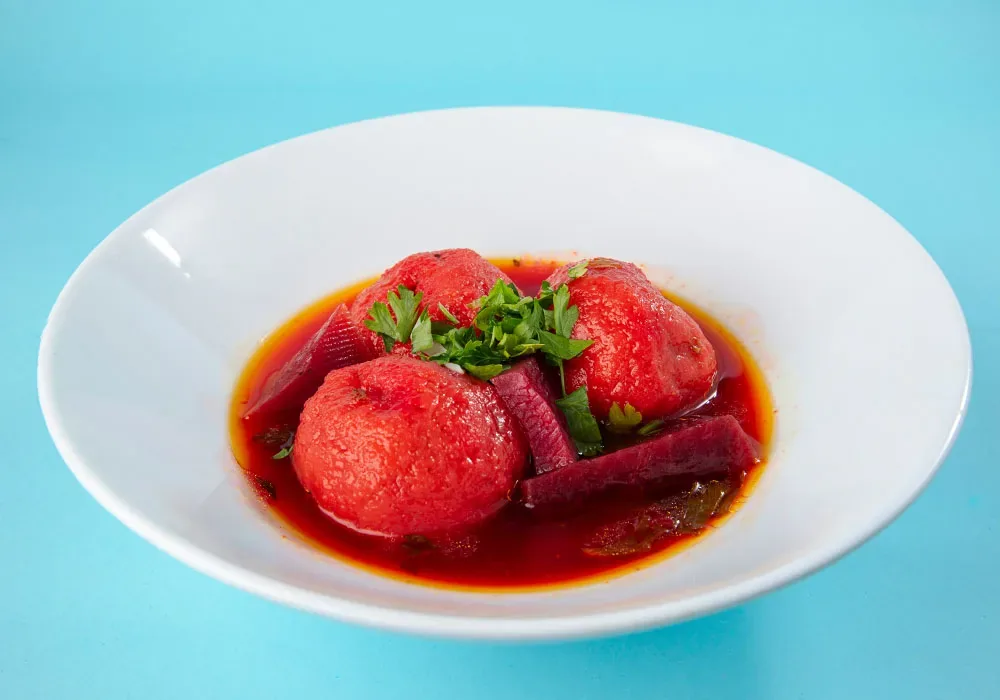
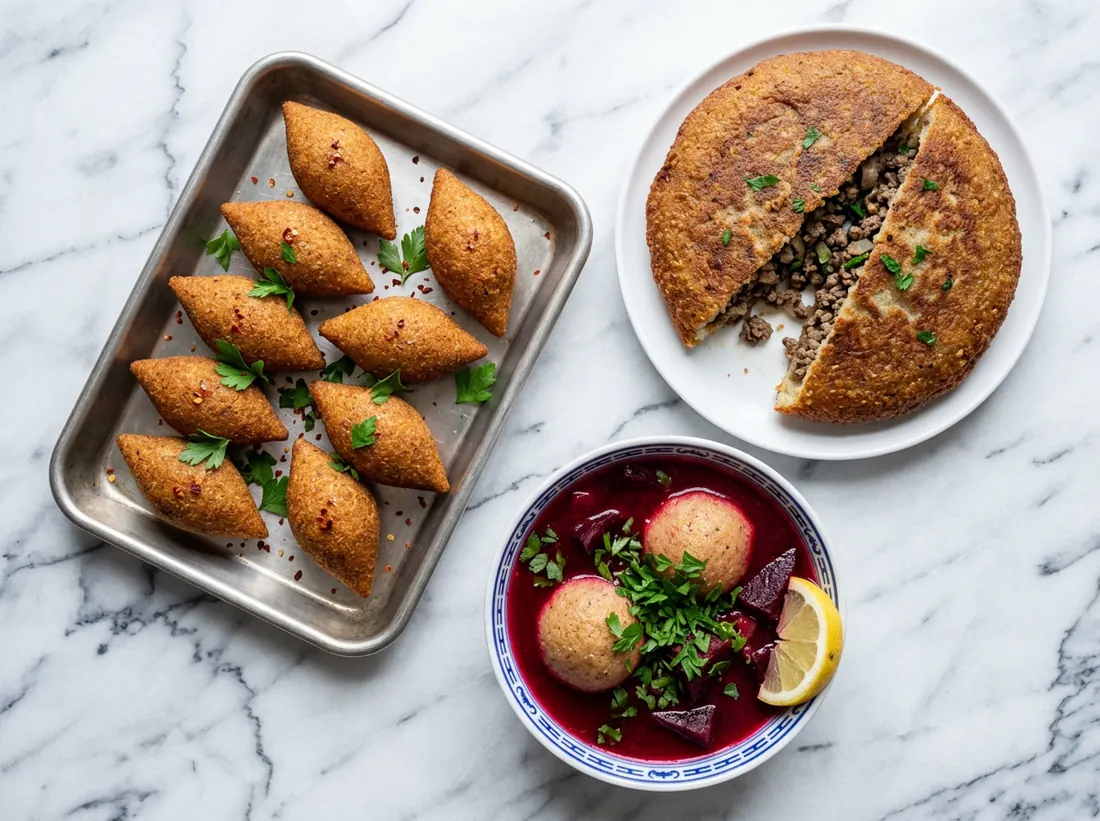
Beet kubbeh is a red, sweet and sour beet soup with semolina dumplings stuffed with beef. It is the Friday and Shabbat soup of Jewish families from Iraq and Kurdistan, and it has one simple test: whole kubbeh, a thin shell and a soup of deep colour.

Pot calculatorOrder Beet kubbeh

Dairy freeMeatAllergens:GlutenCelery

Updated

Beet kubbeh
Time2 h 40 minCook 1 h 10 min
Pot8 bowls3.2 litres
Per bowl479 kcal18.4 g protein · a 400 ml bowl
Cost of the pot₪36for the pot, about ₪4.5 a bowl

The story of Beet kubbeh

In Iraq it was kubbeh shwandar, after the Iraqi Arabic word for beet, and in Israel it became kubbeh selek. In an Iraqi home kubbeh were a job for several pairs of hands: one rolled the dough, one filled, and the children counted how many went into the pot. A cook was judged by little else than her kubbeh: how thin the shell was, and how well each ball held together in the pot.

In Israel the soup moved from home kitchens to market stalls and small eateries, and from there to every kitchen in the country. Today people with no Baghdadi grandmother make it too, and many families keep a bag of shaped kubbeh in the freezer for Friday. The core has not changed: beets, lemon, a little sugar, and a dumpling that cooks in the soup until its shell turns pink.

What makes Beet kubbeh itself

Three things make beet kubbeh what it is. The sourness, from squeezed lemon rather than vinegar. The sweetness, from the beets themselves plus a spoon or two of sugar. And the colour, which is really a chemistry test: the same beets can give a deep burgundy soup or a muddy brown one, depending on acid, time and how hard the pot boils. The dough is as plain as it gets, semolina, water and salt, and that plainness is exactly why it needs a careful hand.
Beet kubbeh for any number of people

Change the number of people and the bowl size, and every ingredient updates in grams, with the cost, calories and protein per bowl.

Bowl size
Units
3.2litres in the pot
4Pot to use, litres
₪36Cost of the pot
₪4.5per bowl
479kcal per bowl
18.4g protein per bowl
IngredientAmountCost
The base
Canola oil30 ml₪0.5
Large onion, chopped200 g · 1 pcs₪1.2
Celery stalks with leaves, sliced150 g · 3 pcs₪3.0
Garlic cloves, chopped10 g · 3 pcs₪0.4
Tomato paste30 g₪1.1
Water2.5 l
The beets
Red beets, peeled and cut into wedges800 g · 4 pcs₪4.7
Small beet, finely grated, for the end100 g · 1 pcs₪0.6
Sweet and sour
Fresh lemon juice120 ml₪2.4
Sugar40 g₪0.2
Salt14 g₪0.0
Black pepper1 g₪0.1
Kubbeh dough
Semolina500 g₪2.9
Lukewarm water320 ml
Salt6 g₪0.0
Kubbeh filling
Ground beef350 g₪16
Onion, finely chopped150 g · 1 pcs₪0.9
Canola oil15 ml₪0.2
Parsley, chopped15 g₪0.7
Celery leaves, chopped15 g₪0.5
Baharat3 g₪0.4
Salt5 g₪0.0
Black pepper1 g₪0.1
Send on WhatsApp

Shelf prices at a large Israeli chain and specialty shops, October 2026. Nutrition from the ingredients in grams, before cooking.

How many calories in Beet kubbeh? Nutrition facts and calorie calculator

Change the amount of any ingredient, drop one, or pick a lighter version, and the numbers per serving update at once: calories, fat, carbs, protein, sodium and fibre.

Beet kubbeh has 120 calories per 100 ml. A 400 ml bowl made with our recipe has 479 calories: 18.4 g protein, 14.6 g fat and 64.3 g carbohydrates. A 250 ml cup has 299 calories.

Lighter

Ingredients, for the whole recipe

  • 30 ml30 kcal per serving
  • 1 pcs10 kcal per serving
  • 3 pcs3 kcal per serving
  • 3 pcs2 kcal per serving
  • 30 g5 kcal per serving
  • 4 pcs43 kcal per serving
  • 1 pcs5 kcal per serving
  • 120 ml3 kcal per serving
  • 40 g19 kcal per serving
  • 14 g0 kcal per serving
  • 1 g0 kcal per serving
  • 500 g225 kcal per serving
  • 6 g0 kcal per serving
  • 350 g108 kcal per serving
  • 1 pcs8 kcal per serving
  • 15 ml15 kcal per serving
  • 15 g1 kcal per serving
  • 15 g0 kcal per serving
  • 3 g0 kcal per serving
  • 5 g0 kcal per serving
  • 1 g0 kcal per serving

What each add-on adds to Beet kubbeh

Values for the amount in the row, from the national food database.

Add-onCaloriesProtein, gFat, g
A tablespoon of oil122013.8
A slice of white bread792.50.5
A slice of challah12641.1
A side cup of cooked rice, about1823.50.3

How to make Beet kubbeh

In cook mode the screen stays on, tap a step when it is done, and the timers run next to each step.
  1. Dough: mix the semolina and salt in a bowl, add the water gradually and knead for 5 minutes until you have a soft, slightly tacky dough that does not crack when you press it with a finger. Cover and rest for 30 minutes.
  2. Filling: fry the onion in the oil over medium heat for 8 minutes until translucent and golden. Add the beef and break it up with a spoon for 8 minutes, until no pink remains and the liquid has evaporated. Season with salt, pepper and baharat, add the parsley and celery leaves, and cool completely.
  3. Soup: in a wide 6 litre pot, fry the onion and celery in the oil for 6 minutes over medium heat. Add the garlic and tomato paste and fry for another minute, until the paste darkens slightly.
  4. Add the beet wedges and the water, bring to a boil and simmer over medium low heat for 25 minutes, until the beets are almost tender.
  5. Meanwhile, shape: with wet hands take a 26 g ball of dough, flatten it into a thin round in your palm, put 14 g of filling in the centre, close it, press gently to push out the air and roll into a smooth ball. Set on a tray dusted with semolina.
  6. Season the soup with the sugar, lemon juice and salt and taste. It should be slightly more sour and salty than seems right, because the kubbeh will absorb some of the flavour.
  7. Return to a gentle boil and lower the kubbeh in one at a time, in a single layer. Do not stir with a spoon, just shake the pot gently now and then.
  8. Cook for 35 to 40 minutes over low heat with the lid half on, until the dough is semi translucent and soft right through to the filling. Frozen kubbeh go in without thawing and need 10 extra minutes.
  9. Add the grated beet for the last five minutes, turn off the heat and let the pot rest for 10 minutes. Serve 4 kubbeh per bowl.

The science of Beet kubbeh

Kitchen science

Beet kubbeh colour: why the soup turns brown

Beet red comes from betalains, water soluble pigments that are most stable in mildly acidic conditions, around pH 4 to 5. Long heat and a hard boil break them down, and the soup turns reddish brown. Lemon does more than add sourness: it protects the red, and grated raw beet added at the end brings in pigment that has not been cooked yet.

Kitchen science

What happens to semolina in the pot

Semolina is coarsely milled durum wheat, rich in protein and starch. During the rest, water slowly works its way into the particles and the dough goes from crumbly to pliable. In the pot, above roughly 60 °C, the starch gelatinises: the granules absorb water, swell and bind to each other, and the dough becomes a soft, semi translucent shell that holds the filling.

Kitchen science

Salt, absorption and flavour

As it cooks, the shell absorbs liquid from the soup, and with it salt, acid and colour. That is why the dough turns pink on the outside, and why a soup that was balanced before the kubbeh tastes flat after them. Season the soup a little more boldly at the start, and salt the dough itself, or the inside of the shell stays bland even when the soup is perfect.

Kitchen science

Sweet and sour is a balance, not a sum

Sugar does not neutralise acid; it dulls the way acid feels on the tongue. So add both gradually and taste again once the kubbeh are in, because the soup reduces a little and the flavours concentrate. Sweet winter beets need less sugar than beets from the end of summer.

Beet kubbeh in every kitchen

Baghdadi

A fairly thin, sweet and sour broth with beet wedges and celery stalks. Some families knead a spoonful of the raw filling into the semolina dough to give the shell flavour and stretch.

Kurdish

The dough sometimes includes a little fine bulgur or cracked wheat, and the filling is beef cooked slowly with onion and pulled into shreds instead of fried mince.

With zucchini

Thick zucchini slices go in 15 minutes before the end. They take on the colour and soften the sourness.

Without tomato paste

The soup comes out pinker and cleaner tasting, beets and lemon only. Keep the paste if you want a deep red.

Vegetarian

A filling of mushrooms and onion fried until completely dry. The soup stays the same and the whole pot is parve.

Common Beet kubbeh problems and how to fix them

My kubbeh fall apart in the soup

Usually one of four things: dough too dry, so it cracks while shaping; air left inside that expands with heat; a wet filling that releases steam; or a hard boil in a crowded pot. Wet the dough until it no longer cracks, press out the air, cool and dry the filling, and cook at a gentle simmer in a single layer.

The dough sticks to my hands

The dough is too wet or your hands are too dry. Wet your hands between balls. If the dough still smears, add a spoonful of semolina and rest it another 10 minutes, because semolina keeps absorbing water.

The kubbeh came out hard

A shell that is too thick, dough that is too dry, or cooking that was too short for the starch in the middle of the shell to soften. Kubbeh from the fridge also firm up, because starch recrystallises in the cold. Gentle reheating in the soup brings back the softness.

The soup is too sour

Add sugar a teaspoon at a time, or thin with a cup of hot water and correct the salt. Next time add the lemon in two stages and taste only after the kubbeh are in the pot.

The beet soup turned brown, not red

The beets cooked too long, the boil was too hard, or the acid went in too late. Cook over low heat, add the lemon before the kubbeh, and grate in a fresh beet for the last five minutes.

Storing, freezing and reheating

3 days

In the fridge

3 months for uncooked kubbeh, 1 month for the soup with kubbeh

In the freezer

2+4

To cool

Bring it from 60 to 21 °C within two hours and down to 5 °C within four more. Split a big pot into shallow boxes.

75 °C

Reheating

Reheat over low heat with the lid on, without stirring with a spoon, until the kubbeh are hot to the centre. If the soup has thickened, add a little water and adjust the lemon and salt.

Nutrition of Beet kubbeh

From our recipe, per bowl and per 100 g, next to the national food database.

ServingkcalProtein, gFat, gCarbs, gFibre, g
Our recipe, a 400 ml bowl47918.414.664.37.0
Our recipe, 100 ml1204.63.616.11.8
Typical Beet kubbeh, 100 g260.60.93.50.8
Typical Beet kubbeh, 100 g (2)2159.24.832.62.1

What the ingredients of Beet kubbeh cost

What each ingredient costs in one pot, and where to buy it.

IngredientPriceIn this potWhere to buy
Ground beef₪46 per kg₪16Supermarket
Red beets, peeled and cut into wedges₪5.9 per kg₪5.3Greengrocer
Celery stalks with leaves, sliced₪6.9 each₪3Greengrocer
Semolina₪5.8 per kg₪2.9Supermarket
Fresh lemon juice₪20 per litre₪2.4Supermarket
Large onion, chopped₪5.9 per kg₪2.1Greengrocer
Tomato paste₪35 per kg₪1.1Supermarket
Parsley, chopped₪4.9 each₪0.7Greengrocer
Canola oil₪15 per litre₪0.7Supermarket
Celery leaves, chopped₪6.9 each₪0.5Greengrocer
Baharat₪119 per kg₪0.4Supermarket
Garlic cloves, chopped₪34 per kg₪0.3Greengrocer
Black pepper₪139 per kg₪0.3Supermarket
Sugar₪5.5 per kg₪0.2Supermarket
Salt₪2.1 per kg₪0.1Supermarket

Shelf prices at a large Israeli chain and specialty shops, October 2026, VAT included. Vegetable prices change with the season.

From the pantry: what Beet kubbeh needs

Make Beet kubbeh a meal

Shabbat

Ready Shabbat food

Soup, hamin, mains and sides, with a quantity calculator and prices.

Plan Shabbat
Hosting

Hosting trays

9 trays to go with the soup, with a planner by number of guests.

Tray planner
Events

Catering

A whole menu in grams per guest, with a reheating table.

Menus

What to serve with Beet kubbeh

Serve in deep bowls, 4 kubbeh and a few beet wedges each. Many Iraqi families serve white rice alongside, and some put the kubbeh over the rice and ladle the soup on top.

The cuisine behind Beet kubbeh

Iraqi

Iraqi cuisine

In Iraq it was kubbeh shwandar, after the Iraqi Arabic word for beet, and in Israel it became kubbeh selek. In an Iraqi home kubbeh were a…

Iraqi cuisine
Kurdish

Kurdish cuisine

Kurdish cuisine

Beet kubbeh in large quantities: events, offices and communities

How much of everything by number of guests, at a 400 ml bowl. For institutional pots, catering and community kitchens.

GuestsLitres30 l potsCost of ingredientsOrder price
25101₪112₪490
50201₪224₪980
100402₪448₪1,960
200803₪897₪3,920
5002008₪2,241₪9,800

Every ingredient for any number of guests is in the calculator above: type the number of people.

Order Beet kubbeh

A ready pot for Shabbat, an event or the office, ordered ahead.

6 litres, about 15 bowls: ₪294

  • Cooked in our kitchen at 99 Ibn Gabirol, Tel Aviv.
  • The price per litre includes VAT. Delivery in Tel Aviv from ₪35, free over ₪750.
  • Shabbat: order by Wednesday 20:00, pick up on Friday 09:00-13:00.

Order Beet kubbeh for a large event

Large orders in Israel and abroad: events, offices, synagogues, communities and institutions.

  • In Israel: cooked in Tel Aviv and delivered to events in the area, and to large events anywhere in the country on a quote.
  • Abroad: for communities, events and restaurants. Tell us where, how many and when, and we come back with a quote and options.
  • Institutional quantities and a shopping list for any number of guests, in the calculator above.
Skip the map
Loading the map

Where we are

Complete99, 99 Ibn Gabirol, Tel Aviv

03-523-1810

What is near the restaurant

  • Gan HaIr MallShopping · 390 m
  • Yitzhak Rabin MemorialMemorial · 440 m
  • Tel Aviv-Yafo City HallCity hall · 460 m
  • Rabin SquareSquare · 610 m
  • Holocaust MemorialMemorial · 640 m
  • Masaryk SquarePark · 880 m
All food businesses on Ibn Gabirol Street

Frequently asked questions

How long do you cook beet kubbeh?

35 to 40 minutes over low heat, counted from the moment the soup returns to a gentle boil. Frozen kubbeh need 10 more minutes. They are done when the dough is semi translucent and soft right through to the filling.

Can you freeze kubbeh?

Yes, and it is best to freeze them before cooking. Freeze on a tray in one layer until hard, then bag them, and drop them straight into boiling soup without thawing.

Should the filling be cooked first?

In most Israeli homes, yes: beef fried with onion and cooled completely. Raw meat shrinks inside the shell and leaves a gap that fills with liquid. Some Iraqi families fill with raw beef mixed with onion and parsley, which works when the dough is thin and well sealed.

Can I use vacuum packed cooked beets?

Yes. They cut the soup's cooking to 10 minutes before the kubbeh, but the colour and sweetness are weaker. One grated raw beet at the end brings the red back.

What is the difference between beet kubbeh and kubbeh hamusta?

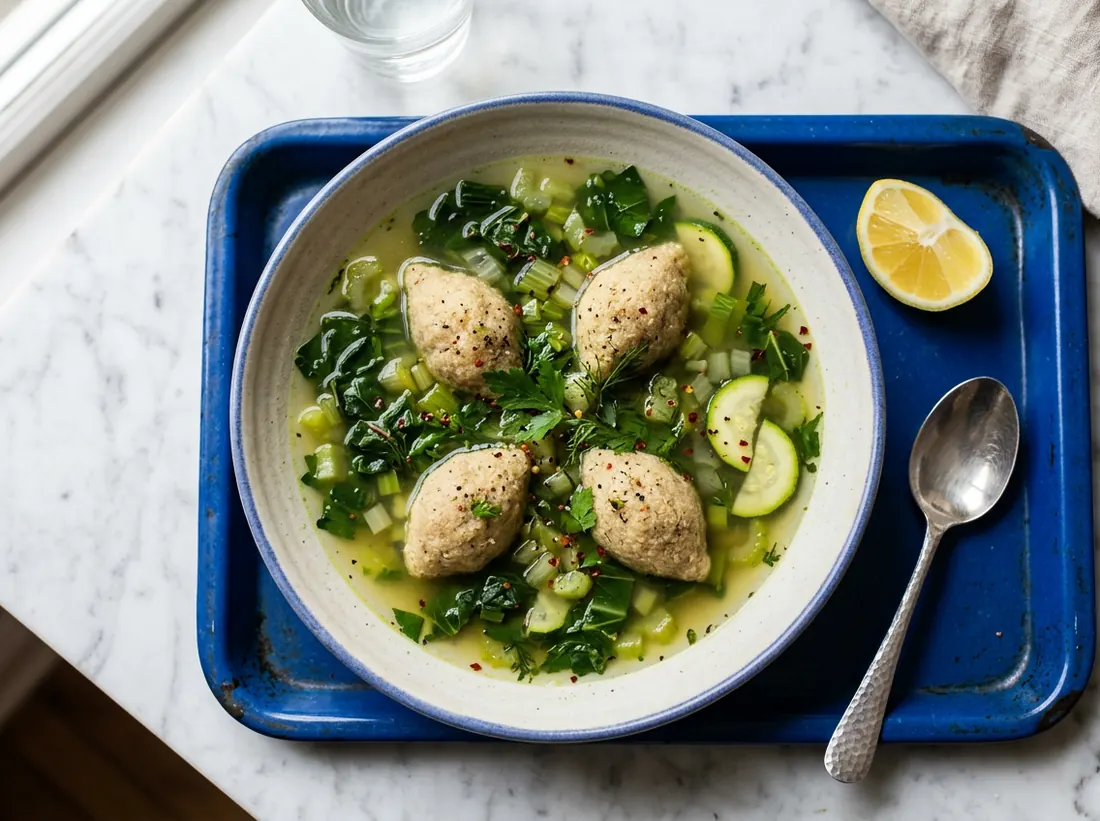
Beet kubbeh is red, sour and sweet, from beets, lemon and sugar. Kubbeh hamusta is green and much more sour, with Swiss chard, zucchini, celery and plenty of lemon, and almost no sugar.

Is beet kubbeh Iraqi or Kurdish?

Both. In Iraq it is called kubbeh shwandar, and Kurdish Jewish homes make a similar beet soup with kubbeh. In Israel the name kubbeh selek is shared by both communities.

What is kubbeh dough made of?

Semolina, water and salt. 500 g of semolina takes about 320 ml of lukewarm water and 6 g of salt, enough for 32 kubbeh. Some cooks add a little fine bulgur or a spoon of oil.

How many calories are in Beet kubbeh?

A 400 ml bowl of Beet kubbeh made with our recipe has about 479 calories and 18.4 g of protein. Per 100 ml: 120 calories.

How much does it cost to make Beet kubbeh at home?

A pot of 8 bowls costs about ₪36 at Israeli shelf prices in October 2026, about ₪4.5 a bowl. The calculator above works it out for any number of people.

Order now

Price, extras and availability are set in the ordering menu. You can also call.

Every soup in Israel

75 soups, each with a pot calculator, a price list and the science. Search by community, time, calories or cost.

All the soups