Kurdish cuisine: 31 dishes from dolma to kubba, by region
Kurdish (Kurdish-Jewish) cuisine: 21 dishes, from Kubbeh hamusta to Okra kubbeh soup, 14 ingredients and spices, 3 dates in the holiday calendar, and the community’s story in Israel. Every dish that has a page here is linked, with every ingredient in grams.
The dishes of Kurdish (Kurdish-Jewish) cuisine
By when they are eaten: Shabbat, holidays, everyday and the street.
Kurdish (Kurdish-Jewish) cuisine, for shabbat
3 dishes
- Kubbeh hamusta: Lemony sour soup with celery, chard and courgettes and stuffed bulgur kubbeh; a Friday meal soup in Kurdish homes
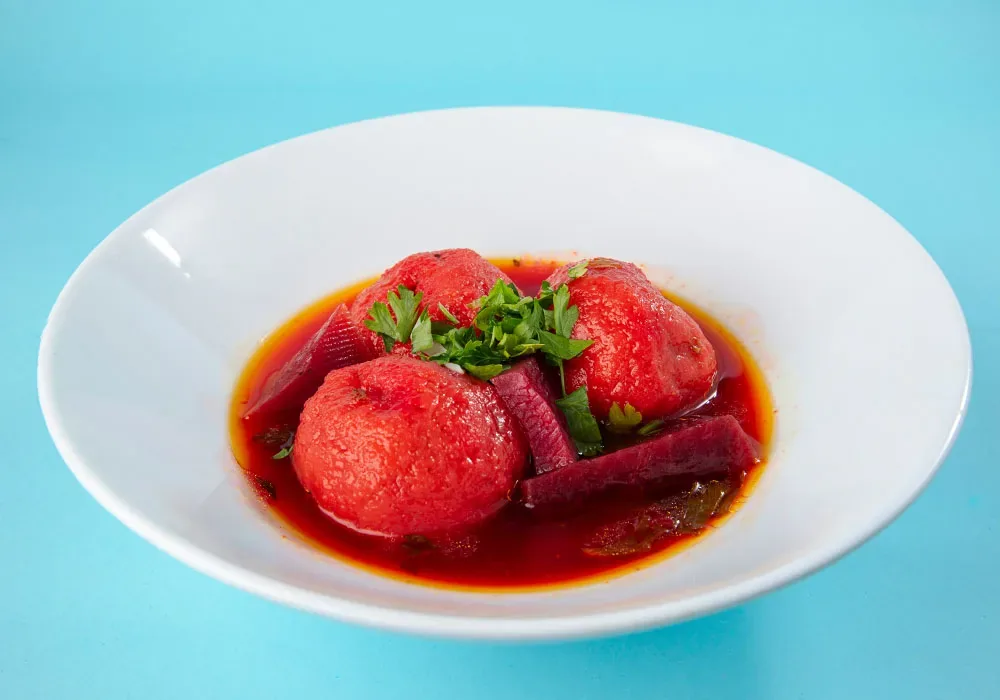
- Beet kubbeh: Beet-and-tomato soup; originates in Iraq; our page: beet kubbeh
- Kurdish rice with chicken:
Kurdish (Kurdish-Jewish) cuisine, for holidays
3 dishes
- Rice kubbeh: A shell of ground rice with beef and chicken, a Passover dish
- Kadeh: Fried half-moon pastry filled with cheese, spinach, dried fruit or meat; a Shavuot dish
- Haliq: A spread of sesame and nuts cooked in silan (date syrup), a Passover dish
Kurdish (Kurdish-Jewish) cuisine, everyday
13 dishes
- Okra kubbeh soup: Red okra soup, Iran and Iraq
- Kubbeh matfuniya: Root vegetable and pumpkin soup, originating in Turkey
- Kubba nablusiyya: Fried oval kubbeh with meat, onion and pine nuts
- Sisqa: The meat filling of kubbeh
- Shafta: Bulgur patties
- Yaprakh: Stuffed with rice, with or without meat, cooked slowly on a low flame
- Madyas: Courgettes stuffed with meat in tomato sauce
- Suprito: Chicken or meat with fried potatoes, lightly seasoned
- Musaka: Aubergine slices and meat patties in tomato and garlic sauce
- Lahma daqiqa: Everyday thin bread baked on a saj; keeps for a long time
- Naskanan: Sweet bread
- Jajik: Cold yogurt soup with purslane and spices
- Jerish: A dish of cracked wheat
Kurdish (Kurdish-Jewish) cuisine, street food
2 dishes
- Zangula: Fried yeast batter dipped in syrup
- Shambourak: Kurdish-Syrian filled pastry, sold in Mahane Yehuda Market
This cuisine’s dishes in our kitchen
Each has a page with a photo, what is in it and every ingredient in grams.
Kurdish cuisine in one minute
What it is
Kurdish cuisine is the home cooking of the Kurdish people, from the mountains and valleys where Turkey, Iraq, Iran and Syria meet. It is built on wheat, rice, yogurt, lamb and chicken, beans and lentils, and armfuls of fresh and wild herbs. Bread is baked daily on a griddle or in a clay oven, rice sits at the centre of the main meal, and sourness comes from lemon, sumac, pomegranate and dried lime rather than from chilli heat.
Is it like Turkish, Persian or Arab food?
It shares dishes with all three, because the borders moved and the pots stayed: dolma, kubba, kebab and baklava are cooked across the region. What makes the Kurdish table its own is the mountain dairy (herbed sheep cheese, whey cheese, yogurt drinks), the paper-thin saj bread, wild greens such as the spring filling of kelane, sour stews ladled over rice, and a hospitality where the guest gets the best tray in the house.
Is there a national dish?
There is no official one. Ask Kurds and most will name dolma first, above all in Iraqi Kurdistan, where a pot of stuffed vine leaves and vegetables turned out onto a tray is the Friday and family dish. Kubba, biryani and kebab come right after.
Where the Jewish Kurdish kitchen fits
The Jews of Kurdistan cooked on the same base: bulgur kubba, saj bread, stuffed vegetables and sour soups. Kashrut changed the details, so meat dishes were cooked with oil instead of butter and yogurt stayed on the dairy table. The kubbeh soups Jerusalem loves today came out of these kitchens, and you will find them in the dish list above.
Kurdistan's kitchen in numbers
countries, one kitchen
Most Kurds live where Turkey, Iraq, Iran and Syria meet, and each part cooks its own version of the same dishes.
Kurds in the world
Estimates range widely. It is one of the largest peoples in the world without a state of its own.
Newroz
The Kurdish New Year opens the season of picnics, wild herbs and dolma eaten outdoors.
main dialects in the kitchen
Kurmanji in the north and west, Sorani in the south and east, so one dish often has two names: kutilk and kube are both kubba.
dishes in the atlas below
From breakfast cheese to wedding rice, with where each one comes from and how it is eaten.
Kurdish food list: 31 dishes and how they are eaten
The dish, the region, what is in it, when it is cooked and how it reaches the mouth.
| Dish | Where | What is in it | When | How it is eaten |
|---|---|---|---|---|
| Dolma (dolme, yaprax) | All four parts | Vine leaves, onions, courgettes, aubergines, peppers and chard stuffed with rice, herbs and often minced meat, cooked in a sour broth of lemon or pomegranate molasses | Fridays, guests, Newroz picnics | The pot is turned out onto a big tray and the family eats from it together |
| Kubba (kube, kutilk) | All four parts | A shell of bulgur, rice or semolina around spiced minced meat and onion | Weekly, holidays | Fried as a snack, or poached in sour and red soups |
| Biryani (biryanî) | Iraqi Kurdistan | Long-grain rice with chicken or lamb, fried potato cubes, peas, toasted vermicelli, almonds and raisins, gently spiced | Weddings, guests, Eid | Heaped on a platter, with salad and a tomato sauce on the side |
| Kelane | Hawraman and Kermanshah, Iranian and Iraqi Kurdistan | Thin dough folded over wild onion greens or spring onions and chives, cooked on a saj | Spring | Brushed with butter, folded and eaten straight off the griddle |
| Tepsî | Iraqi Kurdistan | Fried aubergine, potato, onion and peppers layered with meatballs in tomato sauce, baked in a round tray | Family lunch | Served from the tray, with white rice |
| Teşrîb (tashreeb) | Iraqi Kurdistan | Flatbread torn into a deep dish and soaked in lamb or chicken broth with chickpeas and dried lime | Winter, Ramadan evenings | With a spoon, the meat laid on top |
| Shile over rice | Iraqi Kurdistan | A stew of white beans, okra, peas or aubergine with meat in tomato sauce | Daily lunch | Ladled over white rice; this is the everyday main meal |
| Birinc (white rice) | All four parts | Long-grain rice with a little toasted vermicelli, cooked to separate grains | Every day | Under every stew, beside every kebab |
| Sawar (bulgur pilaf) | Villages across Kurdistan | Coarse bulgur cooked with onion and tomato or in meat broth | Every day | A side to stews, with pickles and salad |
| Meqlûbe | Southern and western Kurdistan | Rice layered with fried aubergine or cauliflower and meat, cooked and flipped | Fridays, guests | Turned out like a cake at the table |
| Nîskene (lentil soup) | All four parts | Red lentils with onion and cumin, sometimes with bulgur or rice | Winter, Ramadan | With lemon and torn bread |
| Kutilk in yogurt soup | Northern and Iraqi Kurdistan | Small bulgur dumplings in a warm yogurt soup with garlic and dried mint | Spring and summer | Hot, in bowls; kosher kitchens make the dumplings without meat |
| Kebab | Erbil, Diyarbakir, Urfa and every city | Minced lamb or beef with onion pressed onto wide skewers and grilled over charcoal | Evenings, picnics | Wrapped in thin bread with grilled tomato, sumac onions and parsley |
| Kofta and shifta | All four parts | Minced meat kneaded with onion and parsley, shaped by hand | Every day | Grilled, pan-fried or simmered in tomato sauce, with rice or in bread |
| Qelî | Northern and southern Kurdistan | Pieces of lamb or beef fried with onion, tomato and peppers until the fat renders | Quick meals, the days after Eid al-Adha | Straight from the pan, with bread |
| Kaburga dolması | Diyarbakir | Lamb ribs or breast stuffed with spiced rice and slow-cooked | Feasts | Carved at the table |
| Perde pilav | Siirt | Rice with chicken, almonds and pine nuts baked inside a thin dough shell | Celebrations, honoured guests | Turned out whole and cut like a cake |
| Büryan | Siirt and Bitlis | Lamb hung in a deep pit oven and slow-roasted over embers | Markets, Ramadan iftar | Sliced thin onto flatbread that soaks up the juices |
| Serûpê (pacha) | Iraqi and Iranian Kurdistan | Sheep's head, trotters and stomach stuffed with rice, simmered for hours | Winter breakfasts | Early in the morning, bread soaked in the broth, with lemon |
| Van breakfast | Van | Herbed sheep cheese, honey with clotted cream, olives, eggs, butter, mirtoxe and flatbread | Weekends, guests | A spread of small plates with endless tea |
| Mirtoxe (murtuğa) | Van and Hakkari | Flour toasted in butter until nutty, then eggs worked in | Breakfast | Hot from the pan, scooped with bread |
| Spinach with eggs | All four parts | Spinach or wild greens cooked with onion, eggs broken on top | Spring | From the pan, with bread |
| Nan (tanûr bread) | All four parts | Wheat dough slapped onto the inside wall of a clay oven | Every day | Torn by hand; bread is also the spoon |
| Saj bread | Mountains and villages | Paper-thin dough stretched over the domed saj griddle | Every day; stacks keep for weeks | Sprinkled with water to soften; Kurdish Jews call it lahma daqiqa |
| Zelate (Kurdish salad) | All four parts | Tomato, cucumber, onion and parsley with lemon or sumac | Every meal | Beside the rice and stew |
| Tirşî (pickles) | All four parts | Turnips turned pink by beet, cucumbers, cauliflower and peppers in brine | Every table | Small bites between rice and stew |
| Klêçe (kulîçe) | All four parts | Cookies filled with dates or walnuts and scented with cardamom | Eid, Newroz | With tea |
| Peqlawe (baklava) | Cities | Thin pastry layered with walnuts or pistachios in syrup | Eid, weddings | With tea or bitter coffee |
| Mastaw and do | All four parts | Yogurt beaten with water and salt; do is the sour, fermented version | Summer, beside rice | Cold, in tall glasses |
| Çay (Kurdish tea) | All four parts | Strong black tea brewed in a double pot | After every meal and all day | In small tulip glasses, very sweet |
| Qehweya kezwanê | Northern Kurdistan | Roasted terebinth fruit, ground and cooked like coffee | With guests | Small cups, thick and nutty |
Names in brackets are the Kurdish names you will hear. Spellings change between Kurmanji and Sorani.
The four kitchens of Kurdistan
One people, four countries, four ways of cooking.
| Part | Cities | Signature dishes | What marks it |
|---|---|---|---|
| Northern Kurdistan (Bakur), southeast Turkey | Diyarbakir, Van, Siirt, Bitlis, Urfa | Van breakfast, perde pilav, büryan, kaburga dolması, terebinth coffee | Mountain dairy and the richest breakfast tables, pit-oven lamb, Ottoman-era pastries |
| Southern Kurdistan (Başûr), northern Iraq | Erbil, Sulaymaniyah, Duhok, Halabja | Dolma, biryani, tepsî, teşrîb, shile over rice, klêçe | Rice-centred lunches, sour stews, the big Friday dolma pot, close ties to the Iraqi Jewish and Arab kitchens |
| Eastern Kurdistan (Rojhilat), western Iran | Sanandaj, Kermanshah, Mahabad, Hawraman | Kelane, nan berenji (Kermanshah rice-flour cookies), herb stews, Persian-style rice | Wild greens and herbs, terraced village gardens, rice and stews in the Persian manner |
| Western Kurdistan (Rojava), northeast Syria | Qamishli, Kobani, Afrin | Kubba, bulgur dishes, olives and olive oil from Afrin, kebab | Wheat plains and olive groves, with Levantine touches such as tahini and pomegranate molasses |
Inside each part the city cooks differently from the village, and the valley from the mountain.
The Kurdish pantry: 14 things every kitchen keeps
The English name, the name you will hear in the kitchen, the Hebrew name and what it does.
| English | Name you will hear | Hebrew | What it does |
|---|---|---|---|
| Sumac | sumaq | סומאק | Sour red powder for kebab onions, salads and grilled tomatoes |
| Dried lime | noomi | לומי (לימון מיובש) | Whole or cracked into stews and tashreeb for a deep, fermented sourness |
| Pomegranate molasses | dibs rumman | דבס רימונים | Sweet and sour glaze for dolma broth and salads |
| Grape molasses | dims | דבס ענבים | Thick grape syrup, eaten with tahini and bread at breakfast |
| Urfa pepper | isot | פלפל אורפה | Dark, smoky chilli flakes; heat is added at the table, not in the pot |
| Yogurt | mast | יוגורט | The base of drinks, soups and sauces on the dairy table |
| Dried yogurt | kashk | קשק | Sour dried yogurt crumbled into winter soups |
| Herbed sheep cheese | jajî | גבינת צאן עם עשבי בר | Young cheese packed with mountain herbs, the star of the Van breakfast |
| Whey cheese | lorik | גבינת מי גבינה | Soft, fresh cheese made from leftover whey, eaten in spring |
| Wild herbs | giya | עשבי בר | Spring greens for kelane, salads and omelettes |
| Coarse bulgur | sawar | בורגול גס | Cooked like rice as a pilaf; fine bulgur goes into kubba |
| Long-grain rice | birinc | אורז ארוך | The prestige grain of the south, cooked to separate grains |
| Walnuts | gwêz | אגוזי מלך | From the Zagros forests into stuffings, cookies and sweets |
| Terebinth | kezwan | פרי האלה | Roasted fruit ground for Kurdish coffee |
All of these can be found in Middle Eastern spice shops and markets.
A day of Kurdish meals, and the guest tray
- Breakfast
Bread warm from the saj or the oven, white cheese, yogurt, olives, eggs, honey or grape molasses with tahini, and the first glasses of sweet tea.
- Lunch, the main meal
Rice with one or two stews (white beans, okra or aubergine in tomato), salad, pickles and bread. In many homes this is the meal the whole family sits down to.
- Afternoon
Tea again, with klêçe, fruit or nuts. In summer a cold glass of mastaw.
- Dinner
Lighter: lentil soup, eggs with greens, cheese and bread, or what is left from lunch.
- When guests come
The table grows: a turned-out dolma pot, biryani or kebab, several salads and pickles, then fruit, then sweets and tea. The host keeps refilling plates, and leaving a little food shows you are full.
A year in the Kurdish kitchen
What is cooked in each season and on each date, and why.
| When | What is cooked | Why |
|---|---|---|
| Late winter | Kubba soups, teşrîb, lentil soup, serûpê | Hot, sour broths for the cold months in the mountains |
| 21 March, Newroz | Picnics: dolma, kebab, salads and sweets | The New Year and the first day out in the green; families eat outdoors |
| Spring | Kelane, spinach with eggs, lorik cheese, kutilk in yogurt soup | Wild greens and new milk arrive together |
| Late summer | Drying tomatoes, peppers and hollowed aubergine shells, boiling grape molasses, making bulgur | Stocking the pantry for winter; the dried shells become winter dolma |
| Ramadan and Eid al-Fitr | Lentil soup and dates to break the fast, klêçe and peqlawe for Eid | Breaking the fast, then visits and sweets |
| Eid al-Adha | Lamb shared with family and neighbours, qelî and biryani | Meat from the sacrifice feeds the house for days |
| Sukkot in Israel (Saharane) | Picnics with kubba, salads and sweets | The spring festival of the Jews of Kurdistan; in Israel it moved to the intermediate days of Sukkot |
The Jewish dates of this kitchen are in the holiday calendar above.
How to eat at a Kurdish table
Never wasted
Bread is treated with respect and is not thrown away. Dry bread goes into soups or to the animals.
Eating on the sifre
In many homes food is laid on a cloth on the floor and everyone sits around it. Shoes stay at the door.
Wash before and after
A jug and basin, or a sink, before the meal and after it. Bread is torn with the right hand.
Your plate refills itself
The host keeps adding food. Saying you are full once is politeness; when you truly are, leave a little on the plate.
The best piece is yours
Guests and elders are served first, and the best meat goes to the guest.
The meal ends with tea
Small glasses of strong, sweet tea follow every meal. A second and a third glass are normal.
Kurdish food: myths and facts
What people say, and what is true.
| You may have heard | The fact |
|---|---|
| Kurdish food is just Turkish food | It shares Ottoman-era dishes, but it has its own breads, dairy, sour stews and names, and four regional kitchens across four countries. |
| Kurdish food is very spicy | Most dishes are mild. Sourness from lemon, sumac and dried lime matters more than chilli, and Urfa chilli flakes are added at the table. |
| It is all meat and kebab | Everyday food is bulgur, rice, beans, lentils, greens and yogurt. Lamb is for guests, Fridays and feasts. |
| Kubba is a Lebanese dish | Kubba, kibbeh and kube are one family across the region. The Kurdish and Iraqi kitchens made the soup branch their own. |
| Biryani is only Indian | Iraqi and Kurdish biryani is a separate, gentle rice with vermicelli, potatoes, peas, nuts and raisins. |
| The Jews of Kurdistan had a different cuisine | They cooked the same base dishes and adapted them to kashrut: oil instead of butter with meat, and yogurt kept for dairy meals. |
Start here: 10 Kurdish dishes, easiest first
- 1. Mastaw
Yogurt, cold water, salt and dried mint. Two minutes, and you have the drink of a Kurdish summer.
- 2. Zelate
Dice tomato, cucumber and onion small, add parsley, lemon and a pinch of sumac.
- 3. Sawar
Fry onion, add tomato paste and coarse bulgur, cover with water and cook it like rice.
- 4. Lentil soup
Red lentils, onion and cumin, blended smooth and finished with lemon.
- 5. White bean shile
Beans and beef simmered in tomato until thick, ladled over rice.
- 6. Kofta in tomato sauce
Minced meat with onion and parsley, shaped and simmered in tomato.
- 7. Tepsî
Fry aubergine and potato, layer them with meatballs and tomato, and bake.
- 8. Kelane
Thin dough folded over chopped spring onions and chives, cooked in a dry pan.
- 9. Dolma
Stuff vine leaves and vegetables with rice, pack the pot tight, cook in a sour broth and turn it out.
- 10. Kubba
Knead fine bulgur into a shell, fill it with spiced meat, close and fry or poach. The skill takes practice.
The holiday calendar of Kurdish (Kurdish-Jewish) cuisine
What goes on the table on each date.
| Date | Dishes | Note |
|---|---|---|
| Friday meal | Kubbeh hamusta | |
| Shavuot | Kadeh | Fried dairy pie |
| Passover | Rice kubbeh, Haliq |
Spice and ingredient glossary
The name in Hebrew, in the local language and in English, and what it is for.
| English | Local name | Hebrew | What it is |
|---|---|---|---|
| Bulgur | برغل | Bulgur | Kubbeh shell |
| Semolina | سميد | Semolina | |
| Ground rice | رز | Ground rice | Passover kubbeh |
| Beet | شوندر | Beet | |
| Chard | سلق | Chard | Hamusta |
| Celery | كرفس | Celery | Hamusta |
| Lemon | ليمون | Lemon | Sour flavours |
| Okra | بامية | Okra | |
| Pumpkin | قرع | Pumpkin | Matfuniya |
| Date syrup | دبس | Date syrup | Haliq |
| Sesame | سمسم | Sesame | |
| Pine nuts | صنوبر | Pine nuts | Kubba nablusiyya |
| Purslane | رجلة | Purslane | Jajik |
| Luffa | Luffa | A plant that becomes safe through long cooking |
Techniques and vessels
How it is cooked, and in what.
Saj griddle
Convex griddle for very thin bread
Hand-shaping kubbeh
Bulgur dough around a sisqa filling
Sour broth
Lemon, celery and chard
Deep frying
Kubba nablusiyya, kadeh, zangula
Tabun
Shabbat hot plate
Stews cooked on the hot plate
Pickling
Turnips with beet, preserved lemon
Long cooking
Stuffed dishes on a low flame
Regions and variants
The same dish, another city, another taste.
| Region | What is special |
|---|---|
| Iraq | Beet kubbeh (shwander), okra kubbeh |
| Iran | Red okra kubbeh |
| Syria | Kubbeh hamusta (chard, courgettes, lemon) |
| Turkey | Kubbeh matfuniya |
Kurdish (Kurdish-Jewish) cuisine in Israel
How they came
Organised immigration mainly 1950-1951 (partly within Operation Ezra and Nehemiah); earlier groups from Zakho from the mid-19th century, Urfa 1896, Barshi 1929
Where they settled
About half in Jerusalem (for example Zikhron Yosef), and more than 30 farming settlements (Nes Harim, Patish and others)
Markets and places
Mahane Yehuda Market (Jerusalem): Winter kubbeh soups; Rachmo, Azura, Mordoch. Kubbeh in Jerusalem: .
Kurdish (Kurdish-Jewish) cuisine in numbers
Kurds in Israel (including descendants)
Kubbeh soups at the Mordoch restaurant
Neighbouring cuisines
The same pots, other spices.
Iraqi (Iraqi-Jewish) cuisine
19 dishes, a spice glossary, a holiday calendar and the story in Israel.
To the pageMoroccan (Moroccan-Jewish) cuisine
22 dishes, a spice glossary, a holiday calendar and the story in Israel.
To the pageYemenite cuisine
21 dishes, a spice glossary, a holiday calendar and the story in Israel.
To the pagePersian (Iranian-Jewish) cuisine
21 dishes, a spice glossary, a holiday calendar and the story in Israel.
To the pageSyrian (Aleppo and Damascus Jewish) and Lebanese cuisine
25 dishes, a spice glossary, a holiday calendar and the story in Israel.
To the pageTunisian and Tripolitan (Libyan-Jewish) cuisine
28 dishes, a spice glossary, a holiday calendar and the story in Israel.
To the pageFrequently asked questions
What is the difference between Iraqi and Kurdish kubbeh?
Their kubbeh is very close. The Kurdish stresses kubbeh soups (hamusta, beet, okra, matfuniya) and very thin bread on a saj (lahma daqiqa), while the Iraqi also stresses rice, stuffed vegetables and tbit.
What is kubbeh hamusta?
A lemon-sour soup with celery, chard and courgettes in which stuffed bulgur kubbeh float.
How is kubbeh dough made?
A shell of bulgur (rice at Passover), filled with sisqa (a spiced meat filling) and shaped with a wet hand. We will fix the weights on our recipe page.
What is eaten at Shavuot in Kurdish cuisine?
Kadeh: a fried half-moon pie filled with cheese, spinach or dried fruit.
What do Kurds eat at Passover?
Rice kubbeh and haliq (a spread of sesame and nuts in silan).
What is lahma daqiqa?
Thin bread baked on a saj, an everyday food that keeps for a long time.
Is Kurdish food spicy?
Not usually:, and the sourness comes from lemon.
What is shafta?
Bulgur patties.
Where can you eat kubbeh in Jerusalem?
In Mahane Yehuda Market: kubbeh stalls and eateries such as Rachmo and Azura.
How many Kurds live in Israel?
Estimates range from about 130,000 to 300,000, depending on the definition and the source; almost 200,000 according to a 2013 estimate.
A meal from this cuisine, for a team or an event
How many people, when and what they like. We come back with a proposal.