Moroccan cuisine: 30 dishes from tagine to dafina, by city
Moroccan (Moroccan-Jewish) cuisine: 22 dishes, from Dafina / Skhina to Tagine, 15 ingredients and spices, 7 dates in the holiday calendar, and the community’s story in Israel. Every dish that has a page here is linked, with every ingredient in grams.
 Illustration
The dishes of Moroccan (Moroccan-Jewish) cuisine
By when they are eaten: Shabbat, holidays, everyday and the street.
Moroccan (Moroccan-Jewish) cuisine, for shabbat
4 dishes
- Dafina / Skhina: Moroccan Shabbat hamin: meat, potatoes, chickpeas, wheat and eggs cooked overnight; our page: dafina
- Hraime (Moroccan style): Fish in tomato sauce with paprika and garlic; the Moroccan version differs from the Libyan hraime
- Fish ball tagine:
- Chicken with preserved lemon and olives: Among the most common dishes outside Morocco
Moroccan (Moroccan-Jewish) cuisine, for holidays
8 dishes
- Couscous: Steamed semolina served with a meat and vegetable stew after the tagine; at Rosh Hashanah it is served with seven vegetables; our page: couscous
- Harira: Soup of chickpeas, tomatoes and herbs; eaten in Ramadan and to break the Yom Kippur fast
- Lamb with prunes: A sweet-and-savoury tagine; a holiday dish
- Tanjia: Meat cooked slowly in a clay jar
- Pastilla: Savoury-sweet filo pie
- Sfenj: Moroccan doughnut; Hanukkah
- Mofleta: Thin pancake with butter and honey; Mimouna and Hanukkah
- Shebakia: Rose-shaped fried dough in honey and sesame, Ramadan
Moroccan (Moroccan-Jewish) cuisine, everyday
10 dishes
- Tagine: A stew in a conical clay pot: meat or chicken with dried fruit, olives or vegetables
- Bissara: Bean or split-pea soup, the first soup of winter
- Matbucha: Cooked tomato and pepper salad
- Carrot salad with cumin and turmeric: Among the salads of the Moroccan table
- Moroccan-style tilapia: A typical dish
- Kefta: Spiced meat patties
- Mafroum: Stuffed vegetables or meat patties coated in potato, in tomato sauce
- Harcha: Semolina bread served at lunch
- Frana: Bread baked in a tabun
- Mint tea: The hospitality drink
This cuisine’s dishes in our kitchen
Each has a page with a photo, what is in it and every ingredient in grams.
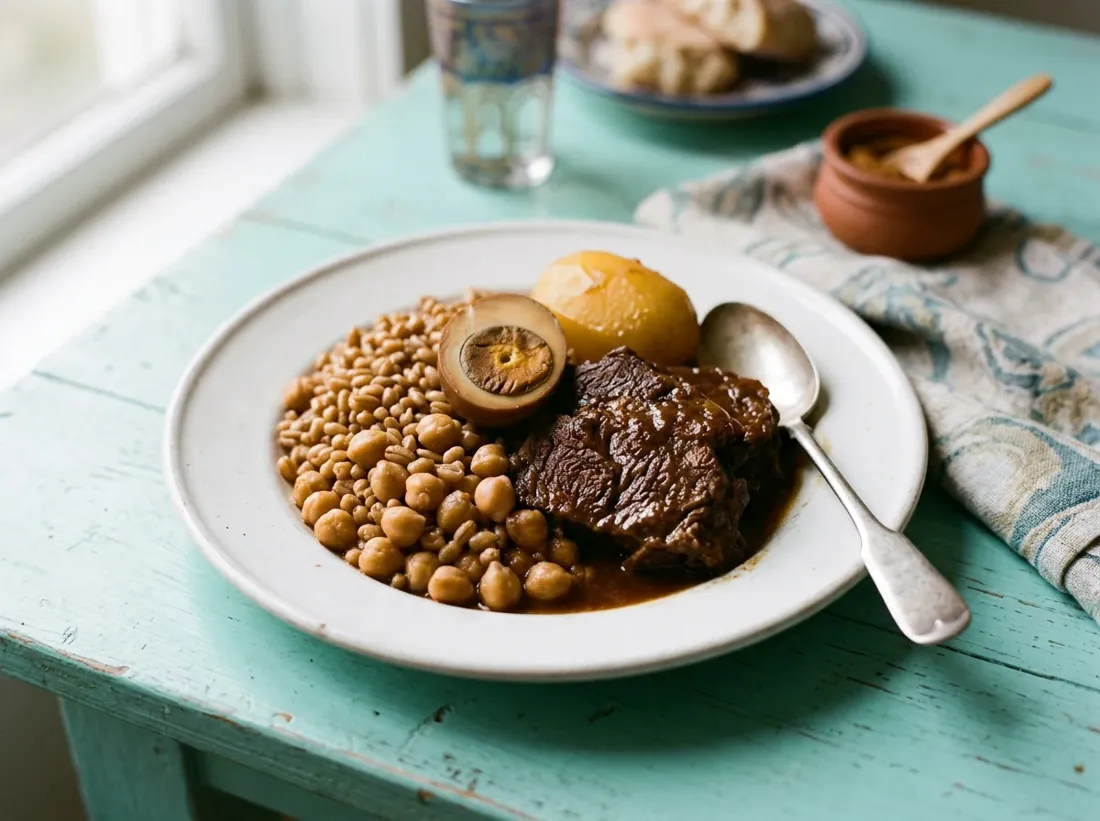
IllustrationMoroccan hamin
Dafina is the hamin of Moroccan Jews: meat, chickpeas, potatoes and brown eggs, with spiced rice cooking in the same pot all night.
 Illustration
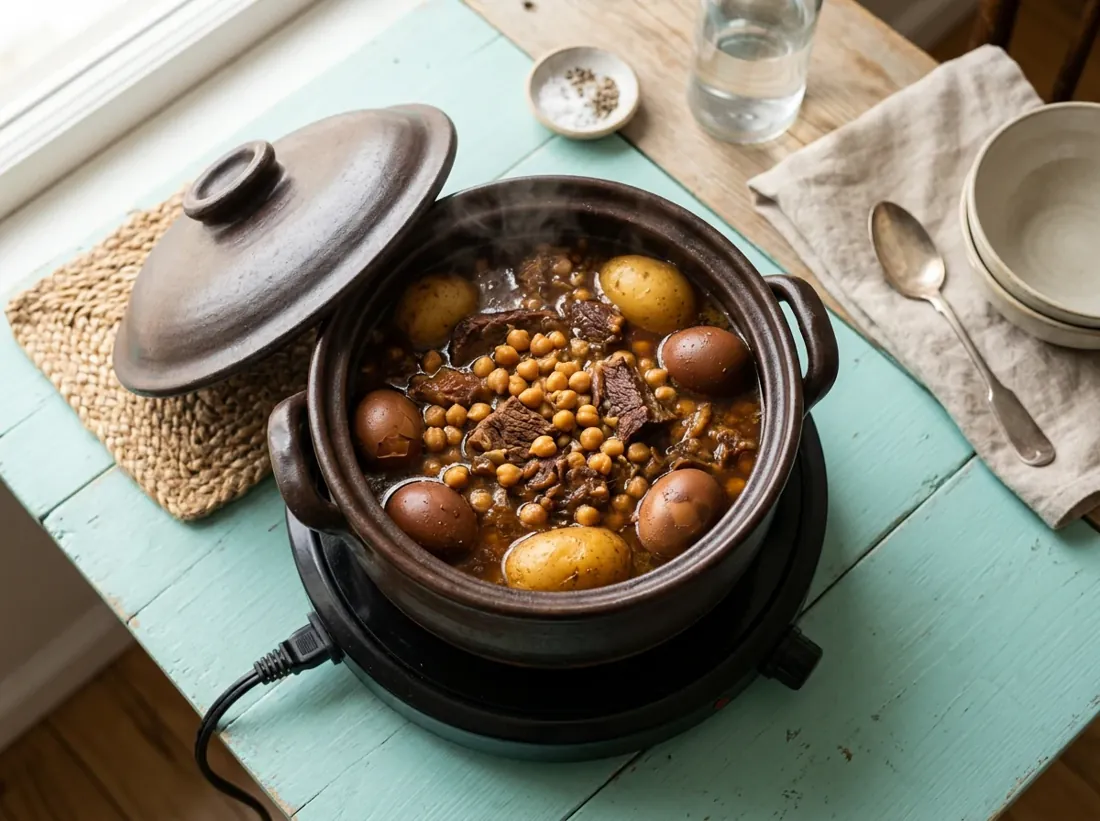
Hamin and cholent: one Shabbat pot, three communities
The Shabbat stew: legumes, potatoes and meat cooked slowly all night, until everything melts into one pot.
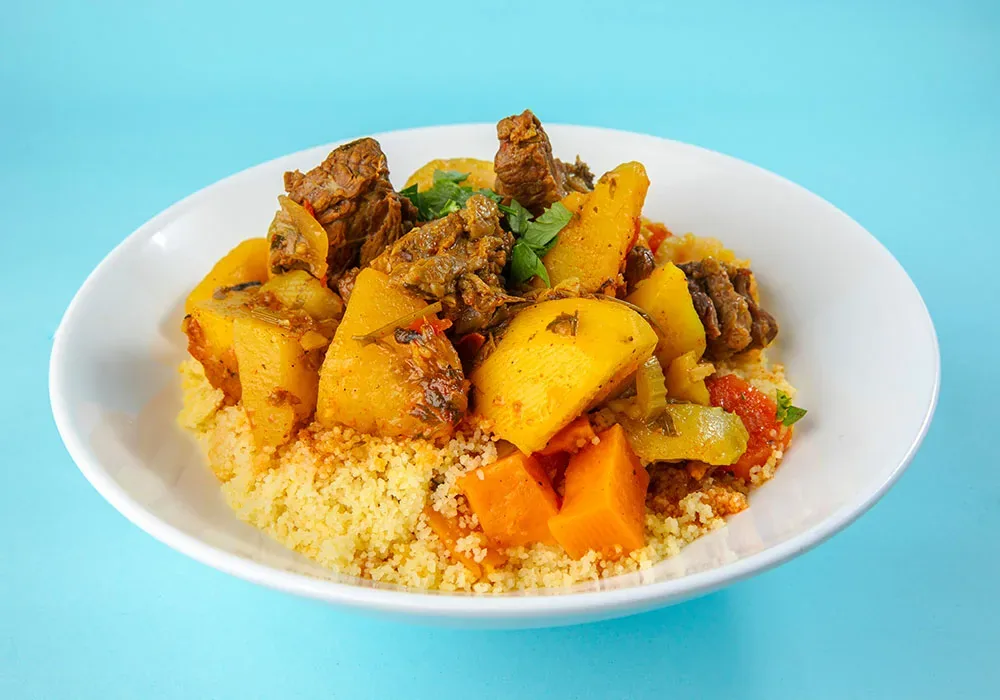
Couscous
Fluffy couscous with vegetables and the day’s stew from the pot.
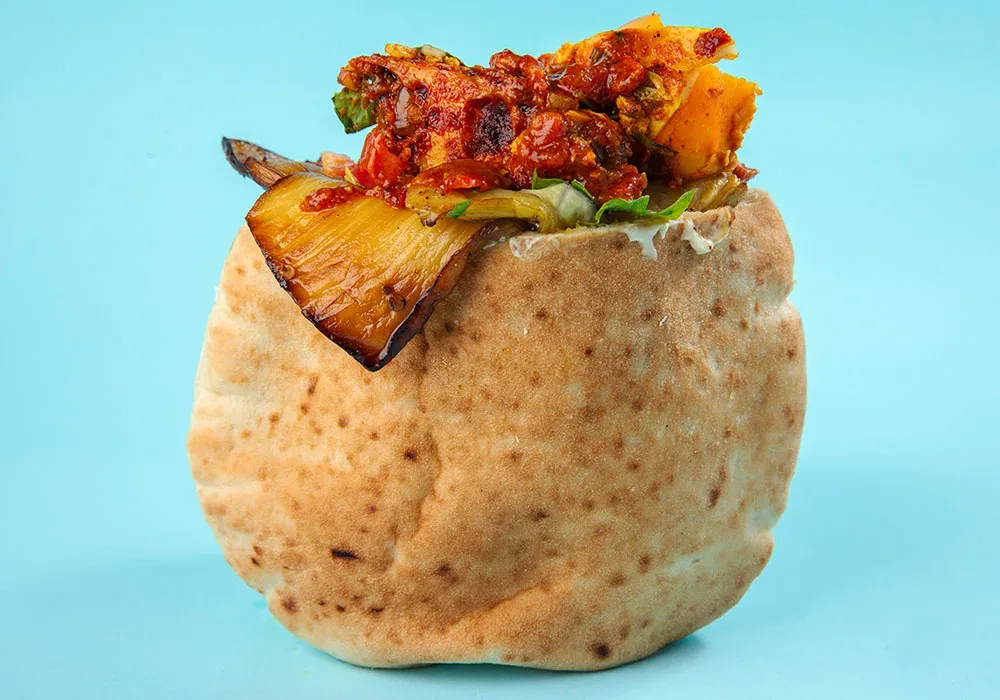
Sabtucha
A local meeting of sabich and shakshuka egg, with aubergine, potato and salads.
Moroccan cuisine in one minute
What it is
Moroccan cuisine grew out of Amazigh (Berber) village cooking, with layers from the Arab, Andalusian, Jewish and French kitchens. Its signatures are slow stews in a conical tagine, couscous steamed over a stew, bread at every meal, sweet and savoury together (lamb with prunes, chicken with preserved lemon), and mint tea poured from a height.
The Moroccan Jewish table
Moroccan Jews cooked in the same language of spices, on their own clock: dafina (skhina) left overnight for Shabbat, a Friday night of fish in red sauce and a tray of cooked salads, the Mimouna feast at the end of Passover, and dishes from the Spanish-Jewish north. In Israel these dishes became part of everyday Israeli food.
How spicy is it?
Warm rather than hot. Cumin, sweet paprika, ginger, turmeric, cinnamon and saffron lead; chilli appears in fish dishes and some salads, and harissa is more at home in Tunisia.
Bread and hands
Bread, khobz, is baked every day and used to scoop food from the shared tagine with the right hand. A meal without bread is not a meal.
Moroccan food list: 30 dishes and how they are eaten
The dish, what is in it, when it is served and how it is eaten.
| Dish | What is in it | When | How it is eaten |
|---|---|---|---|
| Chicken tagine with preserved lemon and olives | Chicken braised with ginger, saffron and turmeric, preserved lemon and green olives | Friday night, guests | From the shared pot, with bread |
| Lamb tagine with prunes | Lamb braised with cinnamon and honey-glazed prunes, topped with toasted almonds and sesame | Holidays, Rosh Hashanah | With bread |
| Kefta tagine with eggs | Meatballs in a spiced tomato sauce, eggs cracked in at the end | Weekdays | Straight from the pot, with bread |
| Fish tagine | Fish on a bed of potatoes, peppers and tomato with chermoula | Friday night, the coast | With bread |
| Hraime | Fish in a red sauce of paprika, garlic and chilli | Friday night | Hot or at room temperature, with bread |
| Sardine kefta | Sardine balls with chermoula in tomato sauce | The coast, weekdays | With bread |
| Couscous with seven vegetables | Steamed semolina with a broth of meat and seven vegetables: pumpkin, carrot, turnip, courgette, cabbage, chickpeas and onion | Friday lunch in many Moroccan homes, holidays | Heaped in a dome, the broth ladled over |
| Couscous tfaya | Couscous with chicken or meat under onions and raisins caramelised with cinnamon | Celebrations | Topped with almonds and eggs |
| Dafina (skhina) | Beef, potatoes, chickpeas, wheat and eggs cooked overnight | Shabbat lunch | Each part served on its own plate |
| Tanjia | Beef or lamb with preserved lemon, cumin and saffron, slow-cooked in a clay jar in the embers of the hammam furnace | Marrakesh, a men's dish for outings | From the jar onto a plate, with bread |
| Mechoui | A whole lamb or shoulder slow-roasted until it falls from the bone | Weddings and feasts | Pulled apart by hand and dipped in cumin and salt |
| Mrouzia | Lamb with raisins, almonds, honey and ras el hanout | Eid al-Adha | With bread |
| Pastilla | Layers of thin warqa pastry with spiced chicken (pigeon in Fez), eggs and almonds, dusted with sugar and cinnamon | Weddings, Fez | Cut at the table and eaten hot |
| Harira | Tomato, lentil and chickpea soup with herbs | Ramadan; Moroccan Jews break the Yom Kippur fast with it | With dates |
| Bissara | A purée of dried fava beans or split peas with olive oil and cumin | Winter mornings | With bread |
| Rfissa | Torn msemen soaked in broth with chicken, lentils and fenugreek | Family gatherings and after a birth | From one shared dish |
| Kefta brochettes | Spiced minced meat on skewers | Street grills | In bread with harissa and onion |
| Msemen | A square layered pancake folded with oil and cooked on a griddle | Breakfast, tea time | With honey or butter |
| Harcha | Semolina bread cooked in a pan | Breakfast | Split and spread with honey or cheese |
| Batbout | A small round yeast bread puffed on a griddle | Every day | Split and filled like a pita |
| Khobz | A round, flat loaf of wheat or semolina | Every meal | Torn to scoop up the tagine |
| Sfenj | Yeast dough rings fried in oil | Breakfast stalls, and Hanukkah in Jewish homes | Sugared or dipped in honey |
| Mofleta | A thin pancake cooked in layers in a pan | Mimouna | Hot, with butter and honey |
| Chebakia | Dough folded into a flower, fried and soaked in honey with sesame | Ramadan | With harira or with tea |
| Briouats | Small triangles of warqa filled with meat, cheese or almond paste | Parties, Ramadan, and the sweet ones at Mimouna | Fried, savoury or dipped in honey |
| Kaab el ghazal (gazelle horns) | Crescent pastries filled with almond paste and orange blossom | Weddings, holidays, Mimouna | With mint tea |
| Ghriba | Crackled cookies of almond, semolina or coconut | Holidays | With tea |
| Seffa | Sweet steamed vermicelli or couscous with cinnamon, sugar and almonds, sometimes with chicken hidden inside | Weddings, celebrations | Spooned from a tall mound |
| Amlou | A spread of argan oil, toasted almonds and honey | Breakfast in the Souss | With bread |
| Mint tea | Green tea with fresh spearmint and sugar, poured from a height | All day, for every guest | Several small glasses |
Dish names as they sound in Moroccan Arabic. Every city and every family has its own version.
Seven kitchens of Morocco, city by city
The same spices, another place, another style.
| City or region | What to eat | What marks it |
|---|---|---|
| Fez | Pastilla, mhencha (an almond-filled pastry coil), sweet and savoury tagines | The most refined kitchen in Morocco; its mellah was the country's first Jewish quarter |
| Marrakesh | Tanjia, mechoui, the night food stalls of Jemaa el-Fna | Slow-cooked meat and street food under the open sky |
| Essaouira (Mogador) | Grilled sardines and fish from the port, fish tagines | A port city that was home to a large Jewish trading community |
| Tetouan and Tangier | Dishes with Spanish names, almond sweets, fish | The Spanish-Jewish north, where the Haketia language mixed Spanish, Hebrew and Arabic |
| Casablanca | Every region's cooking, street grills, bakeries | Morocco's largest city, and home today to most of Morocco's Jews |
| Souss and Agadir | Amlou, argan oil, tagines over charcoal | The argan country of the southwest |
| Atlas mountains | Couscous, barley bread, tagines over charcoal, mountain honey | Amazigh village cooking, the oldest layer of Moroccan food; Jewish communities lived in Atlas villages for centuries |
The Friday night salad tray: 12 Moroccan salads
The salads that fill the table before the fish, and how each is made.
| Salad | What is in it | How it is made |
|---|---|---|
| Matbucha | Tomatoes and roasted peppers with garlic and chilli | Cooked slowly for hours until thick and jammy |
| Zaalouk | Aubergine and tomato with garlic, cumin and paprika | Cooked and mashed together with olive oil |
| Taktouka | Roasted green peppers and tomato | Cooked with garlic, paprika and cumin until soft |
| Carrots with cumin | Cooked carrot slices | Dressed with garlic, cumin, paprika, lemon and parsley |
| Beet salad | Cooked beetroot | Dressed with cumin, lemon and parsley |
| Courgette salad | Courgettes | Cooked soft with garlic and cumin, then mashed or sliced |
| Fried aubergine | Aubergine slices | Fried and dressed with garlic, cumin and vinegar |
| Moroccan chopped salad | Tomato, cucumber, onion and parsley | Diced small, with olive oil and lemon |
| Roasted peppers | Peppers | Charred, peeled and dressed with garlic and olive oil |
| Olives with preserved lemon | Green or red olives, preserved lemon and chilli | Marinated for a few days |
| Chickpeas with cumin | Cooked chickpeas | Dressed with cumin, lemon and parsley |
| Oranges with cinnamon | Orange slices with orange blossom water and cinnamon | Served at the end, as a sweet salad |
The salads are eaten with bread, before the fish and before the main course.
A Moroccan Jewish Shabbat, from Friday night to Saturday lunch
- Friday afternoon
The dafina pot goes onto the hot plate or into a low oven before Shabbat begins, sealed, and stays there until lunch the next day.
- Kiddush and bread
Kiddush over wine, then challah or round Moroccan bread with salt.
- The salads
The table fills with ten or more cooked and fresh salads, eaten with bread.
- The fish
Hraime or a fish tagine, red with paprika and garlic.
- The main course
Chicken with olives and preserved lemon, or couscous with meat and vegetables.
- Tea
Mint tea and small cookies to close the evening.
- Shabbat lunch
The dafina is opened: meat, potatoes, chickpeas, wheat and brown eggs, each on its own plate.
Moroccan table manners and the tea ritual
Right hand and bread
Food is scooped from the shared tagine with a piece of bread in the right hand, from the part of the pot in front of you.
The best piece
The host pushes the best meat towards the guest, and it is polite to accept.
Water before the meal
A kettle and basin come round so everyone can wash their hands at the table.
Poured from a height
Mint tea is poured from high above the glass to raise a foam, returned to the pot and poured again.
Three glasses
A saying goes that the first glass is gentle as life, the second strong as love and the third bitter as death. Guests usually accept all three.
Always something sweet
Tea comes with cookies, dates or nuts. Refusing everything can seem cold; one bite is enough.
Moroccan food: myths and facts
What people say, and what is true.
| You may have heard | The fact |
|---|---|
| A tagine is a dish | It is both: the conical clay pot and anything cooked in it. |
| Couscous is a grain | It is tiny pasta: semolina rolled by hand with water and flour, then steamed. |
| Moroccan food is very hot | It is warm and fragrant; chilli is used lightly, mostly with fish. |
| Ras el hanout has a fixed recipe | The name means head of the shop, and every spice seller makes their own blend. |
| You eat the flesh of the preserved lemon | Mostly the rind is used, chopped fine; the pulp is often scraped away. |
| Mint tea is an ancient tradition | Green tea reached Morocco through trade in the 18th and 19th centuries; today it is the national drink. |
Start here: 10 Moroccan dishes, easiest first
- 1. Mint tea
Green tea, a bunch of fresh mint and sugar in the pot, poured from a height.
- 2. Carrots with cumin
Cook carrot slices, then dress them with garlic, cumin, paprika and lemon.
- 3. Zaalouk
Aubergine and tomatoes cooked with garlic and cumin until they can be mashed.
- 4. Matbucha
Tomatoes and roasted peppers cooked slowly over low heat until thick.
- 5. Harira
Tomatoes, lentils, chickpeas and herbs, thickened at the end with flour and water.
- 6. Kefta tagine with eggs
Small meatballs in tomato sauce, with eggs cracked in at the end.
- 7. Chicken with preserved lemon and olives
Chicken, onion, ginger and saffron, cooked slowly with preserved lemon and olives.
- 8. Hraime
Fish pieces in a sauce of oil, paprika, garlic and chilli, cooked briefly.
- 9. Couscous with seven vegetables
Steam the semolina three times over the meat and vegetable broth, rubbing it loose by hand between steamings.
- 10. Dafina
Beef, potatoes, chickpeas, wheat and eggs in one pot, sealed overnight over low heat.
The holiday calendar of Moroccan (Moroccan-Jewish) cuisine
What goes on the table on each date.
| Date | Dishes | Note |
|---|---|---|
| Shabbat | Dafina, Hraime, Matbucha and salads | |
| Rosh Hashanah | Couscous, Lamb with prunes | |
| Yom Kippur | Harira (to break the fast) | |
| Sukkot | Moroccan recipes for Sukkot | A related Google search |
| Hanukkah | Sfenj, Mofleta | |
| Passover | Tanjia, Passover dishes | The search 'Moroccan food for Passover' appears among related searches |
| Mimouna (the evening after Passover) | Mofleta, Sweets | Celebrated on the night after Passover ends |
Spice and ingredient glossary
The name in Hebrew, in the local language and in English, and what it is for.
| English | Local name | Hebrew | What it is |
|---|---|---|---|
| Ras el hanout | رأس الحانوت | Ras el hanout | A blend of up to 28 ingredients |
| Cumin | كمون | Cumin | |
| Turmeric | كركم | Turmeric | |
| Paprika | فلفل أحمر | Paprika | |
| Cinnamon | قرفة | Cinnamon | |
| Ginger | زنجبيل | Ginger | |
| Saffron | زعفران | Saffron | |
| Cardamom | هيل | Cardamom | |
| Preserved lemon | حامض مصير | Preserved lemon | |
| Argan oil | أركان | Argan oil | |
| Chermoula | شرمولة | Chermoula | Marinade of herbs and spices |
| Smen (preserved butter) | سمن | Smen (preserved butter) | |
| Olives | زيتون | Olives | |
| Mint | نعناع | Mint | |
| Semolina | سميد | Semolina | Base of couscous |
Techniques and vessels
How it is cooked, and in what.
Tagine pot
Conical clay pot that returns the steam to the stew
Couscoussier
A double pot: the stew below, the semolina steamed above
Multi-stage couscous steaming
Cooking in three stages with mixing by hand
Tabun
Clay oven for bread and stews
Overnight stew
Dafina, on low heat from the eve of Shabbat
Deep frying
Sfenj, shebakia
Lemon preserving
Salt and time
Steaming and stewing
Rural cooking versus roasting and baking in the cities
Regions and variants
The same dish, another city, another taste.
| Region | What is special |
|---|---|
| Marrakesh | Centre of the spice trade |
| Fez, Casablanca, Essaouira (Mogador), Tangier-Tetouan | |
| Jewish mellah versus general cuisine |
Moroccan (Moroccan-Jewish) cuisine in Israel
How they came
1948-1956 about 85,000; 1956-1961 about 30,000 in unorganised immigration; 1961-1964 about 80,000 (Operation Yachin); and about 15,000 more from the early 1970s
Where they settled
Development towns on the periphery in the 1960s and 1970s, and big cities
Markets and places
Mimouna: Celebrated on the night after Passover, with public celebrations and restaurants offering a Mimouna menu. Carmel Market and HaTikva Market: Spice and salad shops.
Moroccan (Moroccan-Jewish) cuisine in numbers
Israelis of Moroccan origin
Couscous on UNESCO's Intangible Cultural Heritage list
Ingredients in ras el hanout
Neighbouring cuisines
The same pots, other spices.
Iraqi (Iraqi-Jewish) cuisine
19 dishes, a spice glossary, a holiday calendar and the story in Israel.
To the pageYemenite cuisine
21 dishes, a spice glossary, a holiday calendar and the story in Israel.
To the pageKurdish (Kurdish-Jewish) cuisine
21 dishes, a spice glossary, a holiday calendar and the story in Israel.
To the pagePersian (Iranian-Jewish) cuisine
21 dishes, a spice glossary, a holiday calendar and the story in Israel.
To the pageSyrian (Aleppo and Damascus Jewish) and Lebanese cuisine
25 dishes, a spice glossary, a holiday calendar and the story in Israel.
To the pageTunisian and Tripolitan (Libyan-Jewish) cuisine
28 dishes, a spice glossary, a holiday calendar and the story in Israel.
To the pageFrequently asked questions
What is the difference between dafina and hamin?
Dafina (skhina) is the Moroccan Shabbat hamin, with chickpeas, wheat, potatoes, eggs and meat; every community has its own pot.
What is ras el hanout?
A Moroccan spice blend with up to 28 ingredients, including cumin, turmeric, cinnamon, ginger and cardamom.
How is Moroccan couscous made?
Semolina is moistened and steamed in several stages in a couscoussier above a meat and vegetable stew, mixing by hand between the stages.
What is eaten at Mimouna?
Mofleta with butter and honey, sweets and pastries; celebrated on the evening after Passover ends.
What is preserved lemon?
Lemon cured in salt and its own juice, a key ingredient in chicken and olive tagine.
What is the difference between Moroccan and Libyan hraime?
The Moroccan version differs from the Libyan hraime. The Moroccan is tomato-based with paprika and garlic, and the Libyan is usually hotter.
What do Moroccans eat at Rosh Hashanah?
Couscous with seven vegetables, lamb with prunes, and chicken with preserved lemon.
What is harira and when is it eaten?
A soup of chickpeas, tomatoes and herbs. In Ramadan and to break the fast after Yom Kippur.
How long is dafina cooked?
A whole night, about 12 to 18 hours like hamin.
How is tagine served?
Straight from the conical pot, with bread for dipping or with couscous.
A meal from this cuisine, for a team or an event
How many people, when and what they like. We come back with a proposal.