The story of Sabtucha
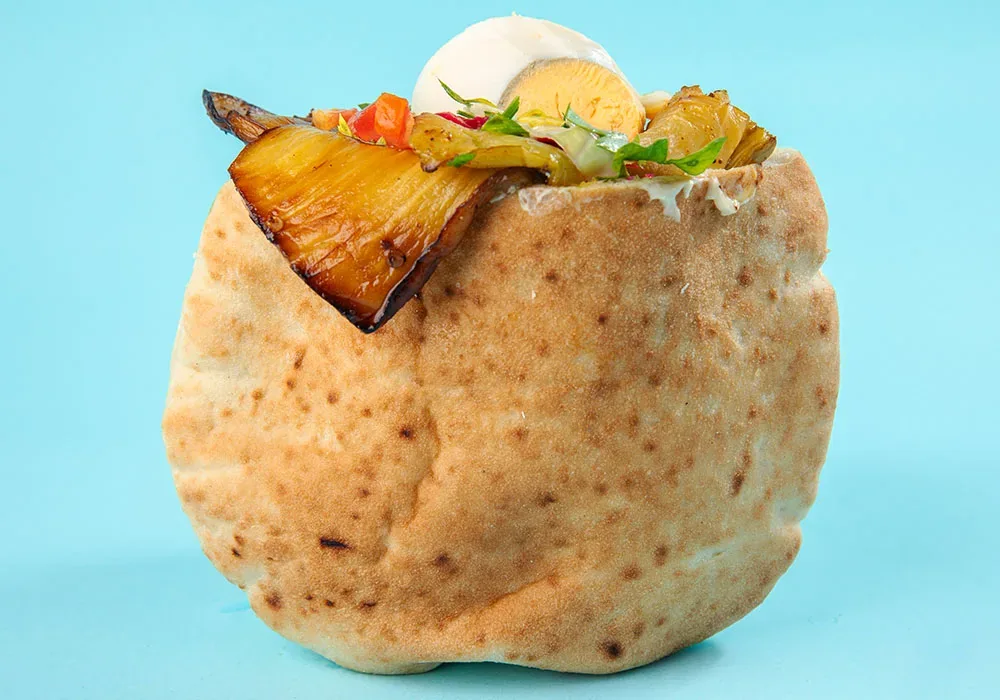
Sabich was born from the Shabbat breakfast of Iraqi Jewish homes: eggplant fried on Friday, eggs cooked all night in the pot of hamin, and boiled potato. In Israel, at the kiosks of Ramat Gan in the 1950s and 1960s, it all went into pita with tahini, salad and amba, and sabich became a national street food. The common story ties the name to a vendor called Sabich, one of the first to sell the dish; another links it to the Arabic word sabah, morning.
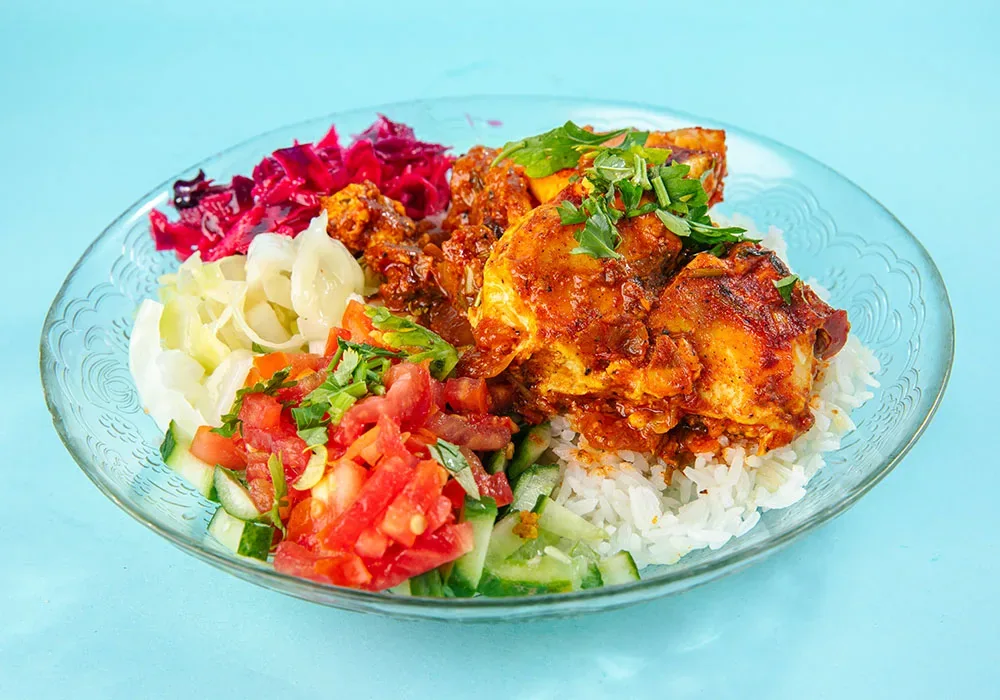
Shakshuka came from North Africa, from Tunisia, Libya and Morocco, with the immigrants, and became one of the best known Israeli breakfasts in the world. Sabtucha takes the best of both: the structure of the sabich and the egg of the shakshuka. The soft yolk breaks inside the pita and becomes a sauce that coats the eggplant, while the tomato sauce adds the sourness and sweetness that in an ordinary sabich come only from the amba.
What makes Sabtucha itself
In an ordinary sabich the egg is a dry, firm element; in sabtucha it is warm and liquid. That changes the whole balance: the soft yolk replaces some of the tahini, and the tomato sauce replaces some of the amba. The challenge is the pita. A soft egg and a wet sauce can turn it into a sponge, so the sauce is reduced until it is as thick as a spread, the eggplant goes in first as a protective layer, and everything is assembled just before the first bite.