Hummus

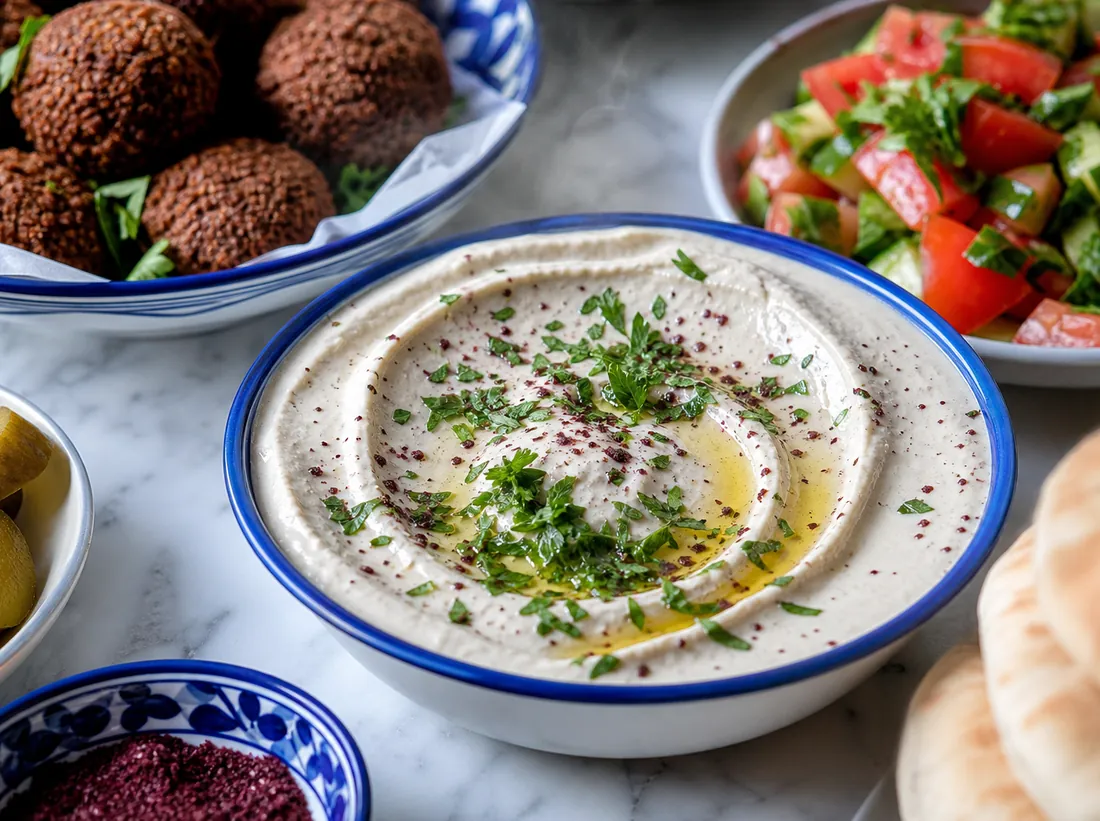
Hummus is a warm purée of chickpeas cooked until they collapse, blended with raw tahini, lemon and garlic until it turns smooth and fluffy. In Lebanon, Syria, the Palestinian towns and Israel it is a breakfast and lunch meal, eaten by wiping it up with pita and raw onion.

Quantity calculatorOrder Hummus

VeganVegetarianGluten freeDairy freeParve

Updated

HummusIllustration
Time2 h 5 minCook 1 h 30 min · + Soak 12 h
Amount8 portions1.8 kg
Per portion545 kcal21.3 g protein · a 220 g portion
Cost of the pot₪24for the pot, about ₪3 a bowl

The story of Hummus

Hummus is simply the Arabic word for chickpeas, and the full name of the dish is hummus bi tahini, chickpeas with tahini. Chickpeas were among the first legumes farmed in the Fertile Crescent, but the purée itself is younger: a 13th century cookbook from Baghdad has a recipe for mashed chickpeas with tahini, soured with vinegar rather than lemon and with no garlic. Lemon and garlic, which now seem essential, came later.

Across the Levant hummus is everyday food, and in Israel it became something close to a national dish within a few years of the state's founding. Jews from Arab countries knew it from home, and the hummus places in Arab towns and villages became somewhere everyone drove to. Between 2008 and 2010 Lebanon and Israel competed for the world record for the largest plate of hummus, in the village of Abu Ghosh near Jerusalem and in a village near Beirut, and the last record, the Lebanese one, passed ten tonnes.

What makes Hummus itself

Good hummus starts with chickpeas cooked far longer than seems reasonable, until one crushes between your fingers with no hard core at all. Tahini is not an extra but half of the flavour: Israeli hummusiya style uses roughly one part tahini to three parts cooked chickpeas, which is why it is so creamy and pale. Temperature matters just as much. The chickpeas are blended hot, and the hummus is served warm or at room temperature, never straight from the fridge.
Hummus for any number of people

Change the number of people and the portion size, and every ingredient updates in grams, with the cost, calories and protein per portion.

Portion size
Units
1.8kg of food
3Pot to use, litres
₪24Cost of the pot
₪3.0per portion
545kcal per portion
21.3g protein per portion
IngredientAmountCost
The chickpeas
Dried chickpeas, small ones500 g₪8.3
Baking soda, half for soaking and half for cooking10 g₪0.2
Tahini and seasoning
Raw tahini from hulled sesame300 g₪8.9
Fresh lemon juice90 g₪1.8
Garlic cloves12 g · 4 pcs₪0.4
Salt12 g₪0.0
Ground cumin2 g₪0.2
Ice cold water150 g
To serve
Olive oil60 g₪3.2
Sweet paprika2 g₪0.2
Chopped parsley10 g₪0.5
Send on WhatsApp

Shelf prices at a large Israeli chain and specialty shops, October 2026. Nutrition from the ingredients in grams, before cooking.

How many calories in Hummus? Nutrition facts and calorie calculator

Change the amount of any ingredient, drop one, or pick a lighter version, and the numbers per serving update at once: calories, fat, carbs, protein, sodium and fibre.

Hummus has 248 calories per 100 g. A 220 g serving made with our recipe has 545 calories: 21.3 g protein, 33.3 g fat and 29.2 g carbohydrates.

Lighter

Ingredients, for the whole recipe

  • 500 g228 kcal per serving
  • 10 g0 kcal per serving
  • 300 g249 kcal per serving
  • 90 ml3 kcal per serving
  • 4 pcs2 kcal per serving
  • 12 g0 kcal per serving
  • 2 g1 kcal per serving
  • 60 ml61 kcal per serving
  • 2 g1 kcal per serving
  • 10 g0 kcal per serving

What each add-on adds to Hummus

Values for the amount in the row, from the national food database.

Add-onCaloriesProtein, gFat, g
A tablespoon of oil122013.8
A tablespoon of raw tahini1003.69

How to make Hummus

In cook mode the screen stays on, tap a step when it is done, and the timers run next to each step.
  1. Soaking: rinse the chickpeas, cover with three times their volume of cold water and 5 g of baking soda, and soak for 12 to 24 hours in the fridge. They will roughly double in weight.
  2. Drain and rinse well, put them in a large pot, cover with 3 litres of fresh water, add the second 5 g of baking soda and bring to a boil.
  3. Skim off the foam and any skins that float, lower to a gentle simmer and cook for 60 to 90 minutes, until a chickpea crushes easily between thumb and finger. In a pressure cooker: 20 to 25 minutes once it reaches pressure.
  4. Keep a cup of the cooking liquid and 100 g of whole chickpeas for serving, and drain the rest while still hot.
  5. While they cook, blend the garlic with the lemon juice and salt in a food processor and leave for 10 minutes so the garlic's harshness softens.
  6. Add the hot chickpeas to the processor and blend for 3 minutes without stopping, until you have a thick, smooth paste.
  7. Add the tahini, the cumin and the lemon and garlic mixture, and blend for 2 more minutes, scraping down the sides once.
  8. With the motor running, add the cold water a spoonful at a time and blend for another 2 to 3 minutes until the hummus is pale and fluffy. Leave it a little looser than you want, because it firms up as it cools.
  9. Taste and correct the salt and lemon, then let it rest for 15 minutes so the flavours settle.
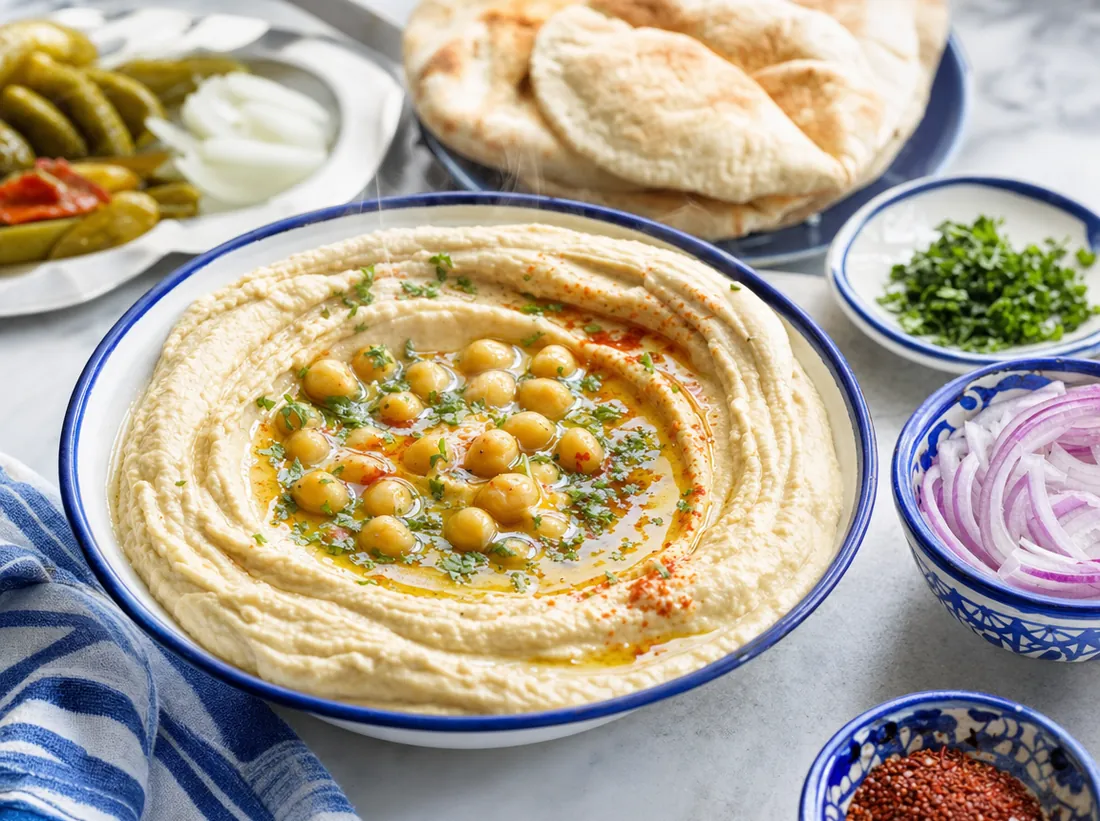
  10. Spread it on a plate with circular strokes of the back of a spoon and make a well in the centre. Fill it with olive oil and the warm chickpeas, and sprinkle with paprika and parsley.

The science of Hummus

Kitchen science

Why baking soda goes into hummus

The cells of a chickpea are glued together by pectin, and the skin is mostly cellulose and hemicellulose. Baking soda raises the pH of the water, and in alkaline conditions pectin breaks down much faster, so the chickpeas soften sooner and the skins loosen. In hard water, calcium and magnesium reinforce the pectin and slow the softening; the soda counteracts that. Too much soda gives a soapy taste and a darker colour.

Kitchen science

How to soak chickpeas for hummus, and why

Water enters a dried chickpea mainly through the hilum, the tiny scar where it was attached to the pod, which is why soaking is slow. After 12 hours the chickpea has nearly doubled in weight and cooks quickly and evenly, with the centre softening at the same pace as the outside. In summer heat, soaking water starts to ferment within hours, with bubbles and a sour smell, so soak in the fridge.

Kitchen science

Why you blend the chickpeas hot

During cooking the starch inside the chickpea absorbs water and softens. As it cools, the starch chains realign in a process called retrogradation, and the texture becomes dense and grainy. Hot chickpeas blend into a far smoother paste, which is also why hummus firms up in the fridge and loosens again with a spoonful of hot water.

Kitchen science

The emulsion: tahini, lemon and ice water

More than half of raw tahini is sesame oil. Blended at length with water, the oil breaks into tiny droplets, and sesame proteins and chickpea starch coat them and keep them from merging. The motor warms the hummus, and ice water keeps it cold enough to trap small air bubbles. Those bubbles give hummus its pale colour and airy texture.

Kitchen science

Hummus on a long buffet table: food safety

Hummus is moist, low in acid and rich in protein, and between 5 and 60 degrees Celsius bacteria multiply in it quickly. Cool cooked chickpeas within two hours and keep them below 5 degrees. At an event, do not leave hummus out for more than two hours, and on a hot day set the bowl on ice.

Hummus in every kitchen

Israeli, hummusiya style

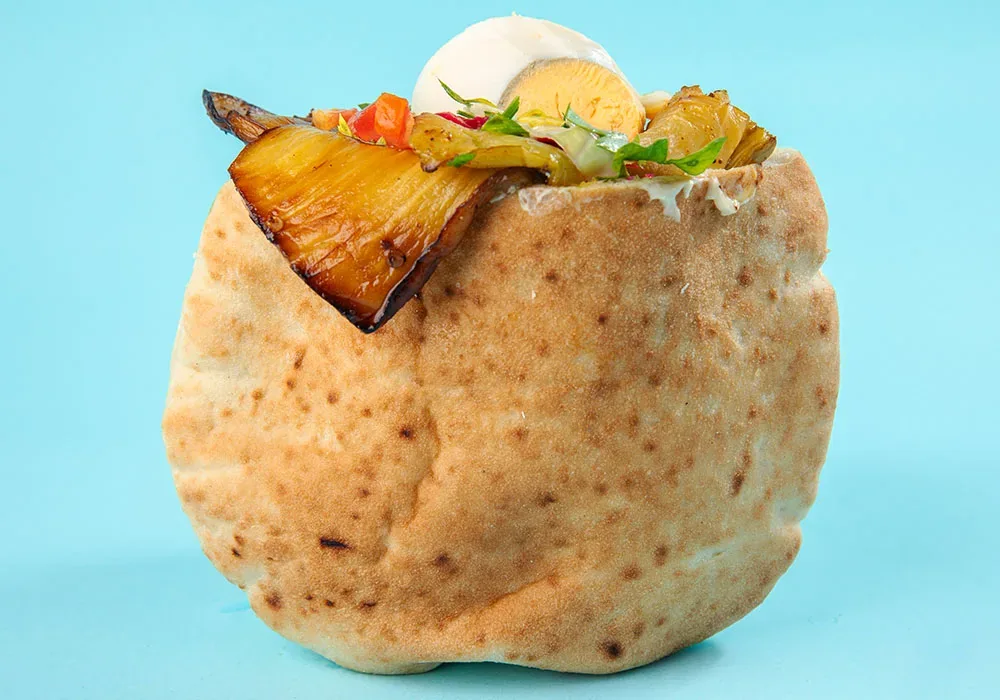
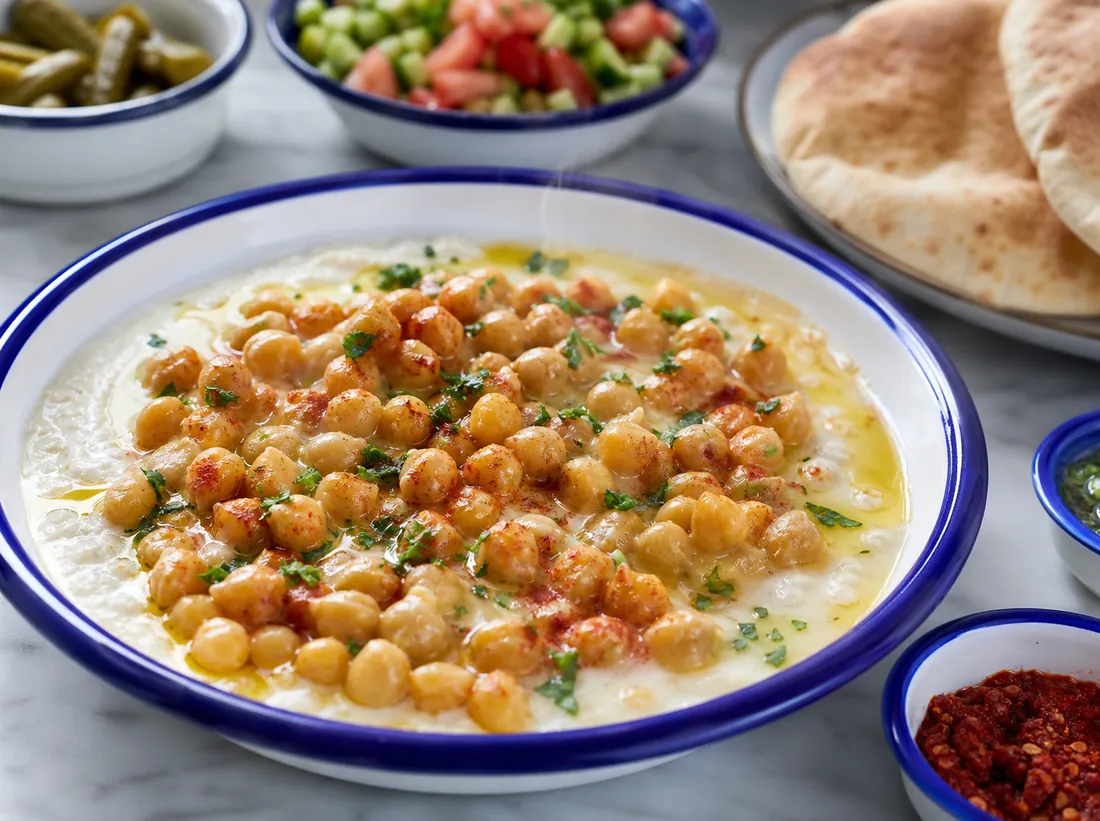
Plenty of tahini, a creamy, fluffy texture, served warm on a wide plate with a well of olive oil in the middle. On top go masabacha, ful, a hard boiled egg, mushrooms or spiced minced meat.

Lebanese

Very smooth, sharper with lemon and garlic, and usually served at room temperature as part of the mezze, with olive oil and paprika or hot red pepper. Hummus topped with minced meat and pine nuts is a Lebanese classic.

Palestinian and Galilee

Warm hummus, sometimes coarser, with whole chickpeas and a sauce of lemon, garlic and hot green chilli. In Jaffa, Akko, Nazareth and the Galilee villages it is a breakfast that is sold out by lunchtime.

Syrian, with fatteh

In Syria hummus often comes with fatteh: toasted bread, warm chickpeas and yoghurt mixed with tahini. Fatteh with yoghurt is a dairy dish, so it is served without meat.

Egyptian

In Egypt hummus is often seasoned with cumin, and it lives in the shadow of ful and ta'ameya, the country's everyday breakfast.

Hummus with meat

Minced beef or lamb fried with onion, baharat and pine nuts, spooned hot over the hummus. The plate becomes a meat dish, so nothing dairy is served with it.

Common Hummus problems and how to fix them

My hummus is grainy, not smooth

The chickpeas were undercooked or blended cold. Cook them until one crushes without effort, blend them hot for 3 minutes before adding the tahini, and give the processor another 2 to 3 minutes with the ice water.

My chickpeas will not soften even after hours

The chickpeas are old, the water is hard, or something acidic went into the pot. Add half a teaspoon of baking soda and keep cooking; next time buy fresh chickpeas and use a pressure cooker. Lemon and tomato go in only once the chickpeas are soft.

My hummus tastes soapy

Too much baking soda. Use no more than 5 g per 500 g of chickpeas at each stage, rinse well after soaking and skim the foam while cooking. If it has already happened, a little more lemon masks it.

My hummus is bitter

Bitterness nearly always comes from the tahini: old, over roasted or made from unhulled sesame. Taste the tahini before adding it. Raw garlic blended for a long time also adds bitterness, and steeping it in lemon softens it.

My hummus went hard in the fridge

That is the starch realigning in the cold. Take the hummus out half an hour before serving and stir in a spoonful or two of hot water or cooking liquid until it is soft again.

My hummus is too runny

Too much water went in. Wait half an hour, because it thickens as it cools; if it is still runny, blend in more cooked chickpeas or another spoonful of tahini.

Storing, freezing and reheating

3 days

In the fridge

1 month for finished hummus, 3 months for cooked chickpeas

In the freezer

2+4

To cool

Bring it from 60 to 21 °C within two hours and down to 5 °C within four more. Split a big pot into shallow boxes.

75 °C

Reheating

Never heat hummus in a pot. Take it out of the fridge half an hour ahead and stir in a spoonful of hot water; for warm hummus, set the bowl over a pan of boiling water for 5 minutes, stirring.

Nutrition of Hummus

From our recipe, per bowl and per 100 g, next to the national food database.

ServingkcalProtein, gFat, gCarbs, gFibre, g
Our recipe, a 220 g portion54521.333.329.215.2
Our recipe, 100 g2489.715.113.36.9
Typical Hummus, 100 g26910.817.612.07.1

What the ingredients of Hummus cost

What each ingredient costs in one pot, and where to buy it.

IngredientPriceIn this potWhere to buy
Raw tahini from hulled sesame₪30 per kg₪8.9Supermarket
Dried chickpeas, small ones₪16 per kg₪8.2Supermarket
Olive oil₪53 per litre₪3.2Supermarket
Fresh lemon juice₪20 per litre₪1.8Supermarket
Chopped parsley₪4.9 each₪0.5Greengrocer
Garlic cloves₪34 per kg₪0.4Greengrocer
Baking soda, half for soaking and half for cooking₪24 per kg₪0.2Supermarket
Ground cumin₪86 per kg₪0.2Supermarket
Sweet paprika₪86 per kg₪0.2Supermarket
Salt₪2.1 per kg₪0Supermarket

Shelf prices at a large Israeli chain and specialty shops, October 2026, VAT included. Vegetable prices change with the season.

Hummus and its culture

The hummusiya is an institution of its own. It opens in the morning and closes when the pot is empty, sometimes by lunchtime. You eat without cutlery, wiping the plate with pita and using a wedge of raw onion as a spoon, and by the end of the meal everyone knows exactly which hummusiya is the best, and it is never the same one. On Saturdays many Israelis drive to Jaffa, Akko, Nazareth or Abu Ghosh just for a plate of hummus.

At home hummus is a fixture of the Shabbat and holiday salad spread, and in Jewish communities abroad it long ago moved from the Israeli kitchen to the supermarket shelf. For a synagogue kiddush, a bar mitzvah, an office lunch or a community evening, a big tray of hummus with pita and warm chickpeas is the simplest way to feed a crowd, and a hummus bar with toppings to choose from has become a favourite corner at events.

Make Hummus a meal

Shabbat

Ready Shabbat food

Soup, hamin, mains and sides, with a quantity calculator and prices.

Plan Shabbat
Hosting

Hosting trays

9 trays to go with the soup, with a planner by number of guests.

Tray planner
Events

Catering

A whole menu in grams per guest, with a reheating table.

Menus

What to serve with Hummus

Serve on a flat plate with warm pita, quarters of white onion, pickles and a sauce of lemon, garlic and hot green chilli. On top: warm chickpeas, ful, a hard boiled egg or masabacha.

The cuisine behind Hummus

Lebanese

Lebanese cuisine

Hummus is simply the Arabic word for chickpeas, and the full name of the dish is hummus bi tahini, chickpeas with tahini. Chickpeas were…

Lebanese cuisine

Hummus in large quantities: events, offices and communities

How much of everything by number of guests, at a 220 g portion. For trays, catering and community kitchens.

Guestskg of food3 kg traysCost of ingredients
255.52₪74
50114₪148
100228₪296
2004415₪592
50011037₪1,480

Every ingredient for any number of guests is in the calculator above: type the number of people.

Order Hummus

A ready pot for Shabbat, an event or the office, ordered ahead.

  • Cooked to order, for Shabbat, an event or the office.
  • Tell us how many people and when, and we send a quote.
  • Delivery in Tel Aviv from ₪35, free over ₪750.

Order Hummus for a large event

Large orders in Israel and abroad: events, offices, synagogues, communities and institutions.

  • In Israel: cooked in Tel Aviv and delivered to events in the area, and to large events anywhere in the country on a quote.
  • Abroad: for communities, events and restaurants. Tell us where, how many and when, and we come back with a quote and options.
  • Institutional quantities and a shopping list for any number of guests, in the calculator above.

Frequently asked questions

How long should I soak chickpeas for hummus?

12 to 24 hours in the fridge, in three times their volume of cold water, with 5 g of baking soda per 500 g. After soaking they nearly double in weight.

Can I make hummus from canned chickpeas?

Yes. Drain them, simmer for 15 to 20 minutes in fresh water with half a teaspoon of baking soda until very soft, and blend them hot. The flavour is less deep than with dried chickpeas, but the texture can be very smooth.

How long do chickpeas take in a pressure cooker?

20 to 25 minutes once the cooker reaches pressure, for chickpeas soaked with baking soda. Release the pressure slowly and check that one crushes easily; if not, give it 5 more minutes.

Can I make hummus without tahini?

Yes, with olive oil, lemon and cooking liquid, but it is a different spread: less creamy, sharper and darker. Tahini is what gives hummus its depth and its pale colour.

What is the difference between hummus, masabacha and mashawsha?

Hummus is a smooth purée. Masabacha is whole warm chickpeas in tahini and lemon. Mashawsha is warm chickpeas partly crushed with lemon, garlic and chilli. A hummusiya often serves all three on one plate.

How much hummus do I need for an event?

As a main plate, 200 to 250 g per guest. As one of several salads on a buffet, 80 to 100 g, which is about 5 kg for fifty people. Keep it chilled until serving and do not leave it out for more than two hours.

How do you make hummus with meat?

Fry chopped onion, add minced beef or lamb, baharat, salt and toasted pine nuts, and spoon it hot into the centre of the hummus. The dish is then meat, so no dairy is served alongside.

How many calories are in Hummus?

A 220 g portion of Hummus made with our recipe has about 545 calories and 21.3 g of protein. Per 100 g: 248 calories.

How much does it cost to make Hummus at home?

A tray or pot of 8 portions costs about ₪24 at Israeli shelf prices in October 2026, about ₪3 a portion. The calculator above works it out for any number of people.

Every dish

Home dishes of every community, each with a calculator, a price list and the science.

All the dishes