The story of Falafel
Nobody knows for certain where falafel was born. The usual view is that it is Egyptian, but the earliest written mentions in Egypt date only from the 19th century. In Egypt it is still made from dried, peeled fava beans and called ta'ameya, while in the Levant chickpeas replaced the fava, completely or in part. What is certain is that fried balls of soaked legumes were cheap everyday food across the Middle East long before falafel had an international name.
In the austerity years of the young State of Israel, falafel was a cheap and filling meal, and Jews from Yemen and the Arab countries, who knew it from home, opened stalls in the streets. Within a few years falafel in pita became the symbol of Israeli street food, and abroad it is known as one of Israel's national dishes, a title Palestinians and Arab countries still dispute.
What makes Falafel itself
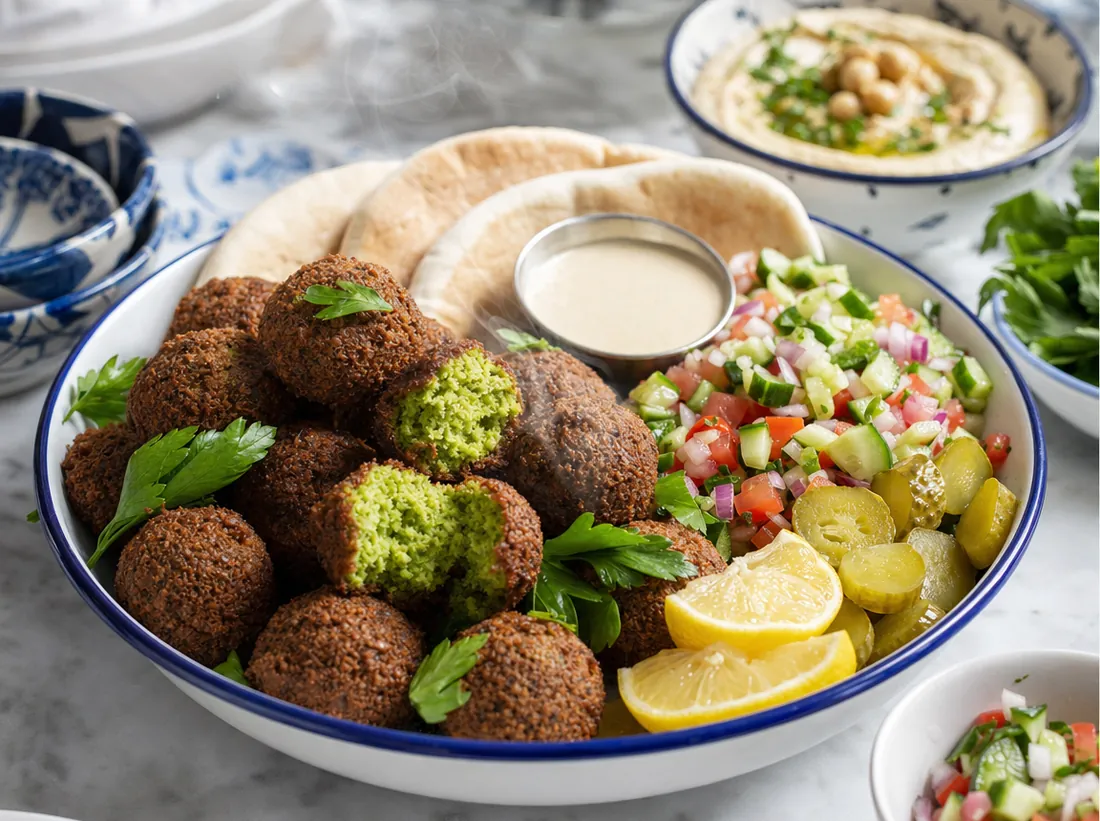
Real falafel is made from soaked chickpeas that have never seen boiling water. Their starch is still raw; it cooks only in the hot oil, gluing the ball together from the inside, which is why no flour or egg is needed. The balance of legume to herbs decides the colour: good Israeli falafel is green inside. And it is eaten at once. A falafel ball is at its best in the first minutes out of the oil, while the crust still crackles.