The story of Tabbouleh
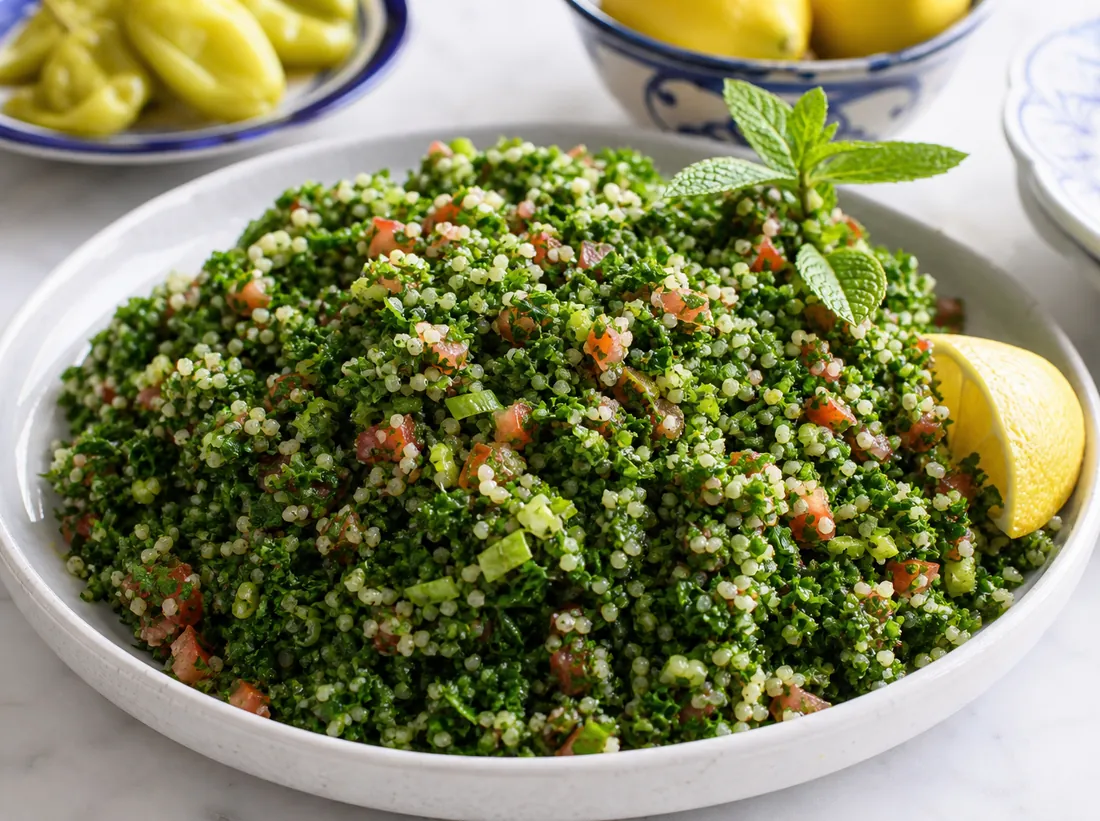
Tabbouleh was born in the mountain villages of Lebanon and Syria, where parsley, mint and wheat grow side by side. Bulgur, wheat that has been boiled, dried and cracked, was a staple of the mountains, and tabbouleh used it sparingly, almost as a seasoning. It is a fixture of the Lebanese mezze, and Lebanon even marks a national tabbouleh day every summer.
With the great Lebanese emigration, tabbouleh reached the Americas, Australia and Europe, and changed on the way: in France taboulé is a couscous salad, and in many places it became a greenish bulgur salad. In Israel tabbouleh is known from Arab cooking and the mezze, and many homes add more bulgur and sometimes cucumber, but anyone who has eaten tabbouleh in a Lebanese village remembers mostly green.
What makes Tabbouleh itself
In real tabbouleh the parsley is the salad, and the bulgur only holds the dressing. The cutting is the whole secret: completely dry leaves, a very sharp knife, and hair thin slices cut once, not chopped over and over. The bulgur is neither cooked nor soaked in water; it absorbs the tomato and lemon juice and softens inside the salad. And the seasoning is clearly sour, because lemon is what holds all that green together.