The story of Baba ganoush
Baba means father in Arabic, a term of affection, and ganoush may be a person's name. Nobody knows for certain who the name meant, and every family in the Levant tells its own story. What is agreed is that the dish is Levantine: aubergines over an open fire, tahini and lemon, with a slightly different balance in every country.
In Israel's austerity years aubergines were cheap and plentiful, and home cooks made dozens of dishes from them, some in place of meat. Since then, charring aubergines over the gas flame has become an Israeli home ritual: foil around the burner, the smell of smoke in the stairwell on Friday, and a bowl of aubergine and tahini salad waiting for the Shabbat meal.
What makes Baba ganoush itself
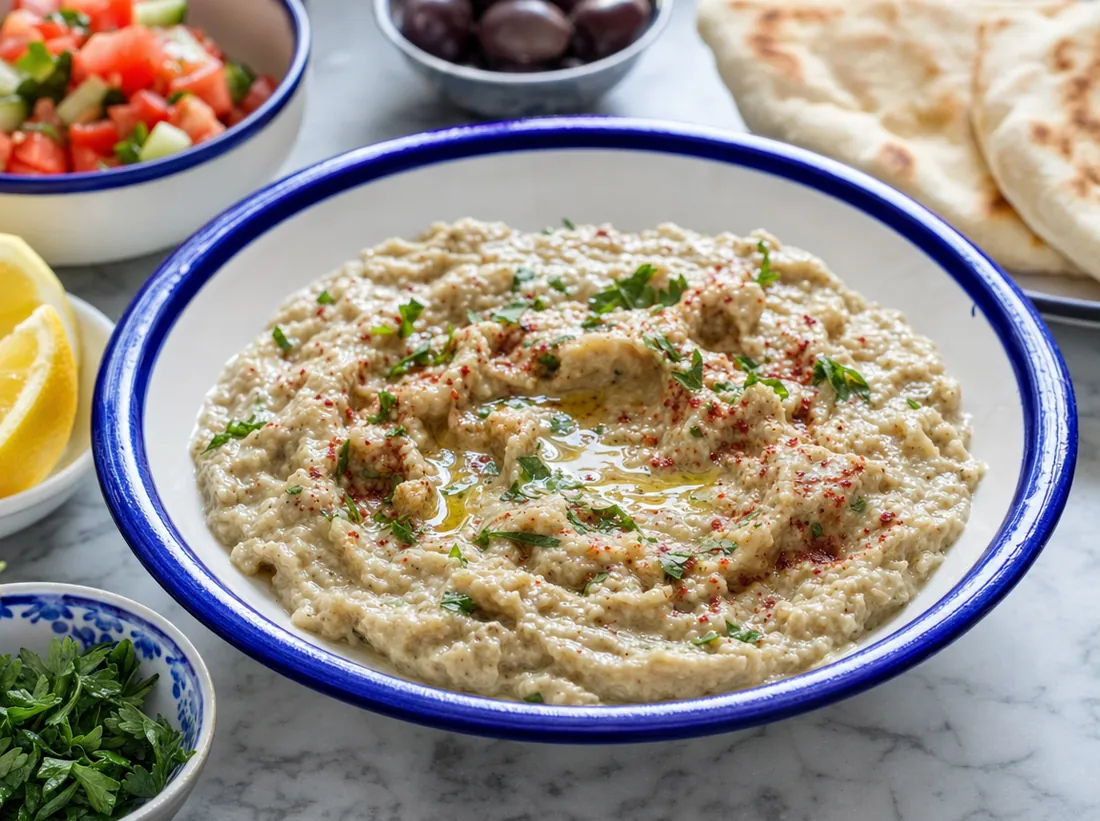
In baba ganoush the smoke is an ingredient, not a side effect. The skin has to char until it is black and cracking, because at that point the flesh inside is steaming in its own juice and picking up the taste of the fire. Then the brown, bitter liquid is drained away, and the tahini goes in by measure: enough to coat the aubergine, not enough to hide it. The texture stays slightly rough, because the aubergine is chopped with a knife, not blended.