The story of Mujaddara
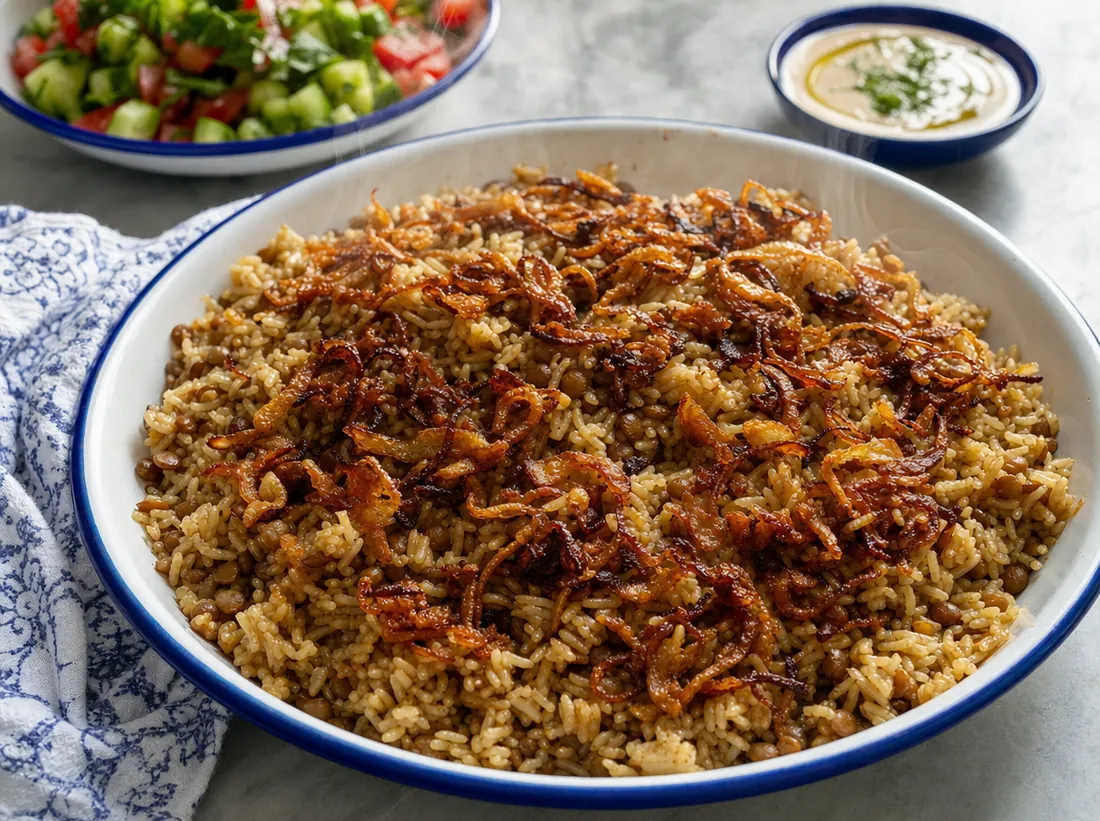
The name comes from Arabic and means pockmarked: the dark lentils are scattered among the pale grains of rice. A rice and lentil dish by this name already appears in a 13th century Baghdad cookbook, where it was served with meat at feasts. Without the meat it became, for generations, the food of the ordinary home: lentils, grain, onion and oil, four things found in every pantry in the Levant, Syria, Egypt and Iraq.
Many people link mujaddara to the lentil stew Jacob gave Esau in the Book of Genesis, a lovely cultural thread rather than a historical fact. What is certain is that the dish crossed every community and faith in the region: Arab Christians eat it during Lent, Druze and Galilee villages cook it with coarse bulgur, and Syrian and Egyptian Jews brought the rice version to Israel. Today it is in almost every Israeli home, from Thursday supper to the office lunch.
What makes Mujaddara itself
A good mujaddara has three textures: separate grains of rice, whole soft lentils and onions browned to the edge. The amount of onion surprises first timers, a kilo for a pot of 8, because frying takes away about three quarters of its weight. The oil the onions fried in goes back into the pot and seasons the rice, so the sweet, almost smoky taste of the onion is in every spoonful, not only on top. The lentils cook first on their own, since they need longer than the rice, and their cooking liquid becomes the rice water.