The story of Maqluba
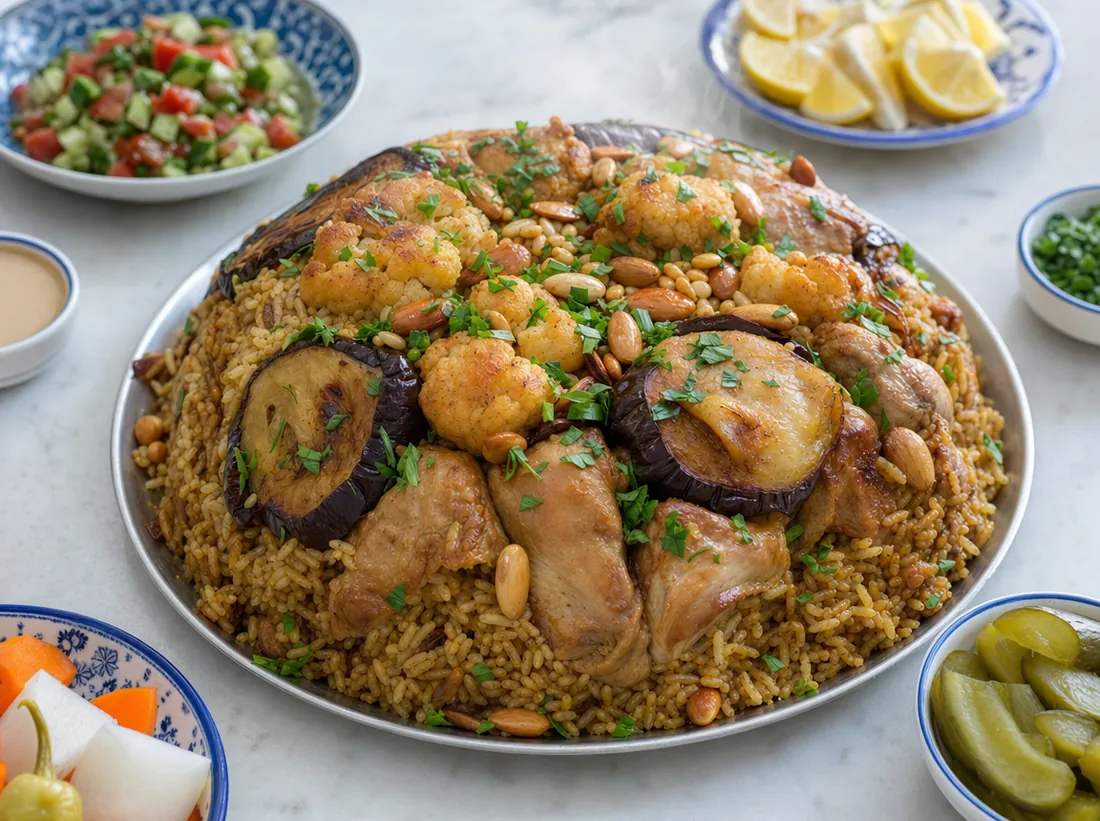
Maqluba is a festive, hosting dish of the Palestinian kitchen, and it is eaten in Jordan, Syria, Lebanon and Iraq too. It is a Friday dish for a big family: one wide pot that feeds eight to ten people, with chicken or lamb and the vegetables of the season, cauliflower in winter and aubergine in summer. Coastal cities also make it with fish.
In Israel maqluba is a dish of celebrations and holidays in Arab and Druze homes, and from there it reached many Jewish kitchens, at home and at events. Every family keeps its own order: some line the bottom with tomato slices, some start with potatoes, and some lay the chicken first so it takes the deepest colour. The name already appears in a medieval Baghdad cookbook, but there it described an entirely different dish, and the maqluba we know is a dish of homes rather than of books.
What makes Maqluba itself
What makes maqluba maqluba is the flip, and the whole recipe is built around it. The vegetables are fried first so they keep their shape and bring deep flavour, the rice is soaked so it cooks evenly under a heavy layer, and the liquid is exact: enough to cook the rice, not so much that it turns to porridge. After cooking comes the rest, a quarter of an hour in which the starch sets and the tower learns to stand on its own.