Persian food: 21 dishes, tahdig, gondi and ghormeh sabzi
Persian (Iranian-Jewish) cuisine: 21 dishes, from Chelo to Kabab koobideh, 16 ingredients and spices, 6 dates in the holiday calendar, and the community’s story in Israel. Every dish that has a page here is linked, with every ingredient in grams.
 Illustration
The dishes of Persian (Iranian-Jewish) cuisine
By when they are eaten: Shabbat, holidays, everyday and the street.
Persian (Iranian-Jewish) cuisine, for shabbat
4 dishes
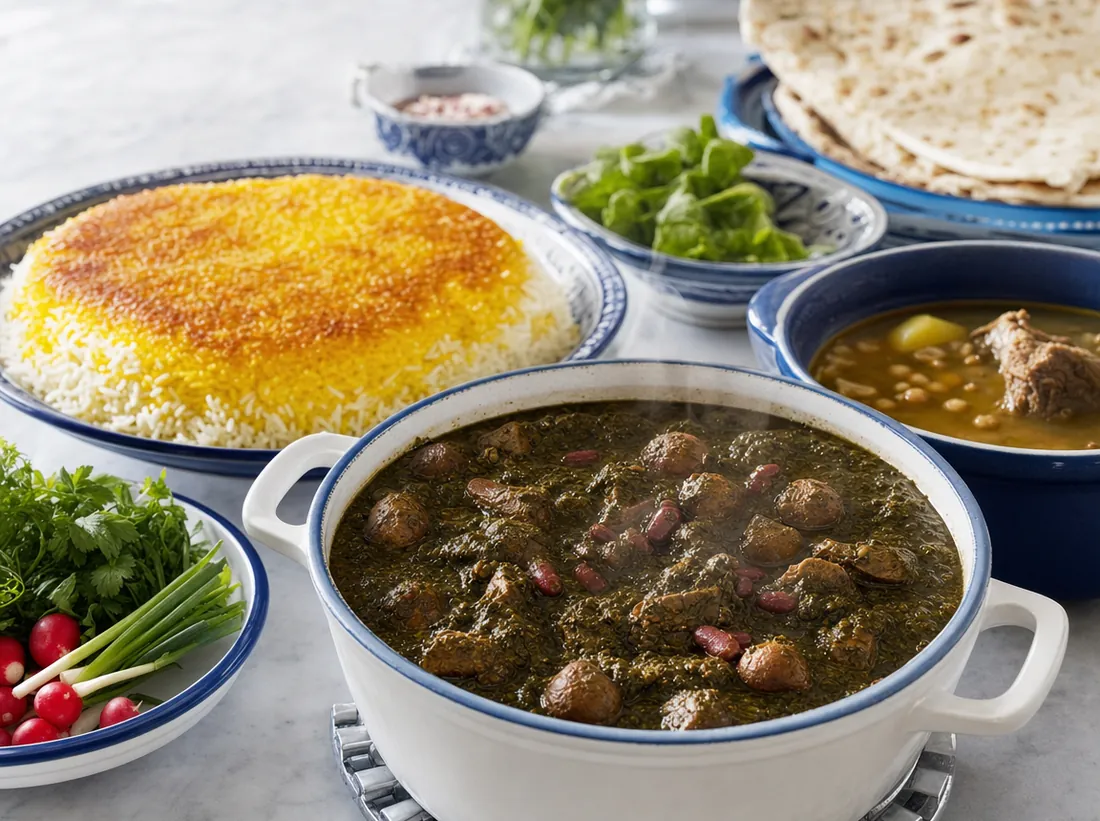
- Gondi: Chicken and chickpea-flour balls in soup, a Shabbat dish, with cumin and turmeric; served with bread and sabzi herbs
- Ghormeh sabzi: Herb stew with lamb or beef, dried lime (Omani lime) and red kidney beans
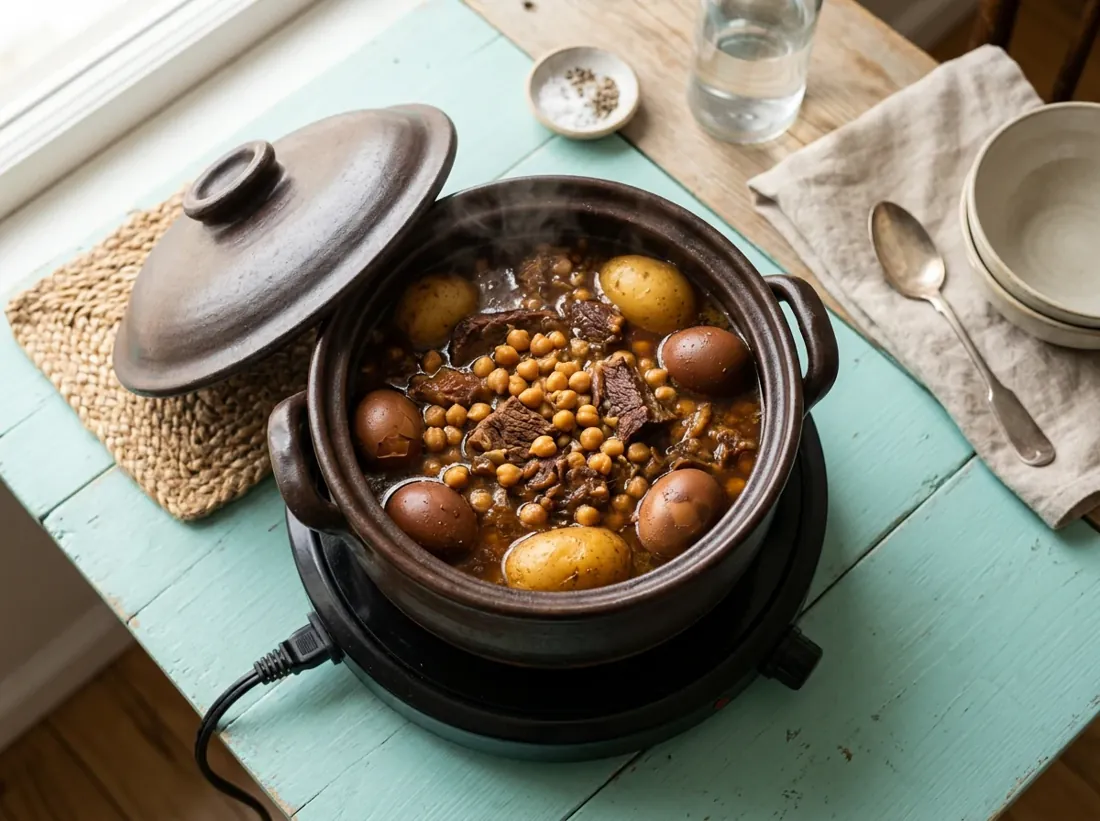
- Haleem: A Shabbat stew cooked overnight, like cholent or hamin; adapted for Shabbat without lighting a fire
- Gohoot: Persian hamin
Persian (Iranian-Jewish) cuisine, for holidays
4 dishes
- Fesenjan: Pomegranate and walnut stew
- Kuku sabzi: Herb fritter in eggs; appears in the Persian recipes category
- Persian love cake: Cake with cardamom, almonds and rose water
- Gaz and sohan: Traditional Persian sweets
Persian (Iranian-Jewish) cuisine, everyday
11 dishes
- Chelo: Rice that is partly boiled, drained and steamed
- Tahdig: The crispy rice at the bottom of the pot
- Ash reshteh: Soup of noodles, legumes and herbs
- Ash anar: Pomegranate soup
- Kufteh berenji: Patties of rice, sweet potato and herbs
- Baghali polo: Persian rice with fava beans and dill
- Adas polo: Rice with lentils
- Lubia polo: Rice with green beans; appears in search questions
- Sabzi khordan: A platter of fresh herbs
- Doogh: Salted yogurt drink
- Ash-e jo: Persian barley soup; no source in this sheet
Persian (Iranian-Jewish) cuisine, street food
2 dishes
- Kabab koobideh: Minced-meat skewer on saffron rice and sumac
- Faloodeh: Noodle and rose-water granita
This cuisine’s dishes in our kitchen
Each has a page with a photo, what is in it and every ingredient in grams.
The holiday calendar of Persian (Iranian-Jewish) cuisine
What goes on the table on each date.
| Date | Dishes | Note |
|---|---|---|
| Shabbat | Gondi, Haleem, Gohoot, Ghormeh sabzi | |
| Rosh Hashanah | Ash anar, Fesenjan | |
| Passover | Persian charoset | |
| Purim | Sweets | |
| Shavuot | Persian dairy dishes | The search 'Persian dairy food' appears on Google |
| Nowruz (Persian New Year, spring) | Kuku sabzi, Baghali polo | Celebrated in March |
Spice and ingredient glossary
The name in Hebrew, in the local language and in English, and what it is for.
| English | Local name | Hebrew | What it is |
|---|---|---|---|
| Saffron | زعفران | Saffron | |
| Sumac | سماق | Sumac | |
| Dried lime | لیمو عمانی | Dried lime | Khoresht sabzi |
| Barberries | زرشک | Barberries | |
| Rose water | گلاب | Rose water | |
| Advieh | ادویه | Advieh | Spice blend |
| Kashk | کشک | Kashk | Dried yogurt for stews |
| Pomegranate molasses | رب انار | Pomegranate molasses | |
| Walnuts | گردو | Walnuts | Fesenjan |
| Fenugreek leaves | شنبلیله | Fenugreek leaves | |
| Sabzi (herb mix) | سبزی | Sabzi (herb mix) | Parsley, coriander, leek, fenugreek |
| Dill | شوید | Dill | |
| Chickpeas | نخود | Chickpeas | Gondi |
| Fava beans | باقلا | Fava beans | |
| Lentils | عدس | Lentils | |
| Rice | برنج | Rice | The centre of the cuisine |
Techniques and vessels
How it is cooked, and in what.
Parboil, drain, steam
Boiling, draining and steaming with a towel under the lid; creates tahdig
Sabzi frying
Herbs fried before the stew
Skewer grilling
Koobideh
Khoresht stewing
Stews with rice on the side
Overnight Shabbat cooking
Haleem and gohoot, like hamin (12 to 18 hours)
Kashk drying
Dried yogurt
Sofreh
The meal is served on a cloth on the floor
Torshi pickling
Torshi
Regions and variants
The same dish, another city, another taste.
| Region | What is special |
|---|---|
| Tehran | Origin of gondi according to common belief |
| Isfahan, Shiraz, Hamadan, Kermanshah | Ancient Jewish communities |
| Iranian Kurdistan | Close to Kurdish and Iraqi food |
| Gilan and the Caspian Sea | Herbs and fish |
Persian (Iranian-Jewish) cuisine in Israel
How they came
Immigration 1948-1953 (scale not found in the sheet); after 1979 about 55,000 left Iran, of whom about 20,000 went to Israel by 1990
Where they settled
No single concentration; Jerusalem, Netanya, Kfar Saba and Tel Aviv according to the surveys
Markets and places
Shemshiri (99 Nahalat Binyamin, Tel Aviv): A centre of Persian food since 2000, catering and a Persian food market on Fridays. Salimi (80 Nahalat Binyamin): Gondi. Gourmet Sabzi (47 Levinsky): In the Levinsky market. HaAchim ('The Brothers'), Ibn Gabirol: A modern Persian restaurant on our pilot street; OAD 2023 recommendation.
Persian (Iranian-Jewish) cuisine in numbers
Israelis of Iranian-Jewish origin
Jews in Iran, 1968 / 1996 / 2025
Left Iran after 1979, of whom to Israel by 1990
Shemshiri on Nahalat Binyamin
Neighbouring cuisines
The same pots, other spices.
Iraqi (Iraqi-Jewish) cuisine
19 dishes, a spice glossary, a holiday calendar and the story in Israel.
To the pageMoroccan (Moroccan-Jewish) cuisine
22 dishes, a spice glossary, a holiday calendar and the story in Israel.
To the pageYemenite cuisine
21 dishes, a spice glossary, a holiday calendar and the story in Israel.
To the pageKurdish (Kurdish-Jewish) cuisine
21 dishes, a spice glossary, a holiday calendar and the story in Israel.
To the pageSyrian (Aleppo and Damascus Jewish) and Lebanese cuisine
25 dishes, a spice glossary, a holiday calendar and the story in Israel.
To the pageTunisian and Tripolitan (Libyan-Jewish) cuisine
28 dishes, a spice glossary, a holiday calendar and the story in Israel.
To the pageFrequently asked questions
What is gondi?
A soup with chicken and chickpea-flour balls, seasoned with cumin and turmeric. A classic Shabbat dish of Iranian Jews, served with bread and sabzi herbs.
What is tahdig?
The crispy rice layer at the bottom of the pot, the result of cooking the rice in three stages: boiling, draining and steaming.
How do you make Persian rice?
The rice is partly cooked in boiling water, drained, and steamed in a pot with oil and a cloth under the lid until tahdig forms.
What is khoresht sabzi?
A herb stew with lamb or beef, red kidney beans and dried lime.
What is Omani lime?
A sun-dried lime that gives deep sourness to stews such as khoresht sabzi.
What is the difference between Persian and Iranian?
In the community's Hebrew, 'Persian' is the traditional name; 'Iranian' denotes the country. The search 'Persian food' is 14 times bigger than 'Iranian food'.
What is haleem?
A Shabbat stew cooked overnight, close to cholent and hamin.
Is Persian food spicy?
Not usually: the flavour is built on herbs, sourness and dried fruit, without heavy heat.
What is eaten at Nowruz?
Herb rice with fish (sabzi polo mahi) and kuku sabzi are traditional Nowruz foods. Nowruz is the Persian new year, in spring.
Where can you eat Persian food in Tel Aviv?
On Nahalat Binyamin (Shemshiri, Salimi), in the Levinsky market (Gourmet Sabzi) and on Ibn Gabirol (HaAchim).
A meal from this cuisine, for a team or an event
How many people, when and what they like. We come back with a proposal.