The story of Couscous
Couscous is one of the oldest foods of North Africa, with its roots among the Berbers, the indigenous peoples of the Maghreb. Rolling semolina by hand and steaming it in a perforated vessel over a pot is a tradition centuries old, from Libya and Tunisia to Algeria and Morocco. Women rolled large batches together, dried them in the sun and kept them for months. In December 2020 the knowledge and practices around couscous were inscribed on UNESCO's list of the Intangible Cultural Heritage of Humanity, in a joint nomination by Algeria, Mauritania, Morocco and Tunisia.
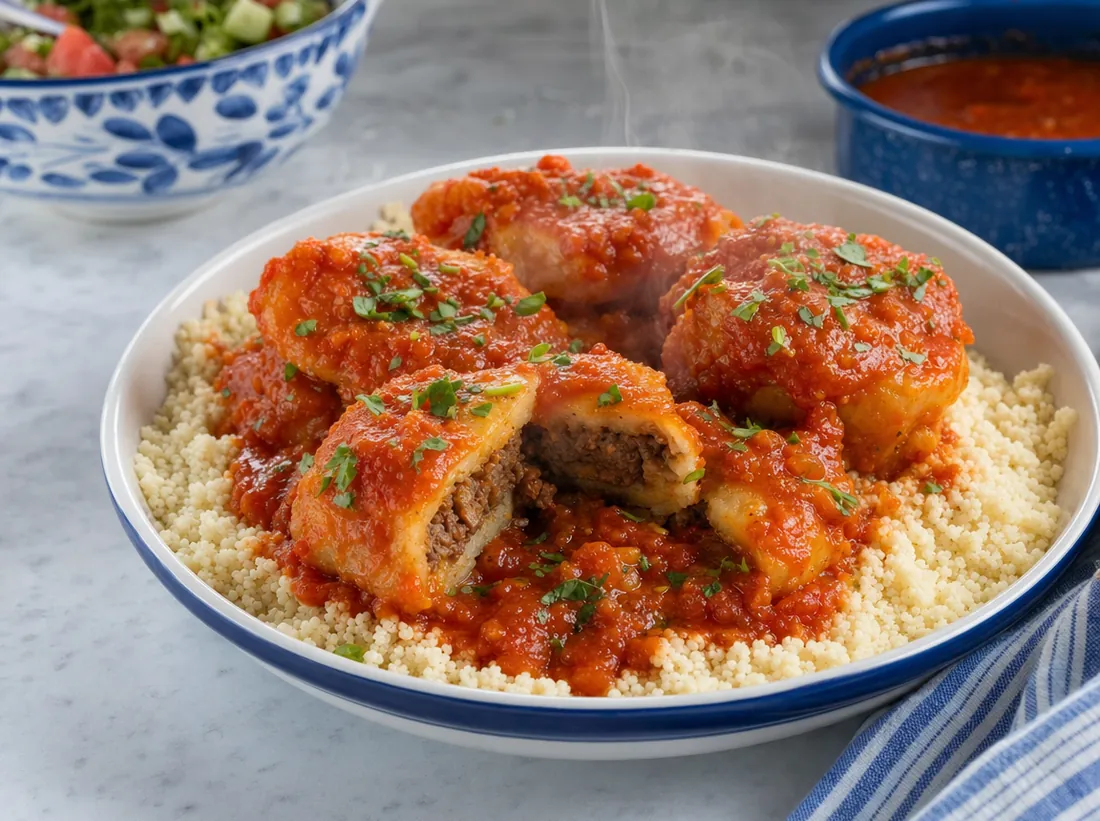
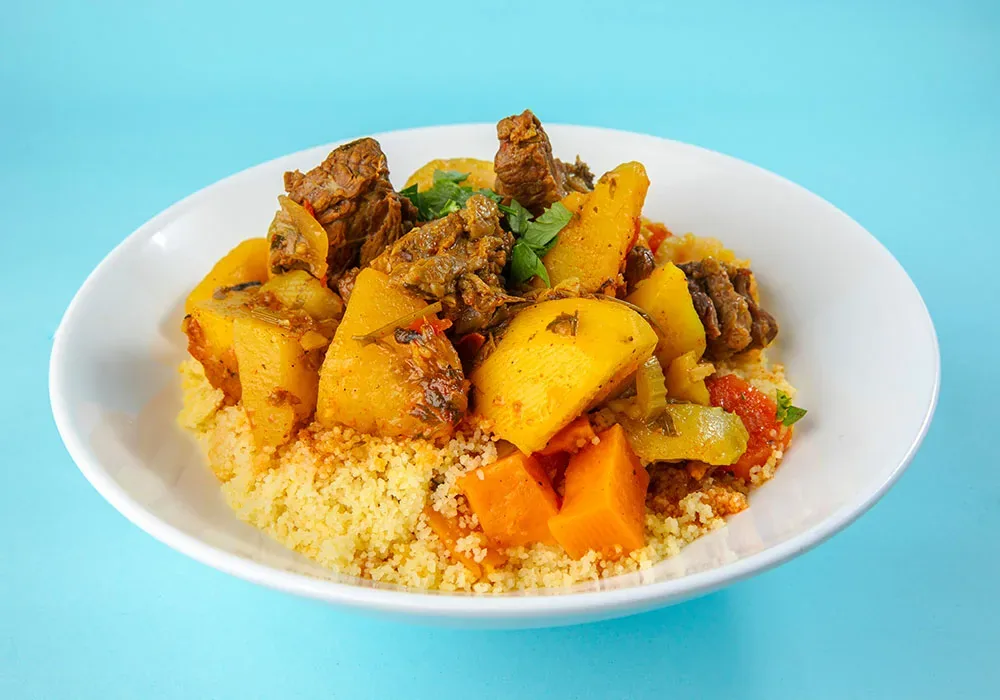
North African Jews brought couscous to Israel in the 1950s and 1960s, along with the keskes, the double pot in which the grains steam above the broth. In Moroccan homes it is Friday night dinner or Shabbat lunch, Libyan Jews serve it with mafrum, and in the coastal cities of Tunisia it is also made with fish. Today most people buy ready couscous, but many families still have someone who rolls it by hand for holidays and celebrations, and anyone who has tasted it knows the difference.
What makes Couscous itself
Real couscous is not boiled, it is steamed. Steam from the meat pot rises through the holes of the keskes, cooks the grains and carries the aroma of turmeric, onion and beef into them, without the grain ever swimming in liquid and turning to porridge. Between steamings the couscous is tipped into a wide bowl, the clumps are broken up, salted water and oil are sprinkled over, and back it goes. Three rounds like this give plump, tender, separate grains that melt in the mouth and soak up broth without falling apart.