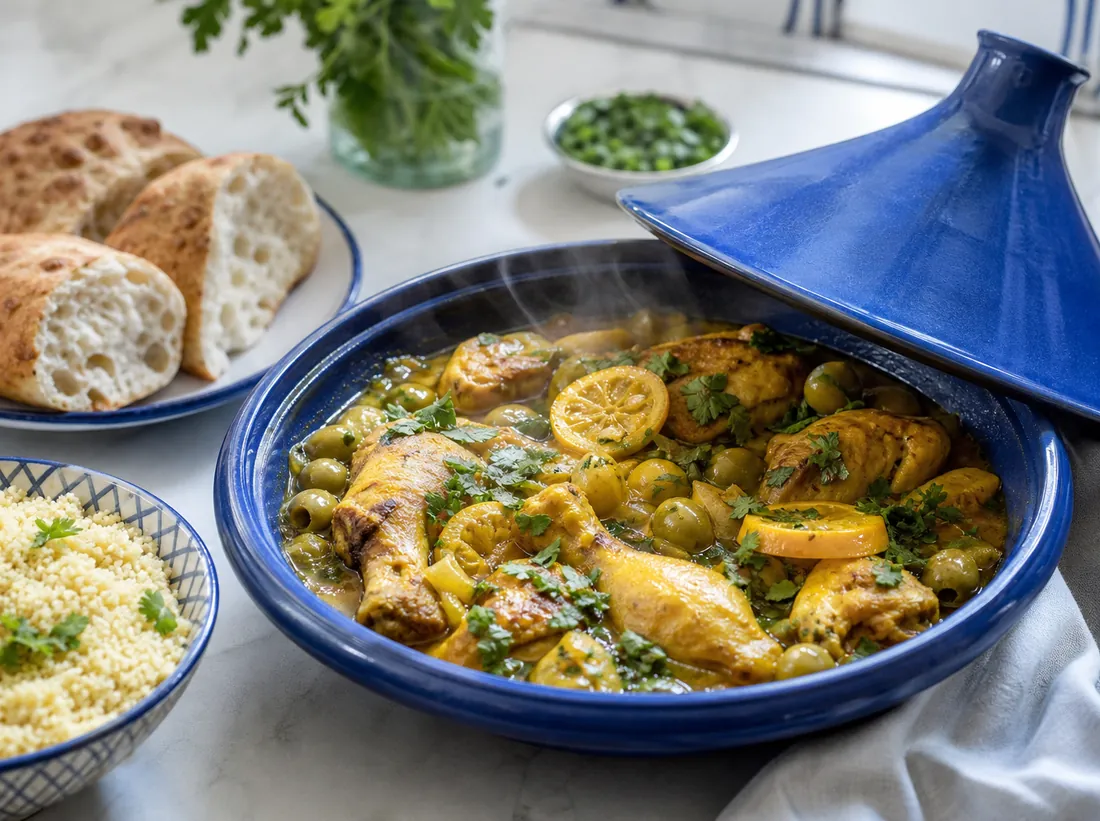
The story of Tagine
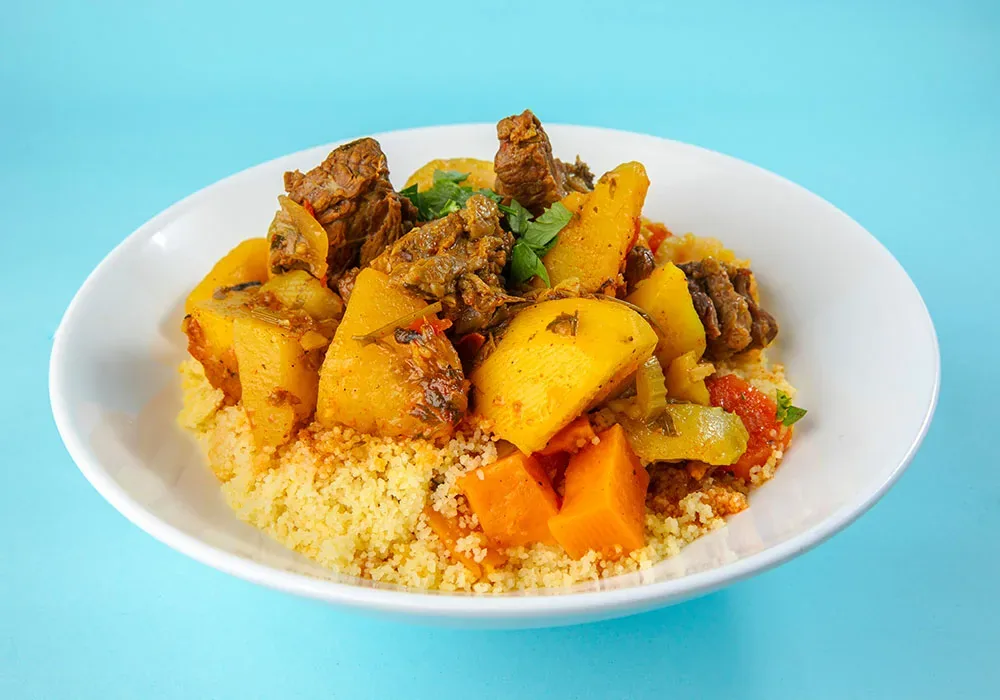
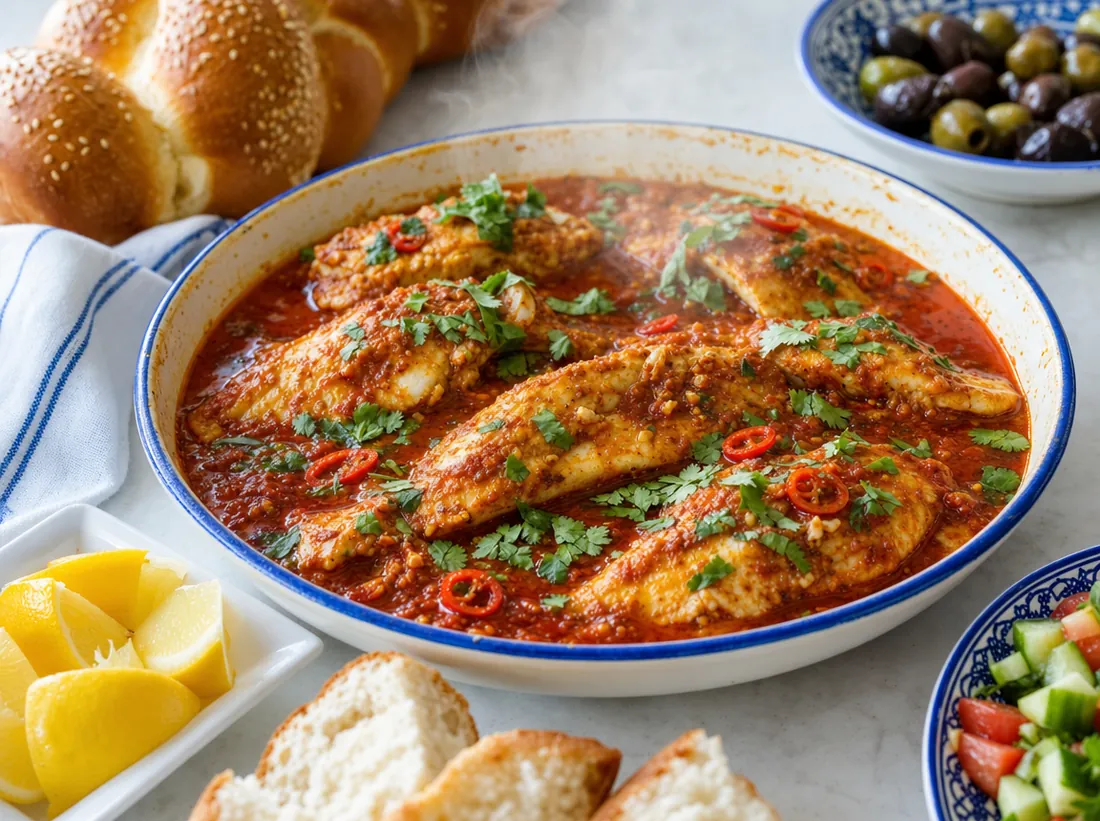
The tagine began with the Berbers, the native peoples of North Africa, and its name is the name of the vessel: a wide, shallow clay dish with a tall cone-shaped lid. In Morocco it is set over a small charcoal brazier and cooked slowly in very little liquid, and almost anything can go in: chicken, lamb, beef, meatballs, fish or vegetables, with preserved lemon, olives, dried fruit and almonds.
Moroccan Jews brought the tagine to Israel in the great waves of immigration of the 1950s and 1960s. In Moroccan homes it stands on the table on Friday night and at holidays, beside the salads, and at Rosh Hashanah a sweet tagine of meat with prunes is served so the year will be sweet. Clay tagine pots are now sold in markets all over the country, and the word itself has become a general name for a Moroccan stew.
What makes Tagine itself
A tagine cooks with almost no water. The tall lid traps the steam, which condenses in the cooler top of the cone and drips back onto the meat, so the sauce concentrates instead of boiling away. The grated onion at the bottom melts as it cooks into a thick golden sauce with no flour. Preserved lemon brings a deep, salty sourness that fresh lemon cannot, and the olives go in at the end so they do not oversalt everything. Thighs and drumsticks with skin and bone are the right choice: they stay juicy even after an hour and a half of slow cooking.