Preserved lemon
Preserved lemon is lemon cured for weeks in salt and its own juice, until the rind turns soft, translucent and mellow. A staple of North African cooking, it gives chicken tagine with olives, fish, salads and dressings a salty, rounded lemon flavour that fresh lemon cannot. And it is parve.
 Illustration
What is Preserved lemon
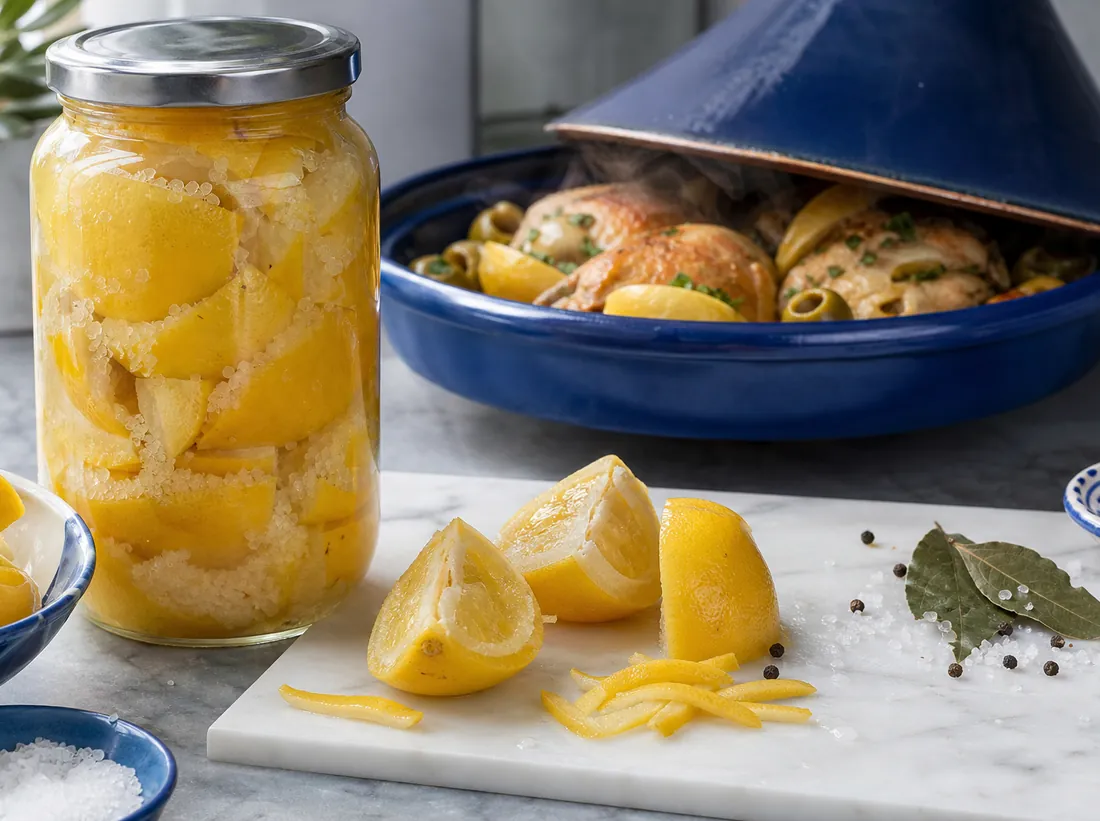
Preserved lemon is made from whole lemons cut almost into quarters, packed with coarse salt into a jar and covered with lemon juice. Over three to four weeks the salt draws out the juice, the rind softens and turns translucent, and the sharp bitterness of fresh peel becomes a rounded, slightly floral and savoury lemon flavour. In Morocco it is called l'hamd markad, and in the markets it is sold from barrels.
In the kitchen the rind is the main part: it is rinsed, the flesh is scooped out, and the rind is cut into strips or chopped fine. It belongs above all to Moroccan cooking, in chicken tagine with olives, in fish and in salads, and Moroccan Jews brought it into Israeli kitchens. Israel also has a local jar: slices or pieces of lemon pickled with salt, paprika and oil, served beside falafel, sabich and fish.
Price and where to buy
250 g jar, wedges
per kg
Where
Preserved lemon in jars is on the pickles shelf of some Israeli supermarket chains, as wedges, as a paste or as pickled lemon in oil. Moroccan-style lemons by weight, plain or spiced, are at the pickle stalls of Carmel Market and Hatikva Market in Tel Aviv and Mahane Yehuda in Jerusalem, and at Moroccan delis. Homemade is cheaper: a kilo and a half of lemons and 150 g of salt, about 20 shekels, fill a 1 litre jar.
Shelf prices, October 2026, VAT included.
Kinds of Preserved lemon
Moroccan, salt only
Lemons, coarse salt and lemon juice, nothing else. The classic for tagine, with the cleanest lemon flavour.
Spiced
The same jar with bay leaves, black peppercorns, coriander seed, a cinnamon stick, cloves or a dried chilli. The spices scent the brine and the rind, which suits fish, salads and meat.
Israeli pickled lemon in oil
Sliced or chopped lemon cured in salt, then mixed with sweet or hot paprika and oil. It is eaten as it is, as a condiment beside falafel, sabich, fish and grilled meat, more than it is cooked with.
Quick preserved lemon
Thin slices or small dice with the same amount of salt, ready in about a week. Softer and less deep, for when you cannot wait a month.
Preserved lemon paste
Preserved lemon blended smooth, sold in small jars. It melts into dressings, marinades and sauces. Use about half as much as chopped rind, since it contains the salty flesh too.
How to use Preserved lemon
Make it at home
For 1 kg of lemons, about 8 lemons, you need 150 g of coarse salt and the juice of 4 or 5 more lemons. Scrub the lemons, cut each into quarters from the top, leaving them joined at the base, and fill each with a heaped tablespoon of salt. Pack them tightly into a clean 1 litre jar, scatter the rest of the salt between them, press until juice comes out and top up with lemon juice until everything is covered. Close the jar, keep it at room temperature away from the light and turn it every day or two. After 3 to 4 weeks, 21 to 30 days, the rind is soft and translucent and the lemons are ready.
Rind, not flesh
Rinse the lemon under the tap, scoop out the flesh and seeds with a teaspoon and use the rind, in strips or chopped fine. The flesh is very salty and can make a dish bitter; a teaspoon of it can go into a marinade, a dressing or a pot of stew, and no more.
Chicken tagine with olives
Two preserved lemons, about 80 g of rind in strips, for 1.8 kg of chicken thighs and drumsticks and 150 g of olives, 6 servings. They go in for the last 15 minutes so the rind keeps its shape. The full recipe in grams is on our tagine page.
Fish and roast chicken
The rind of half a lemon, chopped fine, for a kilo of fish fillets or a tray of chicken, with garlic, coriander, paprika and olive oil. You can also tuck quarters of rind between the pieces in the tin, and leave out most of the salt.
Salads, dressings and soup
A tablespoon of finely chopped rind, about 15 g, in a dressing of four tablespoons of olive oil with a little honey or mustard, or in a bowl of chopped salad, couscous or grain salad for 4. On harira, lentil soup or a Moroccan fish soup, a teaspoon of chopped rind on each bowl instead of a squeeze of lemon.
Soups with Preserved lemon
 Illustration
Fish soup
Mediterranean fish soup starts with a half hour stock of white fish heads and frames, and goes on with…
 Illustration
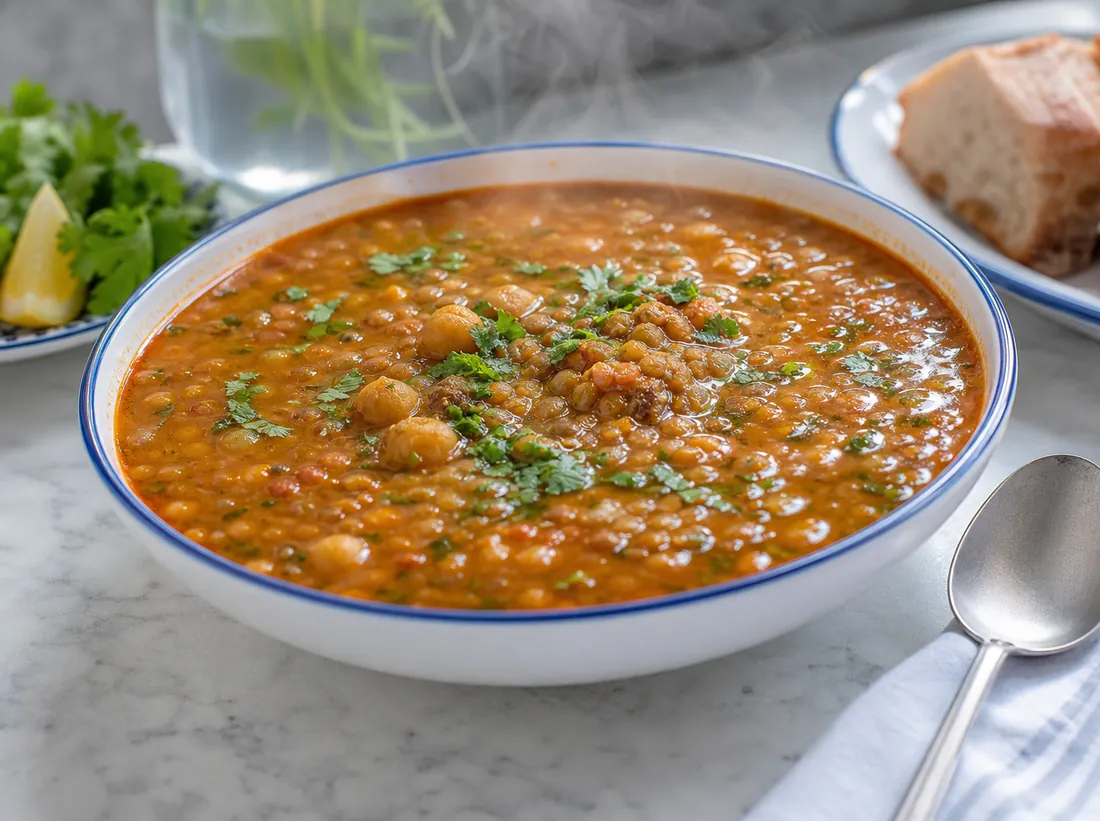
Harira
Harira is the thick Moroccan soup of tomatoes, lentils, chickpeas, a little meat and fresh herbs, thickened…
 Illustration
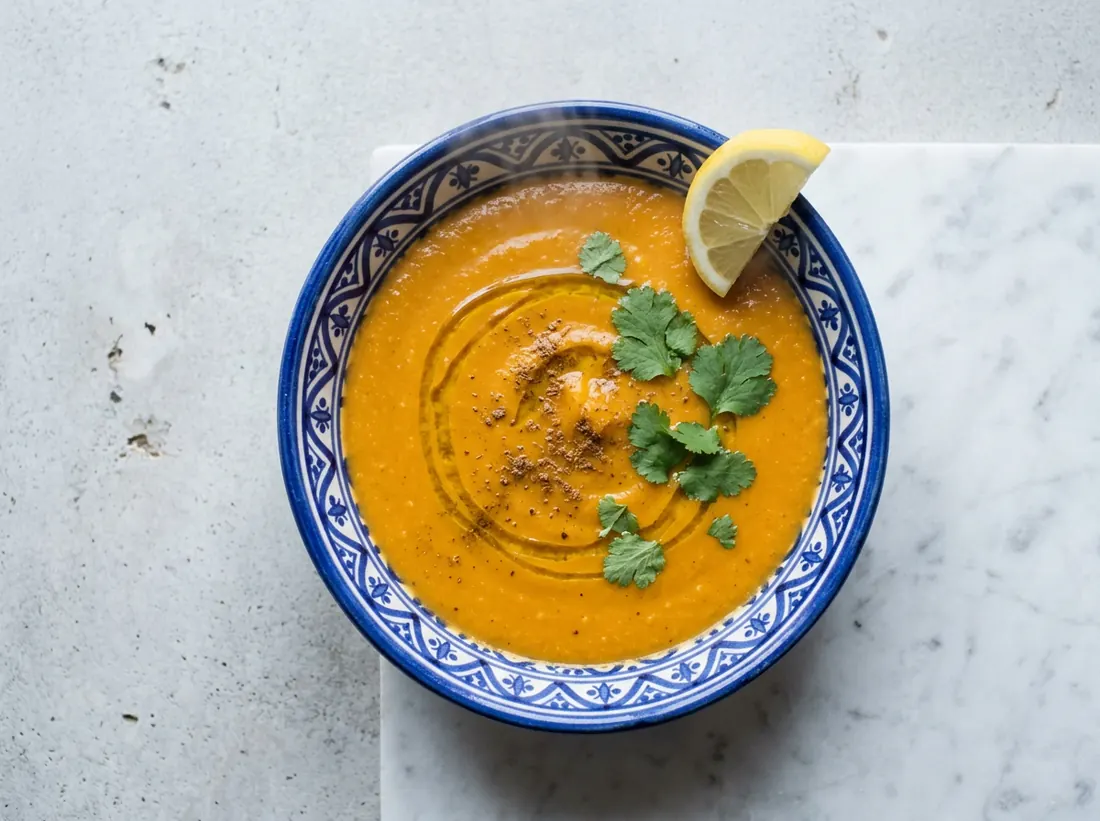
Red lentil soup
Red lentil soup is the quick, thick winter soup of the Israeli home: red lentils, carrot, celery and cumin…
How to choose Preserved lemon
In a bought jar: lemons covered by their liquid, a soft yellow rind and a clean smell of lemon and salt. Dark brown, dry lemons sitting above the liquid are old.
Read the label: lemons, salt and lemon juice for the Moroccan kind; oil and paprika for the Israeli pickled lemon. Pick the one that suits the dish.
For a homemade jar, choose juicy lemons with thin skins and no soft spots, and scrub them well in hot water, since the rind is what you eat.
Look for a kashrut mark on the jar.
What to use instead of Preserved lemon
| Substitute | How, and what changes |
|---|---|
| Lemon zest, salt and juice | For the rind of one preserved lemon: the finely grated zest of one lemon, half a teaspoon of salt and a tablespoon of lemon juice. Add at the end of cooking. Sharper and fresher, without the rounded depth. |
| Quick simmered lemon | Simmer thin slices of one lemon in 250 ml of water with a tablespoon of salt for 15 to 20 minutes, until the rind is soft. A close texture, in half an hour. |
| Israeli pickled lemon or lemon paste | Half the amount, since it is saltier and carries the flesh, oil and often paprika. Good in fish and salads, less so in a classic tagine. |
| Sumac and zest | In salads and on fish, a teaspoon of sumac with the zest of half a lemon instead of the rind of one preserved lemon. Sour and fresh, but without the taste of the cure. |
How to store Preserved lemon
In the pantry
In the fridge
In the freezer
The science of Preserved lemon
Osmosis: how the salt makes the brine
Salt on the cut flesh pulls water out of the lemon's cells by osmosis, from the weaker solution inside the cells to the salty one outside. After a day or two the lemons are lying in their own salty juice, which is why they are pressed down and topped up with juice, so that no part stays dry.
Why the rind turns soft
The white pith is rich in pectin, the glue between plant cells. Weeks of acid and salt break it down slowly: sodium from the salt pushes out some of the calcium that ties the pectin chains together, and the fruit's own enzymes and the acid loosen them further. The rind loses its firmness and turns soft and translucent.
Why it does not spoil
Lemon juice is very acidic, and with this much salt very few microbes can grow. There is a little fermentation, but most of the change comes from salt, acid and time, which is why the jar keeps for months.
Why the flavour turns rounder
The bitterness of fresh peel sits in the white pith and slowly passes into the liquid, while the scented oils of the zest stay trapped in the jar, with no heat to drive them off. The result is a rind that tastes of lemon without the bite: salty, floral and almost savoury.
Ask for Preserved lemon
Looking for Preserved lemon and cannot find it? Send a request and we will come back with a price and availability.
- Tell us how much you need and by when.
- We come back with a price, pack size and availability.
- Pick up at 99 Ibn Gabirol or delivery in Tel Aviv.
Frequently asked questions
What is preserved lemon?
Lemon cured for weeks in salt and its own juice until the rind is soft and mellow. It is a staple of Moroccan cooking, in tagines, fish and salads.
How do you make preserved lemons?
Cut lemons into quarters without separating them, fill them with coarse salt, 150 g per kilo of lemons, pack them into a jar and cover with lemon juice. They are ready after 3 to 4 weeks at room temperature.
Do you use the rind or the flesh of preserved lemon?
Mostly the rind. Rinse, scoop out the flesh and cut up the rind. The flesh is very salty, and a little of it can go into sauces and stews.
How long do preserved lemons last?
Up to a year in the fridge, with the lemons covered by their liquid and lifted out with a clean spoon.
What can I use instead of preserved lemon?
The grated zest of one lemon, half a teaspoon of salt and a tablespoon of lemon juice for each preserved lemon, added at the end of cooking. It comes close, without the depth of the cure.
What does preserved lemon taste like?
Lemony, salty and rounded, without the sharp bitterness of fresh peel. It brings salt and lemon to a dish at once, so use less salt.
Where can I buy preserved lemon in Israel?
In jars on the pickles shelf of some supermarkets, and by weight at the pickle stalls of Carmel Market, Hatikva Market and Mahane Yehuda.
Is preserved lemon parve?
Yes. It is lemons, salt and lemon juice, so it goes with meat, dairy and fish. On a bought jar, look for a kashrut mark.
The Complete99 pantry
Ingredients and kitchen gear, with prices and availability.
More from the pantry
Amba
Amba is a sour, spicy sauce of pickled green mango, yellow from turmeric with a strong smell of fenugreek. It…
Baharat
Baharat is a blend of warm, fragrant spices, and its name is simply the Arabic word for spices. In Iraqi,…
Bulgur
Bulgur is wheat that has been boiled, dried and cracked, so it is ready in minutes. Fine bulgur, which many…