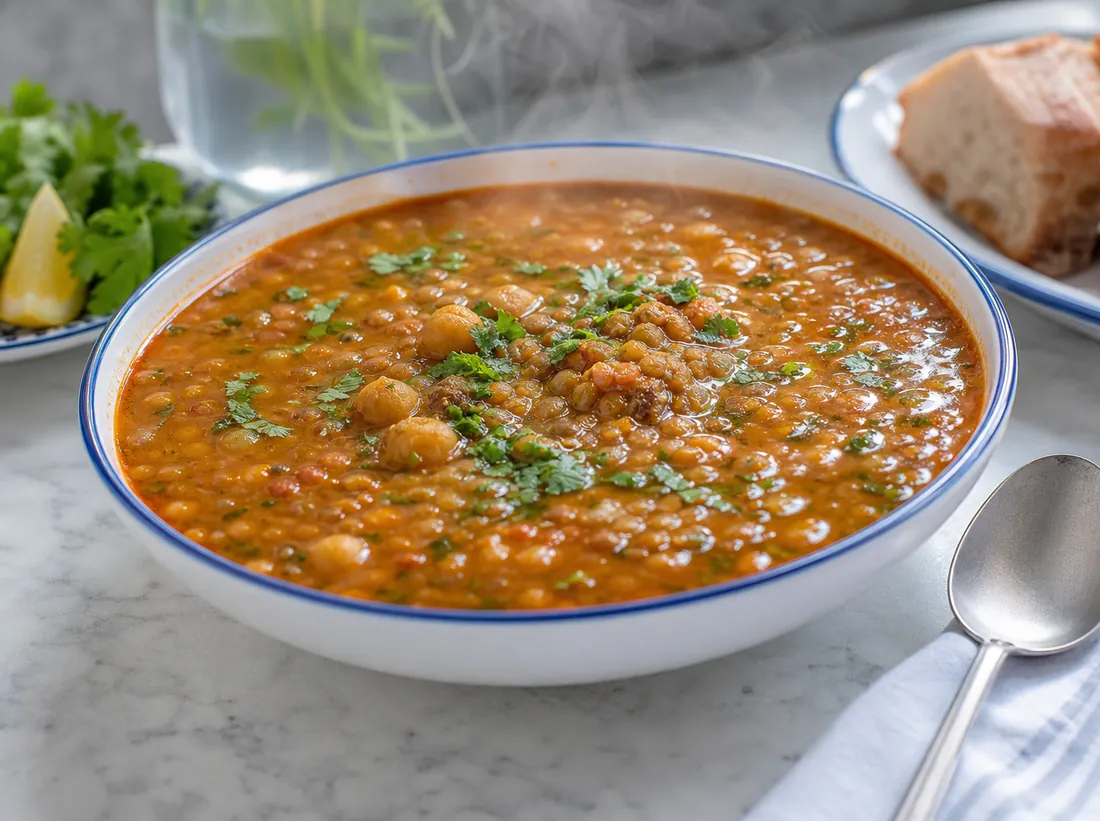
The story of Harira
Harira is one of the soups most tied to Morocco, and it comes to the table when a fast ends: for Moroccan Jews on the evening after Yom Kippur, for Muslims at sunset on each day of Ramadan. The pot is cooked before the fast begins and reheated when it ends, with dates beside the bowl.
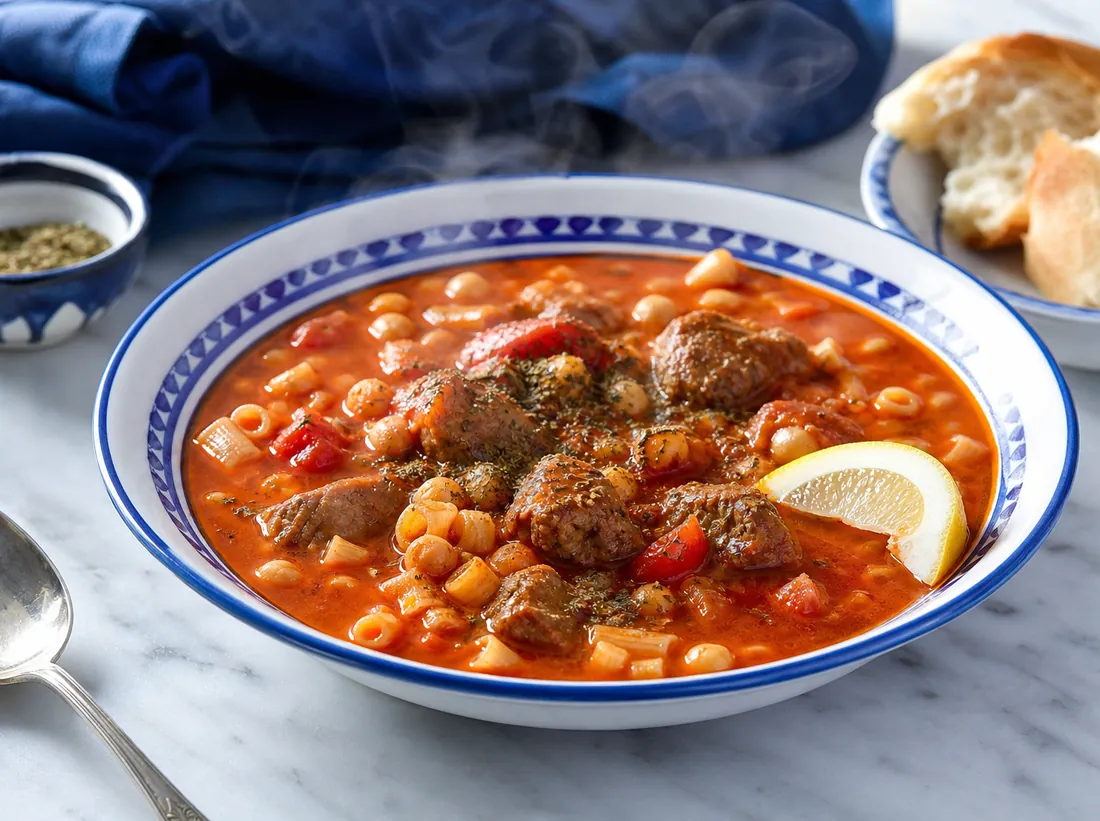
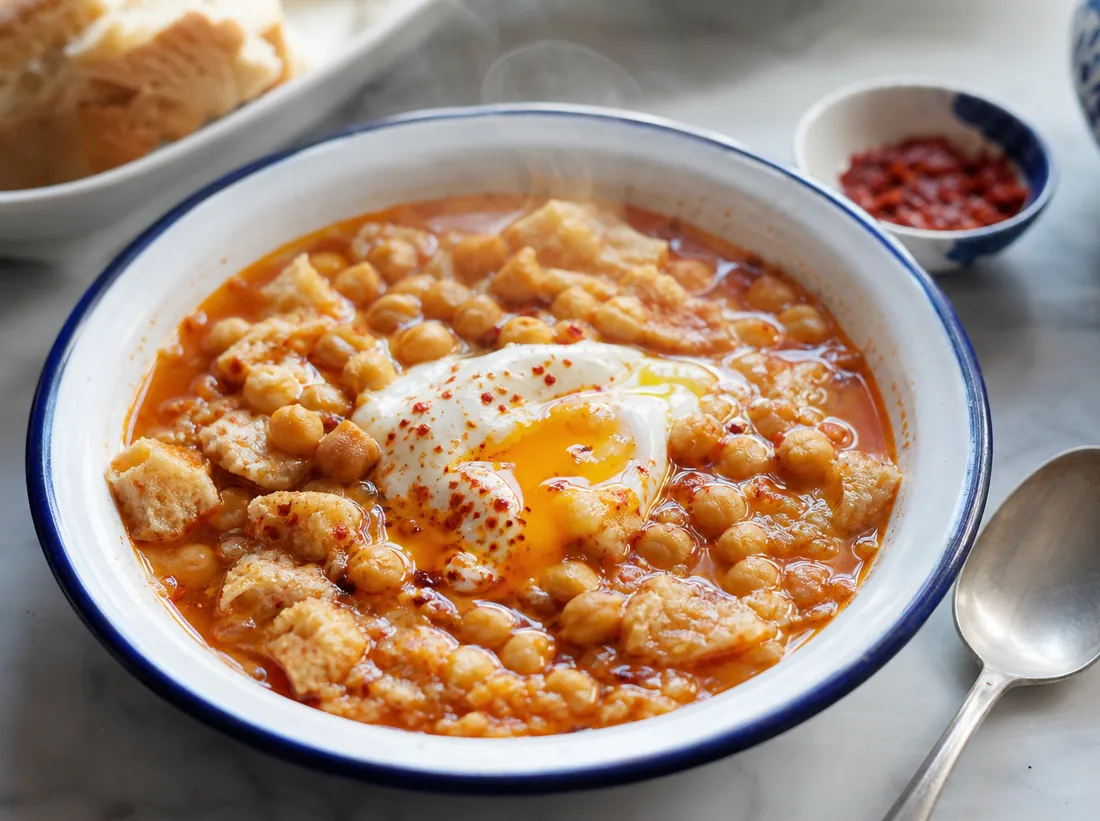
In Israel harira arrived with immigrants from Morocco, and on the night after Yom Kippur its smell drifts through many neighbourhoods. Every family keeps its own version, with or without meat, with noodles or rice, thickened with flour or egg, but the tomatoes, legumes and coriander stay.
What makes Harira itself
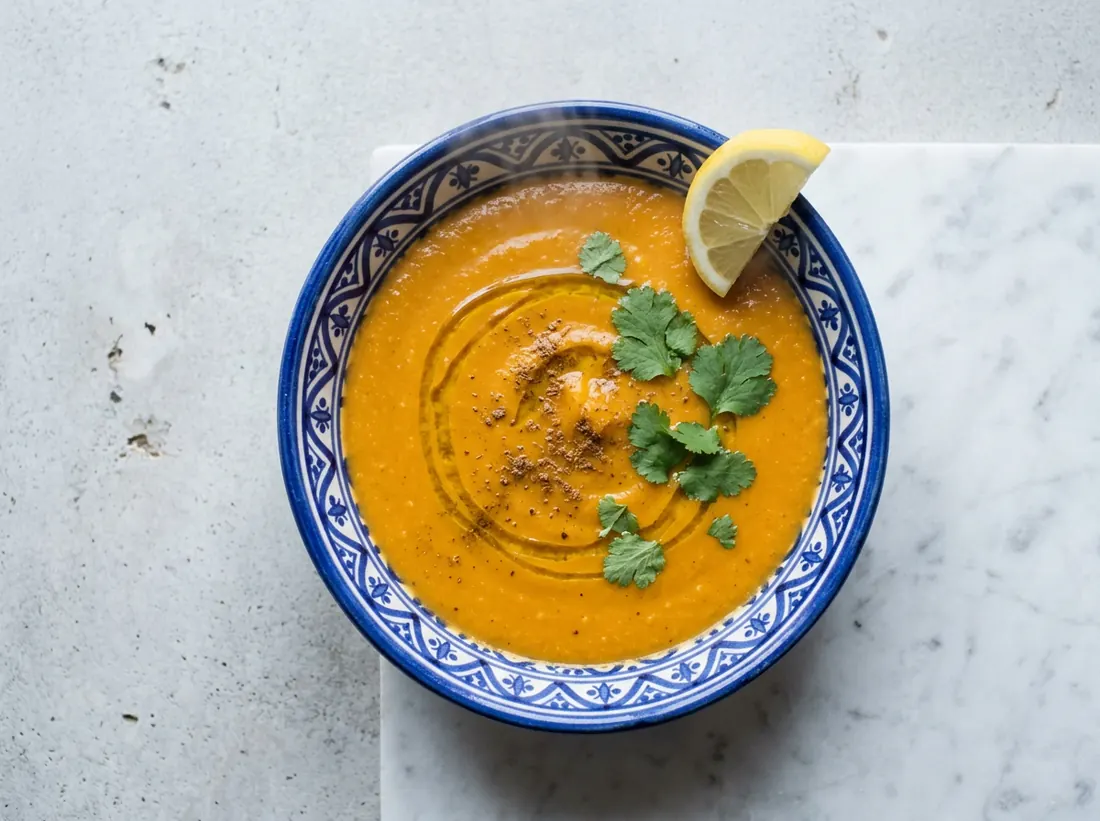
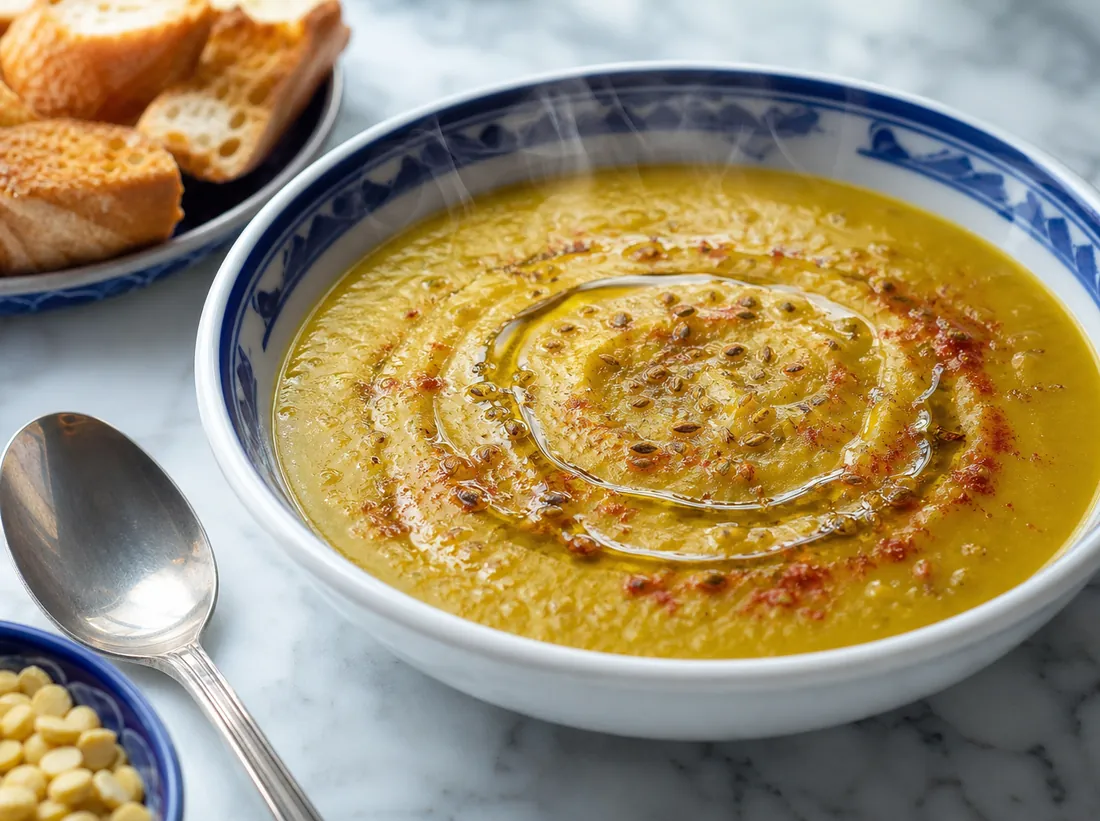
Harira is neither a tomato soup nor a legume soup but both at once. Tomatoes give acidity and a red base, lentils and chickpeas give body, and coriander, parsley and celery bring green colour and a fresh smell. What really defines it is the tadouira, a flour and water mixture poured in at the end that turns the soup velvety. Ginger, turmeric, cinnamon and black pepper give gentle warmth without heat.