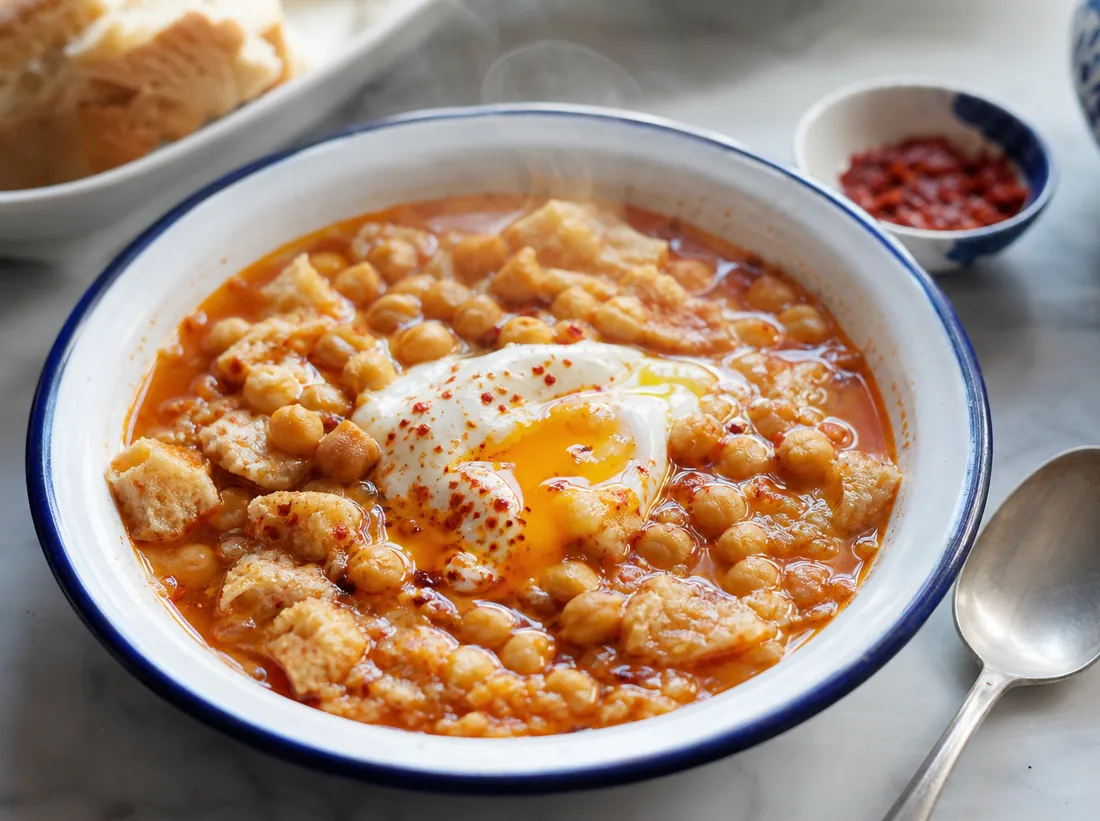
Bissara, Moroccan fava bean soup

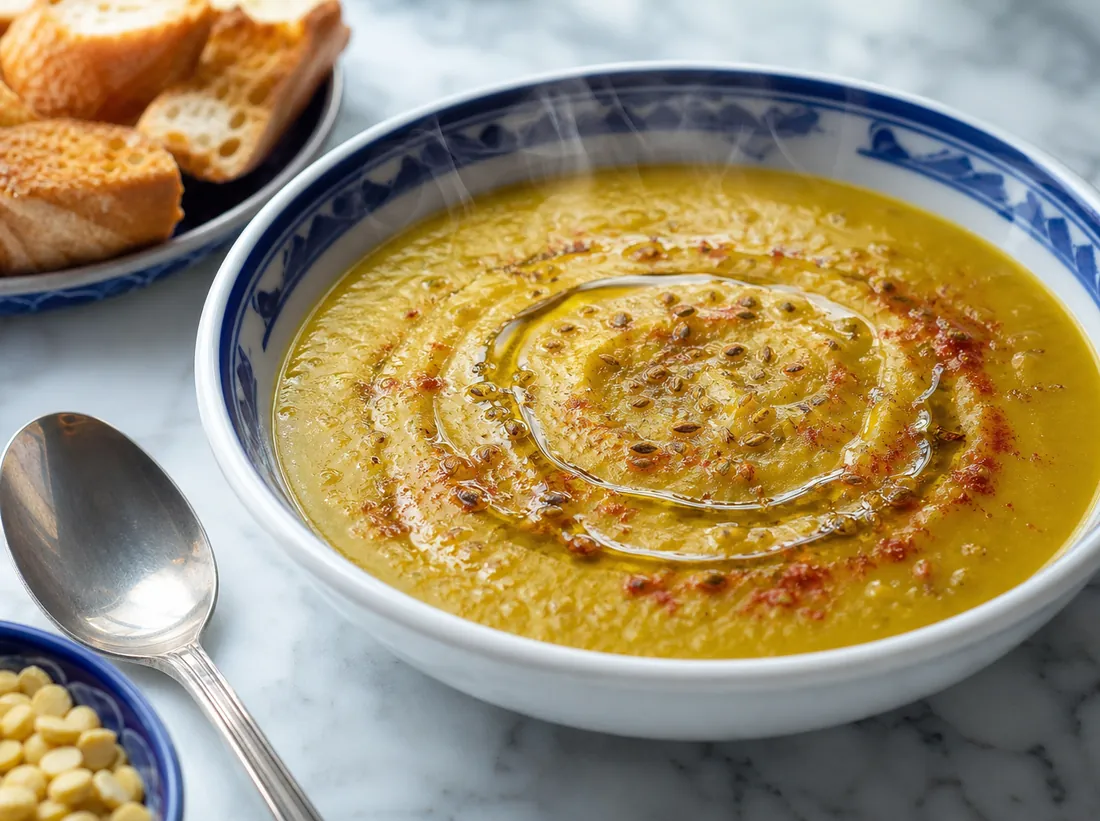
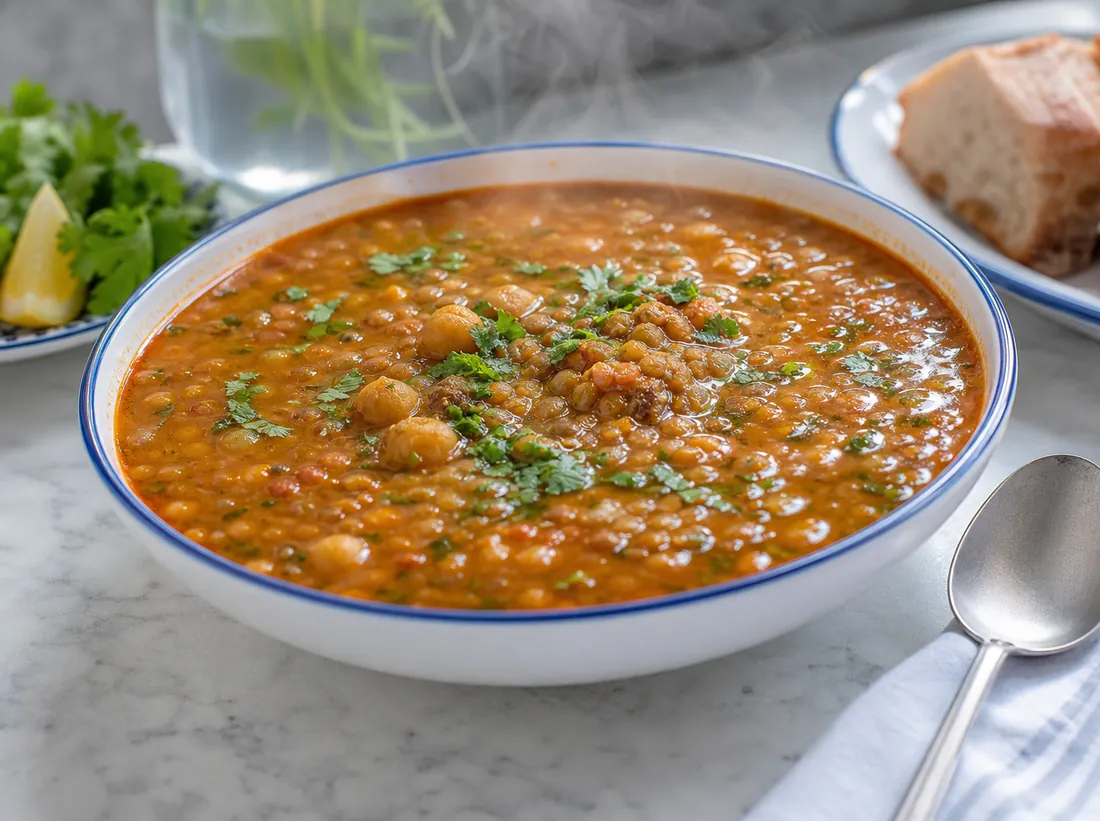
Bissara is a thick, smooth soup of dried peeled fava beans, garlic, cumin and paprika, served with a pool of olive oil and a pinch of cumin. It is Moroccan, fully vegan and cheap, and it is ready in an hour after an overnight soak.

Pot calculatorOrder Bissara

VeganGluten freeParve

Updated

BissaraIllustration
Time1 h 20 minCook 1 h 10 min · + Soak 8 h
Pot6 bowls2.1 litres
Per bowl401 kcal18.9 g protein · a 350 ml bowl
Cost of the pot₪17for the pot, about ₪2.9 a bowl

The story of Bissara

Bissara is a breakfast and winter food in Morocco, above all in the north. It is sold by the bowl in the street and in simple eateries and eaten with round bread dipped straight into it. Olive oil, cumin and chilli stand on the table so everyone can season their own.

In Egypt the same name belongs to a different fava dish, green with herbs and thick as a dip. In Israel the Moroccan bissara is less known than harira, yet it is one of the simplest and cheapest winter soups there is, made from things almost every pantry holds.

What makes Bissara itself

Bissara is almost nothing but fava beans, and that is its strength. Dried peeled favas give a creamy texture and a sweet, nutty taste with no cream or butter, and the olive oil cooked into them binds to the purée and makes it glossy. The spices in the pot are deliberately mild: the bold flavour goes in at the bowl, with fresh olive oil, cumin and chilli, so every plate has its own character.
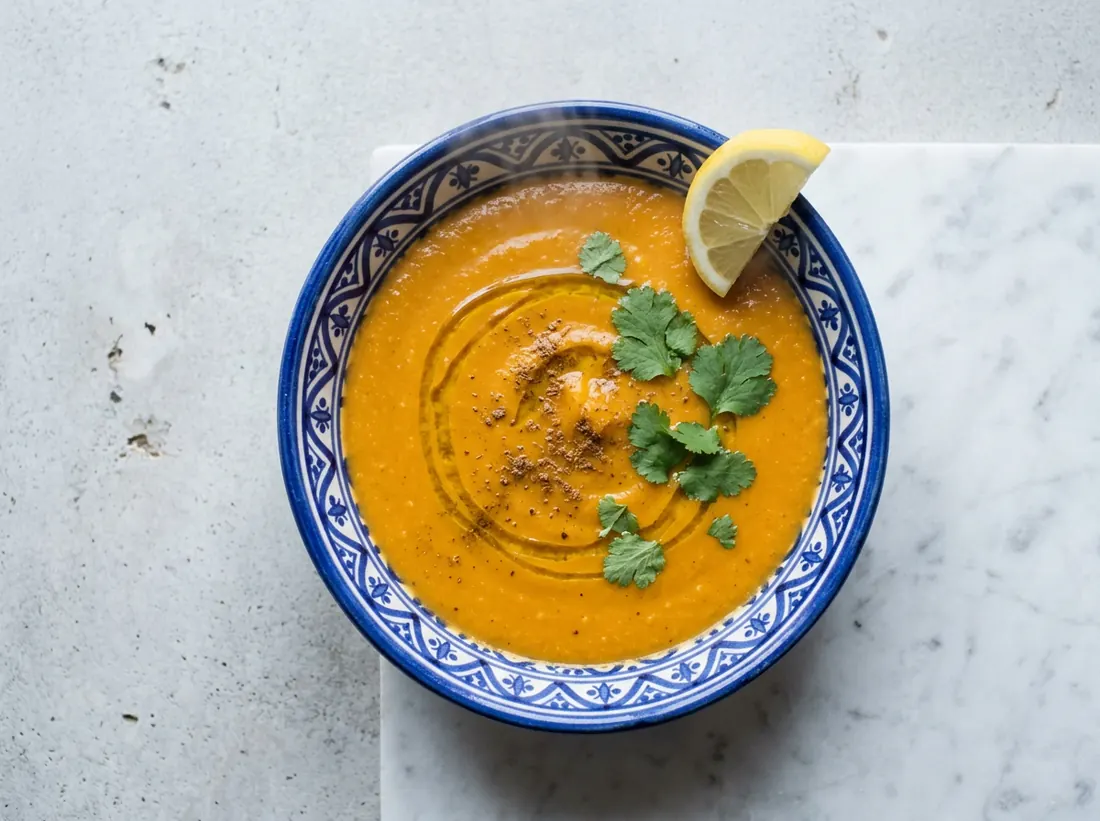
Bissara for any number of people

Change the number of people and the bowl size, and every ingredient updates in grams, with the cost, calories and protein per bowl.

Bowl size
Units
2.1litres in the pot
3Pot to use, litres
₪17Cost of the pot
₪2.9per bowl
401kcal per bowl
18.9g protein per bowl
IngredientAmountCost
The fava beans
Dried split peeled fava beans, soaked overnight500 g₪9.0
Water2.2 l
Garlic cloves, peeled30 g · 6 pcs₪1.0
Olive oil for cooking60 g₪3.2
Ground cumin6 g₪0.5
Sweet paprika6 g₪0.5
Salt14 g₪0.0
To finish and serve
Lemon juice20 ml₪0.4
Extra virgin olive oil, to drizzle40 g₪2.1
Cumin, to sprinkle3 g₪0.3
Hot paprika or chilli flakes2 g₪0.2
Send on WhatsApp

Shelf prices at a large Israeli chain and specialty shops, October 2026. Nutrition from the ingredients in grams, before cooking.

How many calories in Bissara? Nutrition facts and calorie calculator

Change the amount of any ingredient, drop one, or pick a lighter version, and the numbers per serving update at once: calories, fat, carbs, protein, sodium and fibre.

Bissara has 115 calories per 100 ml. A 350 ml bowl made with our recipe has 401 calories: 18.9 g protein, 18.3 g fat and 43 g carbohydrates. A 250 ml cup has 286 calories.

Lighter

Ingredients, for the whole recipe

  • 500 g236 kcal per serving
  • 6 pcs7 kcal per serving
  • 60 g88 kcal per serving
  • 6 g4 kcal per serving
  • 6 g3 kcal per serving
  • 14 g0 kcal per serving
  • 20 ml1 kcal per serving
  • 40 g59 kcal per serving
  • 3 g2 kcal per serving
  • 2 g1 kcal per serving

What each add-on adds to Bissara

Values for the amount in the row, from the national food database.

Add-onCaloriesProtein, gFat, g
A tablespoon of oil122013.8
A slice of white bread792.50.5
A slice of challah12641.1

How to make Bissara

In cook mode the screen stays on, tap a step when it is done, and the timers run next to each step.
  1. Drain and rinse the soaked beans and pick out any skins that float.
  2. Put them in a pot with 2.2 litres of water, the garlic, 60 g olive oil, the cumin and the sweet paprika.
  3. Bring to a boil and skim the white foam.
  4. Simmer gently, lid ajar, for about an hour, until the beans crush when pressed. Stir from the bottom every few minutes, as the starch settles and sticks.
  5. Add the salt and blend with a stick blender until completely smooth.
  6. Thin with boiling water to the texture you want: thick as a cream for dipping, looser for soup.
  7. Add the lemon juice, taste and adjust the salt.
  8. Ladle into bowls, drizzle generously with olive oil and sprinkle with cumin and hot paprika.

The science of Bissara

Kitchen science

Why peeled favas cook fast

The skin of a dried fava is tough, fibrous and slows water from getting in. In split peeled favas water reaches the seed directly, so they soften in an hour after soaking. Whole favas need far longer, and their skins add a brown colour and bitterness.

Kitchen science

Why bissara gets so thick

Dried favas are rich in starch and protein. As they cook the starch granules swell and burst, and blending turns them into a thick paste. As the soup cools the starch chains re-form into a tight network, a process called retrogradation, so yesterday's bissara is nearly as firm as mash.

Kitchen science

Olive oil and emulsion

Blending breaks the olive oil into tiny droplets, and the bean protein and starch coat them and keep them apart. The result is a stable emulsion that gives the soup gloss and creaminess. If it separates after freezing, a quick blend brings it back.

Kitchen science

Cold olive oil on top

The aroma compounds of extra virgin olive oil, and part of its bitter, peppery taste, are sensitive to heat and fade with long cooking. Oil in the pot gives body; oil drizzled on the hot bowl gives smell and flavour, so bissara uses both.

Bissara in every kitchen

Soup in a bowl

Thinned with water until it runs off the spoon, as served in the street on winter mornings.

Thick dip

As thick as hummus, on a flat plate with olive oil and bread for dipping.

Split pea

Dried split peas instead of favas. Sweeter, and no soaking needed.

Egyptian

In Egypt bissara is a green fava purée with coriander, dill and parsley, topped with fried onion.

With fish

In northern Morocco it is sometimes served as a side to fish.

Common Bissara problems and how to fix them

My bissara is too thick

That is normal, and it thickens more as it cools. Thin it with boiling water or the cooking liquid you kept, a spoonful at a time, stirring until it is right.

The favas will not soften

Old beans, too short a soak or hard water. Keep cooking with a pinch of bicarbonate of soda, and next time soak a full night in plenty of water.

There are skins and a bitter taste

The beans had skins on. Pass the soup through a fine sieve after blending, and next time buy split peeled favas.

The bissara burned on the bottom

The starch settles and sticks as the soup thickens. Cook on low heat, stir from the bottom every few minutes and add water when it gets too thick.

The bissara tastes bland

It is mild by nature, and the flavour comes at the bowl. Add salt, lemon, fresh olive oil, cumin and chilli when serving, not in the pot.

Storing, freezing and reheating

4 days

In the fridge

3 months

In the freezer

2+4

To cool

Bring it from 60 to 21 °C within two hours and down to 5 °C within four more. Split a big pot into shallow boxes.

75 °C

Reheating

Bissara sets firm in the fridge. Warm it over low heat with a little boiling water, stirring all the time, and blend again if it separated after freezing.

Nutrition of Bissara

From our recipe, per bowl and per 100 g, next to the national food database.

ServingkcalProtein, gFat, gCarbs, gFibre, g
Our recipe, a 350 ml bowl40118.918.343.018.1
Our recipe, 100 ml1155.45.212.35.2

What the ingredients of Bissara cost

What each ingredient costs in one pot, and where to buy it.

IngredientPriceIn this potWhere to buy
Dried split peeled fava beans, soaked overnight₪18 per kg₪9Supermarket
Olive oil for cooking₪53 per litre₪5.3Supermarket
Garlic cloves, peeled₪34 per kg₪1Greengrocer
Ground cumin₪86 per kg₪0.8Supermarket
Sweet paprika₪86 per kg₪0.5Supermarket
Lemon juice₪20 per litre₪0.4Supermarket
Hot paprika or chilli flakes₪86 per kg₪0.2Supermarket
Salt₪2.1 per kg₪0Supermarket

Shelf prices at a large Israeli chain and specialty shops, October 2026, VAT included. Vegetable prices change with the season.

Make Bissara a meal

Shabbat

Ready Shabbat food

Soup, hamin, mains and sides, with a quantity calculator and prices.

Plan Shabbat
Hosting

Hosting trays

9 trays to go with the soup, with a planner by number of guests.

Tray planner
Events

Catering

A whole menu in grams per guest, with a reheating table.

Menus

What to serve with Bissara

Serve in deep bowls with olive oil, cumin and chilli on the table and fresh round bread for dipping. Olives and crushed garlic on the side complete the meal.

The cuisine behind Bissara

Moroccan

Moroccan cuisine

Bissara is a breakfast and winter food in Morocco, above all in the north. It is sold by the bowl in the street and in simple eateries and…

Moroccan cuisine

Bissara in large quantities: events, offices and communities

How much of everything by number of guests, at a 350 ml bowl. For institutional pots, catering and community kitchens.

GuestsLitres30 l potsCost of ingredients
258.81₪72
50181₪144
100352₪287
200703₪575
5001757₪1,437

Every ingredient for any number of guests is in the calculator above: type the number of people.

Order Bissara

A ready pot for Shabbat, an event or the office, ordered ahead.

  • Cooked to order, for Shabbat, an event or the office.
  • Tell us how many people and when, and we send a quote.
  • Delivery in Tel Aviv from ₪35, free over ₪750.

Order Bissara for a large event

Large orders in Israel and abroad: events, offices, synagogues, communities and institutions.

  • In Israel: cooked in Tel Aviv and delivered to events in the area, and to large events anywhere in the country on a quote.
  • Abroad: for communities, events and restaurants. Tell us where, how many and when, and we come back with a quote and options.
  • Institutional quantities and a shopping list for any number of guests, in the calculator above.

Frequently asked questions

Which fava beans are used for bissara?

Dried split peeled favas, pale yellow and flat. They soften in an hour after soaking and give a light, smooth soup.

Do the favas need soaking?

Yes, at least 8 hours or overnight in cold water. Without soaking the cooking takes much longer and the texture is uneven.

Can I make bissara with split peas?

Yes. Split peas need no soaking, cook in about 45 minutes and give a slightly sweeter bissara.

Can people who avoid fava beans eat bissara?

Not the fava version. People who avoid favas, for example because of G6PD deficiency, make the same soup with split peas.

What is the difference between bissara and ful medames?

Ful medames is made from small whole favas in their skins and served as crushed beans. Bissara is made from peeled favas, blended completely smooth and served as soup.

Is bissara vegan?

Yes. It holds only favas, water, olive oil, garlic and spices, and it is parve and gluten free.

How many calories are in Bissara?

A 350 ml bowl of Bissara made with our recipe has about 401 calories and 18.9 g of protein. Per 100 ml: 115 calories.

How much does it cost to make Bissara at home?

A pot of 6 bowls costs about ₪17 at Israeli shelf prices in October 2026, about ₪2.9 a bowl. The calculator above works it out for any number of people.

Every soup in Israel

75 soups, each with a pot calculator, a price list and the science. Search by community, time, calories or cost.

All the soups