The story of Masgouf
Masgouf was born on the banks of the Tigris, and in Baghdad it was the summer evening meal for generations. Along Abu Nuwas Street, at the river's edge, restaurants kept the fish swimming in a pool until a diner picked one. The fish was split along the back, salted and set on stakes around a fire with the open flesh facing the flames, and grilled slowly until the fat dripped and the flesh turned white.
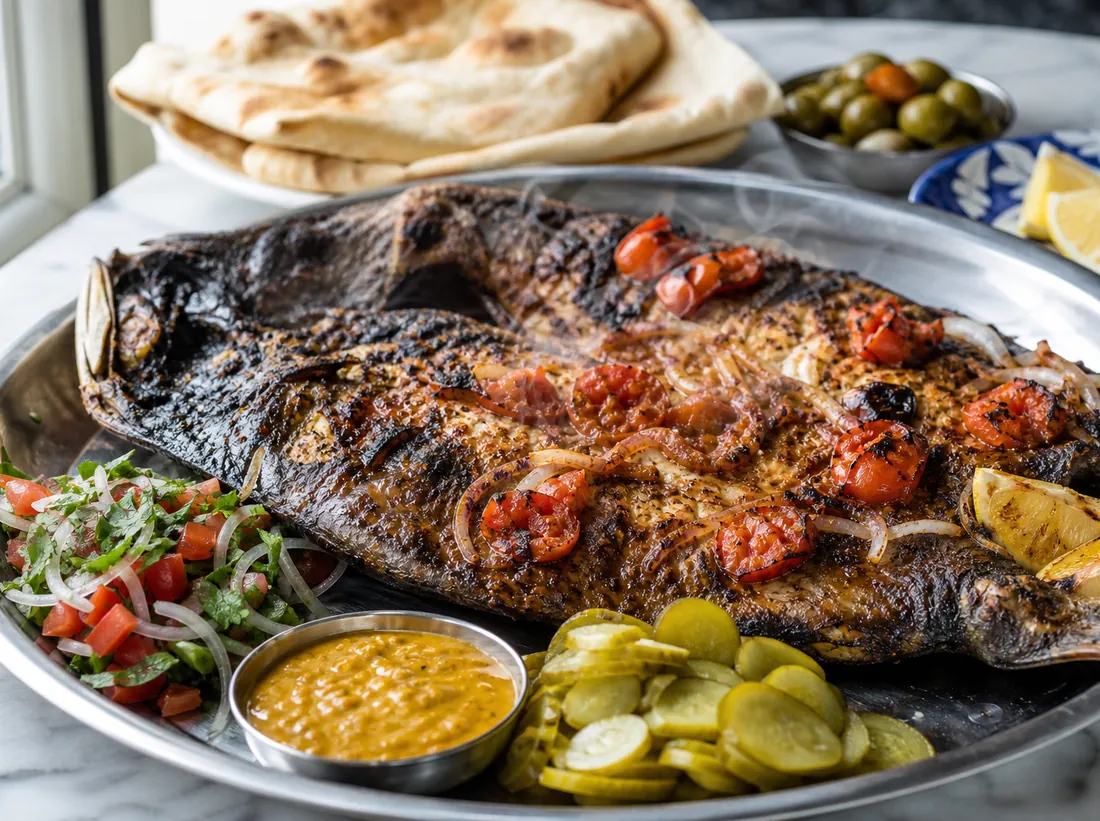
In Iraq masgouf is made with carp and with native river fish such as shabbout and bunni, and it is served on a large tray with tomatoes, onions, pickles, amba and flatbread. Iraqi Jews who came to Israel brought with them the memory of summer evenings by the river and the taste of amba, and in Israel the carp of the fish ponds in the valleys suits it exactly.
What makes Masgouf itself
Masgouf differs from every other grilled fish in two ways: the fish is opened along the back, not the belly, and it is grilled facing the fire, not above it. Opening it from the back keeps the belly whole, and the fish lies open like a book at an even thickness, so all the flesh cooks at the same pace. The heat reaches it from the side as radiant heat, and the flesh cooks slowly in its own fat without drying out. At the end the fish is laid skin down over the embers to crisp. Carp suits this exactly, because it is an oily fish that can take an hour of fire without drying out.