The story of Oven baked salmon
Salmon is a fish of the northern seas, and for generations it reached the Jewish table mainly smoked or cured. In Europe and America it entered the menu of Jewish delis as lox on a bagel, and in Israel it was a rare, expensive item until fish farms in Norway and the other northern countries made it available everywhere.
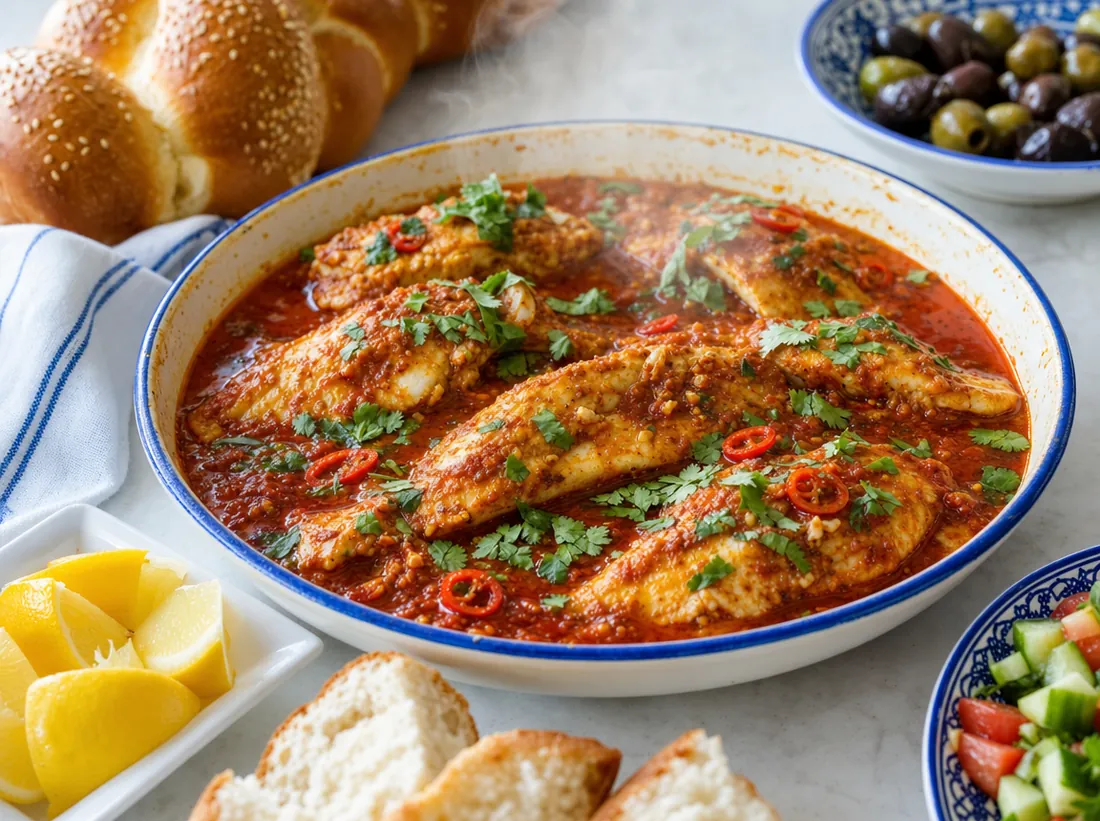
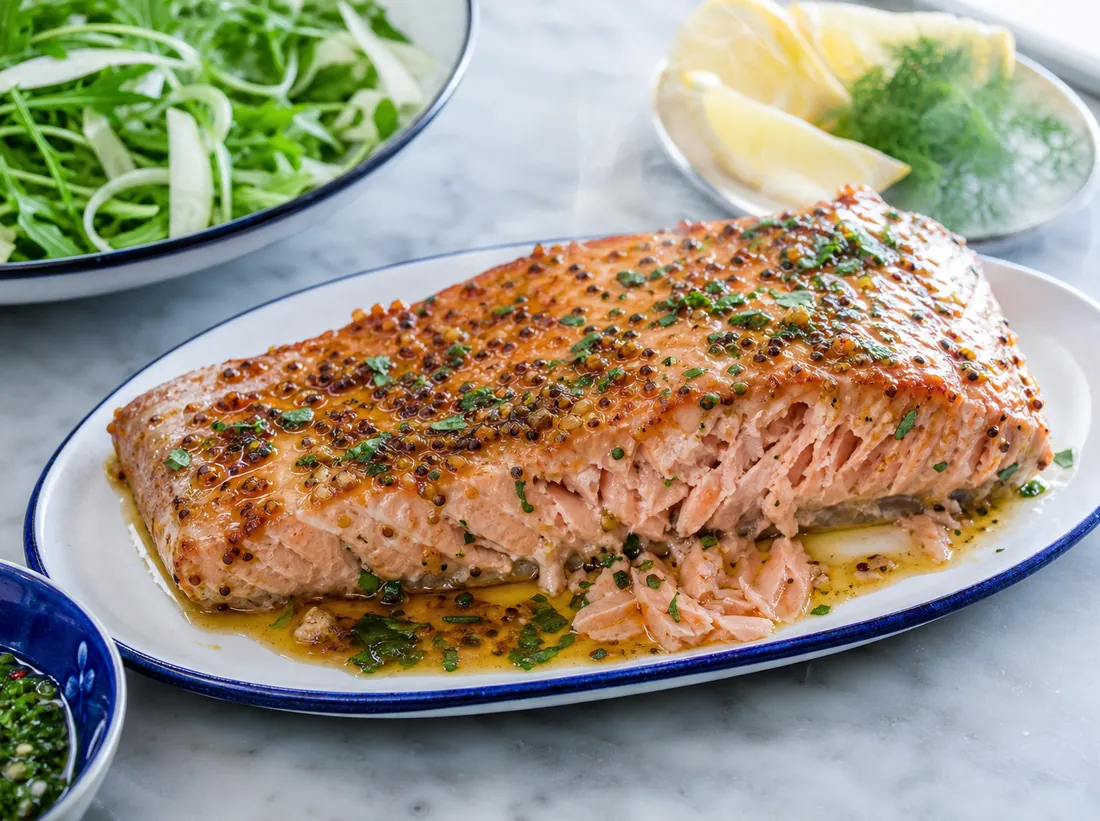
Once it reached every fish counter, salmon conquered the Israeli kitchen. It is kosher and parve, nearly boneless, children like it, and it cooks in the oven faster than a pot of rice. So oven baked salmon became one of the most common dishes for Friday night dinner, holiday meals and event platters, in dozens of versions: honey and mustard, silan and soy, herbs and lemon, and a red Moroccan sauce.
What makes Oven baked salmon itself
Salmon differs from white fish in the amount of fat between its layers of muscle, which is what lets you bake it at high heat without it drying out at once. The fat melts, softens the flesh and gives it a rich flavour, and the flakes separate along the white lines of fat. Even so, fish proteins are far more sensitive to heat than meat: five degrees too many at the centre and it is already dry and coarse.