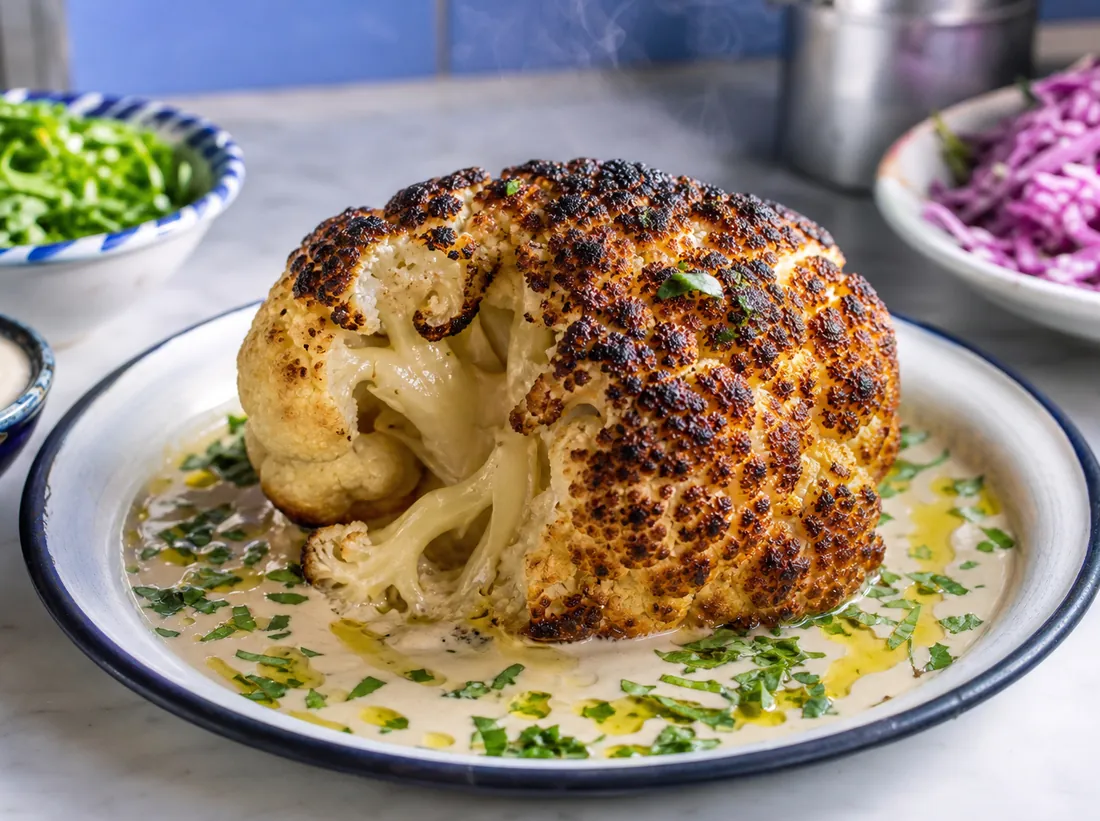
The story of Oven roasted cauliflower
Cauliflower is a vegetable of the Israeli winter, and in Arab and Jewish cooking across the Middle East it was eaten for generations mostly fried: florets in batter, in deep oil, with tahini and lemon. In Ashkenazi cooking it came to the table boiled, sometimes in a savoury bake. Roasting it in the oven until deeply browned was, back then, a new idea.
Then a whole cauliflower, blanched and roasted and served like a cut of meat on a board, came out of Tel Aviv restaurants. The dish spread quickly into homes, and later onto the menus of Israeli restaurants in Paris, New York, Vienna and Melbourne, becoming one of the symbols of new Israeli cooking: a simple vegetable, a lot of heat, and a lot of confidence.
What makes Oven roasted cauliflower itself
The secret of whole roasted cauliflower is two stages. Blanching cooks the cauliflower right through, because water carries heat far faster than air, and roasting at maximum heat does only one job: browning. Without blanching the outside burns before the inside is ready. The cauliflower comes out sweet and nutty, with nearly black edges as crisp as chips and small leaves that turn crunchy.