The story of Ptitim
Ptitim were born in the Israel of the austerity years. In the early 1950s rice was scarce, and thousands of immigrants arrived from countries where rice was the base of every meal. Prime Minister David Ben-Gurion asked one of Israel's food factories for a wheat substitute, wheat being easier to obtain, and in 1953 the first ptitim reached the market: tiny grains of dough shaped like rice and baked in an oven. The public promptly called them Ben-Gurion rice.
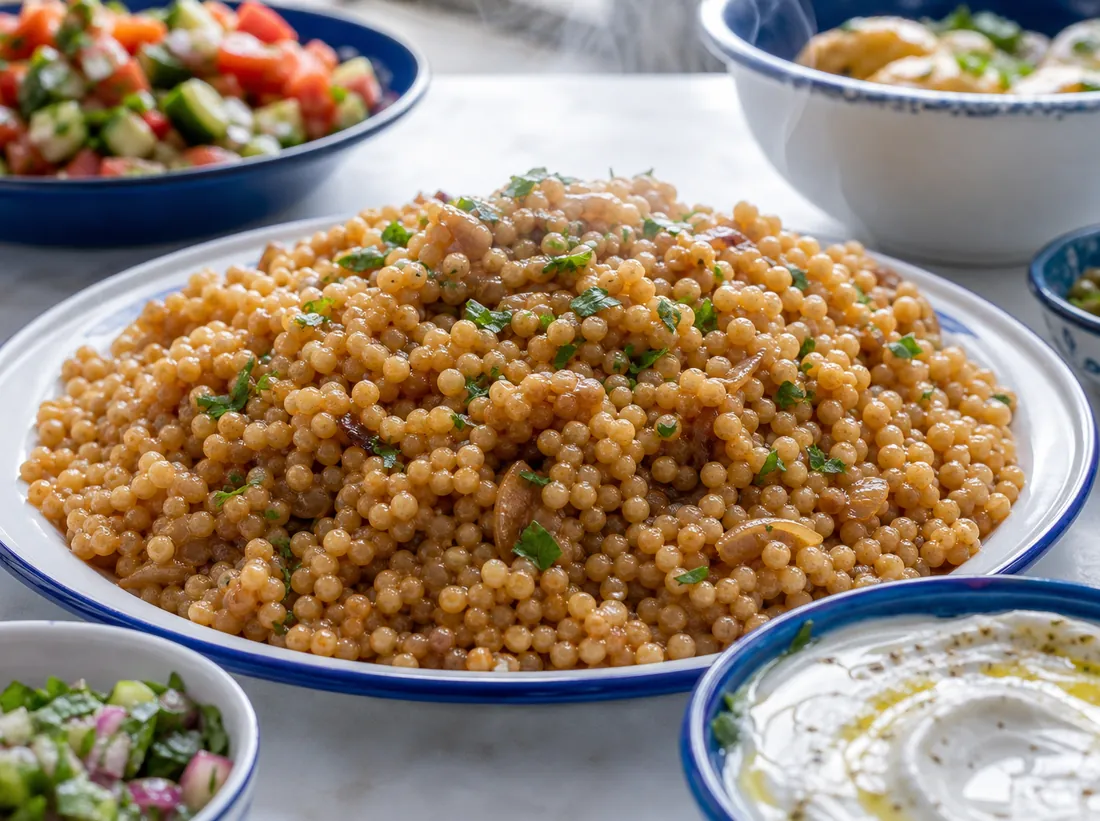
Austerity ended, but ptitim stayed. Later came the round shape, the little balls most Israelis know, followed by stars, rings and shells, and ptitim became the national children's food. In recent decades they went abroad as Israeli couscous or pearl couscous, although they are not couscous at all: couscous is rolled from semolina and steamed, while ptitim are a baked pasta.
What makes Ptitim itself
Ptitim are pasta, yet they behave like rice: you fry them, add an exact amount of water and wait for it to be absorbed. The difference is the toasting. Ptitim are baked before they are packed, which gives them a nutty taste and a springy bite plain pasta lacks, and they keep their shape even in a pot held warm for an hour. That is why they are the perfect side for kindergartens, schools and events: a tray of ptitim is still good at the second serving.