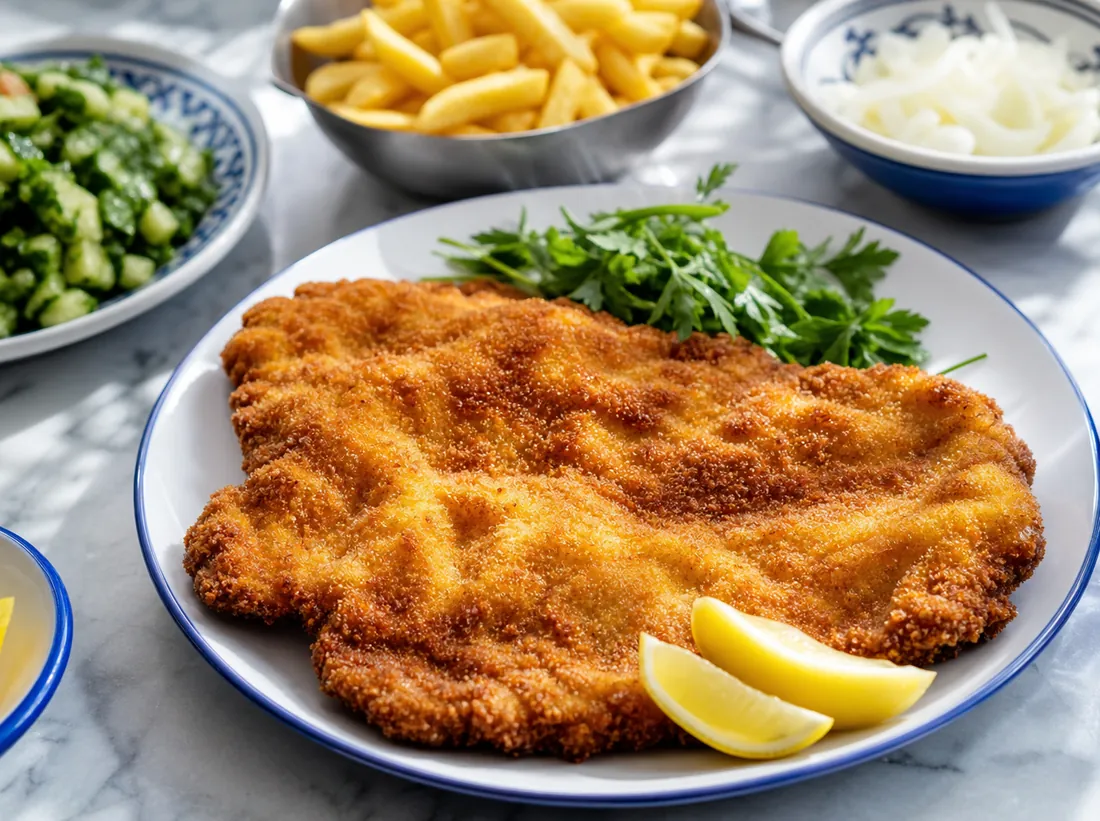
Schnitzel

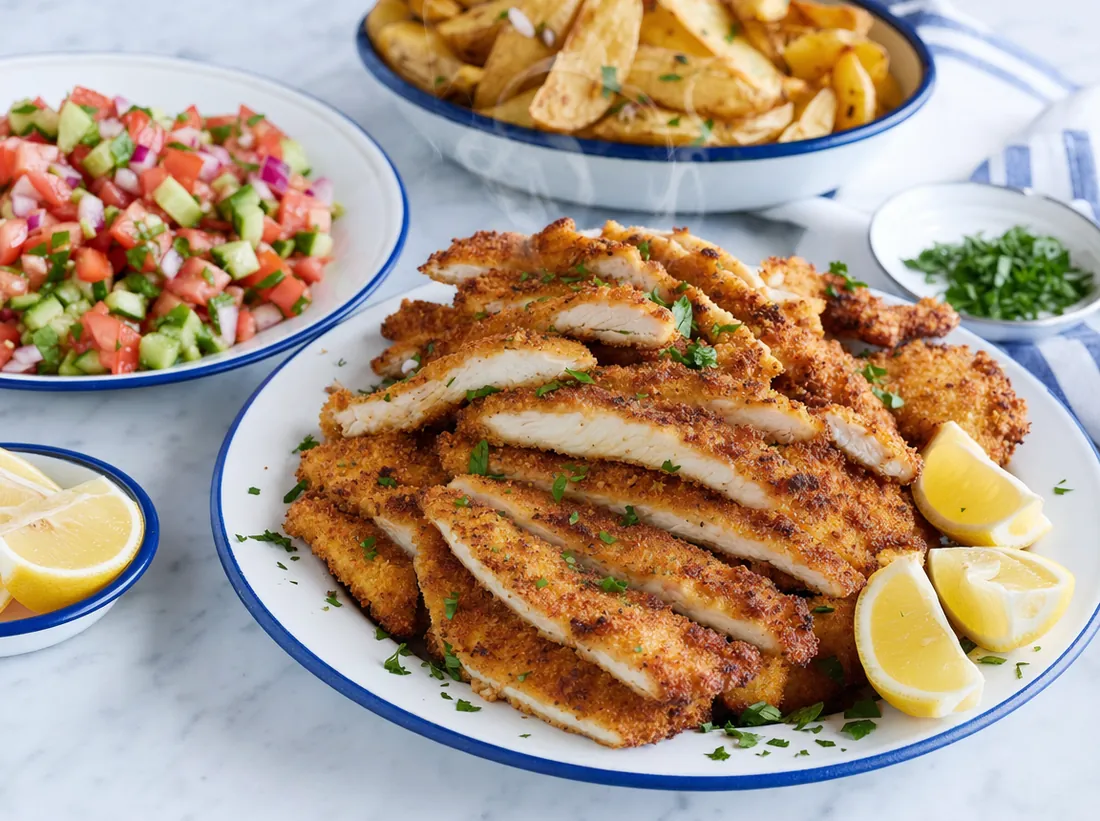
Schnitzel is a thin slice of chicken breast coated in flour, egg and breadcrumbs and fried until golden and crisp outside and juicy inside. It came to Israel from Vienna as veal schnitzel, turned into chicken schnitzel here, and became the dish every Israeli child grows up on.

Quantity calculatorOrder Schnitzel

Dairy freeMeatAllergens:GlutenEggs

Updated

SchnitzelIllustration
Time1 h 10 minCook 25 min
Amount6 portions1.2 kg
Per portion527 kcal46.8 g protein · a 200 g portion
Cost of the pot₪50for the pot, about ₪8.3 a bowl

The story of Schnitzel

Wiener schnitzel is a thin slice of veal coated in flour, egg and breadcrumbs and fried in fat, and in Austria the name is reserved for veal. It has relatives all over Europe, such as the cotoletta of Milan, and Jews who came from Central Europe brought the dish with them to the Land of Israel well before the state was founded.

In the austerity years after 1948 veal was almost unobtainable, while chicken and turkey were cheap and available. Schnitzel moved to chicken breast and turkey, and kashrut changed it further: it is fried in oil instead of butter, with no trace of dairy in the coating. From home kitchens it spread to army dining halls, schools and pita stands, and it remains one of the most common home dishes in Israel.

What makes Schnitzel itself

Israeli schnitzel is thin, even and golden, and its coating hugs the meat instead of puffing up as in Vienna. The breast is sliced thin and pounded to an even half centimetre, so it cooks in two or three minutes a side, before it has time to dry out. The egg is seasoned, usually with garlic and mustard, and the crumbs sometimes carry sesame or paprika. It is eaten hot from the pan, cold the next day in a sandwich, and in pita with hummus, salad and chips.

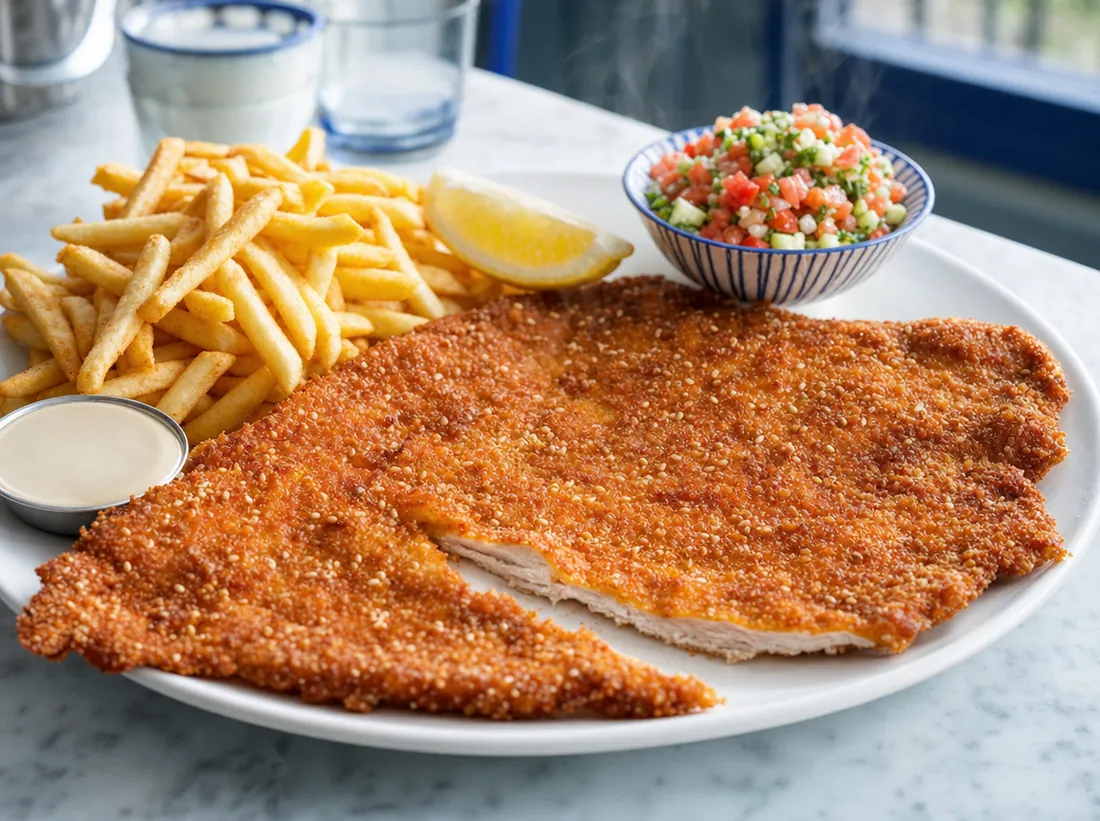
Our schnitzel at 99 Ibn Gabirol: thin, large and golden

The meat

Whole, real chicken breast

Our schnitzel is sliced from whole chicken breast and pounded into a thin, large schnitzel, not made from ground chicken or a processed product.

Made to order

Thin, large, breaded and fried on the spot

Every thin, large schnitzel is breaded and fried until golden the moment it is ordered; none waits ready made.

In pita

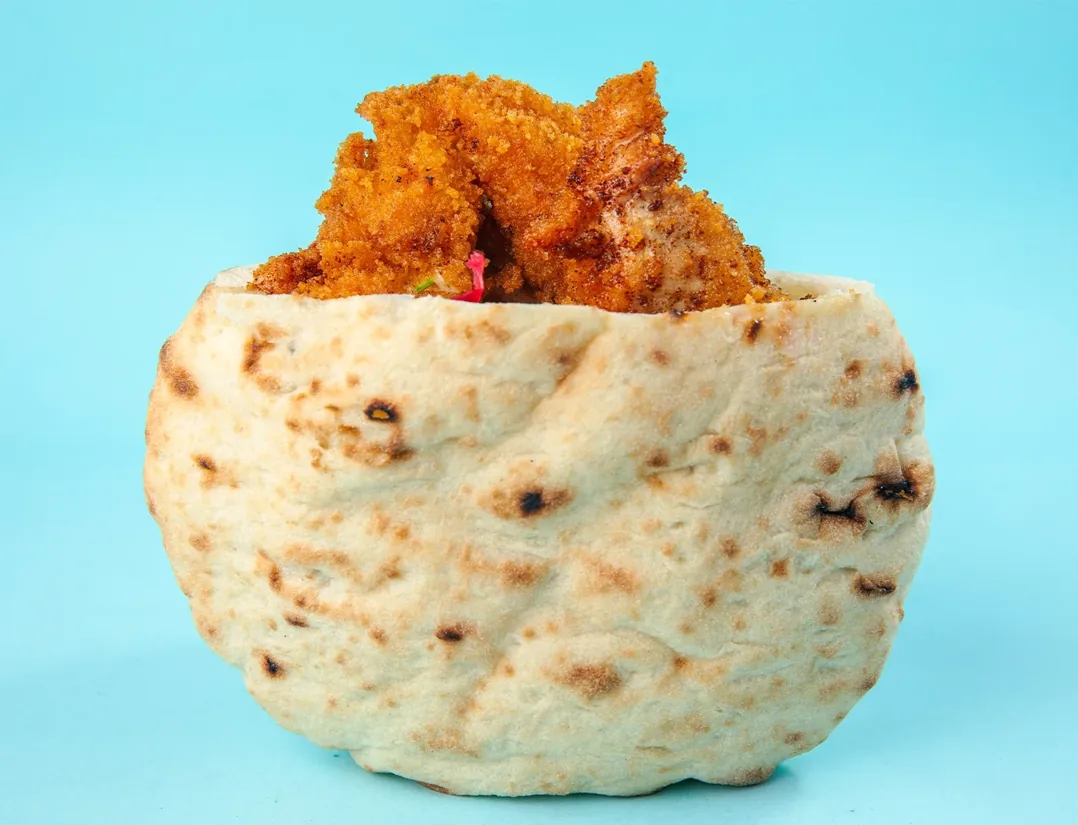
Schnitzel in a pita

The hot schnitzel goes into the pita right as it leaves the oil.

In a baguette

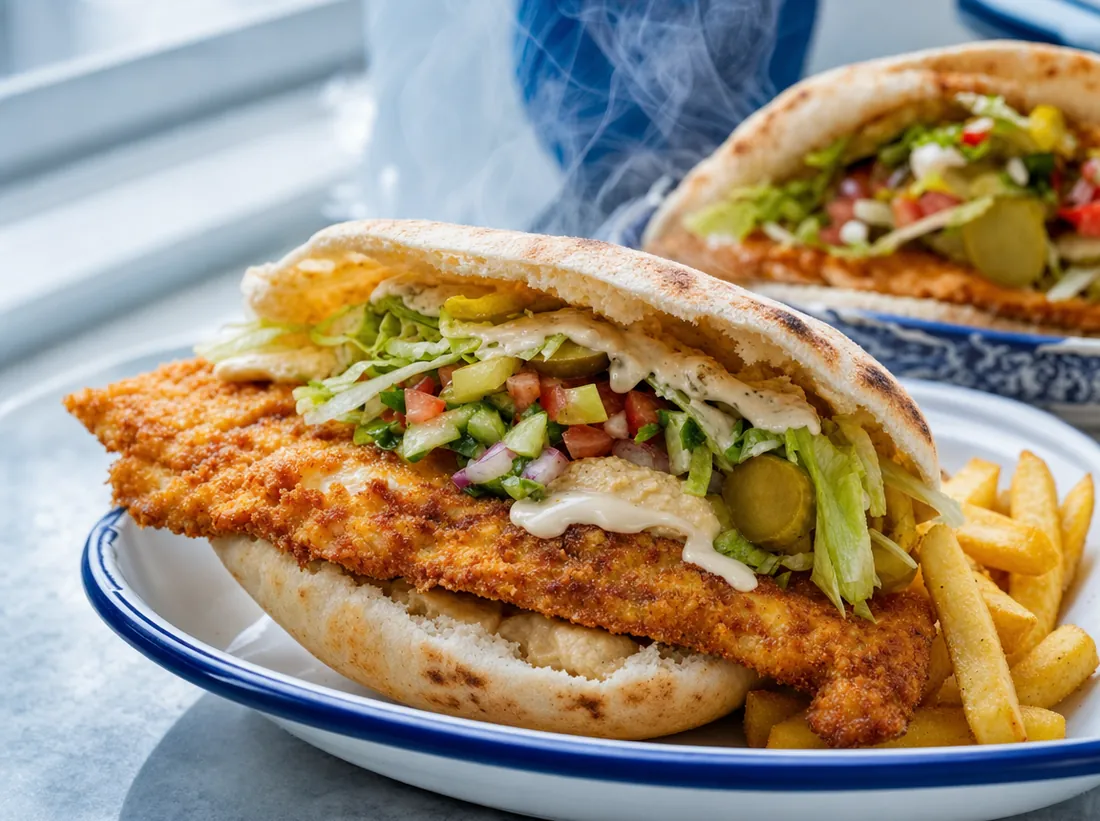
Schnitzel in a baguette

A big baguette sandwich, for eating on the go.

On a plate

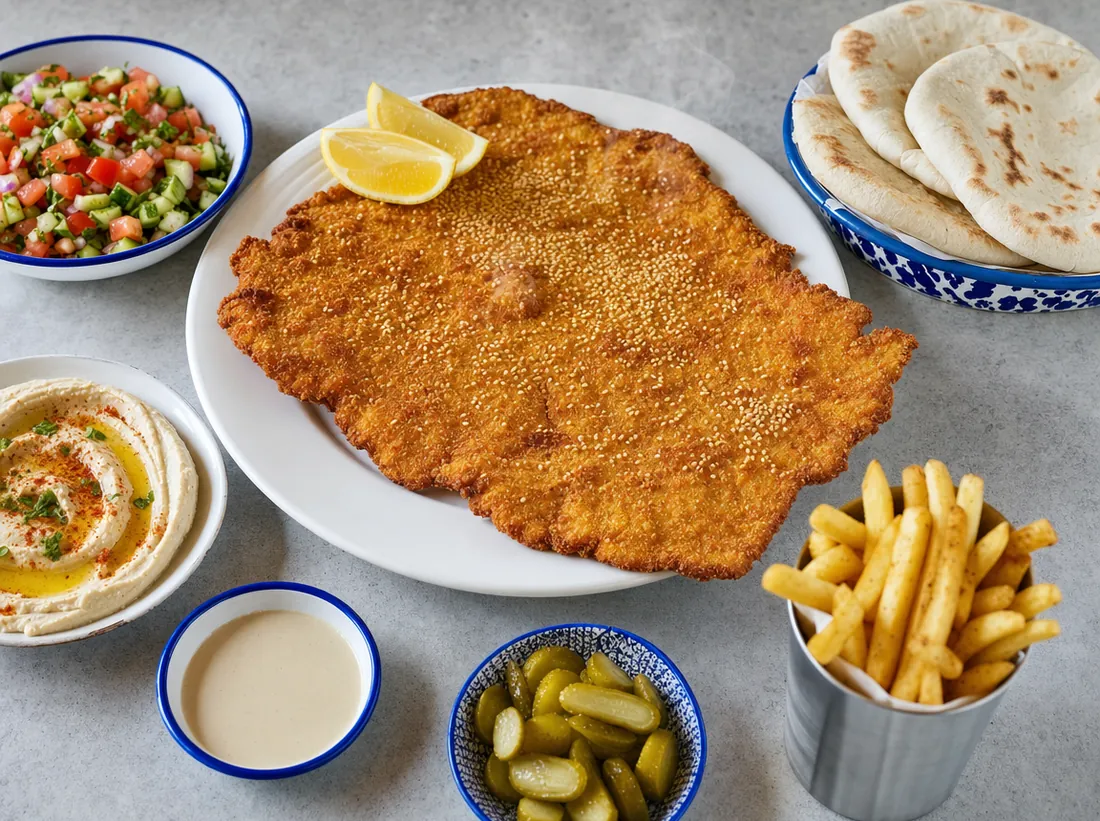
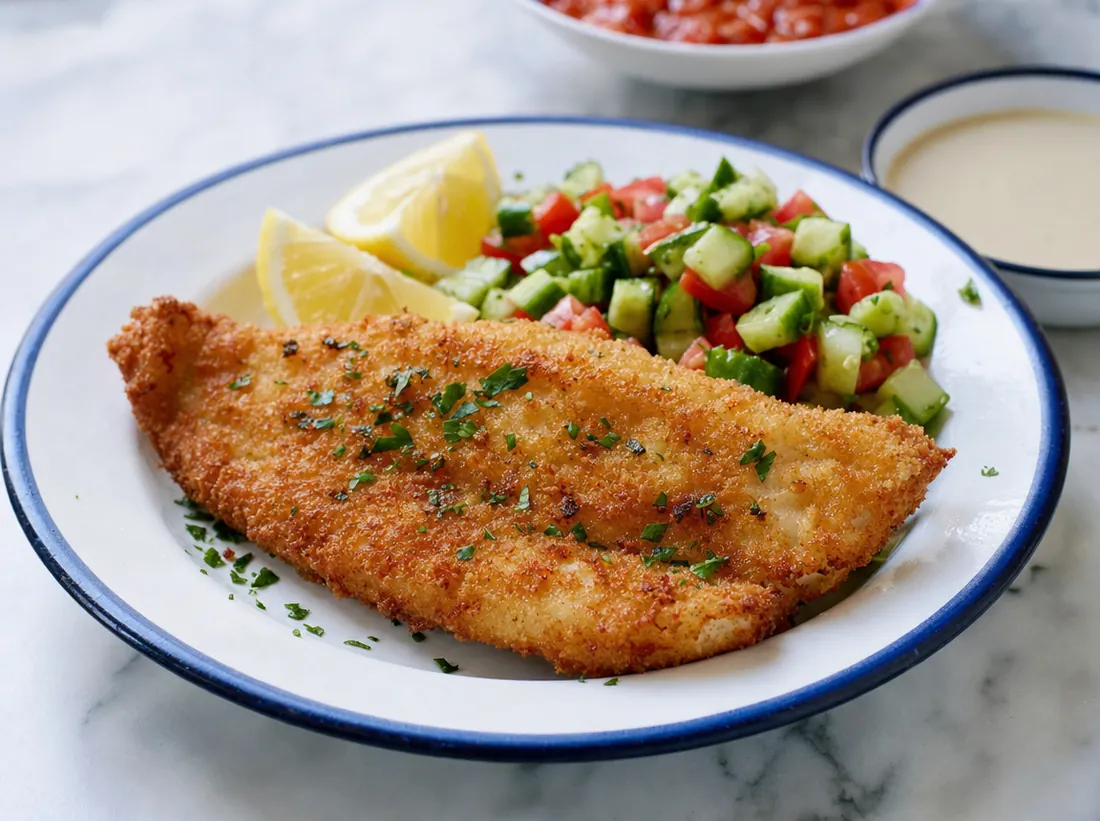
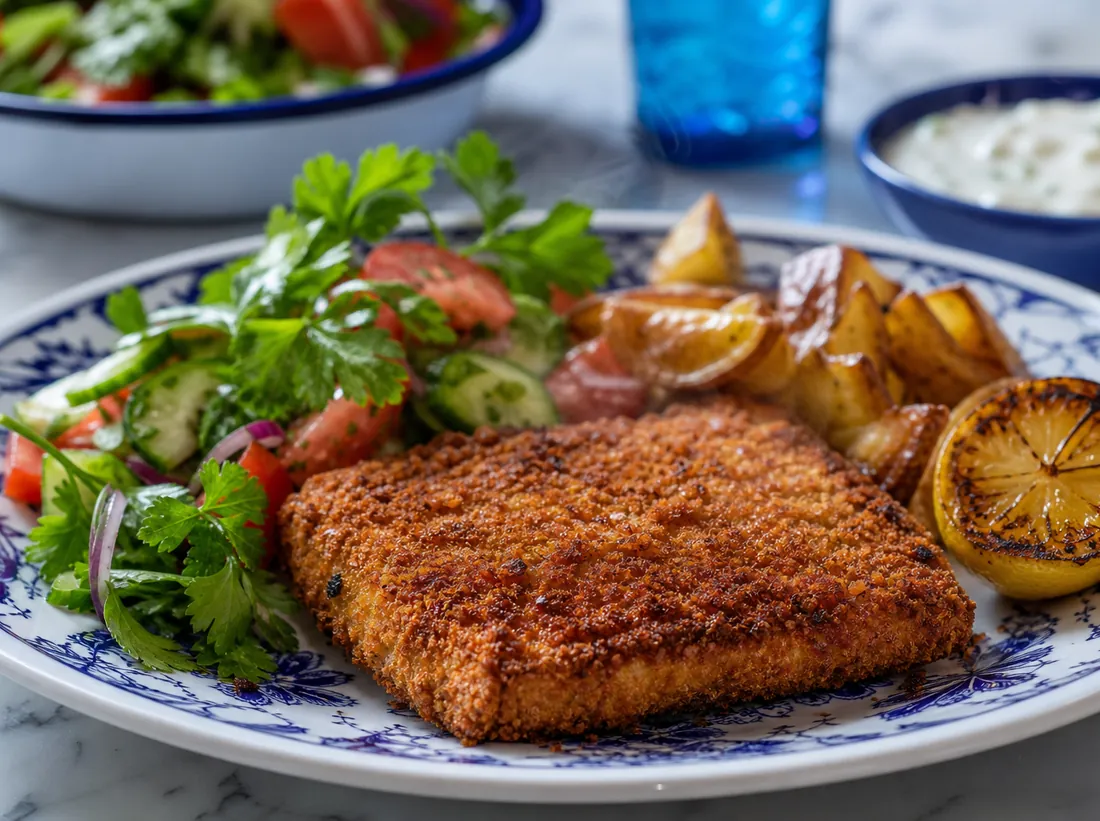
Schnitzel on a plate

For a sit down meal, on a plate.

Delivery

Order on Wolt

The schnitzel can be ordered for delivery through Wolt, straight from the kitchen at 99 Ibn Gabirol.

Events

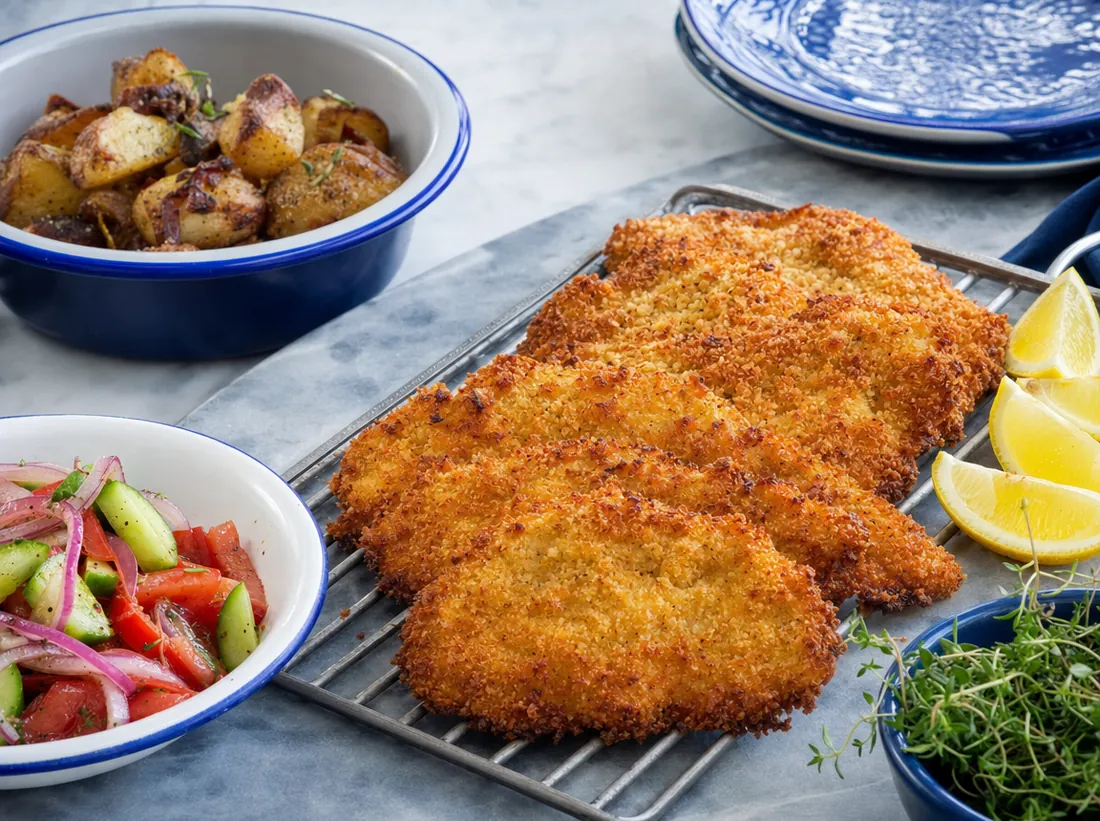
Schnitzel hosting trays

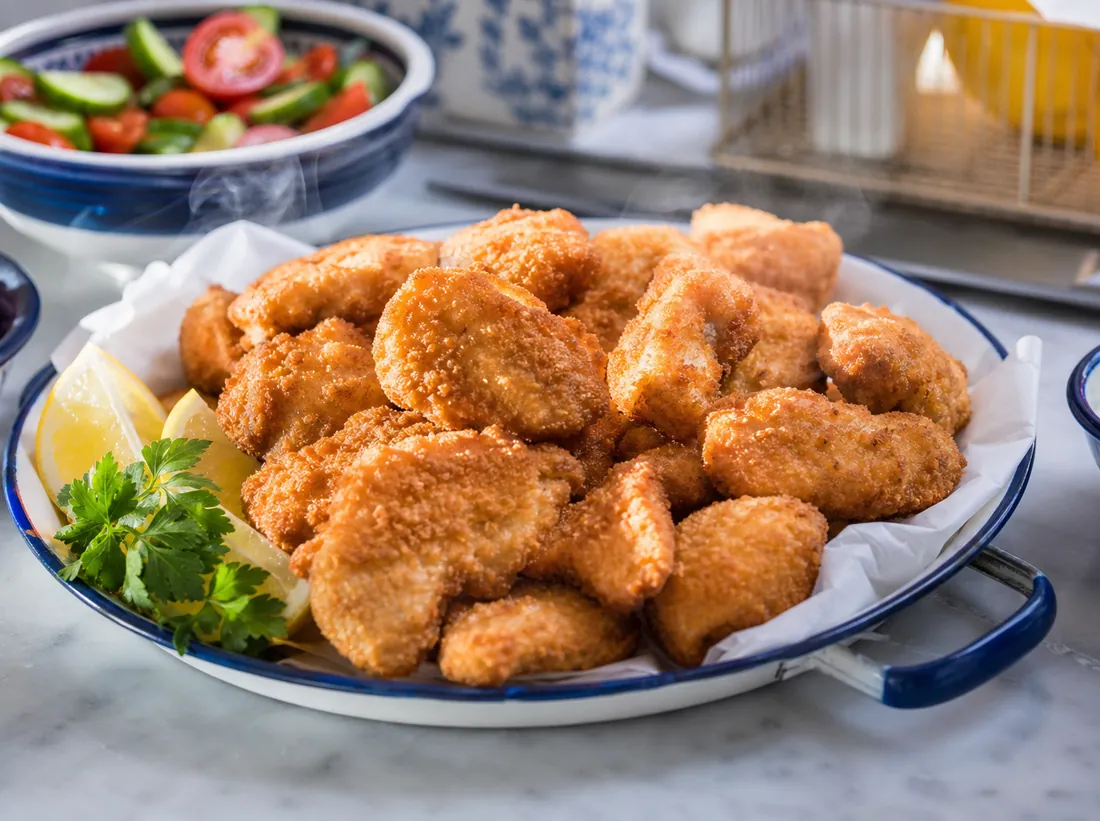
Trays of schnitzels and schnitzel nuggets for events, offices and communities, in a single layer on open trays so they arrive crisp. Order ahead through a quote request.

Address

99 Ibn Gabirol, Tel Aviv

The kitchen where the schnitzels are fried is at 99 Ibn Gabirol Street, Tel Aviv.

Schnitzels of the world

20 relatives of the schnitzel, from Vienna to Tokyo, and what it takes to make each in a kosher kitchen

CountryNameMeatCoatingHow it is servedKosher note
AustriaWiener SchnitzelVealFlour, egg and fine crumbs, a loose coating that puffsWith lemon, potato salad, cucumber salad and lingonberry jamKosher with kosher veal fried in oil instead of butter
AustriaWiener Schnitzel vom SchweinPorkAs the VienneseAs the VienneseNot kosher. The kosher counterpart is chicken or turkey
AustriaPariser SchnitzelVeal or chickenFlour and egg only, no crumbsWith lemon and potatoesKosher with veal or chicken, in oil
ItalyCotoletta alla milaneseBone in veal rib chopEgg and crumbs, fried in butterWith lemon, sometimes topped with tomato and rocketKosher with a kosher veal chop, in olive oil
Argentina and UruguayMilanesaBeef, sometimes chickenEgg with garlic and parsley, then crumbsWith chips or mash, or topped with a fried eggKosher from beef or chicken. The napolitana version, with ham and cheese, is not
FranceEscalope panéeVeal, chicken or turkeyFlour, egg and crumbs, usually in butterWith pasta or vegetablesKosher in oil
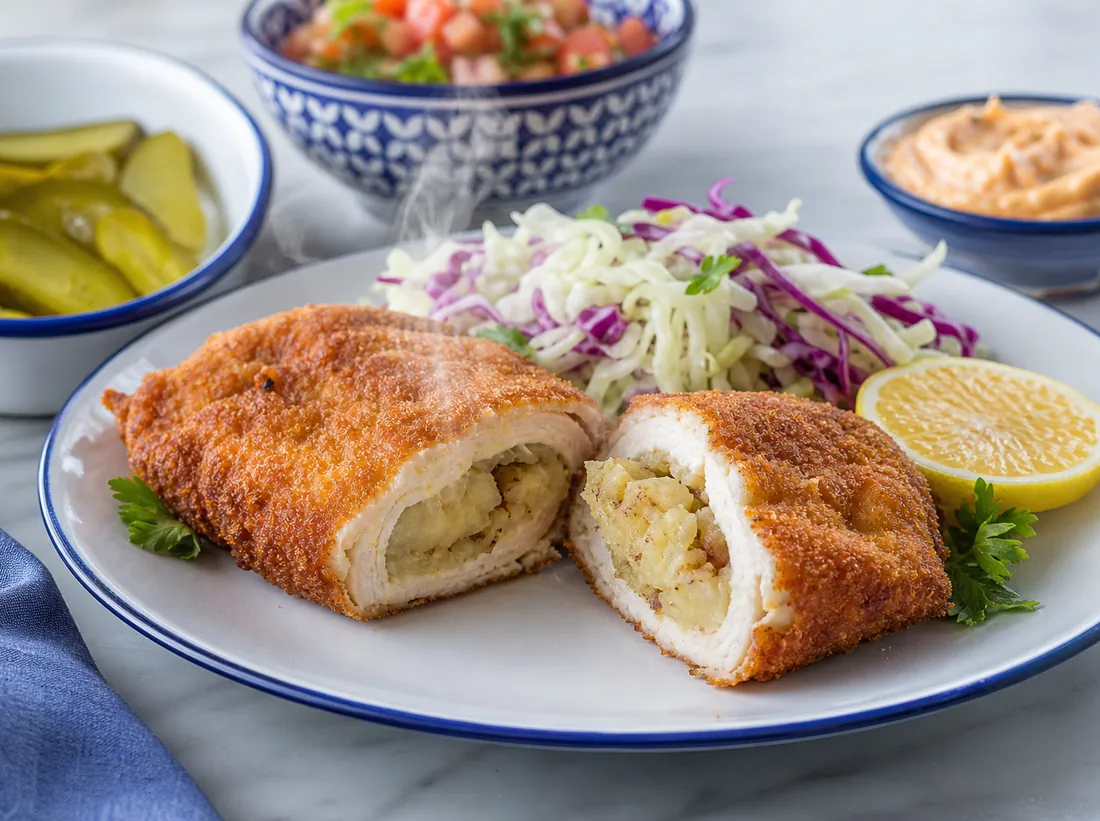
SwitzerlandCordon bleuVeal or porkStuffed with ham and cheese, then coatedWith chips and saladKosher version: chicken with smoked turkey breast and mustard, no cheese
GermanyJägerschnitzelPork or veal, sometimes uncoatedCrumbs, or flour onlyIn mushroom sauce, often with cream, with spätzle or chipsKosher with chicken or veal and a mushroom sauce on stock, no cream
GermanyHolsteiner SchnitzelVealFlour, egg and crumbsTopped with a fried egg, capers and anchoviesKosher cooks leave out the anchovies, since fish is not served with meat
GermanyPaprikaschnitzelPork or vealFlour or crumbsIn a sauce of red peppers and tomatoesKosher with chicken or veal; the sauce is parve
PolandKotlet schabowyPorkEgg and crumbs, fried in fatWith potatoes and cabbageNot kosher. The same method works with chicken or turkey
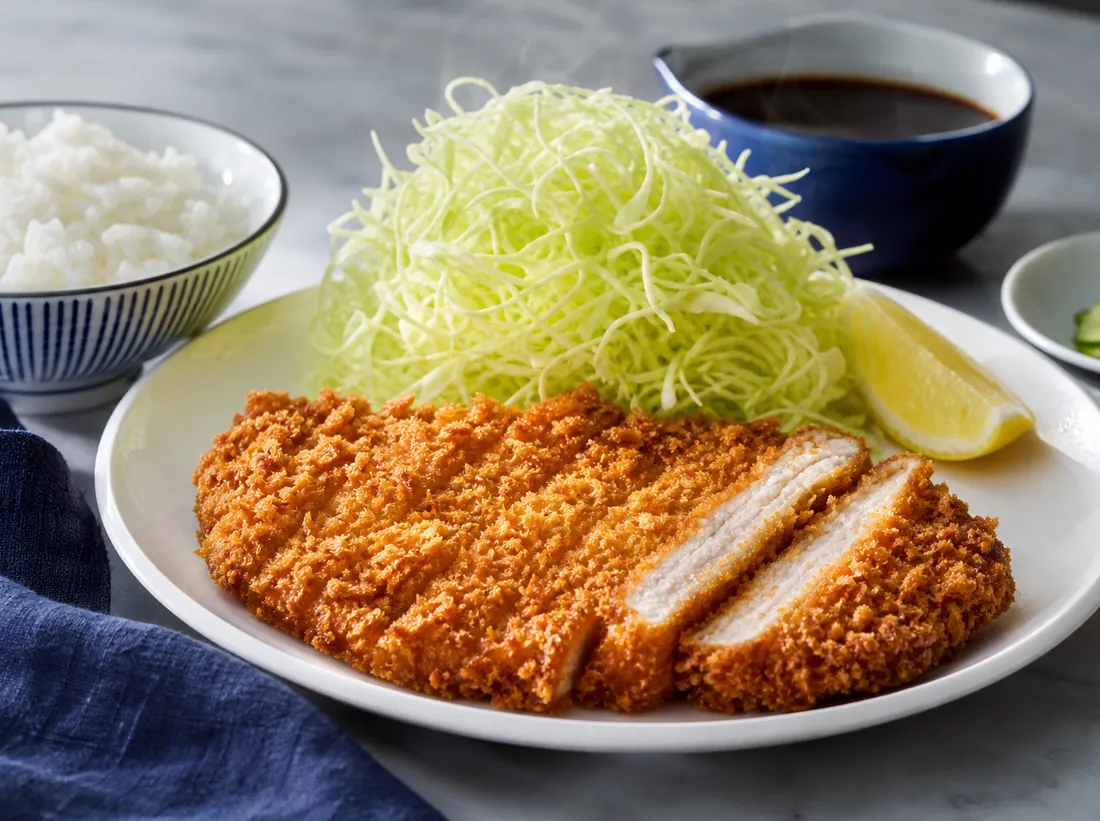
JapanTonkatsuPorkFlour, egg and panko, deep friedWith shredded cabbage, rice, miso soup and tonkatsu sauceNot kosher. The kosher counterpart is chicken katsu
JapanChicken katsuChickenFlour, egg and pankoWith rice and cabbage, in curry sauce or in a sandwichKosher with a sauce that contains no fish
AustraliaChicken schnitzel and parmaChickenCrumbsIn pubs with chips and salad. The parma is topped with tomato sauce and cheeseThe schnitzel itself is kosher in oil. The parma, with cheese, is not
United StatesChicken fried steakBeefSeasoned flour, a dip in egg and milk and flour again, no crumbsIn a white milk gravyKosher version: egg only dip and a parve gravy
IsraelChicken schnitzelChicken breast, sometimes turkeyFlour, egg seasoned with mustard and garlic, crumbs and sometimes sesameWith mash, rice or ptitim and salad, or cold in a sandwichMeat, fried in oil, no dairy
IsraelSchnitzel in pita and baguetteChickenAs the Israeli schnitzelWith hummus or tahini, salad, pickles, chips and ambaMeat. Tahini and hummus are parve
IsraelSchnitzel in challahChickenAs the Israeli schnitzelIn soft challah with matbucha, aubergine, tahini and pickles, a Friday dishMeat, in a parve challah
IsraelThe army schnitzelChicken or turkeyA simple coating, fried in large batchesIn the dining hall with rice and sides, or cold in a rollMeat, kosher
Israel and Jewish communitiesPesach schnitzelChickenPotato starch, egg and matzo mealAs the rest of the year, with salad and mashKosher for Pesach

Every one of these dishes is possible in a kosher kitchen: kosher meat, frying in oil instead of butter or lard, and no milk or cheese next to the meat.

The history of schnitzel

Vienna

Pounded slices of meat, coated in crumbs and fried, appear in German language cookbooks from early on, and the name Wiener Schnitzel is documented in the 19th century. In Austria and Germany the name Wiener Schnitzel on its own is still reserved for veal, and a schnitzel of any other meat must say so in its name.

Milan

Cotoletta alla milanese, a bone in veal chop in an egg and crumb coat, is the closest relative of the Viennese schnitzel. Milan takes pride in a long lineage for the dish, and the two cities still argue over who came first.

Legend and fact

A popular story says Field Marshal Radetzky brought the recipe from Milan to Vienna in the 19th century. Researchers have found no record of it, and the story appeared in print only long after his death. It is a fine legend, not history.

Japan

At the end of the 19th century a Tokyo restaurant reworked the European cutlet: pork in a panko coat, deep fried. That was the birth of tonkatsu, and chicken katsu has since become one of the most common dishes of modern Japanese cooking.

The Land of Israel

Jews from Central Europe brought schnitzel to the Land of Israel before the state was founded. In the austerity years after 1948 veal was almost unobtainable, while chicken and turkey were more available and cheaper, so schnitzel moved to chicken breast and turkey. Kashrut changed it further: frying in oil instead of butter, and no milk in the coating.

From austerity to every home

From home kitchens schnitzel moved into army dining halls, schools and pita stands, and from there into supermarket freezers, with nuggets and corn schnitzel. Today almost every butcher in Israel sells chicken breast sliced for schnitzel, and it is one of the most common home dishes in the country.

Schnitzel coatings

How each coating behaves in oil at 170 to 180 °C

CoatingTextureOil absorbedBest for
Fine breadcrumbsThin, even and golden, hugs the meatMediumClassic pan schnitzel and Wiener schnitzel
Coarse crumbsCrisper and rougherMediumOven and thick schnitzel
PankoLarge, airy flakes, a strong crunch that lastsMedium to lowAir fryer, oven and fish schnitzel
Crushed cornflakesVery crisp and slightly sweet, browns fastLow to mediumOven, air fryer and children's nuggets
Matzo mealFine, dense and a little hardMediumPesach
Sesame, mixed into crumbsToasty, a fine crunch, burns fastMedium, and sesame itself is rich in oilIsraeli sesame schnitzel and tofu schnitzel
Gluten free crumbs, from rice or cornCrisp and a little hard, colours fastMediumGuests who avoid gluten
Almond flourSoft and nutty, no real crunch, browns fastLow, but almonds are rich in oilA low carbohydrate coating, in oil at 165 to 170 °C
Crushed pretzelsVery crisp and saltyLow to mediumNuggets and oven, with no added salt
Flour only, no crumbsThin, soft and goldenLowPariser schnitzel and quick schnitzel

How much oil a coating absorbs depends first on the oil temperature and on resting on a rack. The ranking holds for oil at 170 to 180 °C and a schnitzel moved to a rack at once.

Four ways to cook schnitzel

Deep fry, pan fry, oven and air fryer, for chicken breast schnitzel 0.5 to 1 cm thick

MethodHeatMinutesApprox. kcal per 100 gCrispness
Deep fryOil at 175 to 180 °C, 4 to 5 cm deep3 to 4 in total260 to 280Very high, even colour
Pan fryOil at 170 to 180 °C, 1 cm deep2 to 3 a side260 to 280High, the classic Israeli schnitzel
Oven220 °C, or 200 °C fan, on a rack15 to 18About 220Medium to high, when the crumbs are toasted first
Air fryer200 °C, in one layer8 to 10, with a flip210 to 225High on top, good underneath

Values are for breaded chicken breast schnitzel. They change with the thickness of the coating, with sesame and with the amount of oil absorbed. In frying, the depth of the oil matters less than its temperature.

The numbers behind the oil

170-180 °C

Oil temperature

Water in the coating turns to steam at once and the crumbs brown through the Maillard reaction before the meat dries. Below 160 °C the coating soaks up oil.

0.5-1 cm

Schnitzel thickness

An even thickness cooks the whole slice at once. Half a centimetre in the pan, 0.7 cm in the oven, 4 mm for Wiener schnitzel.

1 cm

Oil depth in the pan

Enough to cover half the schnitzel. About 400 ml in a 28 cm pan.

74 °C

In the centre of the breast

The safe temperature for chicken, measured at the thickest point. For fish, 63 °C.

1 minute

Rest on a rack

Steam escapes, the coating sets and heat keeps moving to the centre. In a pile or on paper the coating softens.

3-4

Schnitzels per batch

In a 28 cm pan. More than that drops the oil below 160 °C.

15 minutes

Chilling before frying

The flour absorbs liquid from the egg and the coating sticks. Wiener schnitzel, by contrast, is fried at once, so the crust can puff.

What to serve with schnitzel

Sauce

Amba

A pickled mango sauce, sour and spicy, that balances the frying. Best in schnitzel pita and baguette.

Sauce

Tahini

Parve, so it suits a meat schnitzel. Raw tahini with lemon, garlic and water, in pita or for dipping.

Sauce

Mustard

In the egg before coating and on the side. Smooth mustard for Wiener and stuffed schnitzel, grainy mustard for a sandwich.

Sauce

Ketchup

The children's sauce for nuggets, and good with chips on the same plate.

Sauce

Garlic mayonnaise

Mayonnaise with crushed garlic and lemon, parve, in a baguette or a sandwich.

Sauce

Lemon

The standing garnish of schnitzel since Vienna. Squeeze it over just before the first bite.

Side

Israeli salad

Tomato, cucumber and onion chopped fine, with lemon and olive oil. The acidity cuts through the frying.

Side

Chips

In pita, next to nuggets or on the plate. At home they can be made in the air fryer before the schnitzels.

Side

Mashed potato

Parve mash with olive oil or stock instead of butter and milk, so it suits a meat schnitzel.

Side

Rice or ptitim

The side of the Israeli lunch, next to the schnitzel and a salad.

Side

Potato salad

Viennese style: warm potatoes in vinegar, stock and oil, no mayonnaise. With veal schnitzel.

Schnitzel for every menu

Gluten free

Rice flour and gluten free crumbs

Rice flour or potato starch instead of flour, and gluten free crumbs from rice or corn instead of breadcrumbs. Check the mustard and spices too, and use cornflakes only if they are labelled gluten free.

Pesach

Potato starch and matzo meal

Potato starch instead of flour and matzo meal instead of crumbs. Those who avoid gebrochts coat in potato starch and ground nuts. Ordinary cornflakes are not kosher for Pesach.

Less oil

Oven and air fryer

In the oven 60 ml oil for six people, in the air fryer 20 ml for four. Toast the crumbs first, bake on a rack and pound to an even thickness.

Vegan

Tofu, aubergine, cauliflower and corn

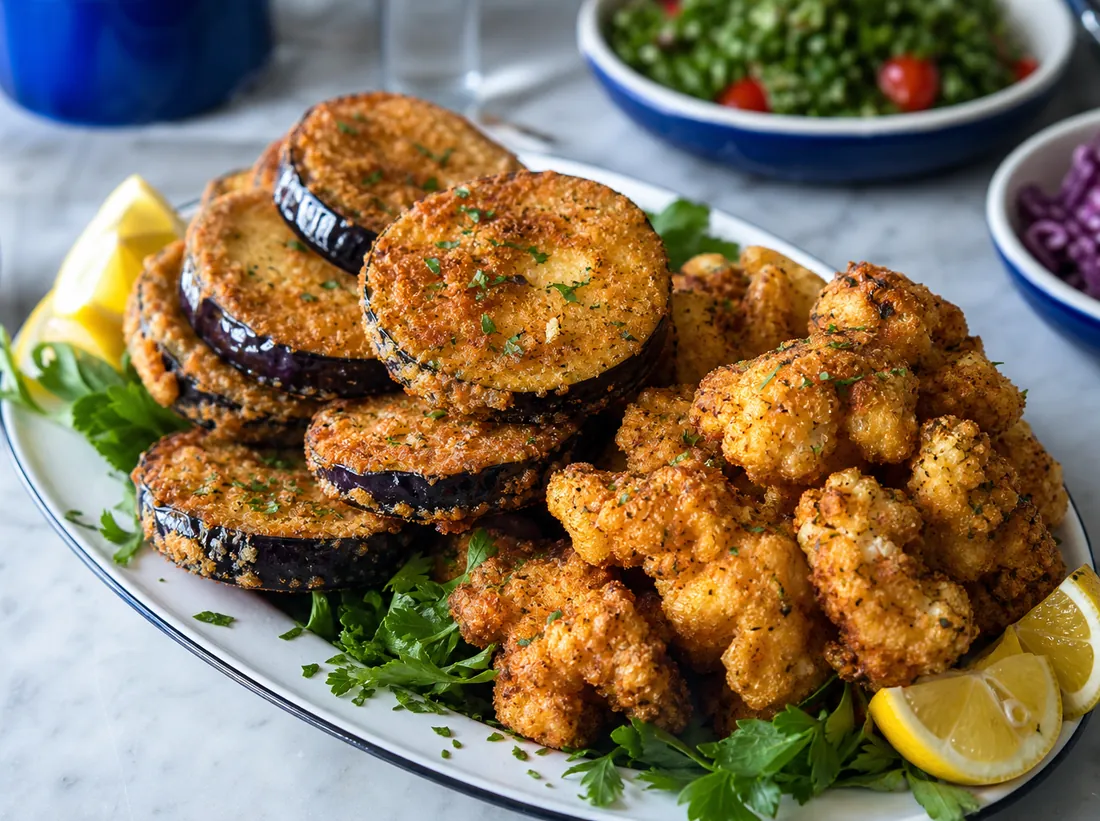
A batter of flour, water and mustard instead of egg. Tofu schnitzel, aubergine schnitzel and cauliflower schnitzel are parve and vegan.

Egg free

A flour and water batter

60 g flour, 100 to 120 ml water and a spoon of mustard hold the crumbs like egg. Mayonnaise works too, but it contains eggs.

Children

Nuggets and fish fingers

20 g pieces, gentle seasoning and cornflakes. Sesame is a common allergen, so on a children's table label it or leave it out.

Low carbohydrate

Almond flour and sesame

A coating of almond flour and sesame instead of flour and crumbs. It browns fast, so fry at 165 to 170 °C.

Kashrut

Meat, parve or dairy

Chicken, turkey and veal schnitzel is meat and fried in oil, with no butter and no milk in the eggs. Tofu, vegetable and fish schnitzel is parve, and fish is not served with meat.

Schnitzel school

  1. Slice and pound

    Slice the breast horizontally into two or three slices, lay between two sheets of plastic and pound from the centre outwards to an even half centimetre.

  2. Dry

    Pat each slice with paper towel. A dry surface is what lets the flour cling.

  3. Season

    Salt in the flour and the egg, and spices in the egg: mustard, garlic and pepper, sometimes mayonnaise or soy. The seasoned egg wash is what gives schnitzel its flavour.

  4. Three stations

    Flour, egg and crumbs, in that order, left to right. One dry hand for the flour and crumbs and one wet hand for the egg, so your fingers do not get breaded.

  5. Coat

    In the flour and shake, in the egg and let it drip, in the crumbs, pressing lightly on both sides.

  6. Chill

    15 minutes in the fridge in a single layer. The flour absorbs liquid from the egg, and the coating sticks instead of falling off in the pan.

  7. Heat the oil

    Oil 1 cm deep, to 170 to 180 °C. Without a thermometer: a crumb dropped in sizzles at once and rises to the surface.

  8. Fry in batches

    3 to 4 schnitzels at a time, 2 to 3 minutes a side, one turn with tongs. Between batches lift out burnt crumbs and wait for the oil to heat up again.

  9. Check

    At the thickest point the meat is white all through, and a thermometer reads 74 °C.

  10. Rest on a rack

    Move to a rack over a tray in one layer and sprinkle with a pinch of salt. For a big batch keep them on the rack in a 100 °C oven, uncovered, until all are ready.

Schnitzel for any number of people

Change the number of people and the portion size, and every ingredient updates in grams, with the cost, calories and protein per portion.

Portion size
Units
1.2kg of food
3Pot to use, litres
₪50Cost of the pot
₪8.3per portion
527kcal per portion
46.8g protein per portion
IngredientAmountCost
The chicken
Chicken breast, sliced for schnitzel1 kg · 12 pcs₪39
The coating
Plain flour100 g₪0.6
Eggs165 g · 3 pcs₪4.0
Mustard15 g₪0.5
Garlic cloves, crushed6 g · 2 pcs₪0.2
Salt, half for the flour and half for the eggs8 g₪0.0
Black pepper2 g₪0.3
Breadcrumbs200 g₪2.7
Sweet paprika4 g₪0.4
Frying and serving
Canola oil for frying, the amount absorbed (about 400 ml in the pan)70 g₪1.0
Lemon, in wedges100 g · 1 pcs₪1.3
Send on WhatsApp

Shelf prices at a large Israeli chain and specialty shops, October 2026. Nutrition from the ingredients in grams, before cooking.

How many calories in Schnitzel? Nutrition facts and calorie calculator

Change the amount of any ingredient, drop one, or pick a lighter version, and the numbers per serving update at once: calories, fat, carbs, protein, sodium and fibre.

Schnitzel has 263 calories per 100 g. A 200 g serving made with our recipe has 527 calories: 46.8 g protein, 18.7 g fat and 38.8 g carbohydrates.

Lighter

Ingredients, for the whole recipe

  • 12 pcs200 kcal per serving
  • 100 g61 kcal per serving
  • 3 pcs39 kcal per serving
  • 15 g3 kcal per serving
  • 2 pcs1 kcal per serving
  • 8 g0 kcal per serving
  • 2 g1 kcal per serving
  • 200 g120 kcal per serving
  • 4 g2 kcal per serving
  • 70 ml95 kcal per serving
  • 1 pcs5 kcal per serving

What each add-on adds to Schnitzel

Values for the amount in the row, from the national food database.

Add-onCaloriesProtein, gFat, g
One large egg837.35.5
A tablespoon of oil122013.8
Chicken breast, 100 g raw12022.52.6
Chicken thigh, 100 g raw12119.74.1

How to make Schnitzel

In cook mode the screen stays on, tap a step when it is done, and the timers run next to each step.
  1. Slice each breast horizontally into two or three thin slices. Place between two sheets of plastic and gently pound with a meat mallet or the base of a pan to an even 0.5 cm.
  2. Set up three deep plates: flour with half the salt in the first, eggs beaten with the mustard, garlic, remaining salt and pepper in the second, breadcrumbs with paprika in the third.
  3. Pat the slices dry with paper towels. Dip each into the flour and shake off the excess, then into the egg and let the excess drip, and finally into the crumbs, pressing lightly on both sides.
  4. Lay the coated schnitzels on a tray in a single layer and chill for 15 minutes so the coating sets.
  5. Heat about 400 ml canola oil in a wide frying pan, about 1 cm deep, to 170 to 180 °C. A crumb dropped into the oil should sizzle at once.
  6. Fry 3 or 4 schnitzels at a time, without crowding, for 2 to 3 minutes a side, until golden. Turn only once, with tongs.
  7. Check the first schnitzel: at its thickest point the meat is white all the way through, and a thermometer reads at least 74 °C.
  8. Move to a rack over a tray, not into a pile. Between batches lift out burnt crumbs with a slotted spoon and top up the oil if needed. Serve with lemon wedges.

The science of Schnitzel

Kitchen science

Why the schnitzel coating sticks

Flour absorbs the moisture on the surface of the meat and forms a tacky layer, the egg clings to it, and the crumbs cling to the egg. With heat the egg proteins set into a glue that holds everything together. Fifteen minutes in the fridge lets the flour absorb liquid from the egg, so the coating comes out even and does not peel.

Kitchen science

The right temperature for frying schnitzel

At 170 to 180 °C the water in the coating boils at once and turns to steam. The pressure of that escaping steam limits how much oil gets in, while the crumbs brown through the Maillard reaction and gain colour and flavour. In oil that is too cool the coating sits for a long time, gets soggy and greasy. In oil that is too hot it burns before the centre reaches 74 °C.

Kitchen science

Why chicken breast dries out

Chicken breast is very lean, and above 60 to 65 °C the proteins in the muscle fibres contract and squeeze out the juice. Pounding to an even thickness lets the whole slice reach the safe temperature at once, without the edges overcooking. Salt in the egg seeps a little way into the meat and helps it hold water.

Kitchen science

Why schnitzel goes soft after frying

Most of the oil enters a schnitzel after it leaves the pan: as it cools, the steam inside condenses, a slight vacuum forms and surface oil is drawn in. A pile of schnitzels or paper underneath traps steam and softens the coating. A rack lets the steam escape on every side.

Schnitzel in every kitchen

Viennese

A very thin slice of veal fried in plenty of fat, with a coating that puffs and lifts slightly off the meat. In Austria it comes with lemon, potato salad and lingonberry jam. The kosher version, like this one, is fried in oil.

Milanese

In Italy this is a bone in veal chop, pounded, dipped in egg and crumbs and fried until golden. The kosher version is fried in olive oil.

Sesame

The familiar Israeli version: a third of the crumbs are replaced with sesame seeds. Sesame browns fast and gives a toasted aroma and a fine crunch, so the oil should be a little cooler.

Cornflakes

Crushed cornflakes instead of crumbs, alone or half and half. They are dry and very crisp and brown quickly because of their sugar, which makes them ideal for oven baked schnitzel.

Oven baked

The same coating, a light spray of oil on both sides and a hot oven on baking paper. Less oily and less evenly coloured, and very practical for large quantities.

Tofu schnitzel

Slices of firm tofu, dried well, coated in flour, a flour and water batter and crumbs. A vegan, parve version that also suits a dairy table.

Common Schnitzel problems and how to fix them

The schnitzel coating falls off

The meat was wet, there was too much flour, or the schnitzel was turned more than once. Dry the slices, shake off excess flour, let the coating rest for 15 minutes in the fridge, and turn only once.

My schnitzel is dry

It was thick and uneven or fried too long. Pound to 0.5 cm, fry for 2 to 3 minutes a side, and take it out when the centre reaches 74 °C, no more.

The schnitzel is greasy

The oil was too cool or the pan was crowded and the temperature dropped. Fry a few at a time, let the oil come back to heat between batches, and drain on a rack.

Burnt outside, raw inside

The oil was too hot or the schnitzel too thick. Drop to medium heat, and for a thick schnitzel fry until golden and finish for 5 minutes in a 180 °C oven.

The schnitzel does not stay crisp

It was stacked, covered or laid on paper while hot. Cool on a rack in a single layer, and reheat in a hot oven, not the microwave.

There are black specks on the schnitzels

Those are crumbs from earlier batches that burnt in the oil and stuck to the coating. Lift them out with a slotted spoon between batches, and for large quantities change the oil halfway.

Storing, freezing and reheating

3 days

In the fridge

3 months

In the freezer

2+4

To cool

Bring it from 60 to 21 °C within two hours and down to 5 °C within four more. Split a big pot into shallow boxes.

75 °C

Reheating

In a hot 200 °C oven on a rack for 6 to 8 minutes, or in a dry frying pan. Not in the microwave, which softens the coating.

Nutrition of Schnitzel

From our recipe, per bowl and per 100 g, next to the national food database.

ServingkcalProtein, gFat, gCarbs, gFibre, g
Our recipe, a 200 g portion52746.818.738.82.7
Our recipe, 100 g26323.49.319.41.4
Typical Schnitzel, 100 g27025.79.318.31.2
Typical Schnitzel, 100 g (2)26326.011.212.31.0

What the ingredients of Schnitzel cost

What each ingredient costs in one pot, and where to buy it.

IngredientPriceIn this potWhere to buy
Chicken breast, sliced for schnitzel₪39 per kg₪39Supermarket
Eggs₪1.4 each₪4Supermarket
Breadcrumbs₪14 per kg₪2.7Supermarket
Lemon, in wedges₪1.4 each₪1.3Greengrocer
Canola oil for frying, the amount absorbed (about 400 ml in the pan)₪15 per litre₪1Supermarket
Plain flour₪5.9 per kg₪0.6Supermarket
Mustard₪30 per kg₪0.4Supermarket
Sweet paprika₪86 per kg₪0.3Supermarket
Black pepper₪139 per kg₪0.3Supermarket
Garlic cloves, crushed₪34 per kg₪0.2Greengrocer
Salt, half for the flour and half for the eggs₪2.1 per kg₪0Supermarket

Shelf prices at a large Israeli chain and specialty shops, October 2026, VAT included. Vegetable prices change with the season.

Schnitzel and its culture

Schnitzel is Friday lunch, a school sandwich, an army dining hall staple and the food of the annual school trip. Almost every Israeli home has someone who fries schnitzels for the whole family, and at the children's tables of weddings and bar mitzvahs schnitzel nuggets are the first thing to run out. On Shabbat it is eaten cold, straight from the fridge, in challah with hummus.

In Jewish communities around the world schnitzel is a kosher dish everyone knows, found in kosher restaurants, Jewish schools and community meals. In Australia, for one, chicken schnitzel is a hugely popular everyday dish. For large events schnitzels and nuggets are ordered on trays, in a single layer and uncovered, so they arrive crisp for dozens or hundreds of guests.

Make Schnitzel a meal

Shabbat

Ready Shabbat food

Soup, hamin, mains and sides, with a quantity calculator and prices.

Plan Shabbat
Hosting

Hosting trays

9 trays to go with the soup, with a planner by number of guests.

Tray planner
Events

Catering

A whole menu in grams per guest, with a reheating table.

Menus

What to serve with Schnitzel

Serve with lemon wedges, mashed potato, rice or ptitim and a finely chopped salad. In pita or a baguette add hummus or tahini, salad, pickles and chips, with hot sauce for those who want it.

Schnitzel in large quantities: events, offices and communities

How much of everything by number of guests, at a 200 g portion. For trays, catering and community kitchens.

Guestskg of food3 kg traysCost of ingredients
255.02₪208
50104₪415
100207₪830
2004014₪1,660
50010034₪4,151

Every ingredient for any number of guests is in the calculator above: type the number of people.

Order Schnitzel

A ready pot for Shabbat, an event or the office, ordered ahead.

  • Cooked to order, for Shabbat, an event or the office.
  • Tell us how many people and when, and we send a quote.
  • Delivery in Tel Aviv from ₪35, free over ₪750.

Order Schnitzel for a large event

Large orders in Israel and abroad: events, offices, synagogues, communities and institutions.

  • In Israel: cooked in Tel Aviv and delivered to events in the area, and to large events anywhere in the country on a quote.
  • Abroad: for communities, events and restaurants. Tell us where, how many and when, and we come back with a quote and options.
  • Institutional quantities and a shopping list for any number of guests, in the calculator above.
Skip the map
Loading the map

Where we are

Complete99, 99 Ibn Gabirol, Tel Aviv

03-523-1810

What is near the restaurant

  • Gan HaIr MallShopping · 390 m
  • Yitzhak Rabin MemorialMemorial · 440 m
  • Tel Aviv-Yafo City HallCity hall · 460 m
  • Rabin SquareSquare · 610 m
  • Holocaust MemorialMemorial · 640 m
  • Masaryk SquarePark · 880 m
All food businesses on Ibn Gabirol Street

Frequently asked questions

How long do you fry schnitzel?

2 to 3 minutes a side in oil at 170 to 180 °C, for a schnitzel 0.5 cm thick. A thicker one needs slightly lower heat and another minute a side, until the centre reads 74 °C.

How do I make chicken schnitzel in the oven?

Coat as usual, lay on baking paper, spray a little oil on both sides and bake for 18 to 20 minutes at 220 °C, turning halfway. Coarse crumbs or cornflakes give a crisper result in the oven.

What is the difference between schnitzel and schnitzelonim?

Schnitzelonim are small pieces or strips of chicken breast, coated and fried like schnitzel. They cook faster, a minute and a half to two a side, and suit children and party platters.

How do I make tofu schnitzel?

Slice firm tofu 1 cm thick, dry it well between towels, season and coat in flour, a flour and water batter and crumbs. Fry for 2 minutes a side. It is vegan and parve.

Chicken or turkey schnitzel?

Most schnitzels in Israel are chicken breast, which is tender and mild. Turkey schnitzel is larger, slightly drier and deeper in flavour. Either way, pound it to an even thickness.

Can I freeze schnitzels?

Yes. Freeze them coated but not fried on a tray in a single layer, then bag them. Fry straight from frozen over slightly lower heat, one extra minute a side.

How many schnitzels do I need for 40 people?

About two per person, which is 150 to 170 g of raw breast per guest, so 6 to 7 kg of chicken breast for 40. Make nuggets for the children's table, and serve everything in a single layer so it stays crisp.

How many calories are in Schnitzel?

A 200 g portion of Schnitzel made with our recipe has about 527 calories and 46.8 g of protein. Per 100 g: 263 calories.

How much does it cost to make Schnitzel at home?

A tray or pot of 6 portions costs about ₪50 at Israeli shelf prices in October 2026, about ₪8.3 a portion. The calculator above works it out for any number of people.

Order now

Price, extras and availability are set in the ordering menu. You can also call.

Every dish

Home dishes of every community, each with a calculator, a price list and the science.

All the dishes