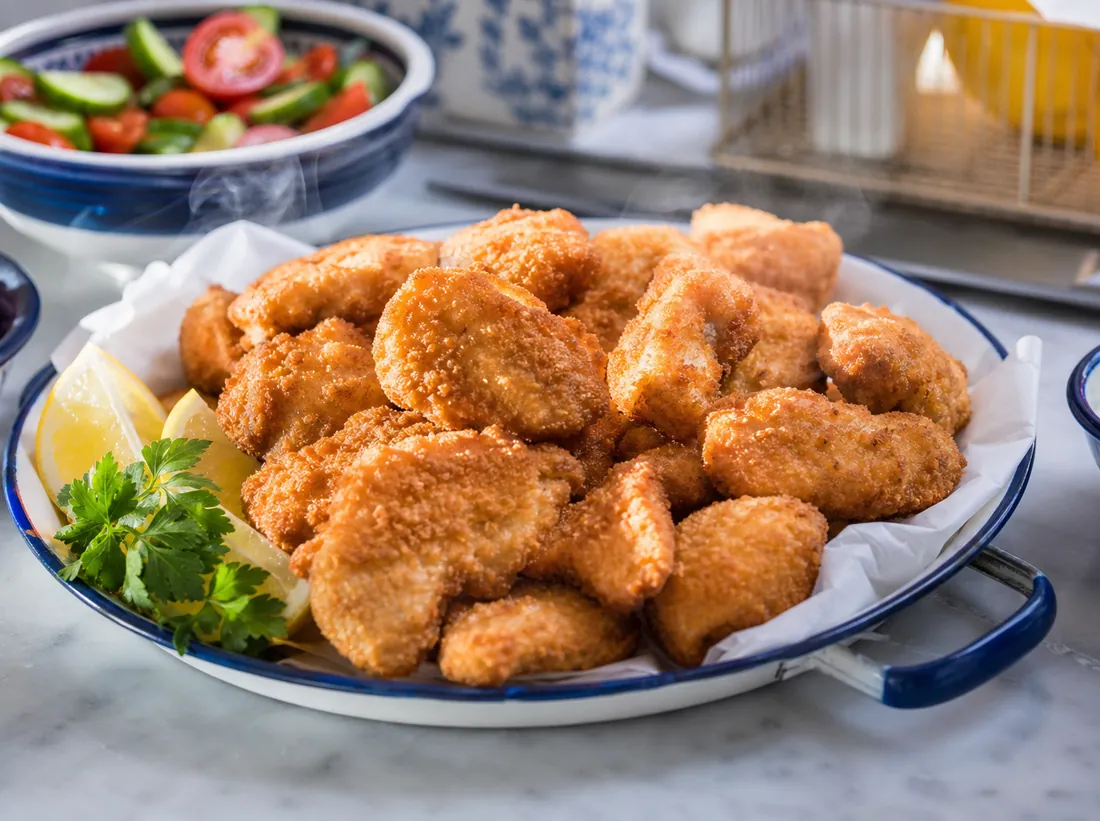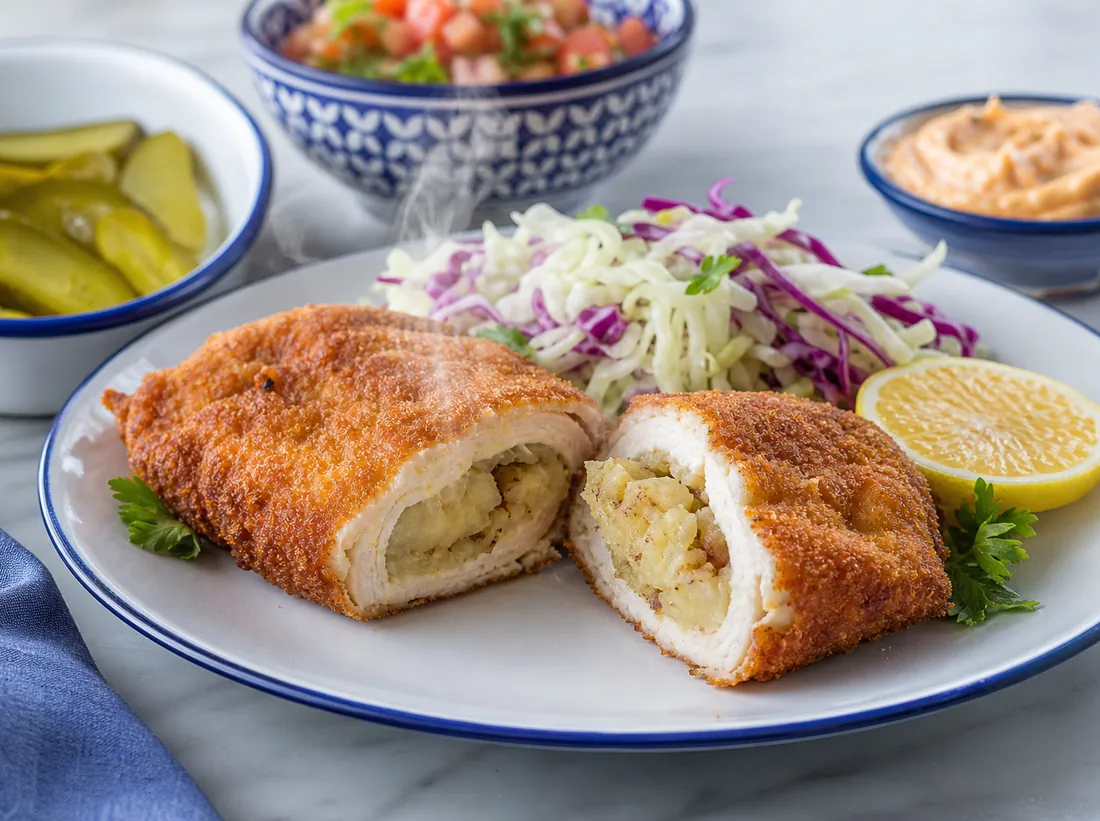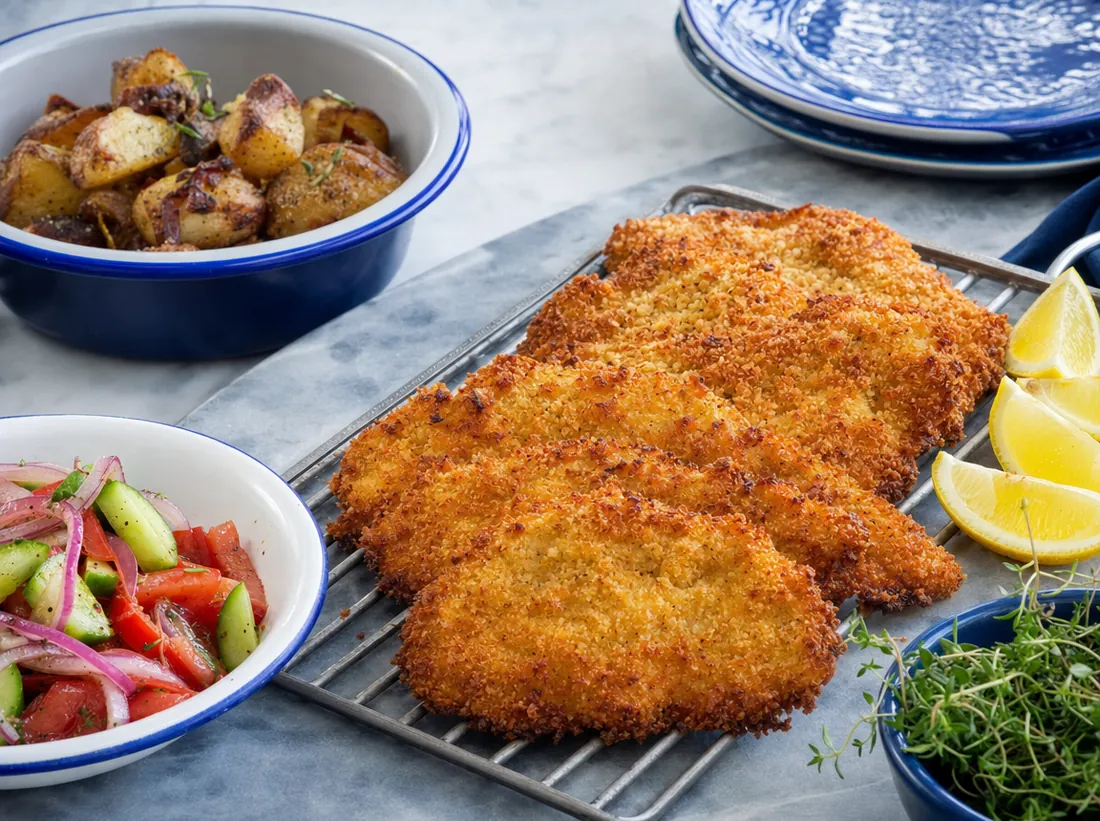
The story of Oven baked schnitzel
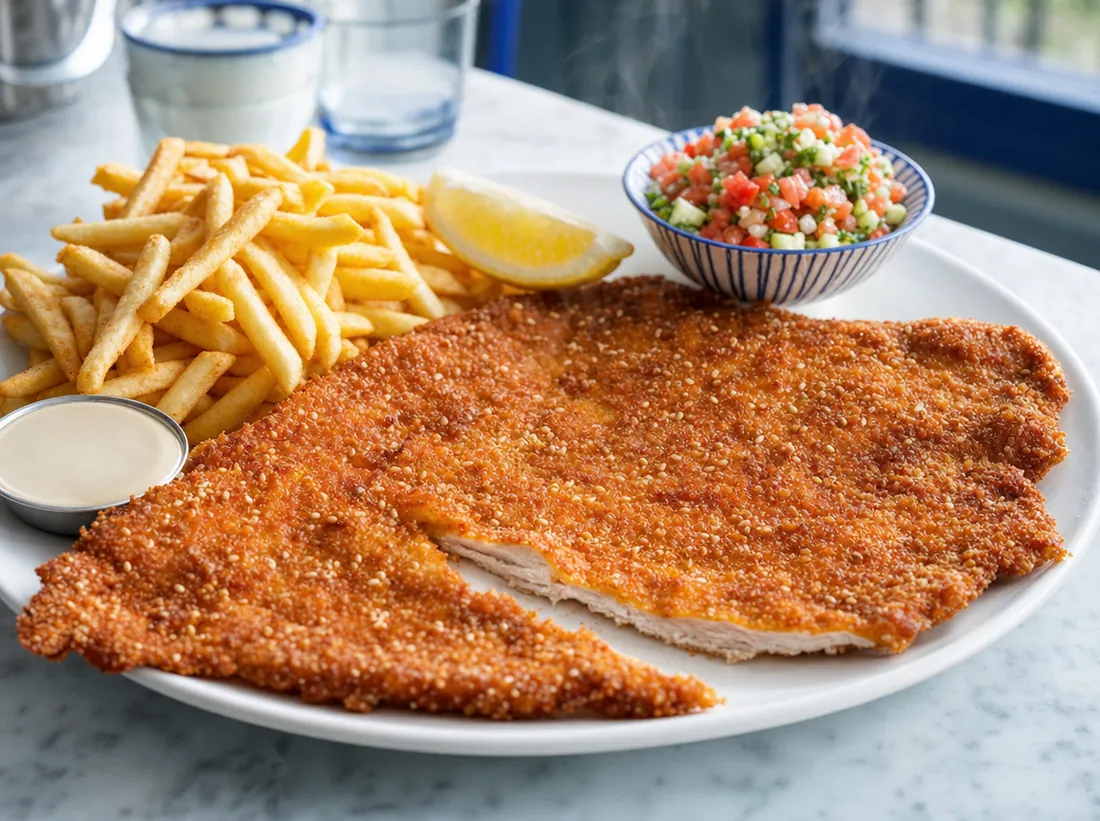
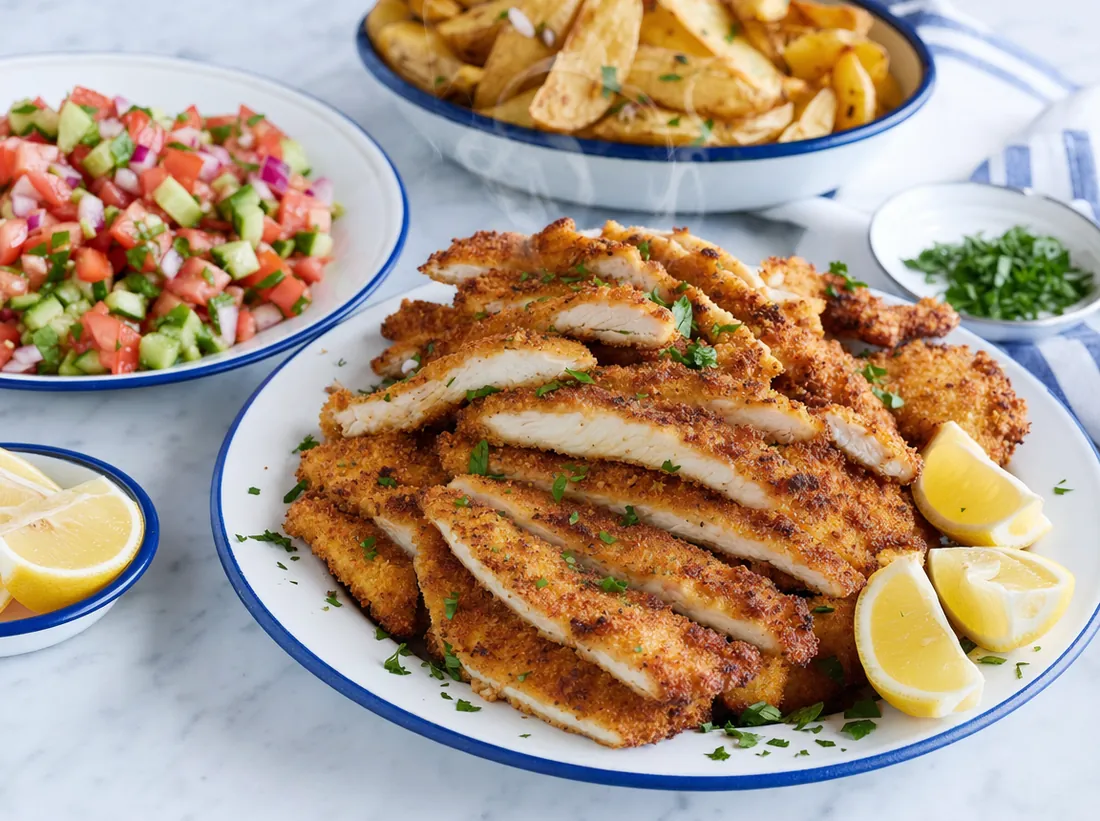
Baked schnitzel was born in the home kitchen, from wanting the taste of schnitzel without standing over a pan of hot oil and filling the house with the smell of frying. In Israel, where schnitzels are made in almost every home before Shabbat, baking became the easy way to make a big batch at once: two trays in the oven instead of six rounds in the pan, with hands free for the salads.
Over the years the coating changed too. Coarse crumbs, panko and cornflakes suit dry heat better than fine crumbs, and baking on a rack moved from restaurant kitchens into homes. Today oven schnitzel is a midweek dinner, a school sandwich and a party tray, and every family keeps its own version, with mustard, with sesame or with mayonnaise.
What makes Oven baked schnitzel itself
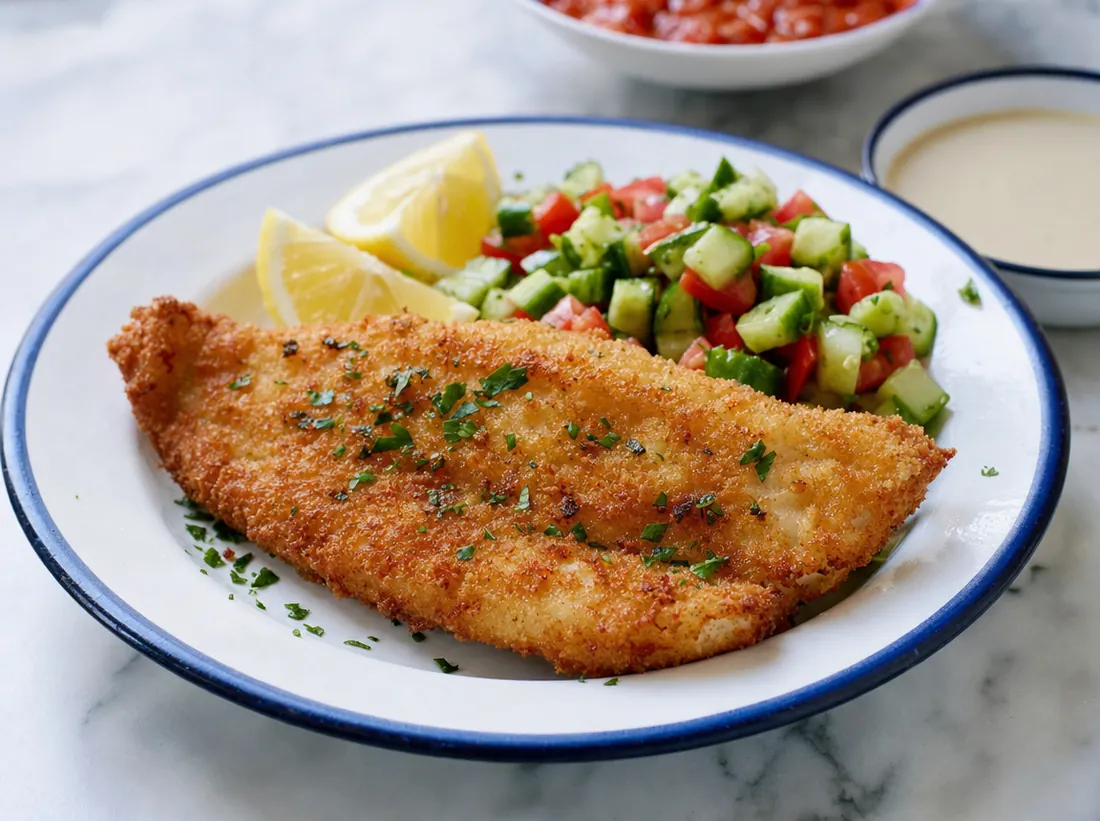
An oven has no bath of hot oil to turn the crumbs golden, so that work is done in advance: the crumbs are toasted in a pan with a little oil until pale gold, and only then used for coating. The chicken is pounded to an even 0.7 cm, a little thicker than for frying, because the dry oven air dries out very thin slices. It bakes at 220 °C on a rack over a tray, with space around each piece, for 15 to 18 minutes, and comes out when the centre reads 74 °C. The result is crisp, less oily than frying and very practical for large quantities.