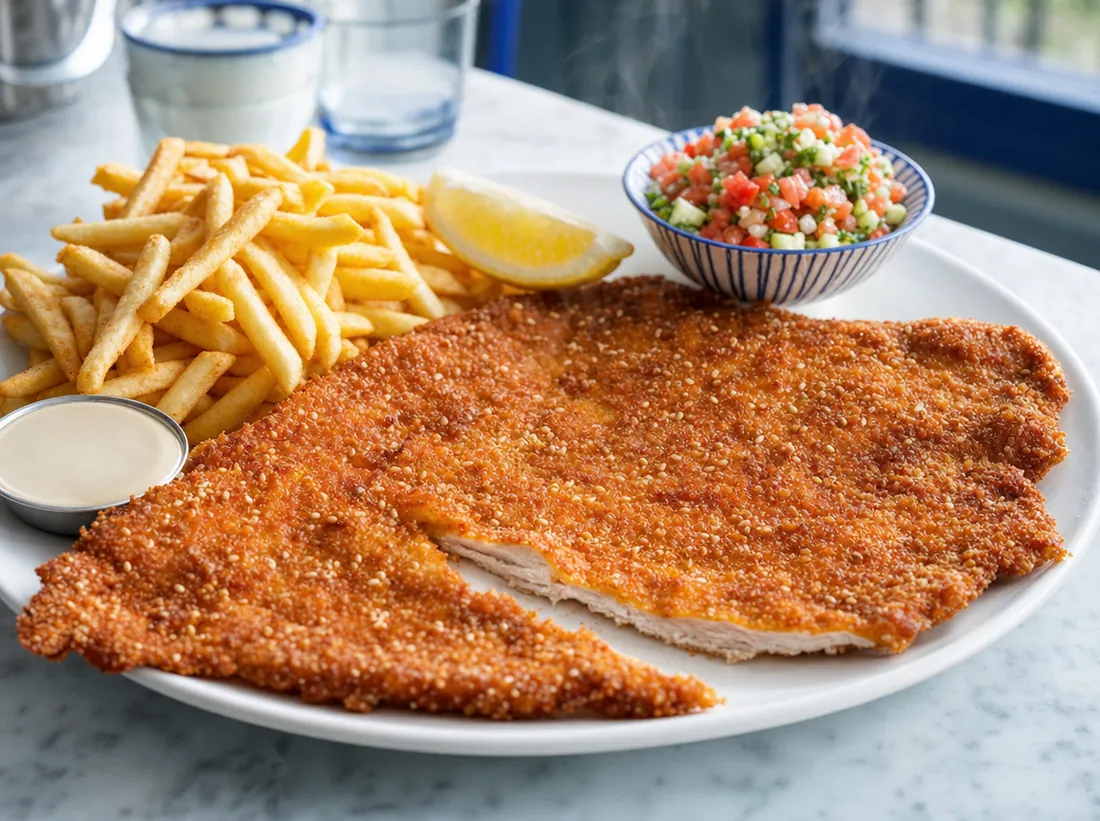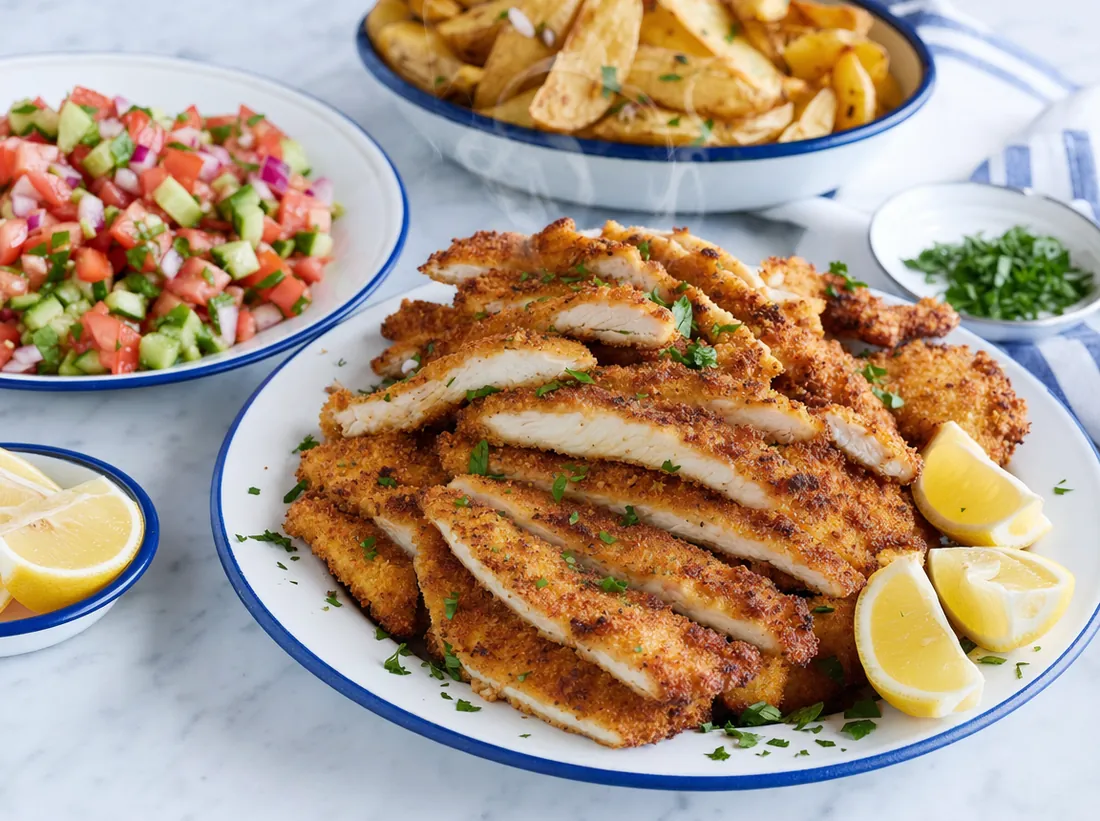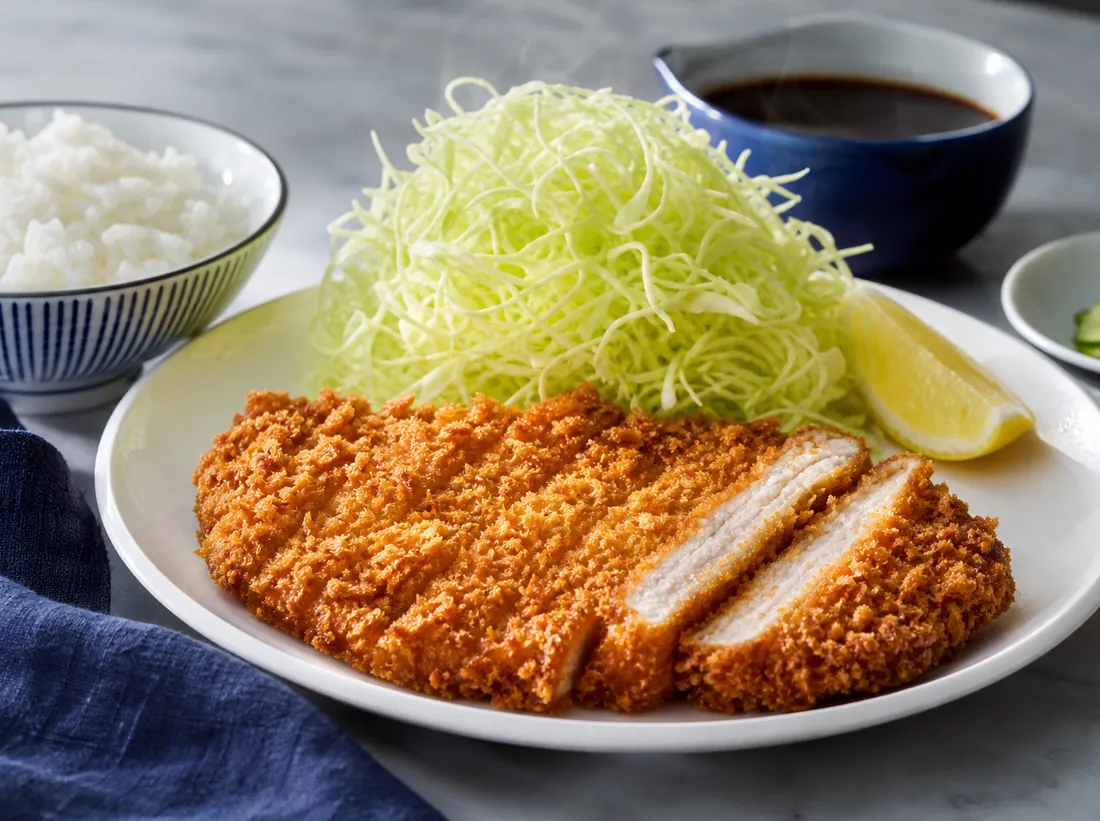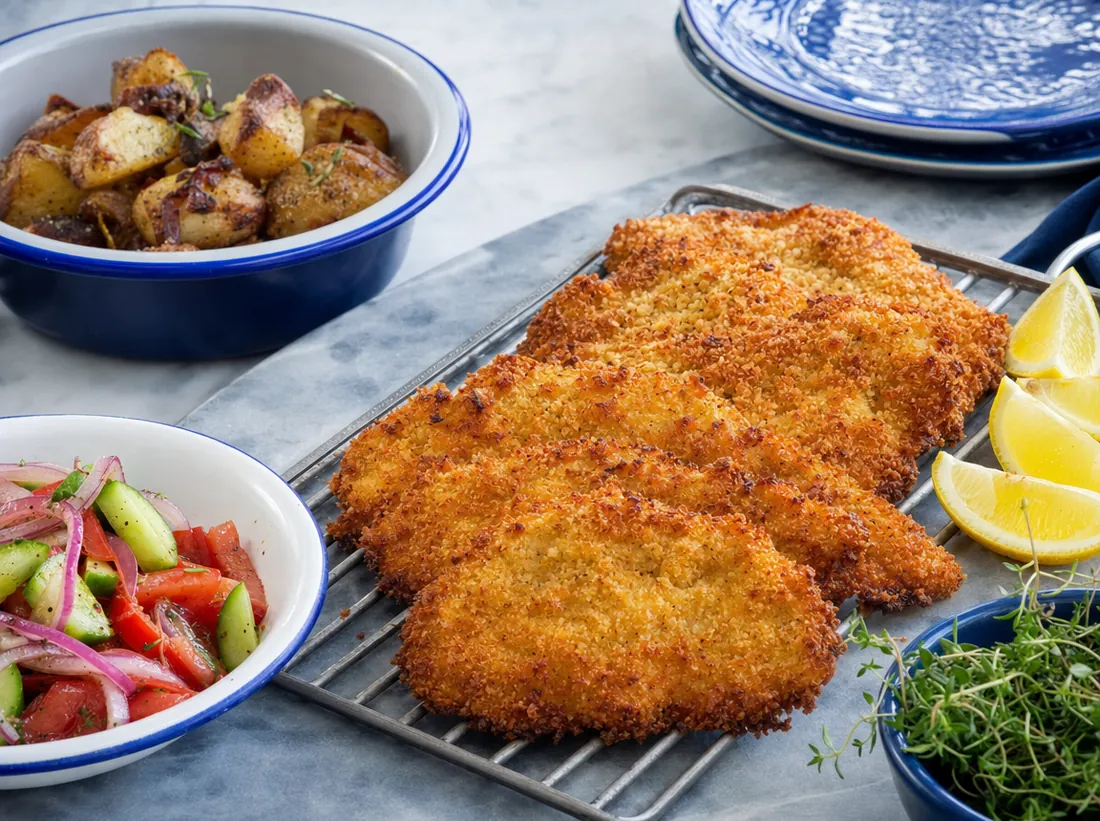
The story of Fish schnitzel
Coated, fried fish is an old food all over Europe and the Mediterranean. In Jewish cooking it is a Shabbat custom: Sephardi and Portuguese Jews who settled in London were known for the fried fish they made on Friday and ate cold on Shabbat, and in mid 20th century Britain frozen fish fingers became a children's classic.
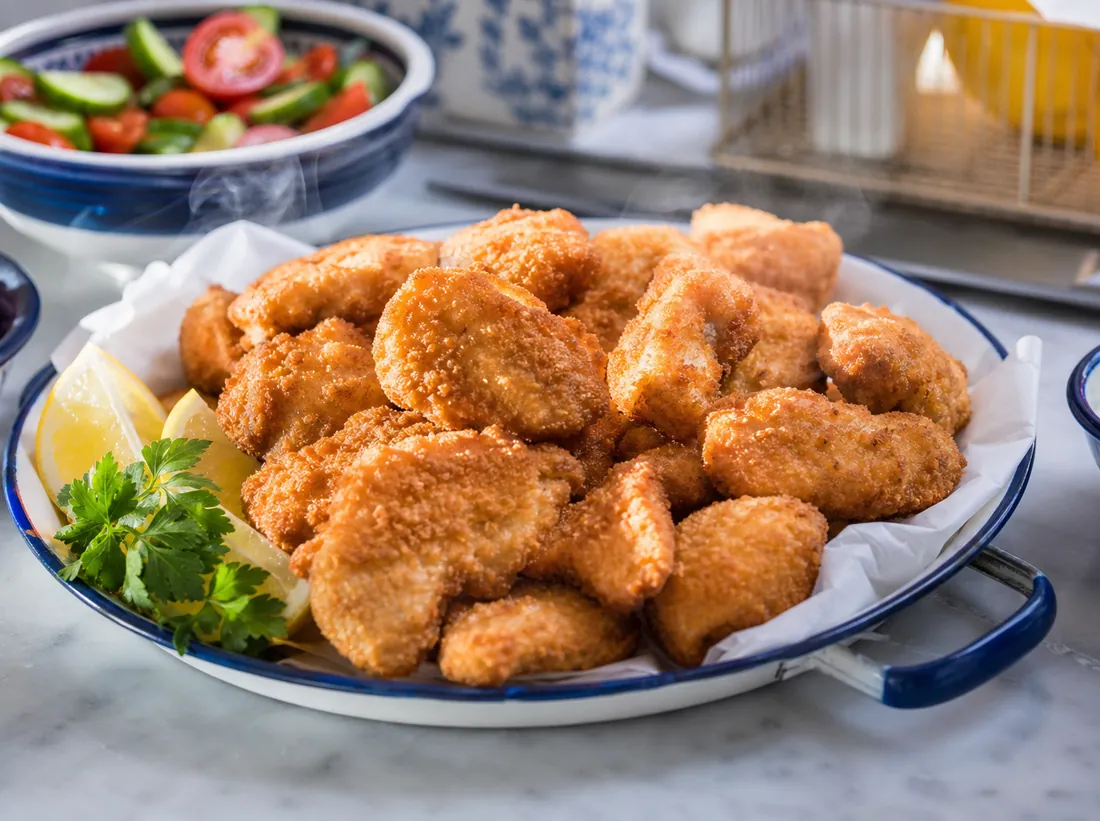
In Israel fish schnitzel is built around tilapia, the fish raised in ponds and in the Sea of Galilee and known there as St Peter's fish, and around frozen cod and hake. It is served in kindergartens and schools, at dairy or parve dinners, and on days when people want fish with no bones and no strong smell. The small strips are called fish fingers.
What makes Fish schnitzel itself
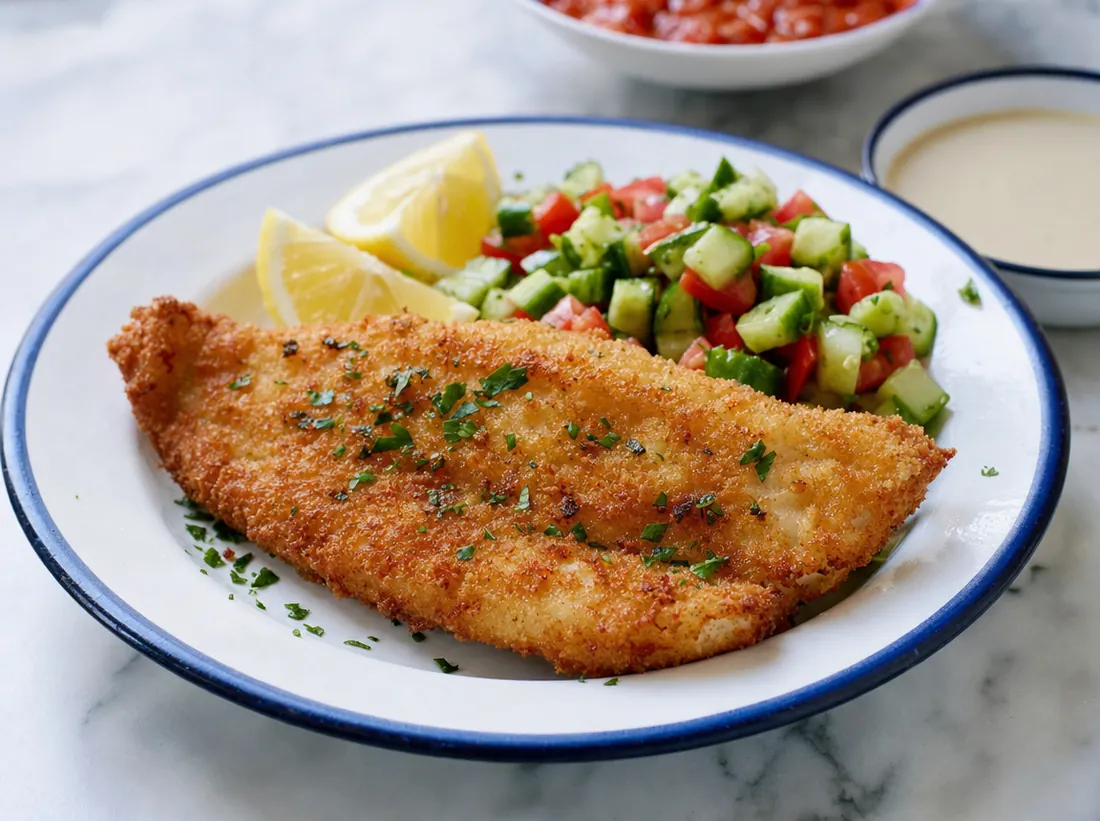
Fish cooks much faster than chicken and flakes easily, so fish schnitzel asks for a gentle hand and speed. The fillet is dried well, salted just before coating and covered in a mix of crumbs and panko that gives crunch without a thick shell. Two to three minutes a side at 175 °C are enough, turned with a wide spatula. It is parve, but kosher custom does not serve fish and meat together on one plate.