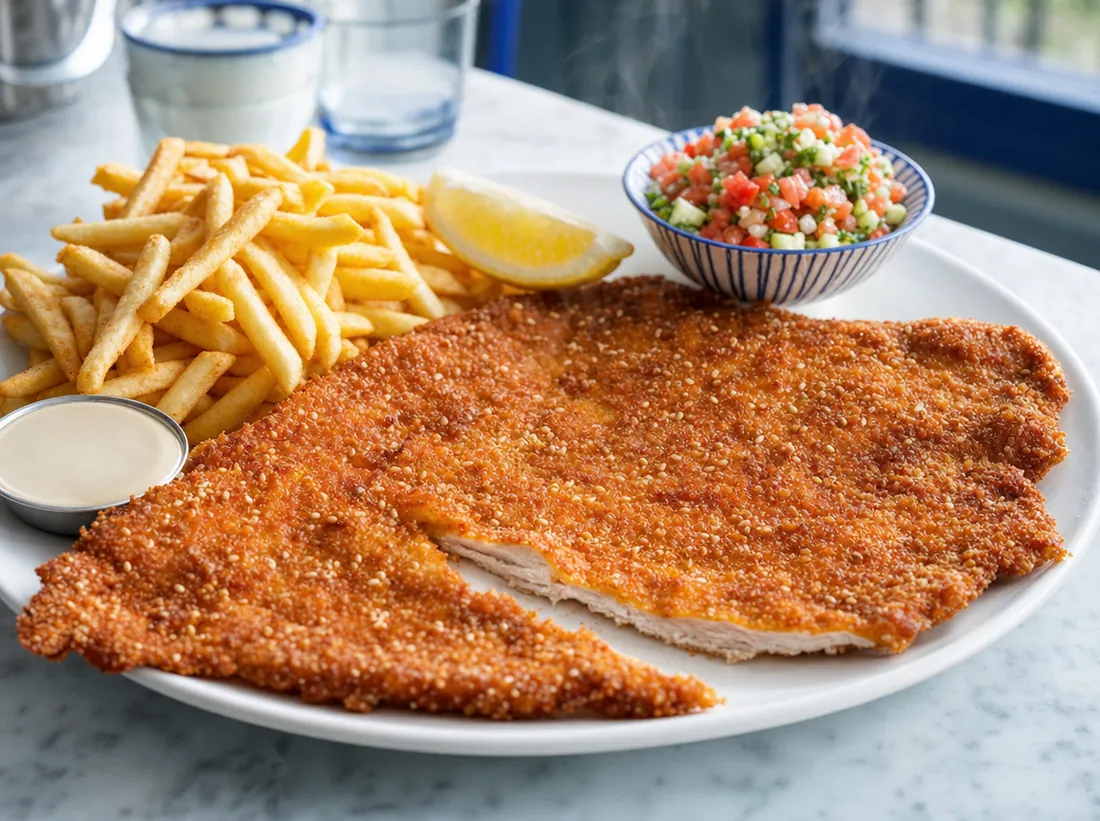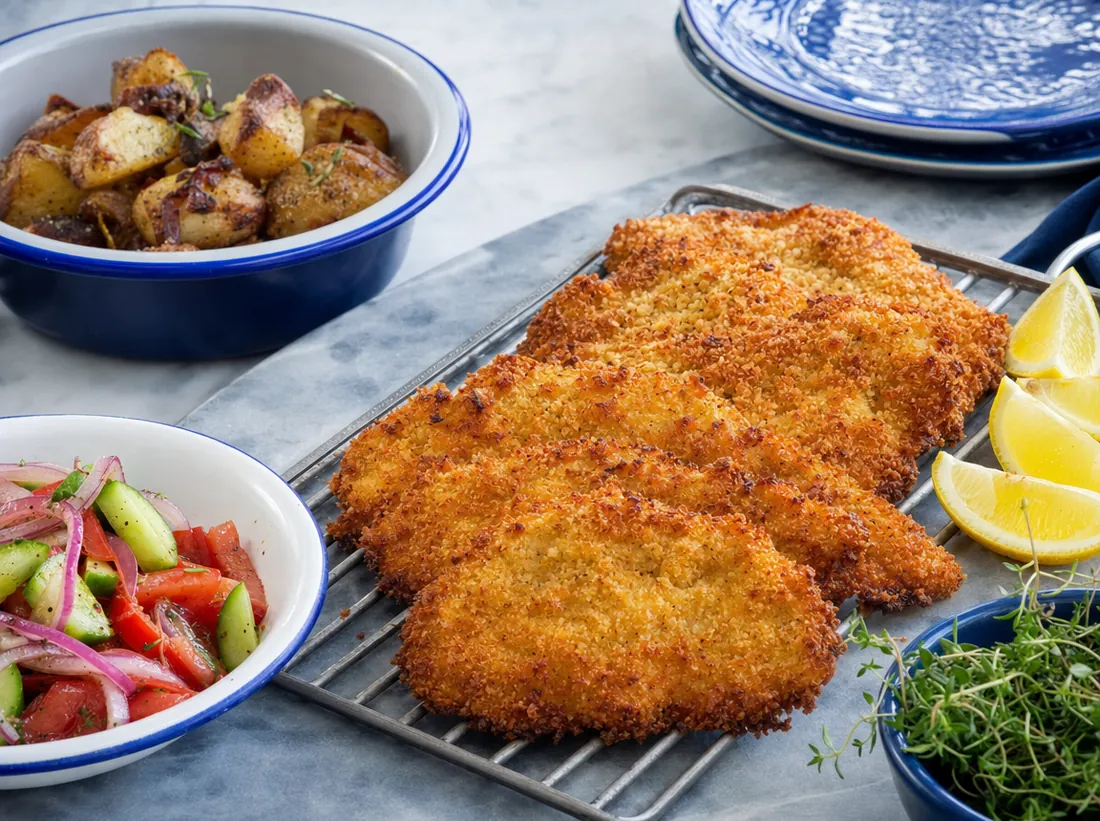
The story of Aubergine schnitzel and cauliflower schnitzel
Coated, fried vegetables are old in the kitchens of the Mediterranean and the Middle East. Italy fries aubergine in crumbs, in Lebanese and Iraqi cooking fried cauliflower is an everyday dish, and the canteens of the former Soviet Union served cabbage schnitzel: blanched cabbage leaves, folded, coated and fried. In Israel, a land of aubergines and of schnitzel, the two met at home.
In recent decades vegetable schnitzel became a familiar frozen product, and corn schnitzel and cauliflower schnitzel are sold in every supermarket and fill children's plates. The home version uses real vegetables in whole pieces, is vegan and parve, and also serves as the vegetarian dish at Friday dinners and events.
What makes Aubergine schnitzel and cauliflower schnitzel itself
Vegetables are mostly water, and that is the challenge of vegetable schnitzel: water leaves during frying, turns to steam and softens the coating. So each vegetable is prepared in advance. The aubergine is salted for 20 minutes so it gives up liquid and absorbs less oil, and the cauliflower is blanched for 3 minutes so the centre is tender when the coating turns golden. Instead of egg there is a batter of flour, water and mustard, which holds the crumbs and keeps the dish vegan.