The story of Chraime
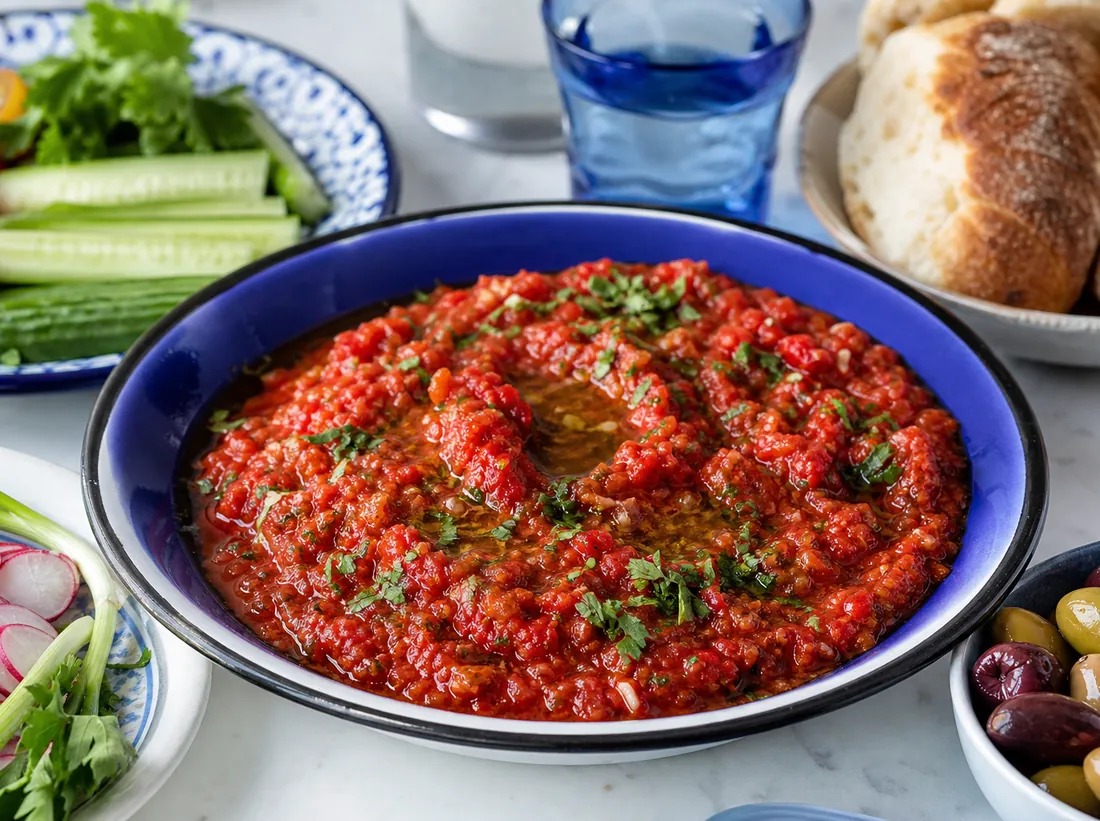
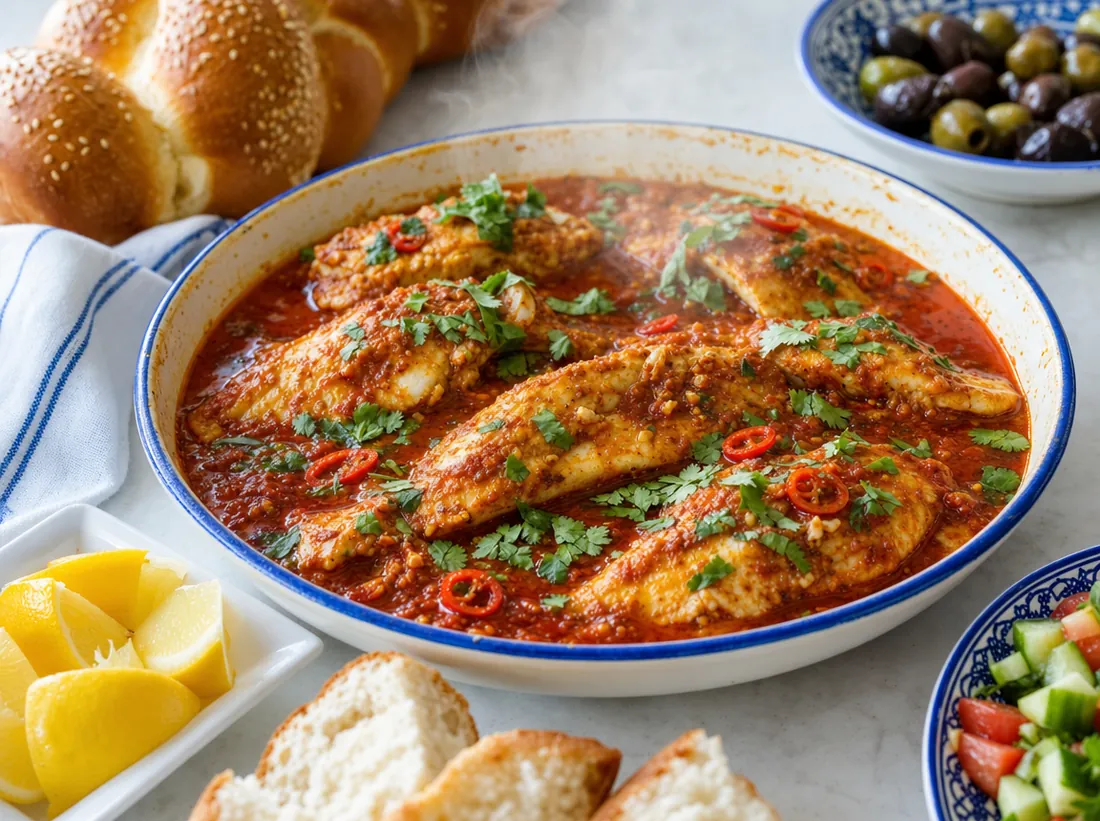
The name chraime is linked to the Arabic word for hot, and it fits. In the kitchen of Libyan Jews, and of Tripoli above all, the sauce is built on filfel chuma, a paste of garlic, dried red pepper, cumin and caraway, which gives it colour and heat. Moroccan Jews cook their spicy fish with fresh red peppers, garlic, chilli and coriander, sometimes with chickpeas, and in Israel the two versions met under one name.
In Sephardi tradition the fish course comes before the meat, and in Libyan and Moroccan homes that fish is chraime: after kiddush and challah, before the soup or the couscous. A kosher kitchen does not cook or serve fish together with meat, so the fish is served as a course of its own. Chraime also appears at Rosh Hashanah and Passover, and it is good the next day at room temperature, once the sauce has settled.
What makes Chraime itself
Chraime is really a sauce, and the fish joins it only at the end. The sauce cooks first on its own, until the oil turns a deep red and the tomato paste loses its raw taste, and only then do the fish portions go in for a short cook, without stirring. The oil is not a mistake: it carries the colour of the paprika and the heat, and it is what the challah gets dipped into, which is half the pleasure.