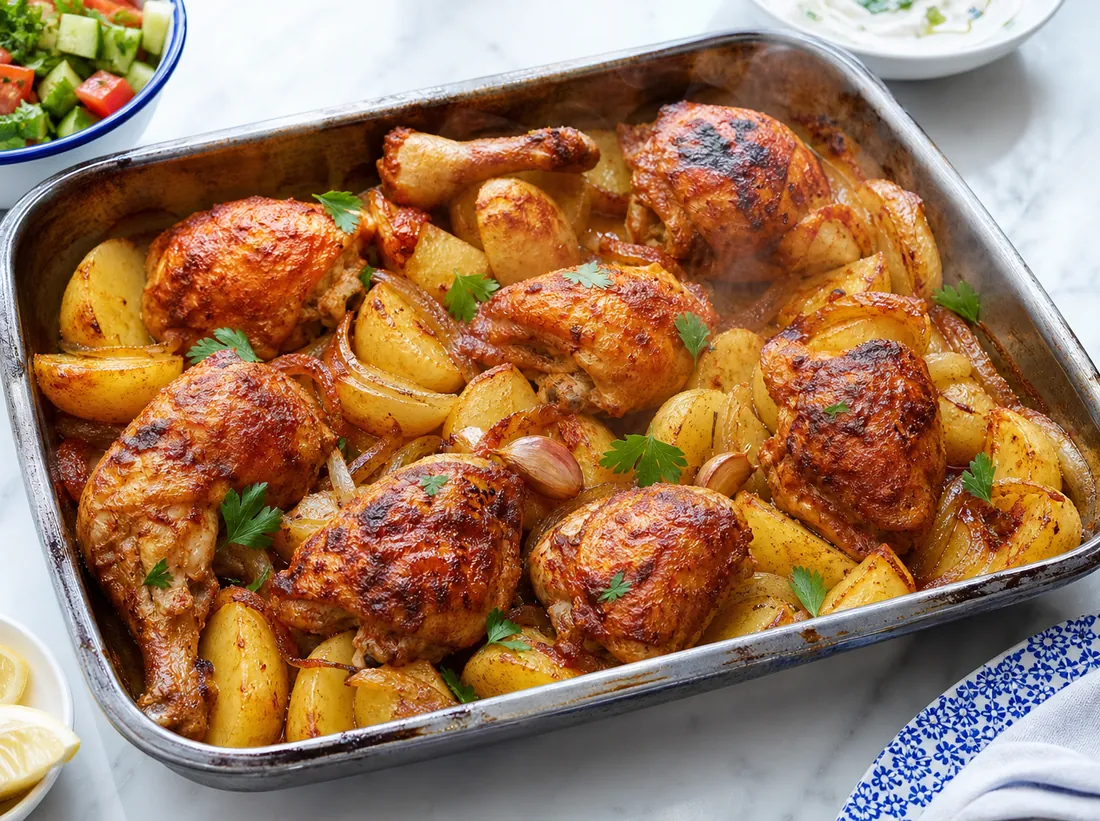
The story of Oven chicken
Roast chicken was once a festive dish. In Jewish homes in Eastern Europe and in Muslim lands a hen was expensive, and most birds went into the Shabbat soup pot. In the first decades of the state, as poultry farms and slaughterhouses spread, chicken became the most available meat in Israel. It was first roasted in a wonder pot on the stove, then in the electric ovens that came into homes, and so the Friday tray was born: a cut up chicken, potatoes, paprika and garlic, and twenty minutes of work before the oven does the rest.
Every community brought its own spices to the tray: paprika and garlic in Ashkenazi and Hungarian homes, turmeric, cumin and preserved lemon in Moroccan homes, hawaij in Yemenite homes, and in recent years date syrup, soy sauce and mustard. The principle has not changed: chicken, something starchy to soak up the juices, and the heat of an oven. Israel is among the countries that eat the most chicken per person, and oven chicken is one of the first things every young cook learns.
What makes Oven chicken itself
This dish is only simple on the surface, because one tray holds two things with different needs. The chicken wants high, dry heat for crisp skin, and the potatoes want moisture and fat to soften. The answer is order: onion and potatoes below, chicken skin side up on top, a little liquid at the bottom, and a hot oven with no cover. The fat from the skin drips onto the potatoes, and they turn soft inside and golden at the edges.