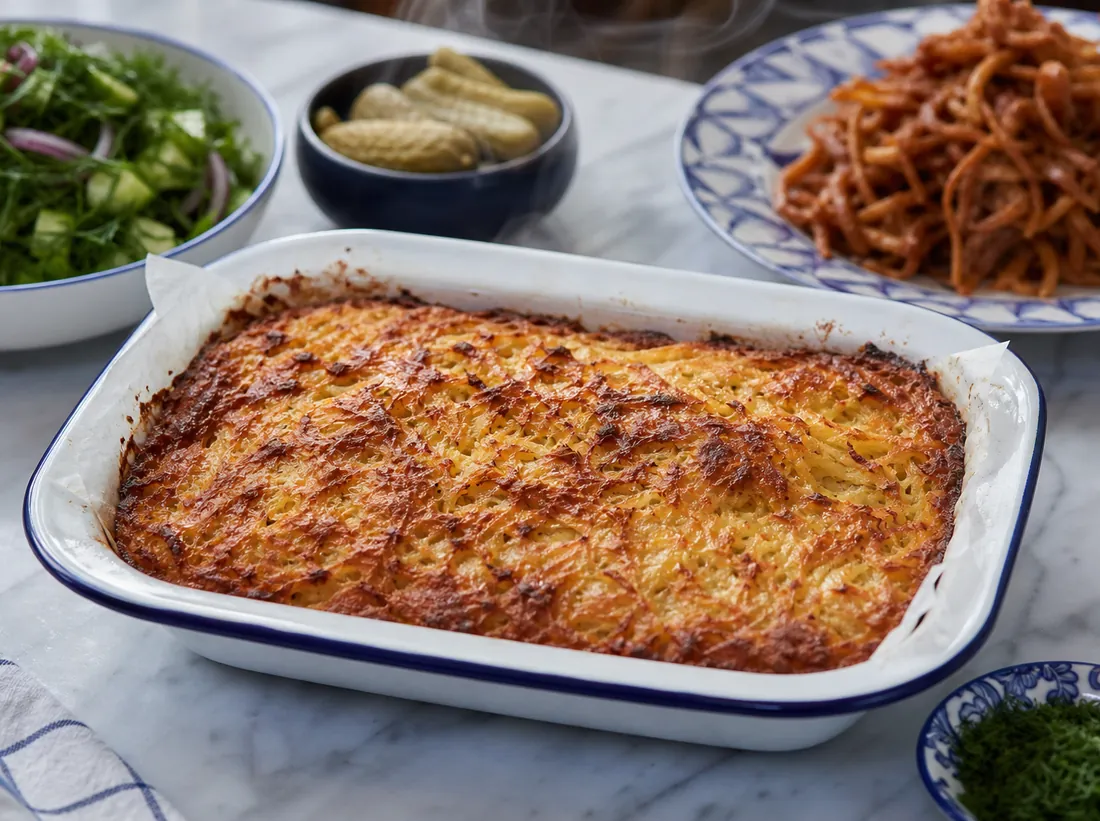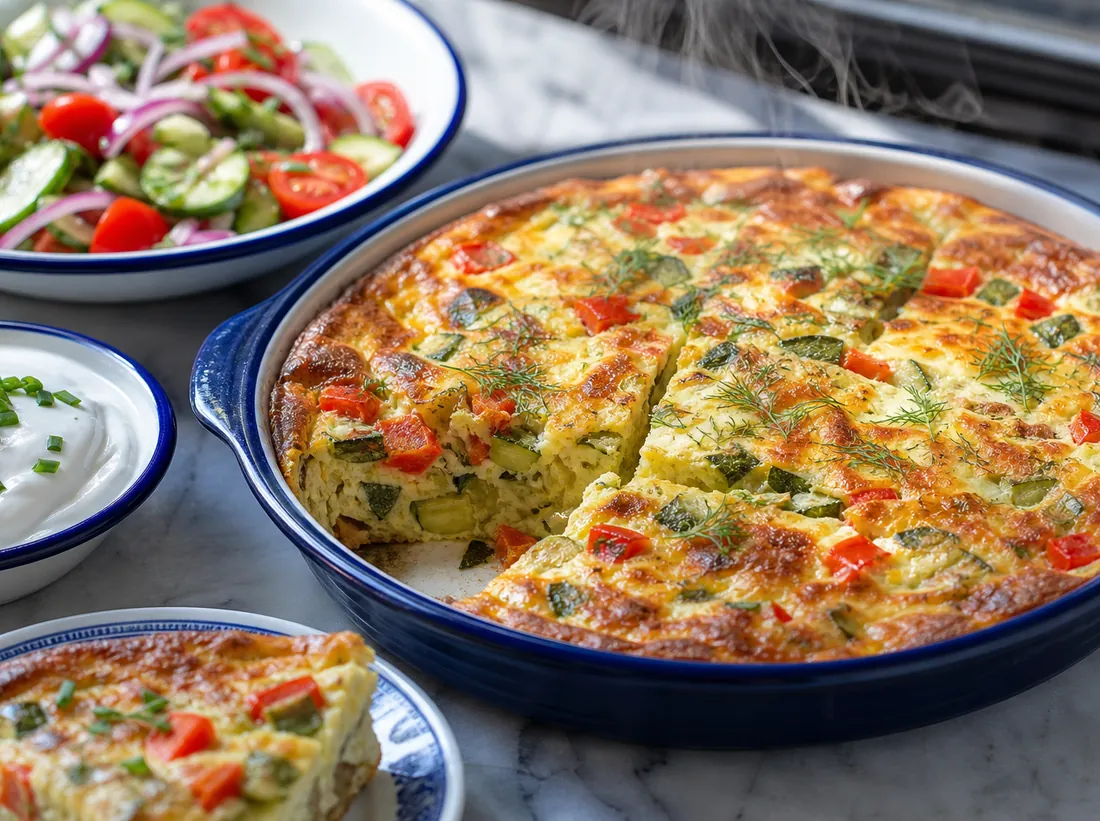
The story of Pashtida
The word pashtida is very old: Rashi, in 11th century France, already uses it for a dish of birds covered in dough. In the European communities of the Middle Ages pashtida was a Shabbat pie, two layers of dough with meat or fish inside, and in spring and summer cheese and vegetables too. Among Eastern European Jews kugel took its place, Sephardi Jews kept small filled pastries, and the word was almost forgotten.
In Israel the word came back, but for a different dish: a crustless bake of eggs, cheese and vegetables that suited a small kitchen, seasonal vegetables and leftovers from the fridge. It became the star of Shavuot, the holiday of dairy foods, and from there spread to every occasion: a brit, a kiddush, a kindergarten party, a shiva, a morning gathering. Today there is a pashtida for every vegetable, whole cookbooks of them, and the phrase pashtida that always works is known to everyone who cooks in Israel.
What makes Pashtida itself
A pashtida is really a savoury custard: eggs that set in the heat and trap vegetables, fat and a little starch. The whole secret is water. Vegetables like zucchini and mushrooms are full of liquid, and if it does not come out before baking, it comes out in the tin. So salt and squeeze the zucchini, cook the mushrooms until dry, and only then mix them into the batter. With the right ratio it is soft and moist, cuts cleanly and does not run on the plate.