The story of Potato kugel
Kugel means ball in Yiddish, and at first that is exactly what it was: a dough or pudding of bread and flour baked inside the cholent pot, sometimes wrapped in cloth, which came out round for the Shabbat meal. Over time kugel moved into its own tin, and later it was also made with noodles. When potatoes became a staple in Eastern Europe in the 19th century, potato kugel was born, cheap and filling, and every family in Poland, Lithuania and Ukraine developed its own version.
In the Jerusalem of the old Yishuv, in the Ashkenazi community of the Old City, a different kugel was born: thin noodles in caramel with plenty of black pepper, sweet and hot in the same bite. It is usually credited to the Perushim, the disciples of the Vilna Gaon, and many see in the burnt sugar and the pepper, both unusual in Eastern European cooking, the influence of their Sephardi neighbours. Today both kugels are sold by weight on Fridays in Jerusalem and Bnei Brak, and served at almost every Shabbat morning kiddush.
What makes Potato kugel itself
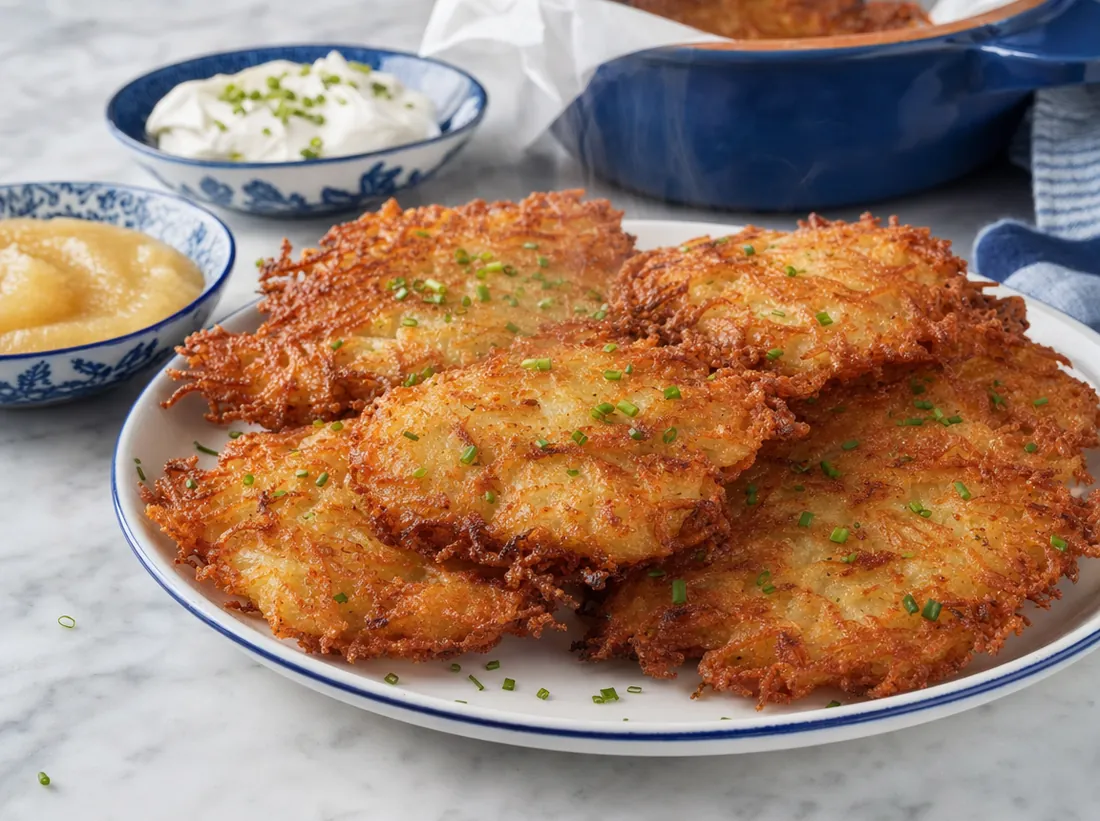
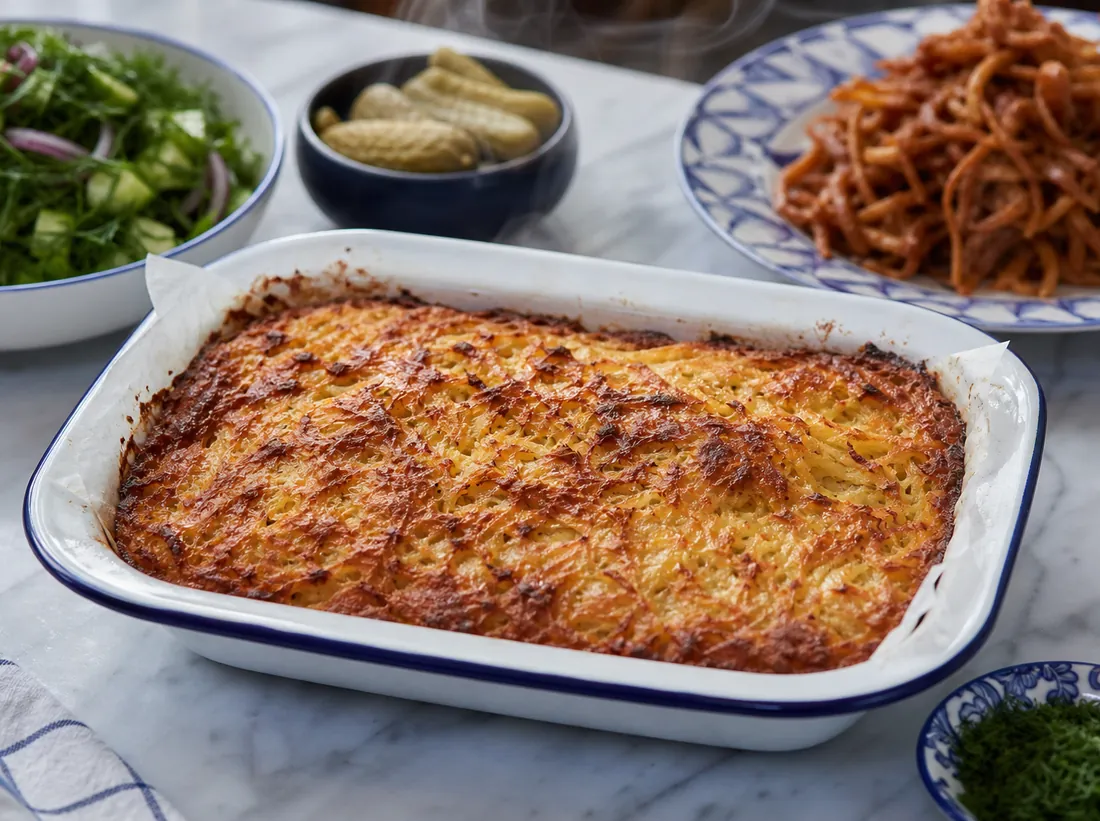
Potato kugel has almost no spices, so everything depends on two things: the batter and the heat. The potatoes are grated finely together with the onion so they do not turn grey, and the oil is heated in the tin until the batter sizzles as it goes in. That builds a brown, crisp crust on every side while the centre stays soft and moist, almost creamy. A good kugel feels heavy in the hand and smells of fried onion.