Food poisoning and storage: how long everything keeps
Food poisoning at home is mostly prevented by four numbers: no more than two hours out of the fridge, a fridge at 4°C, 3 to 4 days for leftovers, and reheating to 75°C. Here are the fridge and freezer times for each food, how to cool and thaw, safe cooking temperatures, event leftovers and what to throw away.
 Illustration
The five numbers of a safe kitchen
hours out of the fridge
The longest that cooked or perishable food should sit at room temperature, serving time included. On a hot day, above 32°C, one hour.
the danger zone
The range where bacteria multiply fastest. Keep hot food above 60°C and cold food below 5°C.
fridge
4°C or below. A simple fridge thermometer tells you more than the dial.
freezer
Bacteria do not multiply at this temperature. Freezer times in the chart are for taste and texture.
reheating
In the centre of the dish, until it steams throughout. Bring soups and sauces to the boil.
How long cooked food keeps in the fridge and freezer
In a closed container, fridge at 4°C or below, freezer at -18°C
| Food | Fridge | Freezer | Note |
|---|---|---|---|
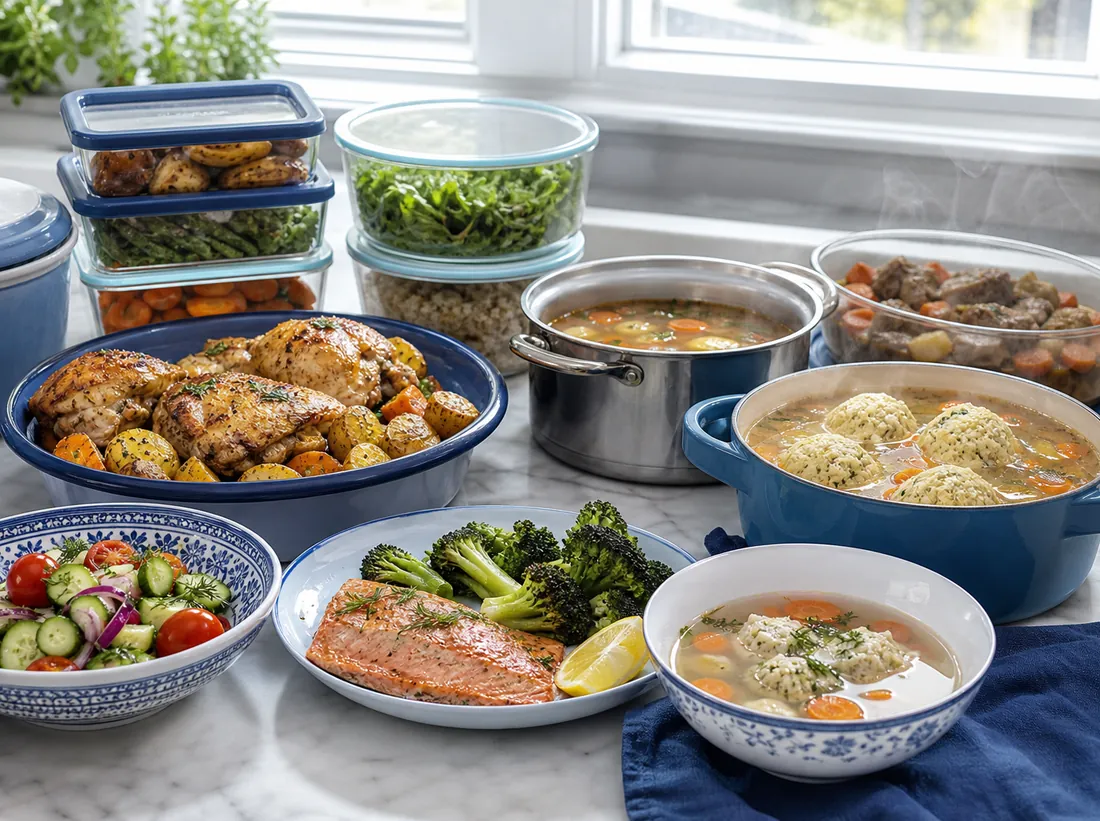
| Soups and stews, with or without meat | 3-4 days | 2-3 months | Divide into containers before cooling |
| Chicken or meat stock | 3-4 days | 2-3 months | Lift off the fat layer before reheating |
| Cooked or roast chicken and meat | 3-4 days | 2-6 months | Take the meat off the bone before freezing |
| Hamin and Shabbat stews | 3-4 days | 2-3 months | Cool in shallow containers, not the big pot |
| Cooked or baked fish | 3-4 days | 4-6 months | Reheat gently, covered |
| Cooked rice | 1-3 days | 1-2 months | Cool within an hour, reheat once |
| Pasta, ptitim, couscous and bulgur | 3-5 days | 1-2 months | Cool within one to two hours |
| Cooked legumes | 3-4 days | 2-3 months | In their cooking liquid |
| Cooked and roasted vegetables | 3-4 days | 2-3 months | Texture softens after freezing |
| Quiche, pashtida and egg dishes | 3-4 days | 2-3 months | Reheat in the oven for texture |
| Hard-boiled eggs, in shell or peeled | 1 week | Do not freeze | The white turns rubbery |
| Egg, tuna or chicken salad with mayonnaise | 3-5 days | Do not freeze | Serve on a chilled tray at events |
| Homemade hummus and tahini | 3-4 days | Hummus up to 2 months | Closed container, a film of olive oil on top |
| Pizza | 3-4 days | 1-2 months | Wrap slices separately |
| Opened high-acid cans (tomatoes, fruit) | 5-7 days | 1-2 months | Move to a closed container |
| Opened low-acid cans (corn, tuna, beans) | 3-4 days | 1-2 months | Move to a closed container |
Fridge time counts from the day of cooking. The freezer stops the clock, and food thawed in the fridge is eaten within 3-4 days.
Fresh, uncooked food: fridge and freezer
From the day it comes home, in closed packaging
| Product | Fridge | Freezer |
|---|---|---|
| Fresh chicken, whole or pieces | 1-2 days | Pieces 9 months, whole 1 year |
| Minced beef and minced chicken | 1-2 days | 3-4 months |
| Steaks, chops and roasts | 3-5 days | 4-12 months |
| Fresh lean fish (sea bream, tilapia, cod) | 1-2 days | 6-8 months |
| Fresh oily fish (salmon, mackerel, tuna) | 1-2 days | 2-3 months |
| Fresh eggs in the shell | 3-5 weeks | Not in the shell |
| Hot dogs, opened | 1 week | 1-2 months |
| Sliced deli meat, opened | 3-5 days | 1-2 months |
Keep raw meat, chicken and fish in a container or on a plate on the bottom shelf, so juices cannot drip onto ready food.
How to cool a big pot quickly
- Never overnight
A pot of 5 litres or more left on the counter stays warm in the centre for hours, between 5 and 60°C.
- Divide
Into shallow containers, no more than 5 cm deep, which cool several times faster.
- Cold bath
For soup or sauce: stand the pot in iced water in the sink and stir every few minutes.
- Two stages
From 60 to 21°C within two hours, then to 5°C within four more.
- Into the fridge warm
No need to wait. Warm containers go in loosely covered, spaced apart; close them once cold.
- Label
Contents and cooking date on every container.
Safe cooking and reheating temperatures
In the thickest part, with a cooking thermometer
| What | Temperature | Note |
|---|---|---|
| Chicken and turkey, whole, pieces or minced | 74° | Measure in the thigh, away from the bone |
| Minced meat, meatballs and kebabs | 71° | In mince, bacteria are inside the meat, not only on the surface |
| Whole cuts of beef and lamb | 63° | Plus 3 minutes of rest |
| Fish | 63° | Or until the flesh is opaque and flakes |
| Egg dishes and quiches | 71° | The centre is set, not wobbly |
| Reheated leftovers | 75° | Steaming throughout |
| Hot holding, hot plate and chafing dishes | 60° or more | Keep covered to hold the heat |
| Cold holding | 5° or below | On ice or in the fridge until serving |
In a kosher kitchen, keep separate thermometers for meat and dairy.
Salmonella and food poisoning: the common causes in a kitchen
Where they turn up and what stops them
| Cause | Where it turns up | What stops it | When symptoms usually start |
|---|---|---|---|
| Salmonella | Raw chicken, eggs, food cut on a raw-chicken board | Cooking to 74°C, a separate board, washing hands | 6 hours to 6 days |
| Campylobacter | Raw chicken and its juices | Full cooking, never rinsing raw chicken in the sink | 2-5 days |
| Bacillus cereus | Rice, pasta and starchy dishes kept warm | Cooling within an hour, holding above 60°C | 30 minutes to 15 hours |
| Clostridium perfringens | Big pots of stew and meat sauce that cooled slowly | Fast cooling in shallow containers, reheating to 75°C | 6-24 hours |
| Staphylococcus aureus | Food handled by hand and left at room temperature: salads, sandwiches, cream pastries | Clean hands, keeping food chilled | 30 minutes to 8 hours |
| Listeria | Ready food kept long in the fridge: deli meats, smoked fish, raw-milk cheeses | A fridge at 4°C or below, using food within the chart times | Usually within 2 weeks, sometimes longer |
| Toxin-producing E. coli | Undercooked mince, unwashed leafy greens | Cooking mince to 71°C, washing produce | 3-4 days |
| Norovirus | Ready food prepared by someone who is ill, unwashed fruit and vegetables | Washing hands with soap and water, washing produce | 12-48 hours |
Most of these do not change smell, taste or look. Trust the clock and the thermometer.
How to thaw meat, chicken and fish
Three safe methods, and what to do after each
| Method | How long | After thawing |
|---|---|---|
| In the fridge | A 500 g pack of mince or breasts: overnight. A whole chicken: a day per 2 kg | Mince and chicken keep 1-2 more days, larger cuts 3-5 days. Can be refrozen |
| In cold water, in a sealed bag | About 30 minutes per 500 g, changing the water every 30 minutes | Cook at once |
| In the microwave, on defrost | A few minutes | Cook at once, as parts have started to warm |
| Straight from frozen into the pot or oven | About 50% longer than the usual cooking time | Good for meatballs, chicken breasts and small cuts |
| Frozen soups and stews | Overnight in the fridge, or straight into a pot on medium heat | Bring to the boil |
Never thaw on the counter: the outside reaches the 5-60°C range long before the centre thaws.
Leftovers from events, kiddush and Shabbat
Buffet
Hot food on chafing dishes above 60°C and cold food on ice below 5°C can stay out for the whole event. Everything else: two hours from serving, one hour outdoors on a hot day. Replace an empty tray with a fresh one rather than piling new food on top of old.
Taking food home
Food that stayed hot or chilled in the kitchen can be packed within two hours into shallow, dated containers and eaten within 3-4 days. Food that sat on the table more than two hours is not packed.
Shabbat
Hamin left all night on a hot plate or in a warming drawer stays above 60°C, outside the range where bacteria multiply. Food from the Friday night meal goes back in the fridge within two hours, not left on the table until morning.
How much to order
To avoid mountains of leftovers, plan about 450 to 550 g of food per person for a hot and cold buffet, plus a 5-10% margin.
What to throw away, without second thoughts
Cooked food left out over two hours
Or over one hour on a hot day. Reheating does not break down toxins already formed.
Rice or pasta left in the pot on the counter overnight
Bacillus makes a heat-resistant toxin, so even strong reheating does not help.
Leftovers after 4 days in the fridge
Rice after 3. If you cannot remember when it was cooked, it is time to start labelling.
A swollen, leaking or seam-dented can
Also a jar whose lid has popped, or that foams when opened.
Mould on soft food
Spreads, cooked food, bread, yogurt and soft cheese go entirely. On hard cheese, cut 2.5 cm around the spot.
Meat thawed on the counter for hours
The outside spent all that time between 5 and 60°C.
Expiry dates: what the labels mean
Use by
Found on perishable food: meat, chicken, fish, dairy and ready salads. It is a safety date; after it, do not eat the food, even if it looks and smells fine.
Best before
Found on dry food and cans: rice, pasta, legumes, flour and tins. It is a quality date. A closed, intact pack kept dry is usually still good after it, with less flavour and aroma.
After opening
Once opened, the printed date no longer applies. Many products state how many days they keep after opening, and opened cans follow the times in the chart.
Frequently asked questions
How long does cooked food last in the fridge?
Most cooked food keeps 3-4 days in a closed container at 4°C or below. Cooked rice up to 3 days, best within one.
How long can food sit out?
Two hours at most, serving time included; one hour above 32°C. Then it goes.
Can you put hot food in the fridge?
Yes, in shallow containers spaced apart. Fast cooling shortens the time in the range where bacteria multiply.
What is salmonella and how do you avoid it in the kitchen?
A bacterium that arrives mainly with raw chicken and eggs. Cooking chicken to 74°C, a separate board for raw chicken, washing hands and tools, and keeping eggs chilled stop it.
Should you wash chicken before cooking?
No. Rinsing splashes bacteria around the sink, and cooking kills them anyway. Pat dry with a paper towel and throw it away.
Can you reheat food more than once?
Once is best, and only what you will eat. Rice only once.
Can you refreeze thawed food?
Yes if it thawed in the fridge, with some loss of texture. If thawed in cold water or the microwave, cook it first, then freeze the cooked dish.
What temperature should the fridge and freezer be?
Fridge 4°C or below, freezer -18°C. The door is the warmest spot, so milk, eggs and leftovers go on the shelves.
What is the difference between use by and best before?
Use by is a safety date on perishable food. Best before is a quality date on dry food and cans; an intact pack is usually fine after it.
How long can you keep soup in the freezer?
2-3 months for the best taste, with 2 cm of headroom since liquid expands. Thaw in the fridge or heat from frozen to the boil.
Order instead of cooking
Ready food for Shabbat, an event or the office, from our kitchen in Tel Aviv.
Where to go next
 Illustration
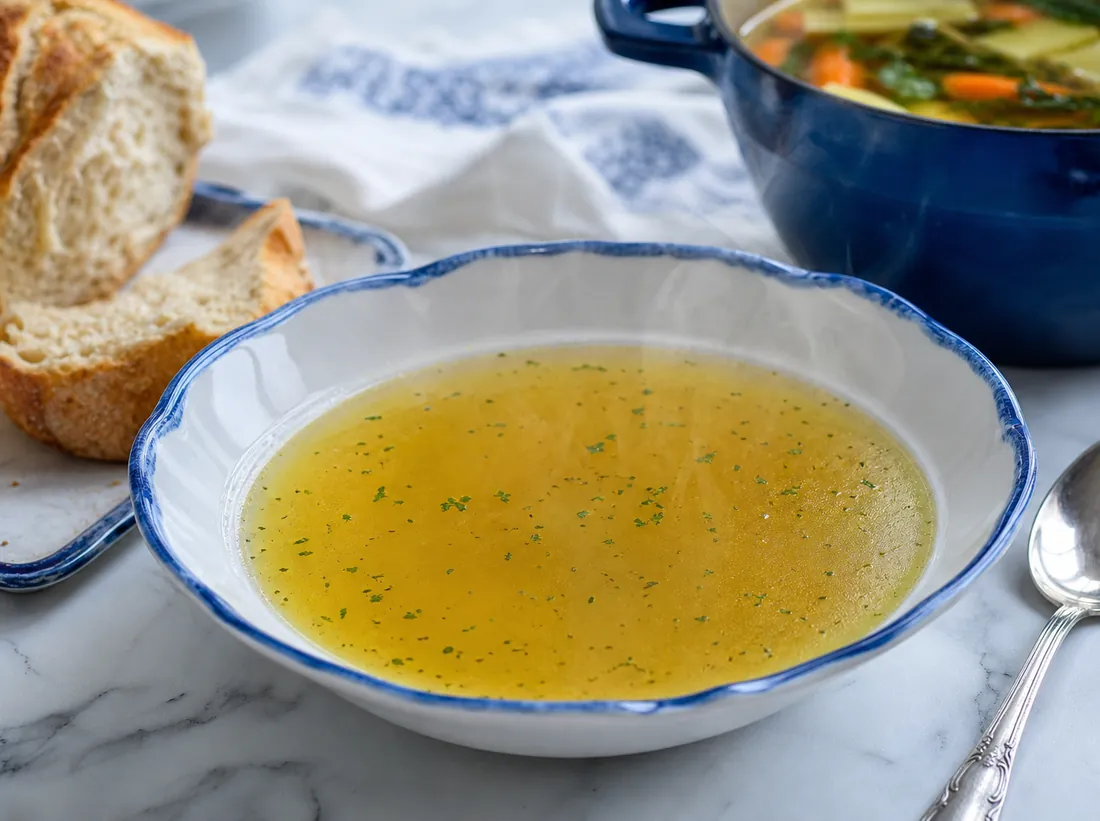
Chicken stock
Chicken stock is the quiet foundation of the kitchen: chicken backs and wings with onion, carrot and celery,…
 Illustration
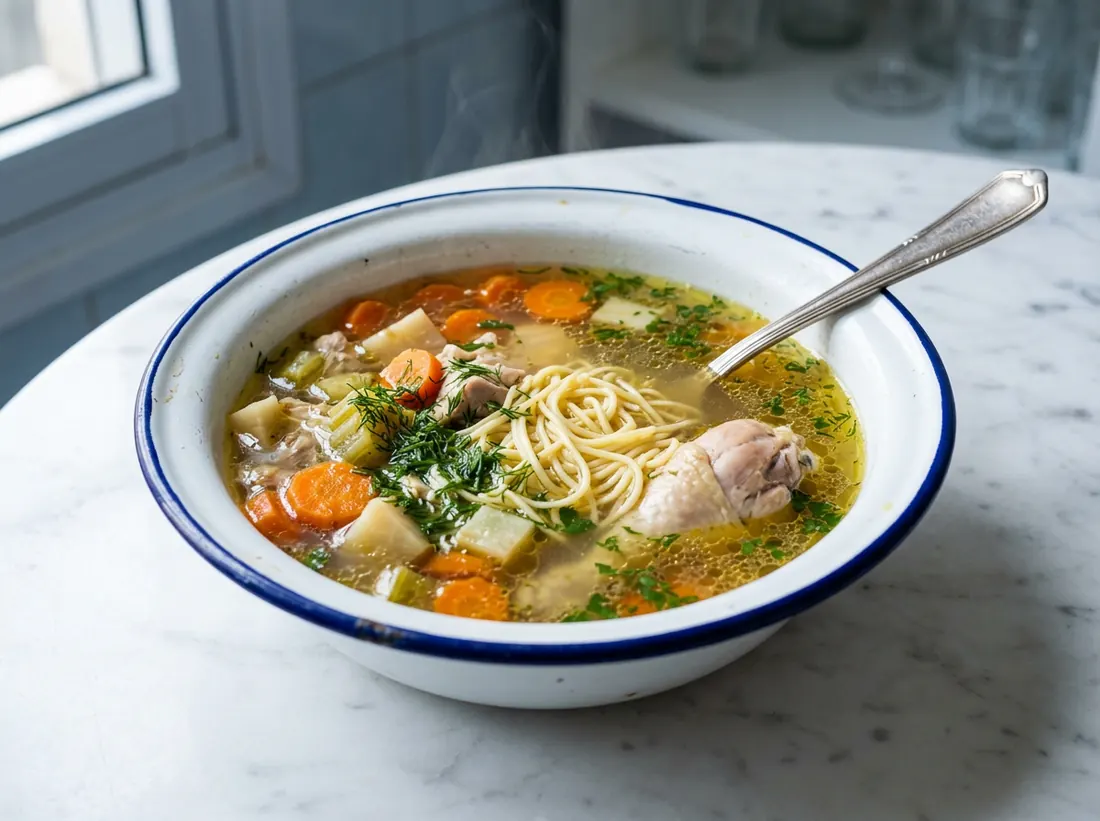
Chicken soup
Clear chicken soup is the Friday night soup of the Israeli home: chicken, root vegetables and dill simmered…
 Illustration
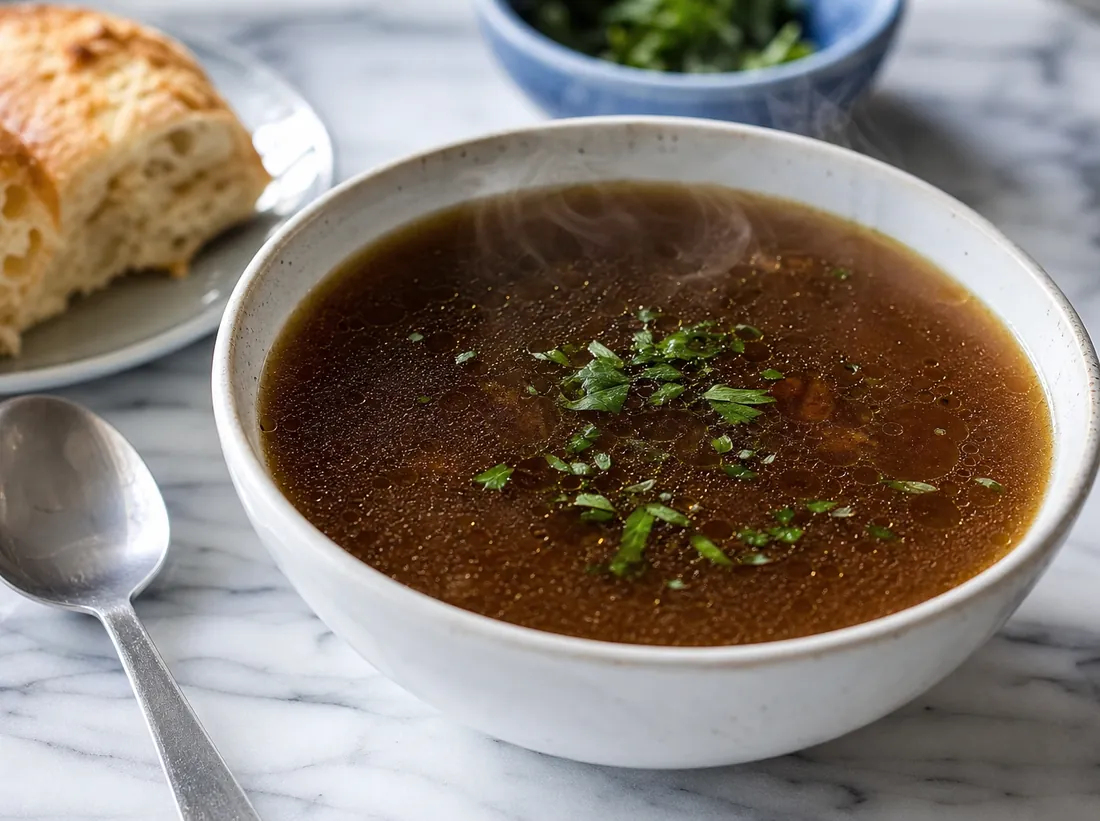
Bone broth
Bone broth is a beef stock simmered slowly for 10 to 12 hours, from roasted bones, marrow bones and calf…