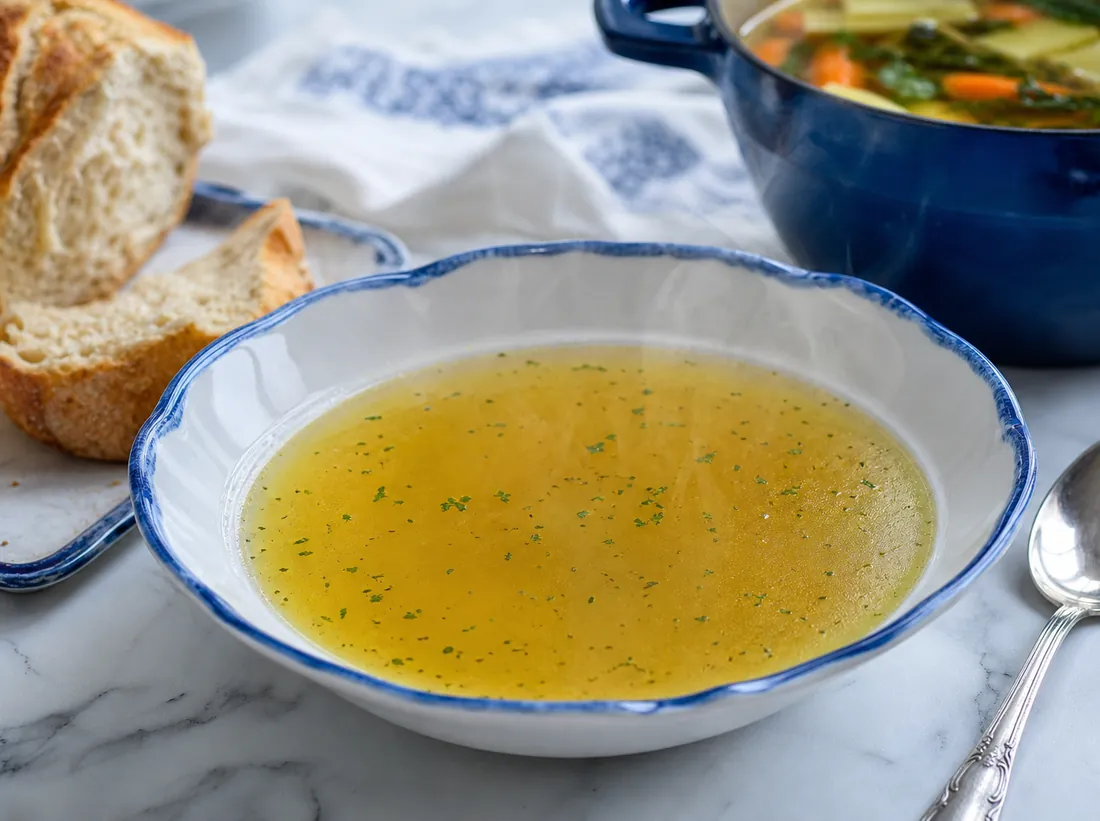
The story of Chicken stock
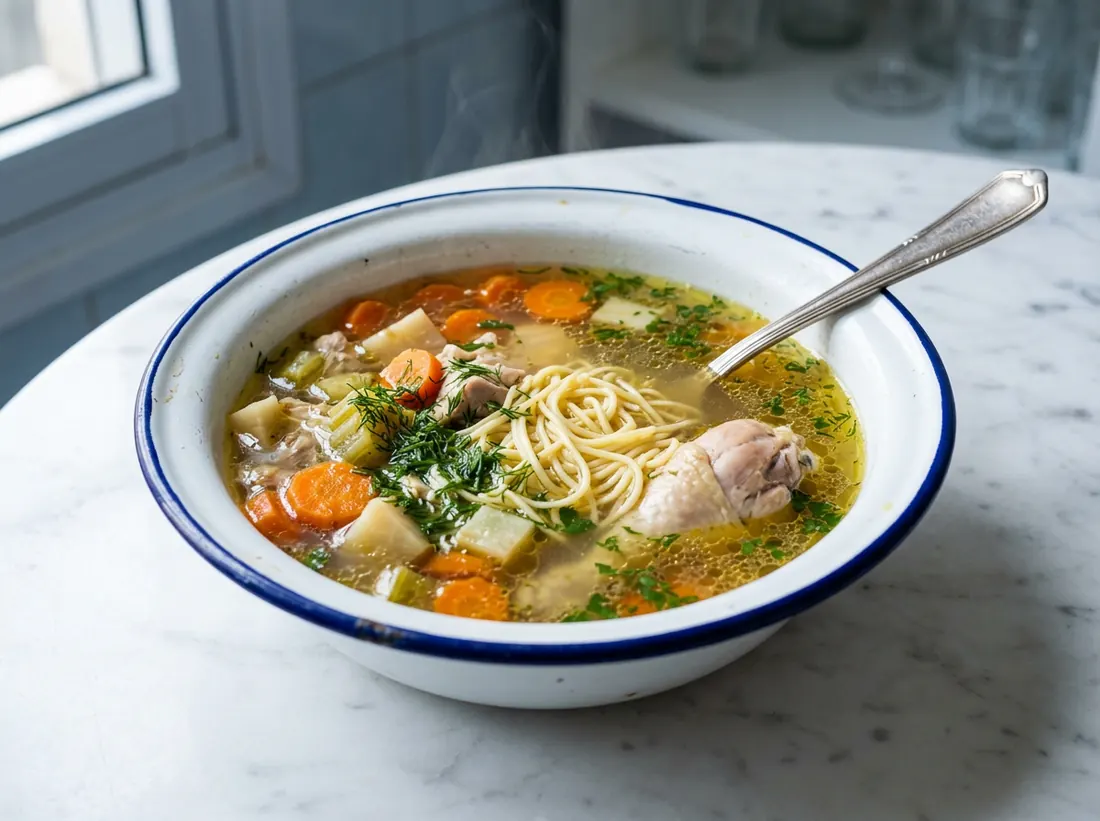
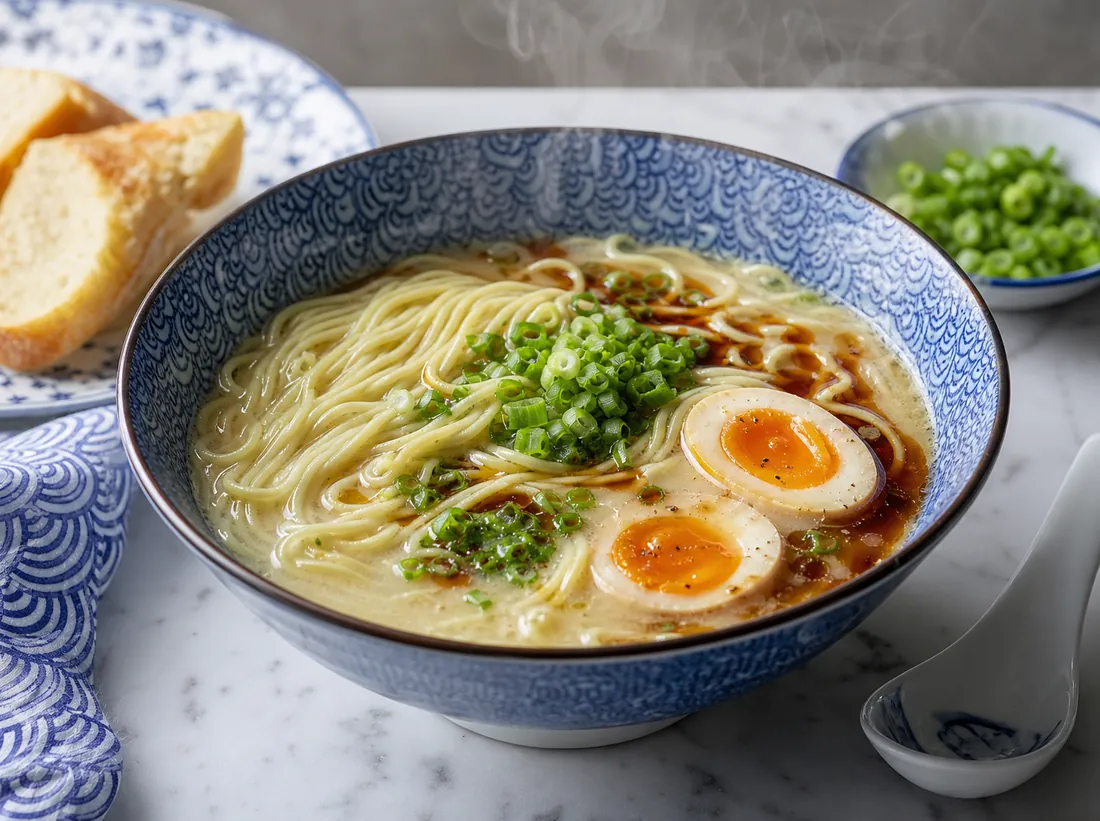
French cooking called stock fond, foundation, and built its sauces, soups and stews on it. Other kitchens work the same way: Chinese, Japanese and Italian cooks start almost every soup or sauce from a stock. In the Ashkenazi kitchen the Friday chicken soup was also the week's stock, and in many Israeli kitchens soup powder took the place of homemade stock for years.
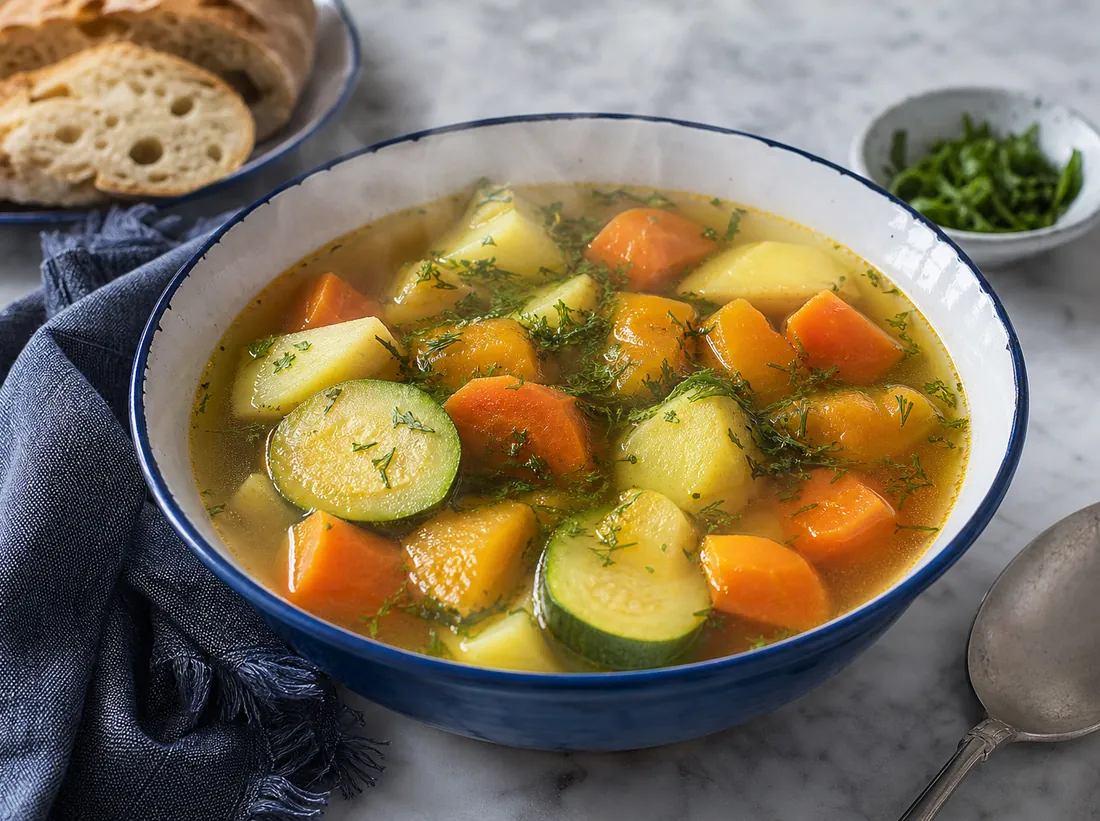
Stock is not soup. Soup is a seasoned dish eaten from a bowl; stock is a raw material: unsalted, made mostly from bones, and meant to keep cooking in rice, risotto, a sauce or another soup. In a kosher kitchen there is a practical side too: chicken stock is meat, so every dairy dish, such as a risotto with butter and parmesan or a cream soup, needs a parve vegetable stock.
What makes Chicken stock itself
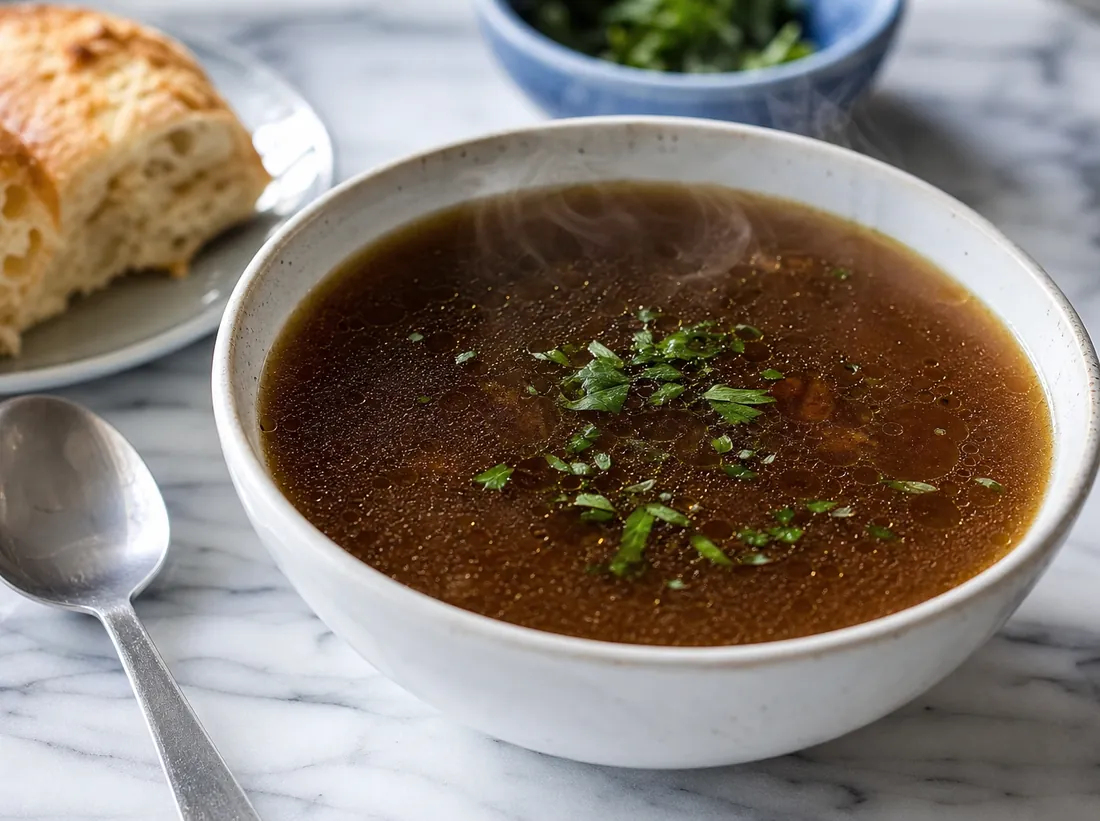
A good chicken stock is judged on three things: it is clear, it tastes deeply of chicken, and it sets in the fridge. All three come from the same habits: cold water at the start, skimming, heat that only trembles, and no stirring. The vegetables are few compared with the bones, so the stock tastes of chicken rather than vegetable soup, and the salt stays out until you know where the stock is going.