Ramen

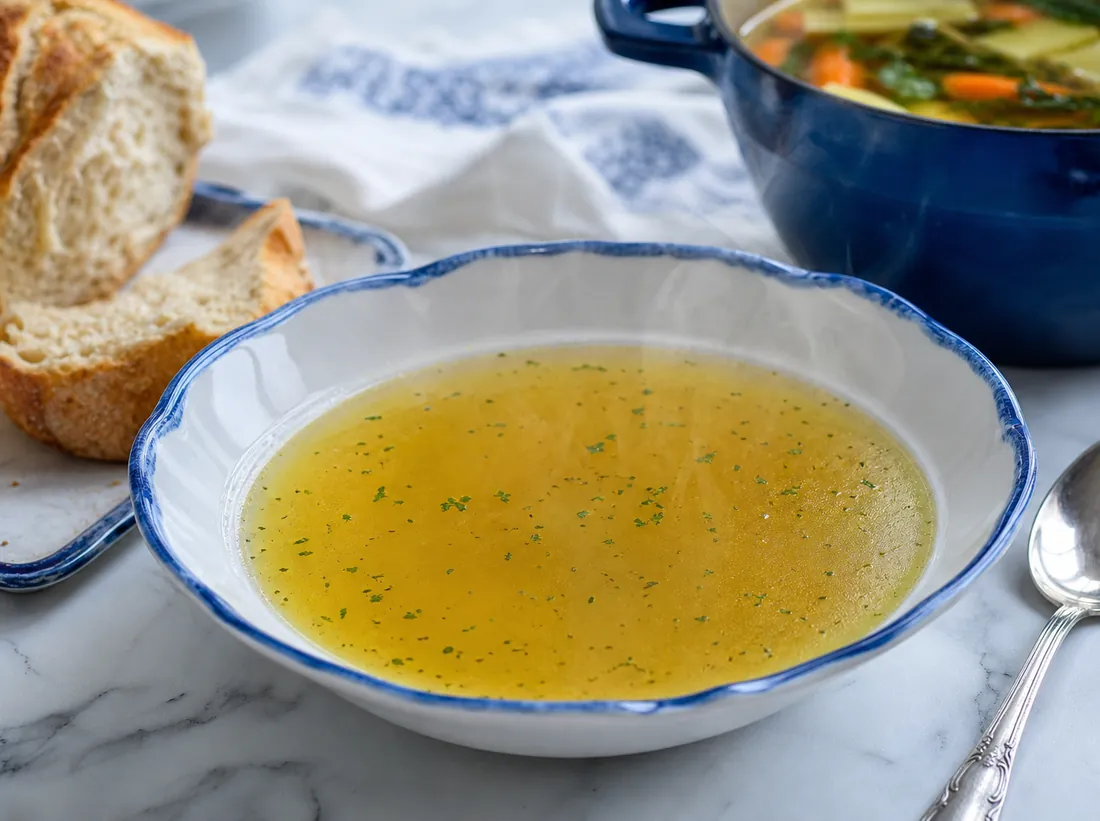
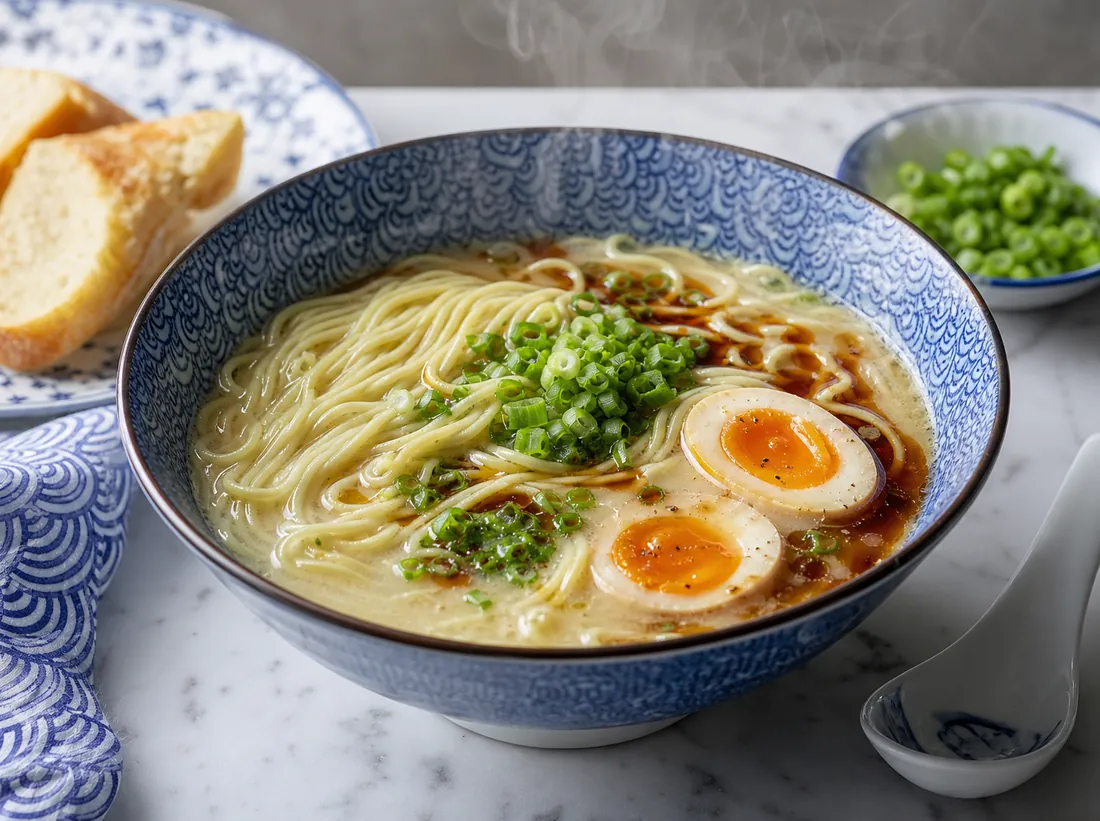
Ramen is a Japanese noodle soup built in five layers: broth, tare, aroma oil, noodles and toppings. In our kosher home version the broth is chicken paitan, white and thick with collagen, with a soy tare, chicken fat oil with spring onion and a soft marinated egg.

Pot calculatorOrder Ramen

Dairy freeMeatAllergens:GlutenEggsSoy

Updated

RamenIllustration
Time5 h 40 minCook 5 h
Pot6 bowls2.7 litres
Per bowl1308 kcal78.7 g protein · a 450 ml bowl
Cost of the pot₪126for the pot, about ₪21 a bowl

The story of Ramen

Ramen began as a Chinese noodle soup that reached Japan in the early 20th century, in the port cities and Tokyo, under names that meant Chinese noodles. After the Second World War it became cheap, filling street food, then a national dish, and each region developed its own style: shoyu in Tokyo, miso in Sapporo, shio in Hakodate and tonkotsu in Fukuoka.

Tonkotsu, the famous white and rich ramen, is made from pork bones boiled hard for many hours, so it is not kosher. The same principle, a broth emulsified by collagen and fat, works with chicken, and in Japan it has a name: tori paitan, white chicken broth. That is our ramen, kosher and meat, with chicken thigh chashu in place of pork chashu.

What makes Ramen itself

Ramen is not one soup but an assembly. The broth gives body, the tare gives salt and umami, the oil gives aroma and gloss, and the alkaline noodles give a spring that pasta lacks. Each part is made on its own and meets the others only in the bowl, so each has to be good by itself. Our broth is not salted at all; the whole seasoning comes from the spoonful of tare at the bottom of the bowl.
Ramen for any number of people

Change the number of people and the bowl size, and every ingredient updates in grams, with the cost, calories and protein per bowl.

Bowl size
Units
2.7litres in the pot
4Pot to use, litres
₪126Cost of the pot
₪21per bowl
1,308kcal per bowl
78.7g protein per bowl
IngredientAmountCost
The paitan broth
Chicken carcasses and backs2 kg₪20
Chicken feet, cleaned800 g₪9.6
Chicken wings500 g₪7.5
Water, plus boiling water to top up5 l
Onion, halved200 g₪1.2
Garlic, whole cloves30 g₪1.0
Ginger, sliced30 g₪1.1
Green parts of spring onions50 g₪2.3
The tare
Soy sauce150 ml₪6.3
Mirin60 ml₪3.6
Kombu5 g₪1.1
Dried shiitake mushrooms10 g₪2.2
The aroma oil
Rendered chicken fat (schmaltz)60 g₪1.8
Canola oil30 ml₪0.5
Spring onion, sliced30 g₪1.4
Garlic, thinly sliced10 g₪0.4
The ramen eggs
Large eggs360 g · 6 pcs₪8.7
Soy sauce for the marinade60 ml₪2.5
Mirin for the marinade60 ml₪3.6
Water for the marinade120 ml
In the bowl
Fresh ramen noodles780 g₪23
Boneless chicken thighs, skin on600 g₪21
Spring onion, thinly sliced40 g₪1.8
Nori sheets, halved12 g · 6 pcs₪6.0
Send on WhatsApp

Shelf prices at a large Israeli chain and specialty shops, October 2026. Nutrition from the ingredients in grams, before cooking.

How many calories in Ramen? Nutrition facts and calorie calculator

Change the amount of any ingredient, drop one, or pick a lighter version, and the numbers per serving update at once: calories, fat, carbs, protein, sodium and fibre.

Ramen has 291 calories per 100 ml. A 450 ml bowl made with our recipe has 1308 calories: 78.7 g protein, 64.3 g fat and 90.9 g carbohydrates. A 250 ml cup has 727 calories.

Lighter

Ingredients, for the whole recipe

  • 2,000 g86 kcal per serving
  • 800 g287 kcal per serving
  • 500 g86 kcal per serving
  • 200 g13 kcal per serving
  • 30 g7 kcal per serving
  • 30 g4 kcal per serving
  • 50 g3 kcal per serving
  • 150 ml16 kcal per serving
  • 60 ml28 kcal per serving
  • 5 g0 kcal per serving
  • 10 g5 kcal per serving
  • 60 g84 kcal per serving
  • 30 ml41 kcal per serving
  • 30 g2 kcal per serving
  • 10 g2 kcal per serving
  • 6 pcs86 kcal per serving
  • 60 ml6 kcal per serving
  • 60 ml28 kcal per serving
  • 780 g362 kcal per serving
  • 600 g155 kcal per serving
  • 40 g2 kcal per serving
  • 6 pcs6 kcal per serving

What each add-on adds to Ramen

Values for the amount in the row, from the national food database.

Add-onCaloriesProtein, gFat, g
One large egg837.35.5
A tablespoon of oil122013.8
A slice of white bread792.50.5
A slice of challah12641.1
A side cup of cooked rice, about1823.50.3
Chicken breast, 100 g raw12022.52.6
Chicken thigh, 100 g raw12119.74.1

How to make Ramen

In cook mode the screen stays on, tap a step when it is done, and the timers run next to each step.
  1. The day before or in the morning, bring water to a boil, gently lower in the cold eggs and cook for 6.5 minutes. Move them to a bowl of iced water for 5 minutes and peel.
  2. Mix 60 ml of soy sauce, 60 ml of mirin and 120 ml of water, and marinate the eggs in it in a closed jar for 6 to 12 hours in the fridge.
  3. Put the carcasses, feet and wings in a pot, cover with cold water, bring to a boil and cook for 10 minutes. Pour off the water and rinse the bones.
  4. Return the bones to a clean pot with 5 litres of water and keep at a hard, rolling boil for 4 to 5 hours with no lid. Stir and scrape the bottom every half hour, and top up with boiling water so the bones are always covered.
  5. In the last hour add the onion, garlic, ginger and spring onion greens. At the end, crush the bones with a wooden spoon and strain through a fine sieve. You will have about 2.7 litres of thick white broth.
  6. The tare: soak the kombu and shiitake in the soy sauce and mirin for an hour, warm to the first wisps of steam without boiling, and strain.
  7. The oil: melt the chicken fat with the oil, add the spring onion and garlic and fry over low heat for 8 to 10 minutes until golden. Strain.
  8. The chashu: sear the chicken thighs skin side down in a pan over medium heat for 10 minutes until the skin is crisp, turn for 5 minutes, brush with a spoonful of tare and slice.
  9. In each hot bowl put 30 ml of tare and 15 ml of oil. Cook the noodles in plenty of boiling water for 1 to 2 minutes, pour 400 ml of boiling broth into the bowl and add the drained noodles.
  10. Top with chashu, half an egg, spring onion and a piece of nori, and serve at once.

The science of Ramen

Kitchen science

Paitan or chintan: why ramen broth turns white

In a rolling boil, bubbles smash the fat into tiny droplets, and gelatin and dissolved proteins coat them and keep them from merging, much as in mayonnaise. The result is an opaque white emulsion that feels thick and rich on the tongue. For chintan the broth stays below the boil, at 85 to 90 °C, the fat floats on top and the broth stays clear.

Kitchen science

Chicken feet and collagen

Feet, wings and carcasses are full of skin, tendon and cartilage. Above 70 °C and over hours, their collagen unwinds into gelatin, which thickens the broth, stabilises the emulsion and makes your lips feel slightly sticky. A good ramen broth sets to a jelly in the fridge.

Kitchen science

What makes ramen noodles yellow and springy

Ramen noodles contain kansui, alkaline salts of potassium and sodium carbonate. The alkalinity tightens the gluten network, so the noodles are springy and do not go soft quickly. It also turns natural flavones in the flour, normally colourless, yellow, which is why the noodles are yellow even without egg.

Kitchen science

Tare, umami without fish

The seasoning lives in the tare, not the broth, so the broth stays unsalted. Kombu brings glutamate and dried shiitake brings guanylate, a nucleotide that multiplies the effect of glutamate. In Japan dried bonito often goes into the tare, but a kosher kitchen does not cook fish with chicken, and the shiitake does the job.

Kitchen science

The ramen egg: osmosis in a jar

Six and a half minutes in boiling water set the white, which starts to firm at 62 to 65 °C, and leave a soft yolk, which only thickens above 65 to 70 °C. In the marinade, salt and sugar diffuse inward, the white firms and takes on colour and flavour, and the yolk loses a little water and turns jammy. More than a day in the jar dries it too far.

Ramen in every kitchen

Tori paitan, white chicken

Our version: an emulsified chicken broth, white and rich, boiled hard and given body by chicken feet and wings.

Shoyu, soy

A clear chicken broth simmered gently, with a soy sauce tare. The classic Tokyo style.

Shio, salt

A clear, pale broth with a tare of salt and kombu. The most delicate style, linked with Hakodate.

Miso

A miso tare that makes a thick, rich broth. Born in Sapporo, where it sometimes gets corn and butter. In a kosher kitchen the butter goes when the broth is meat.

Tonkotsu

An emulsified pork bone broth from Fukuoka. It is not kosher, and chicken paitan is its kosher answer.

Vegetarian ramen

A kombu and shiitake broth with soy milk for body, and a miso or soy tare.

Common Ramen problems and how to fix them

My ramen broth will not turn white

The heat is too low, or there is not enough collagen and fat. Raise to a rolling boil, add chicken feet or skin, and stir so the bones break down.

My ramen tastes bland

Not enough tare, or the broth is thin. Add another spoonful of tare to the bowl and taste. The broth itself should not be salty.

The noodles go soft and swell

They were overcooked or cooked in the broth. Cook them in a separate pot in plenty of water for a minute or two, and serve at once.

The broth burned on the bottom of the pot

At a hard boil the liquid evaporates fast and the gelatin sticks. Stir every half hour, scrape the bottom and top up with boiling water.

The ramen egg yolk came out hard

The egg cooked too long or was not chilled at once. Six and a half minutes for a large egg straight from the fridge, then straight into ice.

The ramen eggs will not peel

Very fresh eggs stick to the shell. Use eggs about a week old, lower them into water that is already boiling, and peel under water.

Storing, freezing and reheating

Broth 4 days, eggs 3 days

In the fridge

Broth 3 months

In the freezer

2+4

To cool

Bring it from 60 to 21 °C within two hours and down to 5 °C within four more. Split a big pot into shallow boxes.

75 °C

Reheating

Bring the broth to a boil and stir well, since the emulsion can separate as it chills. Assemble the bowl again with fresh noodles; never reheat noodles that have sat in broth.

Nutrition of Ramen

From our recipe, per bowl and per 100 g, next to the national food database.

ServingkcalProtein, gFat, gCarbs, gFibre, g
Our recipe, a 450 ml bowl130878.764.390.95.1
Our recipe, 100 ml29117.514.320.21.1

What the ingredients of Ramen cost

What each ingredient costs in one pot, and where to buy it.

IngredientPriceIn this potWhere to buy
Fresh ramen noodles₪30 per kg₪23Supermarket
Boneless chicken thighs, skin on₪35 per kg₪21Supermarket
Chicken carcasses and backs₪9.9 per kg₪20Butcher
Chicken feet, cleaned₪12 per kg₪9.6Butcher
Soy sauce₪42 per litre₪8.8Supermarket
Large eggs₪1.4 each₪8.7Supermarket
Chicken wings₪15 per kg₪7.5Supermarket
Mirin₪60 per litre₪7.2Asian grocer
Nori sheets, halved₪500 per kg₪6Supermarket
Green parts of spring onions₪6.9 each₪5.5Greengrocer
Dried shiitake mushrooms₪220 per kg₪2.2Asian grocer
Rendered chicken fat (schmaltz)₪30 per kg₪1.8Butcher
Garlic, whole cloves₪34 per kg₪1.4Greengrocer
Onion, halved₪5.9 per kg₪1.2Greengrocer
Kombu₪210 per kg₪1.1Asian grocer (hard to find)
Ginger, sliced₪35 per kg₪1Greengrocer
Canola oil₪15 per litre₪0.4Supermarket

Shelf prices at a large Israeli chain and specialty shops, October 2026, VAT included. Vegetable prices change with the season.

From the pantry: what Ramen needs

Pantry

Soy sauce

Pantry

Mirin

Pantry

Kombu

Make Ramen a meal

Shabbat

Ready Shabbat food

Soup, hamin, mains and sides, with a quantity calculator and prices.

Plan Shabbat
Hosting

Hosting trays

9 trays to go with the soup, with a planner by number of guests.

Tray planner
Events

Catering

A whole menu in grams per guest, with a reheating table.

Menus

What to serve with Ramen

Ramen is a whole meal. Serve in a deep, hot bowl with chopsticks and a spoon, with pickled cucumber, kimchi or dumplings on the side.

The cuisine behind Ramen

Japanese

Japanese cuisine

Ramen began as a Chinese noodle soup that reached Japan in the early 20th century, in the port cities and Tokyo, under names that meant…

Japanese cuisine

Ramen in large quantities: events, offices and communities

How much of everything by number of guests, at a 450 ml bowl. For institutional pots, catering and community kitchens.

GuestsLitres30 l potsCost of ingredients
25111₪525
50221₪1,051
100452₪2,102
200904₪4,203
5002259₪10,509

Every ingredient for any number of guests is in the calculator above: type the number of people.

Order Ramen

A ready pot for Shabbat, an event or the office, ordered ahead.

  • Cooked to order, for Shabbat, an event or the office.
  • Tell us how many people and when, and we send a quote.
  • Delivery in Tel Aviv from ₪35, free over ₪750.

Order Ramen for a large event

Large orders in Israel and abroad: events, offices, synagogues, communities and institutions.

  • In Israel: cooked in Tel Aviv and delivered to events in the area, and to large events anywhere in the country on a quote.
  • Abroad: for communities, events and restaurants. Tell us where, how many and when, and we come back with a quote and options.
  • Institutional quantities and a shopping list for any number of guests, in the calculator above.

Frequently asked questions

Is ramen kosher?

Ramen can be kosher. The famous tonkotsu is made from pork bones, but ramen with chicken broth, soy tare and certified noodles is kosher and meat.

What is tonkotsu?

Ramen with a pork bone broth boiled hard until white and thick, the Fukuoka style. Its kosher counterpart is chicken paitan.

What is tare in ramen?

The concentrated seasoning at the bottom of the bowl, usually based on soy, salt or miso. It brings the salt and umami, while the broth brings the body.

How long do you cook ramen broth?

Chicken paitan 4 to 5 hours at a rolling boil, and a clear broth 3 to 4 hours at a gentle simmer. A pressure cooker gets you to paitan in about an hour and a half.

Which noodles should I buy for ramen?

Fresh or frozen ramen noodles made with kansui. Spaghetti cooked in water with baked baking soda also works.

How do I upgrade instant ramen?

Cook the noodles separately, use homemade broth instead of the seasoning packet or with half of it, and add a soft egg, spring onion and aroma oil.

What is the difference between ramen and pho?

Ramen is Japanese, with alkaline wheat noodles and tare at the bottom of the bowl. Pho is Vietnamese, with rice noodles and a beef broth spiced with star anise and cinnamon.

How many calories are in Ramen?

A 450 ml bowl of Ramen made with our recipe has about 1308 calories and 78.7 g of protein. Per 100 ml: 291 calories.

How much does it cost to make Ramen at home?

A pot of 6 bowls costs about ₪126 at Israeli shelf prices in October 2026, about ₪21 a bowl. The calculator above works it out for any number of people.

Every soup in Israel

75 soups, each with a pot calculator, a price list and the science. Search by community, time, calories or cost.

All the soups