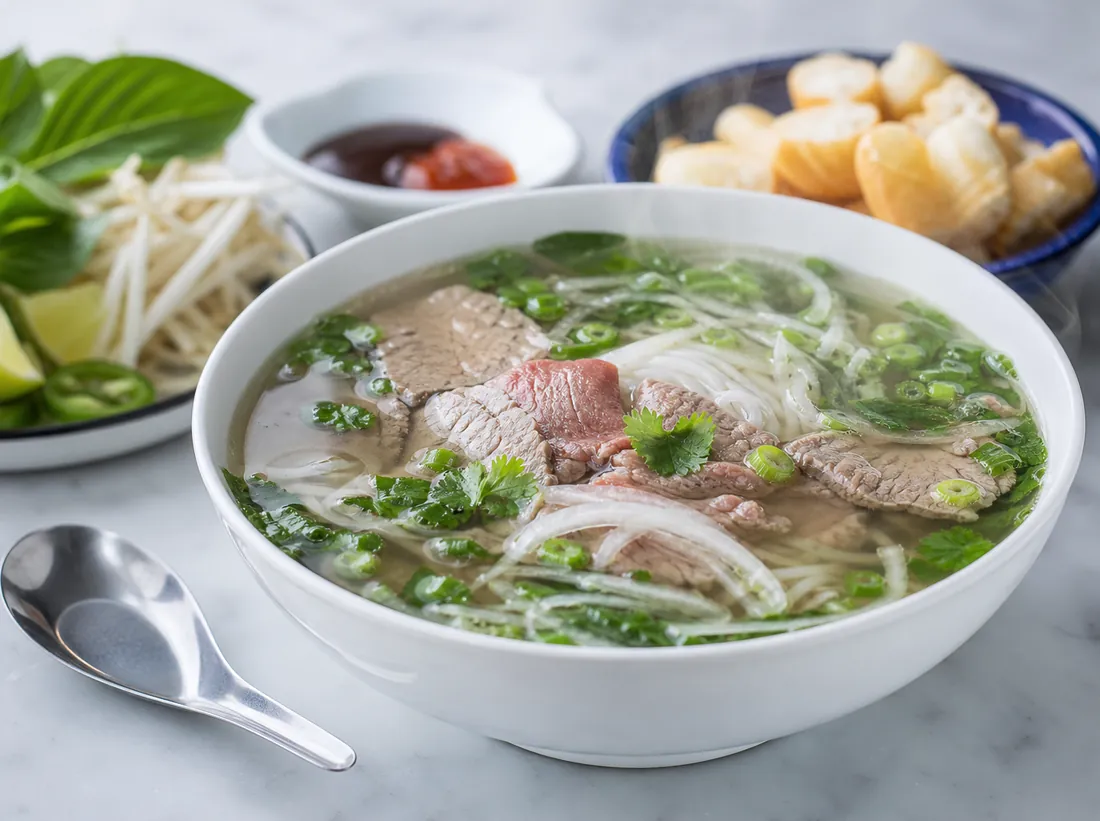
The story of Pho
Pho was born in northern Vietnam in the early 20th century, around Hanoi and Nam Dinh, and became the country's breakfast, sold at street stalls from the early hours. There are several theories about the name and none is certain. In Vietnamese it sounds closer to fuh than to foe.
After Vietnam was divided in 1954, many northerners moved south and brought pho with them. In the south it grew sweeter, with a big plate of herbs, sprouts, lime and sauces on the side, and from there, with the Vietnamese diaspora, it reached the whole world. Our kosher version has no fish sauce: a kosher kitchen does not cook fish with meat, so the seasoning is salt, sugar and soy sauce.
What makes Pho itself
Pho stands on three things. The first is a bone broth as clear as tea, which gets its body from collagen, not from cloudiness. The second is the scent: onion and ginger charred over a flame, and whole spices toasted in a dry pan. The third is the assembly in the bowl: raw slices of beef that cook in the boiling broth before your eyes, and herbs, lime and chilli that each person adds to taste.