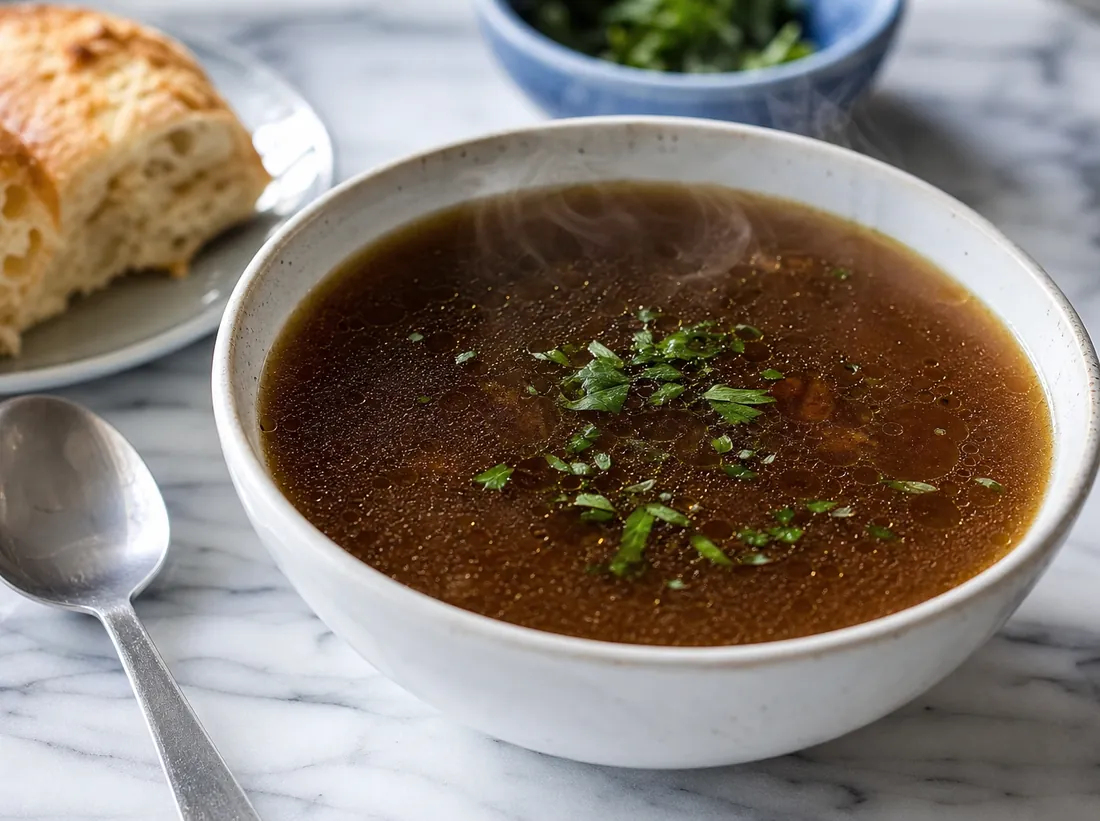
The story of Bone broth
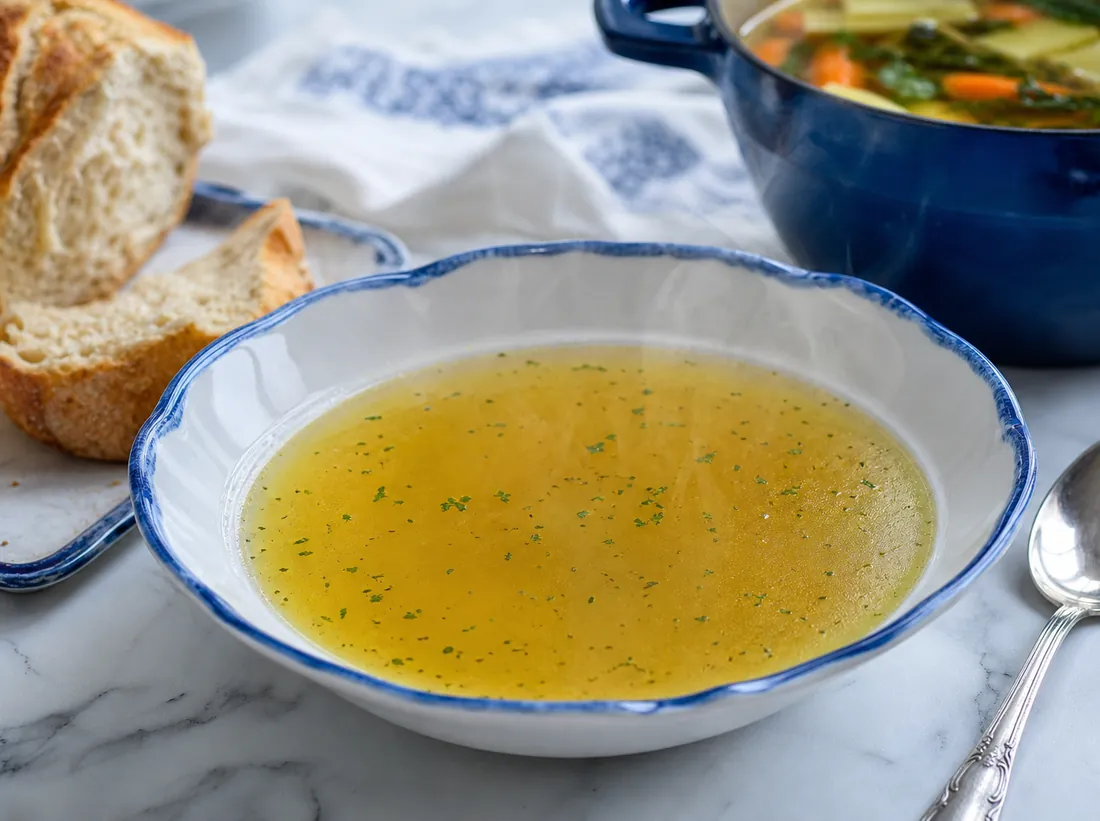
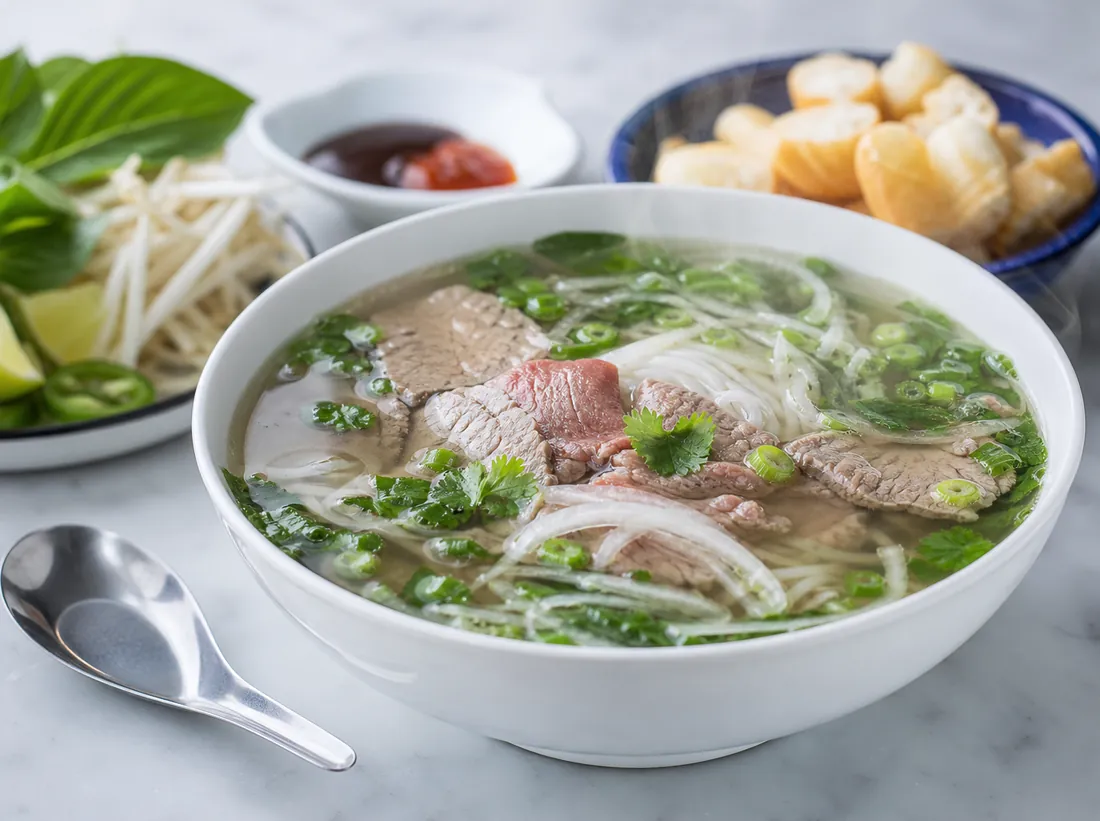
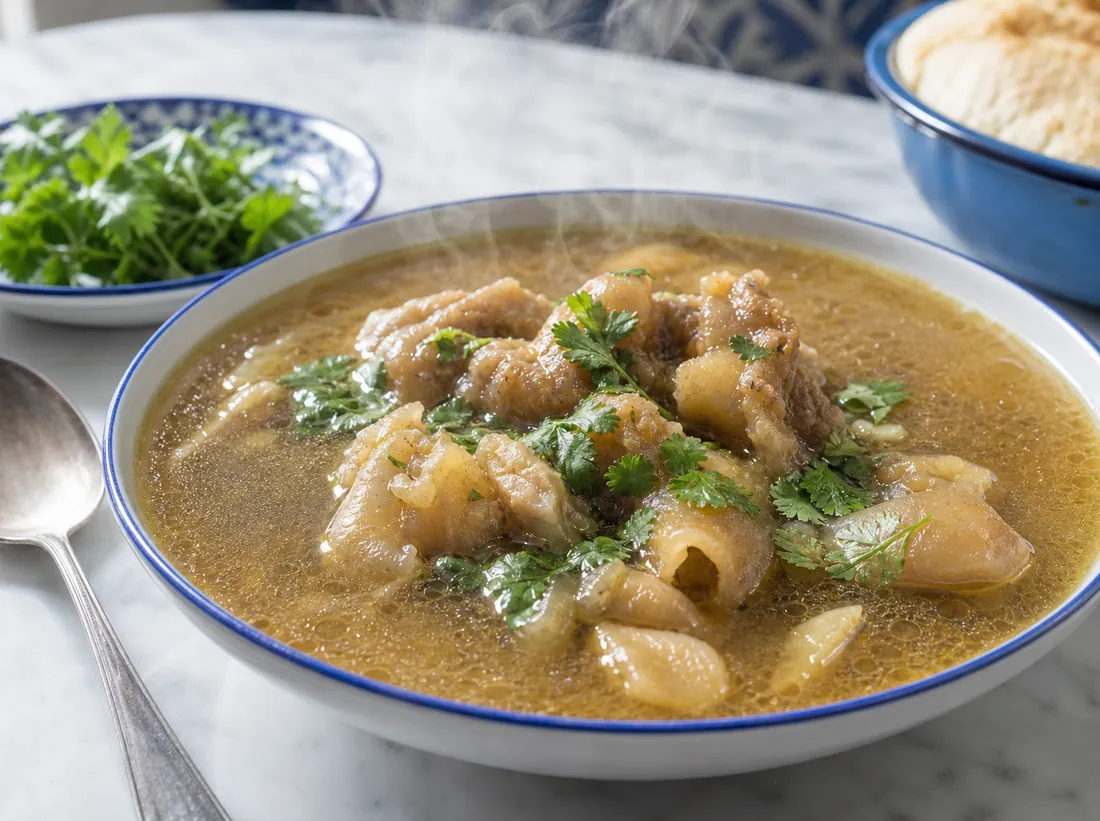
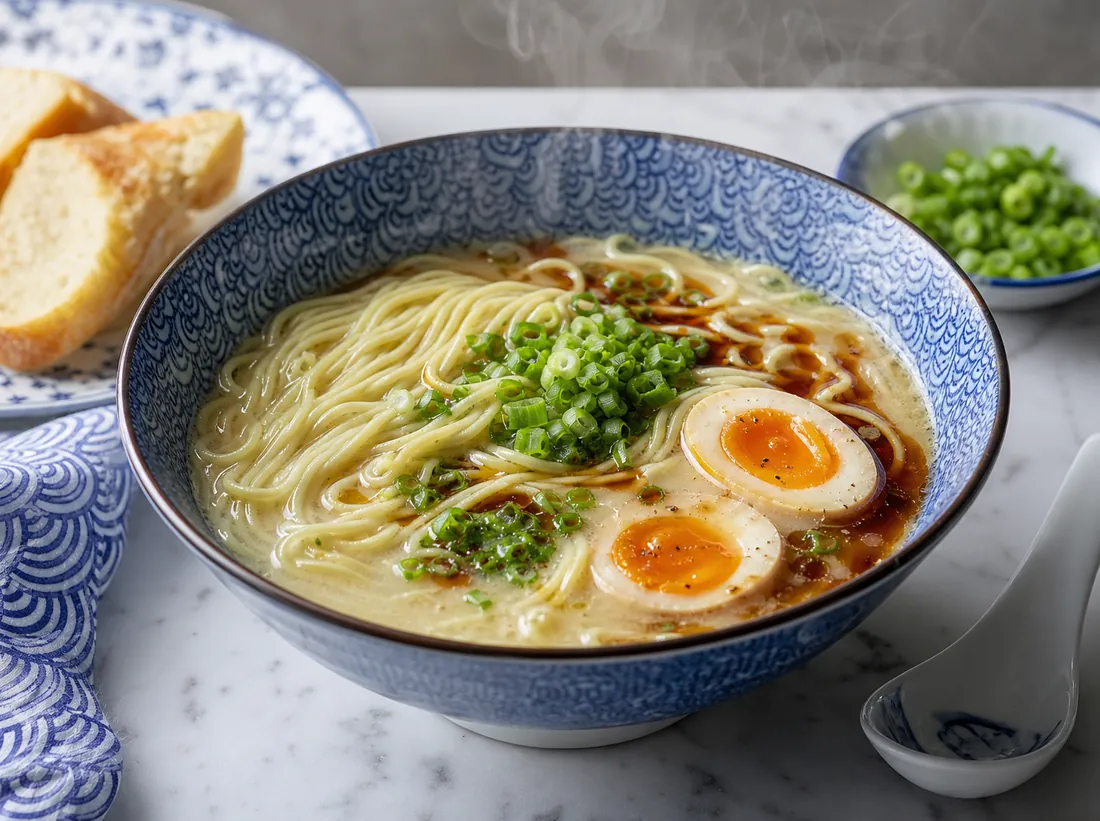
Every traditional kitchen had a pot of bones on the stove. French cooking built its sauces on a brown stock of roasted bones, Vietnamese cooks make the broth for pho from beef bones, and in the Jewish kitchens of the East, calf's foot soup and marrow bone soup are familiar winter dishes. The principle is the same everywhere: take the parts with little meat, and draw flavour and gelatin from them with long cooking.
In recent years bone broth has become a trend of its own, and the English name now appears on frozen jars in shops and cafes, Israel included. In the kitchen it is simply a brown stock taken further: more bones per litre, longer cooking, and seasoning that suits drinking. In Israel you ask the butcher for marrow bones, knuckles and feet, and every kosher butcher sells them.
What makes Bone broth itself
What sets bone broth apart from ordinary stock is concentration. Here there is about a kilo of bones for every litre of broth that comes out, the bones are roasted first, and the pot stays below a boil for 10 to 12 hours. The result is dark, rounded and full of gelatin: cold it wobbles like jelly, hot it coats the mouth. The salt goes in only at the end, because the broth reduces.