Rice noodles
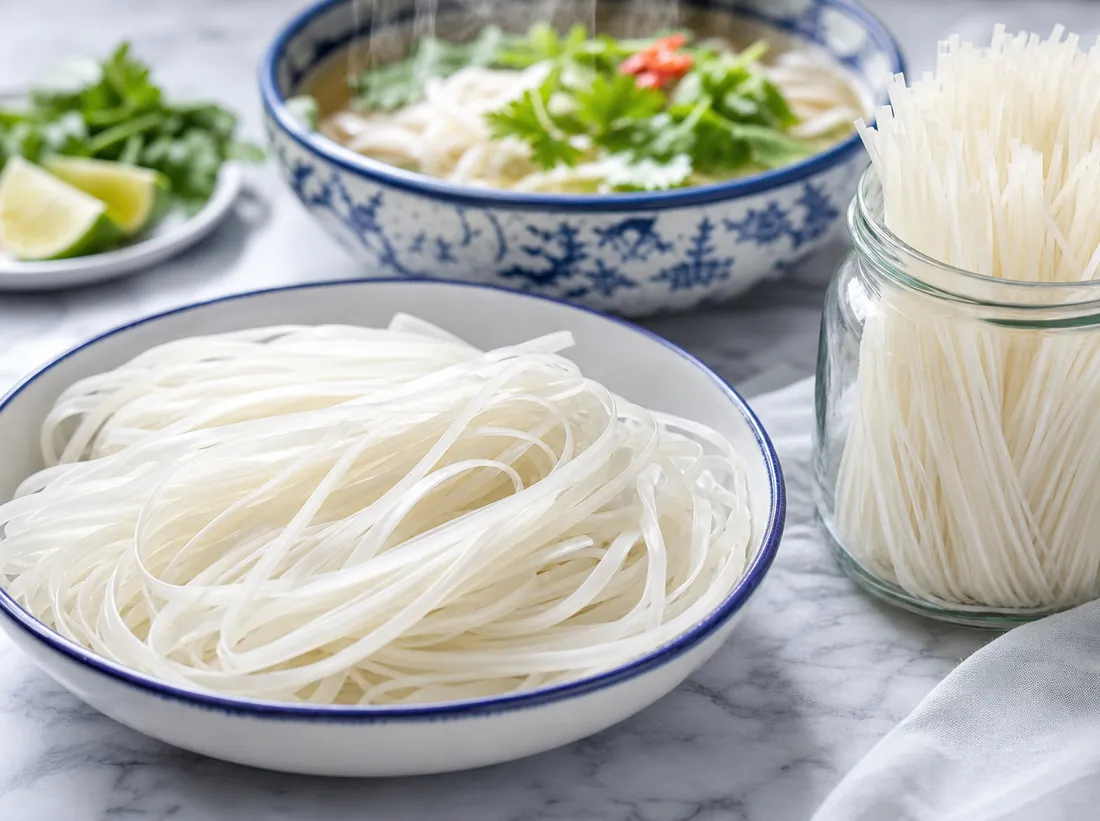
Rice noodles are made of rice flour and water, with no wheat and no egg, and they are the base of pho, pad thai and many Asian noodle soups. Most kinds need no long cooking: soak them in hot water and dip them in boiling water at the last minute.
 Illustration
What is Rice noodles
Rice flour, usually from long grain rice, is mixed with water into a batter. The batter is steamed into thin sheets and cut into ribbons, or kneaded into a dough and pressed through a die into fine strands, and then dried. Dry rice noodles are white and brittle; in hot water they soften into milky white, supple strands.
They taste mild and soak up broth and sauce well. In Vietnam they go into pho and bun soups, in Thailand into pad thai, pad see ew and noodle soups, and in southern China into stir fries. Glass noodles are a different family: they are made from starch, usually mung bean starch, and turn clear as glass when cooked.
Price and where to buy
400 g
per kg
Where
Thin and flat rice noodles are sold in every Israeli supermarket chain, on the Asian food shelf. Extra wide noodles, brown and black rice noodles, glass noodles from mung bean or sweet potato starch and large packs are at the Asian supermarkets around the Tel Aviv Central Bus Station and Florentin, the Asian shops near Carmel Market and online Asian grocers.
Shelf prices, October 2026, VAT included.
Kinds of Rice noodles
Thin rice noodles (vermicelli)
Very fine strands. Five to eight minutes in just boiled water is enough, and they go into soups, salads and fresh rice paper rolls.
Flat rice noodles
Three to five millimetres wide, the noodles of pho and pad thai. Soak 20 to 30 minutes in lukewarm water, then finish with a quick dip in boiling water or in the pan.
Wide rice noodles
Ribbons a centimetre or more across, for pad see ew and stir fries with thick sauce. Soak like flat noodles, a little longer.
Brown and black rice noodles
Darker versions with a nuttier taste. They need a little more time in the water, so check the pack instructions.
Glass noodles
Made from mung bean starch, or sweet potato starch in the Korean style, which is thicker and chewier. Soak 10 minutes in hot water or boil 3 to 8 minutes, depending on thickness.
How to use Rice noodles
Pho
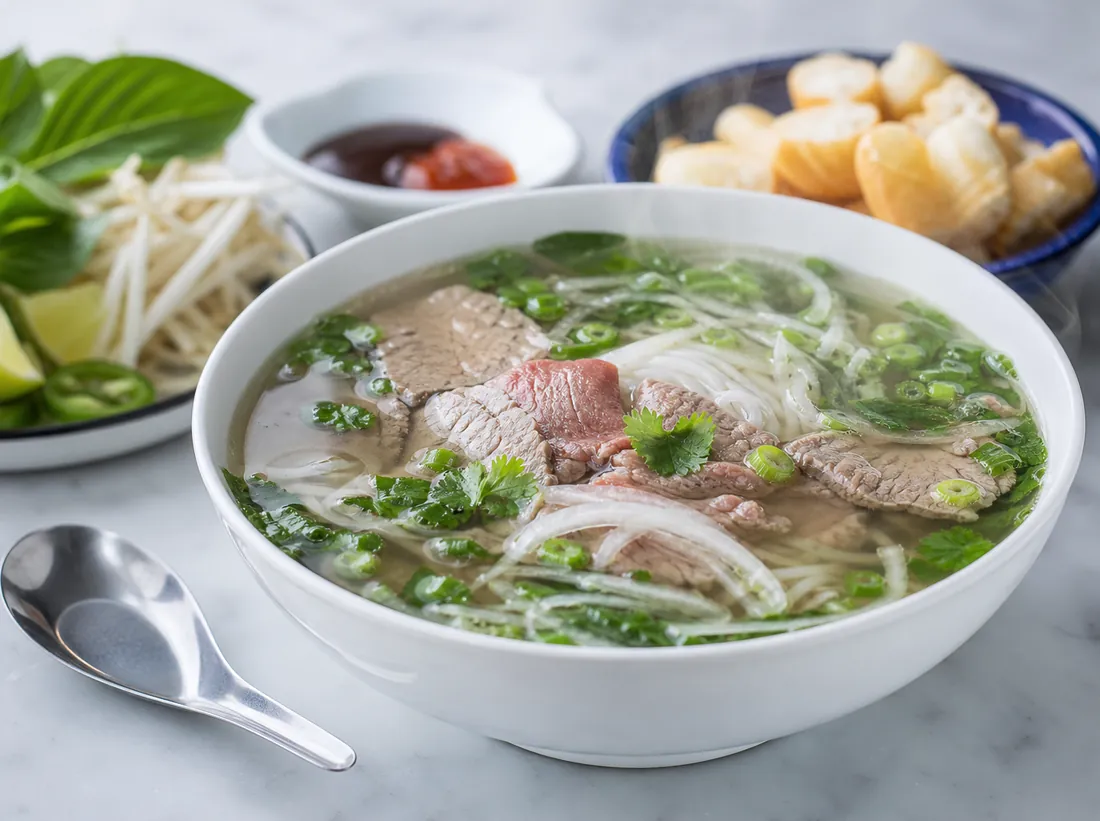
Flat noodles, about 100 g dry per bowl. Soak them, dip for 20 to 30 seconds in boiling water, put them in the bowl and pour boiling broth over.
Thai soups and tom yum
Cook thin noodles separately and divide them among the bowls before ladling in the soup. Left in the pot, they drink the broth and go mushy.
Pad thai
Soak flat noodles in lukewarm water until pliable but still firm in the centre, then finish them in the pan with the sauce. About 200 g dry for two.
Noodle salad
After soaking, rinse thin noodles in cold water, drain well and toss with crisp vegetables, herbs, lime and soy sauce.
Glass noodles in soup
Add soaked glass noodles to the bowl or pot in the last few minutes. They hold up in hot broth better than thin rice noodles.
How to choose Rice noodles
Read the label: rice noodles are rice flour and water, sometimes with a little tapioca or corn starch. If it says wheat flour, they are not rice noodles.
Pick a width that suits the dish: thin for soups and salads, flat for pho and pad thai, wide for stir fries.
Good dry noodles are whole and even in colour, with few broken bits at the bottom of the bag.
Look for a kashrut mark on the pack, and if you need gluten free, look for a gluten free mark as well.
What to use instead of Rice noodles
| Substitute | How, and what changes |
|---|---|
| Glass noodles | Same amount in soups and salads. Chewier and clearer, just as mild in taste. |
| Thin egg noodles | Same amount in soup or stir fry. They contain wheat and egg, so gluten, and the texture is softer and springier. |
| Soba | Same amount in soup or a cold salad. The taste is nutty and greyish, and many soba contain wheat flour too, so check if you avoid gluten. |
How to store Rice noodles
In the pantry
In the fridge
In the freezer
The science of Rice noodles
What holds a noodle without gluten
Rice has no gluten, so the noodle relies on starch. Cooking gelatinises the starch, and as it cools the amylose molecules bond into a stable network, a process called retrogradation. That is why noodles are made from high amylose rice, never sticky rice.
Why they harden and stick
Retrogradation carries on in the fridge, and the noodles turn hard and brittle. A quick dip in boiling water melts those bonds and brings back the bend. Starch left on the surface after cooking is what glues them together, so rinse in cold water and toss with a little oil.
Why glass noodles are clear
Mung bean starch is very high in amylose and has almost no protein or fat. Fully gelatinised, it forms an even gel that light passes through without scattering. Rice noodles hold a little protein and remnants of the rice grain that scatter light, so they turn white.
Ask for Rice noodles
Looking for Rice noodles and cannot find it? Send a request and we will come back with a price and availability.
- Tell us how much you need and by when.
- We come back with a price, pack size and availability.
- Pick up at 99 Ibn Gabirol or delivery in Tel Aviv.
Frequently asked questions
How long do you soak rice noodles?
Thin ones: 5 to 8 minutes in just boiled water. Flat ones: 20 to 30 minutes in lukewarm water, then a quick dip in boiling water or a finish in the pan.
Are rice noodles gluten free?
Noodles made only from rice flour and water are naturally gluten free. If you must be strict, look for a gluten free mark on the pack.
What is the difference between rice noodles and glass noodles?
Rice noodles are made from rice flour and turn white when cooked. Glass noodles are made from starch, usually mung bean, and stay clear and chewy.
Why do my rice noodles stick together?
Overcooking or surface starch. Take them out while still slightly firm, rinse in cold water and toss with a teaspoon of oil.
Can I cook rice noodles in the soup?
Only if you eat it right away. In the broth they keep absorbing and go soft, so store leftovers apart from the soup.
How many rice noodles per person?
About 80 to 100 g dry for a main dish, and about 50 g for a bowl of soup with plenty of toppings.
The Complete99 pantry
Ingredients and kitchen gear, with prices and availability.
More from the pantry
Amba
Amba is a sour, spicy sauce of pickled green mango, yellow from turmeric with a strong smell of fenugreek. It…
Baharat
Baharat is a blend of warm, fragrant spices, and its name is simply the Arabic word for spices. In Iraqi,…
Bulgur
Bulgur is wheat that has been boiled, dried and cracked, so it is ready in minutes. Fine bulgur, which many…