Freekeh
Freekeh, also called frikeh, is wheat picked while still green, roasted over fire and rubbed free of its chaff. The grains are greenish, chewy and smoky, and it cooks like bulgur or rice, in chicken soup, as a side dish and as a stuffing for chicken.
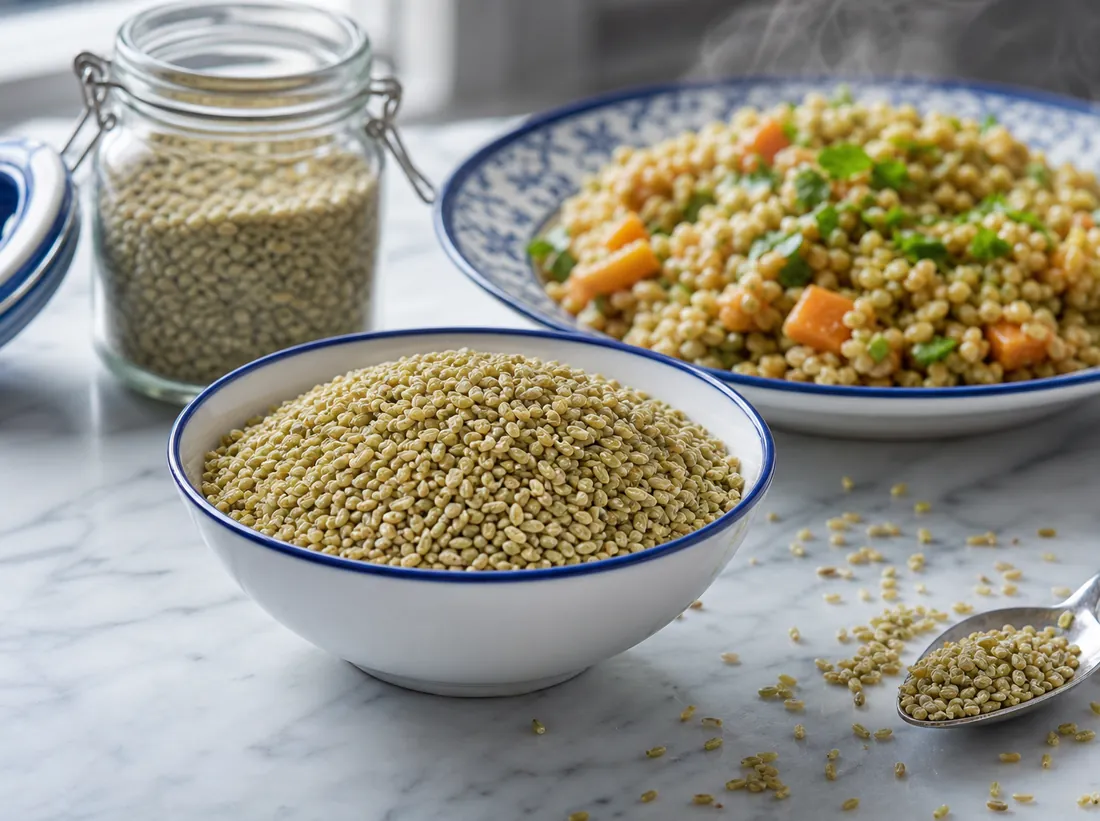 Illustration
What is Freekeh
Freekeh is harvested in spring, when the wheat kernels are already full but still green and moist. Piles of ears are set alight in the field or the yard: the dry straw and chaff burn fast, while the moist kernels only roast on the outside. The ears are then rubbed to release the grains, which is where the name comes from, the Arabic word for rubbing. After drying, freekeh is sold whole or cracked.
It tastes smoky, nutty and a little grassy, and the grain stays chewy even after long cooking. Freekeh is an old staple in the villages of the Galilee, in Lebanon, Syria, Jordan and Egypt, and in North Africa it appears in Algerian versions of harira and chorba. The best known dish is shorbat freekeh, a thick chicken soup with cracked freekeh, and on holidays a whole chicken is stuffed with it.
Price and where to buy
1 kg
per kg
Where
Freekeh is sold at the spice and pulse shops of Carmel Market and Levinsky Market in Tel Aviv, Mahane Yehuda in Jerusalem and Wadi Nisnas in Haifa, at Arab grocers and in online spice shops, usually in bags of half a kilo to a kilo. In the big supermarket chains it is only in some branches, on the grains and pulses shelf.
Shelf prices, October 2026, VAT included.
Kinds of Freekeh
Cracked freekeh
Broken grains that cook in 20 to 25 minutes. They release a little starch and thicken, so this is the freekeh for soup and soft side dishes.
Whole freekeh
A whole grain that cooks in 40 to 45 minutes and keeps its shape and bite. Good for salads, pilaf and stuffing a chicken.
Light or smoky
Some freekeh is greenish and lightly roasted, with a mild taste, and some is darker and smokier. The difference is the degree of roasting, so smell it before you buy.
How to use Freekeh
Freekeh soup with chicken
One cup of cracked freekeh for a pot of 2 to 2.5 litres of chicken stock, with onion fried in oil, half a teaspoon of allspice and a pinch of cinnamon. Simmer 25 to 30 minutes until thick, then return the shredded chicken to the pot.
Cracked freekeh as a side
One cup of cracked freekeh to two and a half cups of boiling water or stock and a teaspoon of salt. Simmer covered on low heat for 20 to 25 minutes, turn off the heat and leave covered for 10 more.
Whole freekeh for salad
One cup of whole freekeh to three cups of water. Simmer 40 to 45 minutes, drain any water left and cool. Toss with herbs, spring onion, lemon, olive oil and a little pomegranate molasses.
Stuffing for chicken
One and a half cups of freekeh cooked for 10 minutes, 200 g of fried ground meat, pine nuts, onion and baharat. Stuff a whole chicken, close it and simmer or roast for about an hour and a half.
In soup instead of rice
Two or three tablespoons of cracked freekeh in a pot of lentil or vegetable soup, for the last 25 minutes. It thickens a little and adds a gentle smokiness.
How to choose Freekeh
Look for greenish to olive brown grains with a pleasant smoky smell, and no musty or harsh burnt smell.
Buy the kind the recipe asks for: cracked for soup and sides, whole for salads and stuffing.
Traditional freekeh sometimes holds small stones and bits of burnt chaff. Pick it over, soak it for a few minutes, pour off whatever floats and rinse.
Look for a kashrut mark on the pack, and remember that freekeh is wheat, so it is chametz at Passover and contains gluten.
What to use instead of Freekeh
| Substitute | How, and what changes |
|---|---|
| Coarse bulgur | Same amount, cooked for only 12 to 15 minutes. No smoky taste, so add a pinch of smoked paprika. |
| Whole wheat berries | Soak overnight and simmer 50 to 60 minutes. Chewy like whole freekeh, without the smoke. |
| Pearl barley | Same amount in soup, about 40 minutes of cooking. Softer and creamier, and the soup comes out thick. |
| Roasted buckwheat | Same amount, 15 to 20 minutes of cooking. Its toasty taste recalls freekeh, and it is gluten free. The texture is softer. |
How to store Freekeh
In the pantry
In the fridge
In the freezer
The science of Freekeh
How it roasts without burning
A green kernel still holds a lot of water. When the ears burn, the dry straw and chaff go up within minutes, and the water inside the kernel evaporates and absorbs most of the heat. So the surface of the grain roasts and takes on a smoky taste, while the inside stays whole.
Why it is green
The kernels are picked before the wheat ripens and turns golden, while they still hold chlorophyll. The heat of roasting stops the ripening, and some of the green colour survives the drying.
Why cracked freekeh thickens soup
In a broken grain the starch is exposed, and during cooking it leaks into the liquid and thickens it. In a whole grain the bran wraps the starch, so whole freekeh stays separate and keeps its bite even after a long time in the pot.
Ask for Freekeh
Looking for Freekeh and cannot find it? Send a request and we will come back with a price and availability.
- Tell us how much you need and by when.
- We come back with a price, pack size and availability.
- Pick up at 99 Ibn Gabirol or delivery in Tel Aviv.
Frequently asked questions
What is freekeh?
Wheat picked while still green, roasted over fire and rubbed free of its chaff. It tastes smoky and cooks like bulgur or rice.
What is frikeh?
The same thing. Freekeh and frikeh are two spellings of one word, and both mean roasted green wheat.
What is the difference between freekeh and bulgur?
Freekeh is green wheat roasted over fire, with a smoky taste. Bulgur is ripe wheat that was boiled, dried and cracked, and it cooks faster.
How long do you cook freekeh?
Cracked freekeh 20 to 25 minutes, in two and a half cups of water per cup. Whole freekeh 40 to 45 minutes, in three cups of water per cup.
Do you need to soak freekeh?
Not necessarily. Pick it over and rinse it. Whole freekeh can soak for half an hour to shorten the cooking.
Does freekeh contain gluten?
Yes. Freekeh is wheat. For a gluten free version use roasted buckwheat.
Where can you buy freekeh in Israel?
At spice and pulse shops in the markets, at Arab grocers and in online shops. In the big supermarket chains it is not in every branch.
The Complete99 pantry
Ingredients and kitchen gear, with prices and availability.
More from the pantry
Amba
Amba is a sour, spicy sauce of pickled green mango, yellow from turmeric with a strong smell of fenugreek. It…
Baharat
Baharat is a blend of warm, fragrant spices, and its name is simply the Arabic word for spices. In Iraqi,…
Bulgur
Bulgur is wheat that has been boiled, dried and cracked, so it is ready in minutes. Fine bulgur, which many…