Kimchi
Kimchi is Korean style fermented vegetables, usually napa cabbage that has been salted and coated in a paste of Korean chilli, garlic, ginger and spring onion. It is sour, spicy, crunchy and slightly fizzy, and in Korea it is on the table at almost every meal.
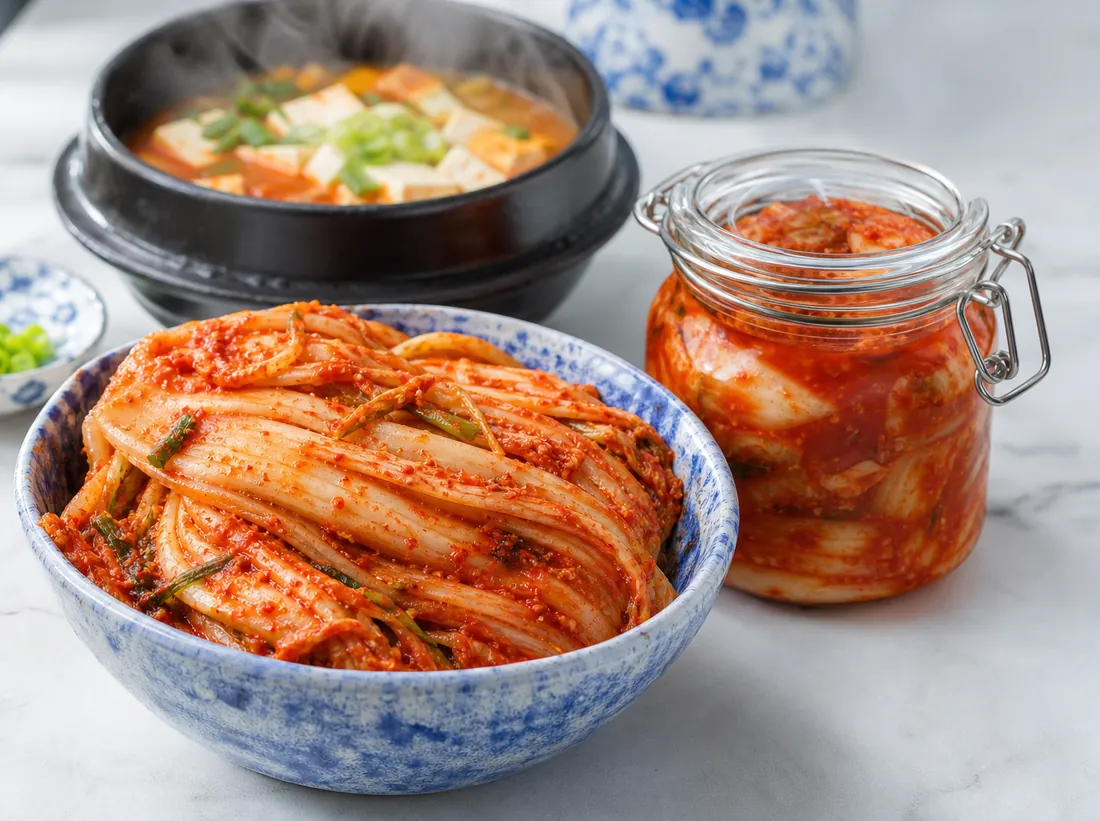 Illustration
What is Kimchi
Kimchi is made from napa cabbage that is cut and soaked in salt until the leaves soften and give up their water. It is rinsed and mixed with a paste of gochugaru, sweet red Korean chilli flakes, with garlic, ginger, spring onion and strips of white radish. It is packed into a jar, left at room temperature for a day or two until fermentation starts, and moved to the fridge, where it keeps souring slowly for weeks.
Kimchi is Korean, not Japanese. In Korea families make large batches at the end of autumn for the whole winter, at a gathering called kimjang. Traditional kimchi usually contains salted shrimp and anchovy fish sauce. Kosher versions contain no seafood and no fish sauce, and the depth comes from salt, soy sauce, seaweed or mushrooms. Look for a kashrut mark on the jar, and for a vegan version check the ingredients.
Price and where to buy
400 g jar
per kg
Where
Kimchi is sold at the Asian supermarkets around the Central Bus Station and Florentin in Tel Aviv, at online Asian shops, at some natural food shops and delis, and sometimes in the Asian chiller of the large chains. Gochugaru for homemade kimchi and napa cabbage are at the Asian shops. It is worth asking ahead whether there is kimchi with a kashrut mark and whether it is vegan.
Shelf prices, October 2026, VAT included.
Kinds of Kimchi
Baechu kimchi
Napa cabbage kimchi, the classic. Sold in whole cabbage quarters or cut into easy pieces, which is then called mak kimchi.
Kkakdugi
Cubes of white radish in kimchi seasoning. Crunchy, juicy and slightly sweet, served with rice and soups.
Oi sobagi
Cucumbers slit lengthwise and stuffed with chilli and spring onion. A summer kimchi, ready after a day or two.
White kimchi
No chilli, with a pale brine of garlic, ginger and pear. Gentle, fresh and not hot, good for anyone who avoids spice.
Well aged kimchi
Kimchi that has sat in the fridge for a few months and turned very sour. It is not eaten as it is, but cooked into stews, fried rice and pancakes.
How to use Kimchi
Homemade kimchi recipe
Cut a napa cabbage of about 1.5 kg into 4 cm pieces, toss with about 100 g of coarse salt and leave for an hour and a half to two hours, tossing every half hour. Rinse three times and drain for 20 minutes. For the paste: 4 to 6 tablespoons of gochugaru, 6 garlic cloves, a tablespoon of grated ginger, a tablespoon of sugar and two tablespoons of soy sauce. Mix with 4 spring onions and 150 g of white radish in strips, and wearing gloves massage the paste into the cabbage. Pack into a jar, leave out for a day or two, then refrigerate.
With a meal
A small bowl of kimchi beside rice, ramen, noodles, eggs and grilled meat. Its sourness and heat balance rich, fatty dishes.
Kimchi fried rice
A cup of chopped kimchi and two tablespoons of its juice for two cups of cold cooked rice. Fry the kimchi for 3 minutes in a tablespoon of oil, add the rice and a teaspoon of soy sauce and stir fry for 5 minutes. Serve with a fried egg on top.
Kimchi stew
Two cups of sour kimchi with its juice, a tablespoon of gochugaru and 600 ml of water or stock. For the kosher version cook it with strips of beef or only with tofu and mushrooms. Simmer for 20 minutes, and at the end add 200 g of cubed tofu and spring onion.
Kimchi pancake
A cup of chopped kimchi, half a cup of flour, half a cup of cold water and a tablespoon of kimchi juice. Pour a thin layer into an oiled pan and fry for 3 to 4 minutes a side, until the edges are crisp.
How to choose Kimchi
Decide what you want: young kimchi, crunchy and mild, to eat with a meal, or aged sour kimchi for cooking.
Read the label for shrimp, fish sauce, anchovy or oysters. Kimchi with a kashrut mark contains no seafood, and vegan kimchi contains no fish either.
Live kimchi keeps fermenting, so the lid can swell a little and it fizzes when opened. That is natural; open it over the sink. A mouldy smell or furry spots on the vegetables mean it should be thrown away.
Look for a kashrut mark on the jar.
What to use instead of Kimchi
| Substitute | How, and what changes |
|---|---|
| Sauerkraut with chilli and garlic | Same amount, with a teaspoon of chilli flakes and a crushed garlic clove for every cup. Sour and tasty, but less deep and less sweet. |
| Fresh kimchi salad | Kimchi with no fermentation, as Koreans make it on the day: cut napa cabbage with gochugaru, garlic, soy sauce, a little rice vinegar and sesame oil. Ready in a quarter of an hour. |
| Spicy pickles | In place of kimchi with a meal, same amount. Cucumbers or cabbage in vinegar with chilli bring sourness and heat, without the fermented taste. |
How to store Kimchi
In the pantry
In the fridge
In the freezer
The science of Kimchi
Lactic fermentation
Salt draws water from the cabbage cells and forms a brine. Salt tolerant lactic acid bacteria, naturally present on the vegetables, start feeding on the sugars and turning them into lactic acid and carbon dioxide. The acid brings the sourness, and the gas brings the tingle and fizz.
Why the cabbage is salted first
Salt pulls water from the leaves, so they soften, shrink and make room for the paste. At that salt level most spoilage bacteria struggle, and the lactic acid bacteria get the upper hand. Rinsing after salting removes the excess, so the kimchi is not too salty.
Why it sours in the fridge
Cold does not stop the bacteria, it only slows them. Acid keeps building slowly over weeks and months, and the taste moves from fresh and crunchy to sour and deep. That is why in Korea young kimchi is eaten as it is and aged kimchi is cooked.
Ask for Kimchi
Looking for Kimchi and cannot find it? Send a request and we will come back with a price and availability.
- Tell us how much you need and by when.
- We come back with a price, pack size and availability.
- Pick up at 99 Ibn Gabirol or delivery in Tel Aviv.
Frequently asked questions
What is kimchi?
Korean style fermented vegetables, usually napa cabbage with Korean chilli, garlic, ginger and spring onion. Sour, spicy and crunchy.
Is kimchi Japanese or Korean?
Korean. Japan has its own pickles, and kimchi is sold there as a Korean food.
Does kimchi contain fish or seafood?
Traditional kimchi usually contains salted shrimp and fish sauce. Kosher versions contain no seafood and no fish sauce, and vegan versions contain no animal products at all.
How do you make kimchi at home?
Salt cut napa cabbage for an hour and a half to two hours, rinse and drain, mix with a paste of gochugaru, garlic, ginger, sugar and soy sauce, pack into a jar, leave out for a day or two and refrigerate.
How long does kimchi keep?
Several months in the fridge, in a closed jar with the vegetables under the liquid. It sours with time and is then best for cooking.
Why does the jar fizz?
Fermentation continues in the fridge and produces gas. A slightly swollen lid and fizzing on opening are natural in live kimchi.
What do you eat kimchi with?
Beside rice, ramen, noodles, eggs and meat, and inside fried rice, kimchi stew and pancakes.
The Complete99 pantry
Ingredients and kitchen gear, with prices and availability.
More from the pantry
Amba
Amba is a sour, spicy sauce of pickled green mango, yellow from turmeric with a strong smell of fenugreek. It…
Baharat
Baharat is a blend of warm, fragrant spices, and its name is simply the Arabic word for spices. In Iraqi,…
Bulgur
Bulgur is wheat that has been boiled, dried and cracked, so it is ready in minutes. Fine bulgur, which many…