Labneh
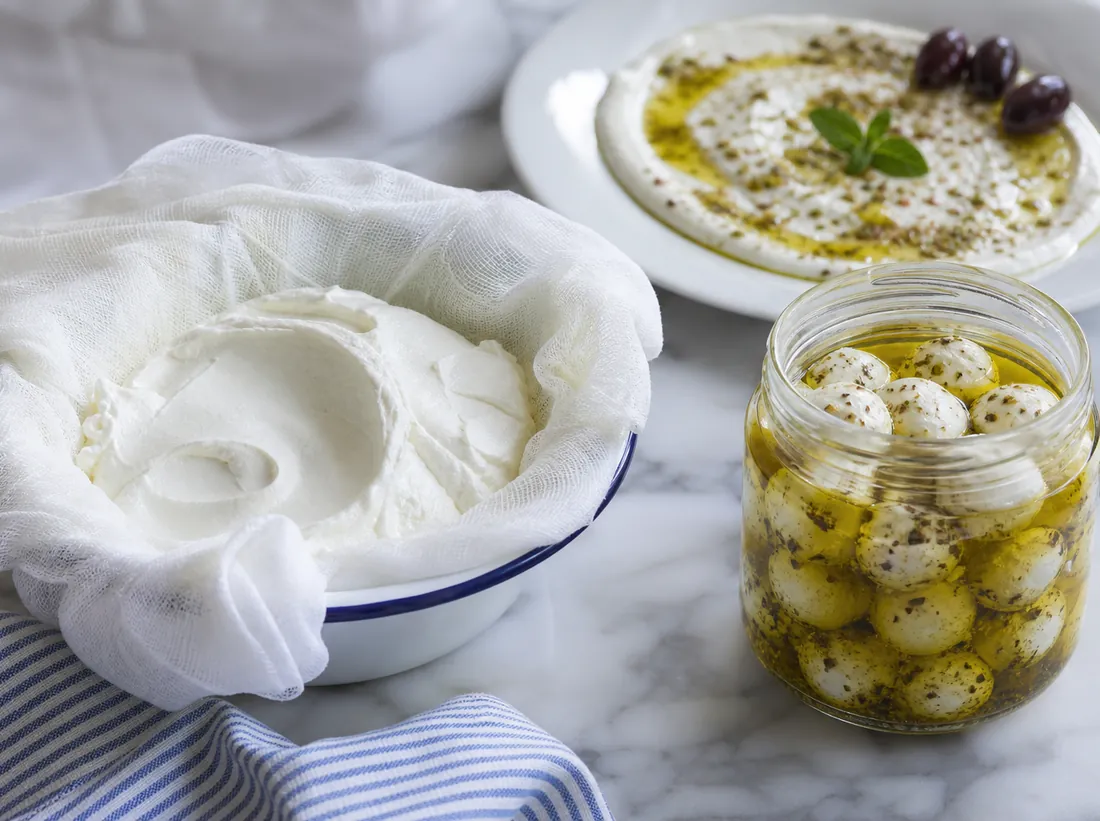
Labneh is salted yogurt strained in cloth until most of the liquid has run out, leaving a thick, smooth and tangy cheese for spreading. At breakfast it is spread on a plate with olive oil and za'atar, and strained a day longer it rolls into labneh balls kept in olive oil.
 Illustration
What is Labneh
Labneh is made from yogurt, once from goat's and sheep's milk and today mostly from cow's milk. The yogurt is salted, poured into a cloth or cloth bag and hung over a bowl, and the whey drips out for hours. The longer it strains, the thicker it gets, from a soft spread to a cheese firm enough to roll into balls.
Labneh is the breakfast cheese of Lebanon, Syria, Jordan and the Galilee, served with olive oil, za'atar, olives, vegetables and pitta. In Israel it is in every dairy fridge, and it is very easy to make at home. Labneh is dairy, so any dish that contains it is a dairy dish.
Price and where to buy
250 g
per kg
Where
Spreadable labneh is sold in the dairy fridge of every Israeli supermarket chain and corner shop. Goat and sheep labneh, labneh balls in olive oil and flavoured labneh are at the cheese shops and delis of Carmel Market, Levinsky Market and Hatikva Market in Tel Aviv, Mahane Yehuda in Jerusalem and Wadi Nisnas in Haifa, and at small dairies in the Galilee.
Shelf prices, October 2026, VAT included.
Kinds of Labneh
Spreadable labneh
Soft, smooth and tangy, in a tub in the dairy fridge, at different fat levels. For a breakfast plate, sandwiches and dips.
Labneh balls in olive oil
Labneh strained a day or two longer until firm, rolled into balls and kept in a jar under olive oil, sometimes rolled in za'atar or chilli.
Goat and sheep labneh
Sharper and more sour, with the deep taste of goat's or sheep's milk. Sold by small dairies, cheese shops and delis.
Flavoured labneh
Labneh with za'atar, garlic, herbs, chilli or preserved lemon, ready to serve.
How to use Labneh
Homemade labneh
One kilo of plain 3% yogurt or Bulgarian yogurt and a teaspoon of salt. Line a sieve with a clean muslin or two layers of cheesecloth, set it over a bowl, pour in the yogurt, cover and refrigerate for 12 to 24 hours. It gives about 450 to 500 g of labneh, and the whey is good for baking and smoothies.
Labneh balls in olive oil
Strain the labneh for 36 to 48 hours in the fridge, until firm. With oiled hands roll balls of 2 to 3 cm, set them on a tray in the fridge for a few hours, then move them to a clean, dry jar. Cover them completely with olive oil.
Breakfast plate
Spread labneh on a flat plate and make a hollow in the middle with the back of a spoon. Drizzle with olive oil, scatter za'atar or dukkah, and serve with olives, cucumber, tomato and warm pitta.
On soup
A spoonful of labneh over a bowl of vegetarian lentil soup, pumpkin soup or spinach soup, just before serving. In tarator labneh can stand in for yogurt; add more cold water until it is as thin as yogurt. The soup becomes dairy.
Labneh sauce
Half a cup of labneh, a tablespoon of lemon juice, a crushed garlic clove, two tablespoons of water and chopped mint or dill. Over roasted vegetables, aubergines, shakshuka or a quiche.
How to choose Labneh
Read the label: good labneh is milk, yogurt cultures and salt. Starch or stabilisers thicken it instead of straining, and the taste turns flat.
A fresh, tangy taste and a clean yogurt smell. A little yellowish liquid on top is whey, which is natural. Stir it back in or pour it off.
With labneh balls choose a jar where the oil covers every ball, and the balls are whole and white with no spots.
Look for a kashrut mark on the pack, and remember that labneh is dairy.
What to use instead of Labneh
| Substitute | How, and what changes |
|---|---|
| Greek yogurt | The closest substitute, same amount. To make it as thick as labneh, strain it in cloth for another two hours. |
| Cream cheese | Same amount, with a teaspoon of lemon juice and a pinch of salt for every half cup. Richer and less sour. |
| Soft white cheese 9% | Same amount, with a tablespoon of yogurt for every half cup. Softer and sweeter, and no good for balls. |
| Strained soy or coconut yogurt | For a meat meal or a vegan kitchen, same amount. Strain in cloth for 12 hours in the fridge with a little salt. |
How to store Labneh
In the pantry
In the fridge
In the freezer
The science of Labneh
What straining does
In yogurt the casein proteins form a fine network that holds water inside. Straining lets out the whey, which is water with milk sugar, salts and whey proteins, and the network stays in the cloth. Casein and fat concentrate, and labneh comes out roughly twice as thick as the yogurt.
Where the tang comes from
Yogurt bacteria turn milk sugar into lactic acid. The acid makes the casein set into a gel, and that gel is what holds labneh together as the water leaves. Salt draws out more water and slows other bacteria, which is why salted labneh keeps longer than yogurt.
Why labneh splits when cooked
Strong heat together with acid tightens milk proteins into grains, and labneh turns grainy and runny. Add it to soup once the heat is off, or first stir a spoonful of the hot liquid into the labneh and only then return it to the pot.
Ask for Labneh
Looking for Labneh and cannot find it? Send a request and we will come back with a price and availability.
- Tell us how much you need and by when.
- We come back with a price, pack size and availability.
- Pick up at 99 Ibn Gabirol or delivery in Tel Aviv.
Frequently asked questions
What is labneh?
A soft cheese made from salted yogurt strained in cloth until most of the liquid is gone. It is thick, smooth and tangy, and eaten with olive oil and za'atar.
What is the difference between labneh and white cheese?
Labneh is strained yogurt, tangy and thick. Israeli white cheese, gvina levana, is made from soured, curdled milk and is softer and sweeter. The two names look almost the same in Hebrew, which is why Israeli packs sometimes spell labneh with an extra letter.
How do you make labneh at home?
Mix a kilo of plain yogurt with a teaspoon of salt, pour it into a cloth lined sieve over a bowl and strain in the fridge for 12 to 24 hours.
How long do you strain labneh?
12 hours for a soft spread, 24 hours for thick labneh, and 36 to 48 hours for firm labneh to roll into balls.
How do you make labneh balls in olive oil?
Strain for two days until firm, roll balls with oiled hands, dry them for a few hours in the fridge and cover them completely with olive oil in a jar.
Is labneh dairy?
Yes. Labneh is made from yogurt, so a dish with labneh is a dairy dish. For a meat meal use strained soy or coconut yogurt.
What can I use instead of labneh?
Greek yogurt strained for another two hours, or cream cheese with a little lemon and salt.
The Complete99 pantry
Ingredients and kitchen gear, with prices and availability.
More from the pantry
Amba
Amba is a sour, spicy sauce of pickled green mango, yellow from turmeric with a strong smell of fenugreek. It…
Baharat
Baharat is a blend of warm, fragrant spices, and its name is simply the Arabic word for spices. In Iraqi,…
Bulgur
Bulgur is wheat that has been boiled, dried and cracked, so it is ready in minutes. Fine bulgur, which many…