Panko
Panko are Japanese breadcrumbs: large, white, airy flakes made from bread without a crust. They absorb less oil than ordinary breadcrumbs and stay crisp for longer, so they are the coating for a crunchy schnitzel, for crispy sushi rolls and for a golden crust on baked fish.
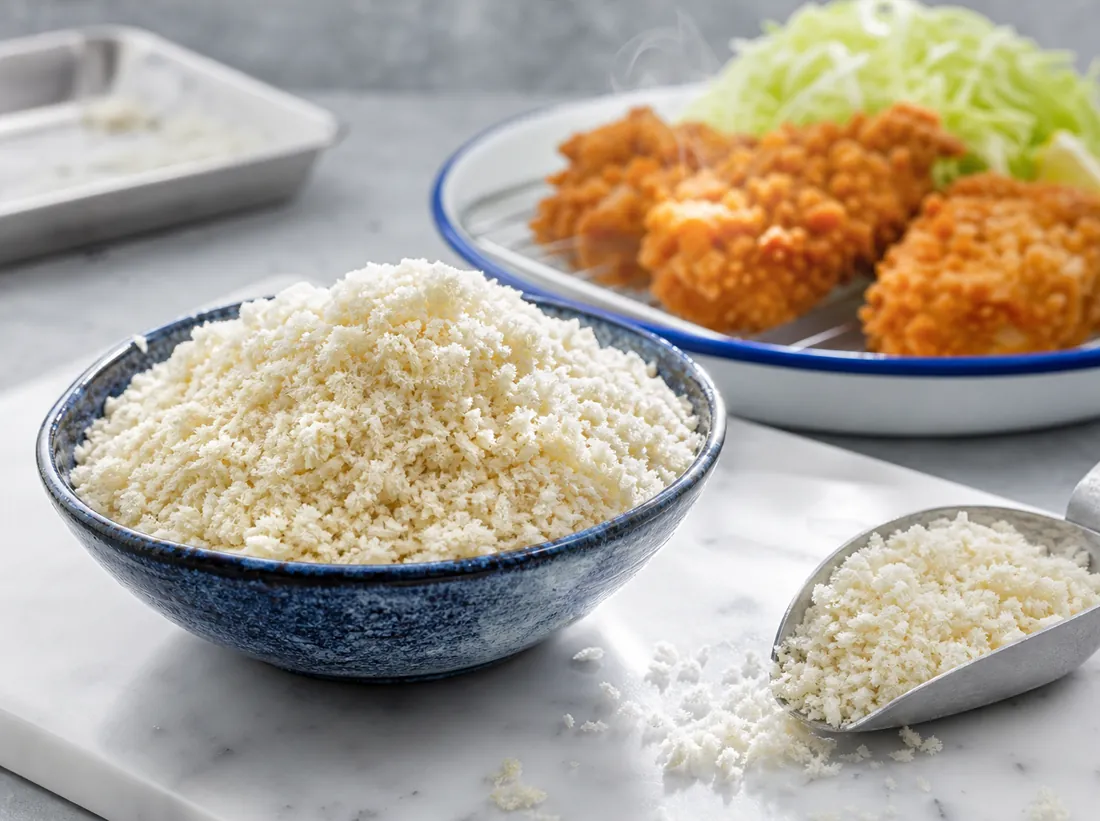 Illustration
What is Panko
Panko is made from white bread baked without a crust. In factories it is usually baked by an electric current that runs through the dough and heats it from inside, so no brown crust forms. The bread is shredded into coarse flakes rather than ground to a powder, then dried. The name combines pan, bread in Japanese, and ko, crumbs or flour.
In Japanese cooking panko coats croquettes, chicken katsu and fried fish. In Israel it goes into schnitzel, chicken nuggets, coatings for fish and vegetables, crispy sushi rolls and toppings for oven bakes. Panko is made from wheat, and there is also gluten free panko from rice or corn.
Price and where to buy
200 g
per kg
Where
Panko is sold in every Israeli supermarket chain, on the breadcrumb and baking shelf or the Asian shelf, in bags of about 200 g. Large packs, golden panko and gluten free panko are at the Asian supermarkets around the Central Bus Station and Florentin in Tel Aviv, at online Asian shops and at natural food shops.
Shelf prices, October 2026, VAT included.
Kinds of Panko
White panko
The classic panko, coarse white flakes from crustless bread. It fries to a pale golden colour and suits almost any coating.
Golden panko
Flakes that were toasted first or coloured, so they look golden in the bag. Handy for oven baking, where white panko browns slowly.
Gluten free panko
Flakes made from rice, corn or other flours. Slightly less crisp and more brittle, and fine for schnitzel and fish coatings for anyone avoiding gluten.
How to use Panko
Panko schnitzel
About 100 g of panko for 500 g of chicken breast, sliced and pounded to 1 cm. Dip in flour, beaten egg and panko, pressing lightly so the flakes stick. Deep fry at 170 to 175°C for about 3 minutes a side, and rest on a rack rather than on paper.
Oven baked panko schnitzel
Toast the panko in a dry pan with two tablespoons of oil for 3 to 4 minutes until golden, and only then coat the chicken. Bake on a rack at 200°C for 15 to 18 minutes. The result is crisp and golden without frying.
Panko for sushi
Dip a rolled sushi roll in a thin batter of flour and cold water, roll it in panko and fry in hot oil for 2 to 3 minutes until golden. Slice with a wet knife after a minute's rest.
Crust for baked fish
Half a cup of panko with a tablespoon of olive oil, a crushed garlic clove, grated lemon zest and chopped parsley. Spread a thin layer of mustard or tahini on a salmon or white fish fillet, scatter the panko on top and bake at 200°C for 12 to 15 minutes.
In meatballs
Half a cup of panko soaked in a quarter cup of water for 500 g of minced meat. The wet flakes keep the meatballs juicier and softer than ordinary breadcrumbs do.
How to choose Panko
Look for large, uneven flakes, white or pale golden, with little dust at the bottom of the bag. A lot of dust means a denser coating.
Read the label: wheat flour, yeast, salt and sometimes sugar and oil. Some products contain milk powder, so for chicken and meat coatings check that the pack says parve.
If you avoid gluten, buy only panko labelled gluten free.
Look for a kashrut mark on the pack, and remember that panko is bread, so it is chametz at Passover.
What to use instead of Panko
| Substitute | How, and what changes |
|---|---|
| Ordinary breadcrumbs | Same weight. The coating comes out thinner, denser and darker, and absorbs more oil. |
| Homemade panko | Cut the crust off day old white bread, grate it on a coarse grater or pulse it a few times in a food processor, and dry it at 150°C for 10 to 15 minutes without letting it colour. Cool completely before closing it in a jar. |
| Crushed cornflakes | Same amount, for a very crunchy coating. Slightly sweet and quick to brown, so fry a little cooler. |
| Coarse matzo meal | At Passover, in place of panko in schnitzel and meatballs, same amount. The coating is denser and harder; look for a kosher for Passover mark. |
How to store Panko
In the pantry
In the fridge
In the freezer
The science of Panko
Why panko is crispier
A panko flake is large, thin and full of air, and the flakes stand up on the surface of the food like a lattice instead of packing into one layer. Steam leaving the chicken escapes between the flakes instead of soaking the coating, so it stays crisp for long minutes after frying.
Why it absorbs less oil
Ordinary breadcrumbs have a huge surface area per gram, and oil clings to every crumb. Panko has less surface per gram, and the oil drains out of its large gaps. The coating is lighter and less greasy.
Why oil temperature matters
At 170 to 180°C the water in the coating evaporates fast, the crust sets and stays crisp. Below 160°C everything is slow, the coating drinks oil and turns soft. An oven is gentler still, which is why panko is toasted first for baking.
Ask for Panko
Looking for Panko and cannot find it? Send a request and we will come back with a price and availability.
- Tell us how much you need and by when.
- We come back with a price, pack size and availability.
- Pick up at 99 Ibn Gabirol or delivery in Tel Aviv.
Frequently asked questions
What is panko?
Japanese breadcrumbs, large airy flakes made from crustless white bread. They give an extra crisp coating for schnitzel, fish and sushi.
What is the difference between panko and breadcrumbs?
Ordinary breadcrumbs are finely ground, sometimes with crust, and give a dense coating. Panko is large dry flakes that absorb less oil and stay crisp longer.
Can you make panko at home?
Yes. Grate crustless white bread into coarse flakes and dry them at 150°C for 10 to 15 minutes, without browning.
How do you use panko for sushi?
Dip a rolled sushi roll in a thin batter of flour and cold water, roll it in panko, fry for 2 to 3 minutes in hot oil, then slice.
How do you make oven baked panko schnitzel crispy?
Toast the panko first in a pan with a little oil until golden, coat the chicken with it and bake on a rack at 200°C for 15 to 18 minutes.
Is there gluten free panko?
Yes, made from rice or corn. Buy only a pack labelled gluten free, since regular panko is made from wheat.
The Complete99 pantry
Ingredients and kitchen gear, with prices and availability.
More from the pantry
Amba
Amba is a sour, spicy sauce of pickled green mango, yellow from turmeric with a strong smell of fenugreek. It…
Baharat
Baharat is a blend of warm, fragrant spices, and its name is simply the Arabic word for spices. In Iraqi,…
Bulgur
Bulgur is wheat that has been boiled, dried and cracked, so it is ready in minutes. Fine bulgur, which many…