Ras el hanout
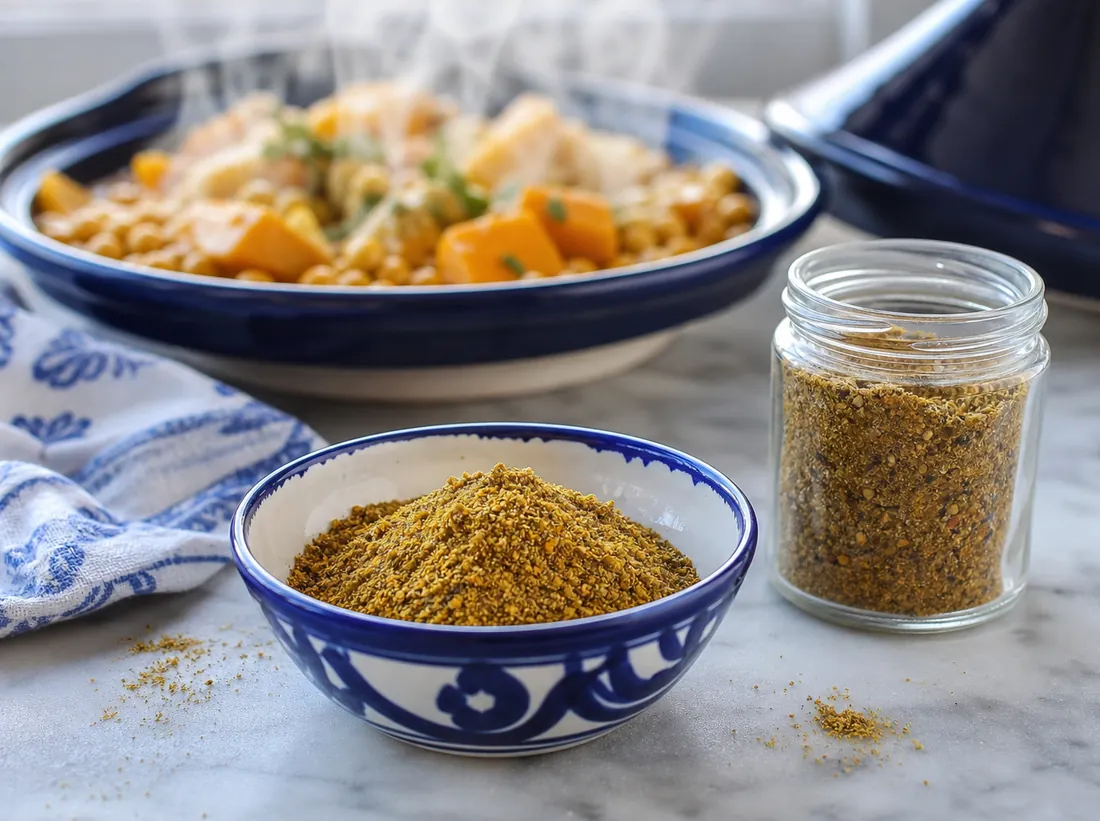
Ras el hanout is a spice blend from North Africa, mostly from Morocco, warm, fragrant and hardly hot at all. The name means head of the shop in Arabic, the best the spice merchant has, and it gives depth to tagines, meatballs, fish, couscous and soups.
 Illustration
What is Ras el hanout
There is no single recipe for ras el hanout. Every spice merchant in Morocco put together his own blend, sometimes from ten spices and sometimes from more than twenty. It almost always has cumin, coriander, cinnamon, ginger, turmeric, paprika and black pepper, and often cardamom, nutmeg, allspice and cloves too. Festive versions add dried rose petals.
The taste is warm and slightly sweet from the cinnamon and ginger, earthy from the cumin and turmeric, and floral from the coriander and cardamom. In Moroccan Jewish cooking it goes into fish and meat balls, chicken stews with dried fruit, couscous, roasted vegetables and soups. It is not hot unless chilli has been added.
Price and where to buy
100 g
per kg
Where
Ras el hanout is sold on the spice shelf of most Israeli supermarket chains. Fresh blends by weight, versions with roses and hot versions are at the spice shops of Carmel Market, Levinsky Market and Hatikva Market in Tel Aviv, Mahane Yehuda in Jerusalem and Wadi Nisnas in Haifa, and at online spice shops.
Shelf prices, October 2026, VAT included.
Kinds of Ras el hanout
Classic ras el hanout
A warm blend of cumin, coriander, cinnamon, ginger, turmeric, paprika and black pepper, with a little cardamom and nutmeg. For everything.
Ras el hanout with roses
A floral version with dried rose petals and sometimes lavender. Good for tagines with dried fruit, rice and spiced desserts.
Hot ras el hanout
With chilli or hot paprika. For meatballs, fish in sauce and grilled meat.
Meatball blend
Some spice shops sell ras el hanout adapted for meatballs, sometimes with salt and garlic. Read the ingredients so you do not salt twice.
How to use Ras el hanout
Chicken tagine
A tablespoon of ras el hanout for a kilo of chicken, with two sliced onions, two garlic cloves, a handful of dried apricots or prunes and a cup of water. Fry the spice for a minute with the onion, add the rest and simmer covered on low heat for about an hour.
Fish or meat balls
A teaspoon of ras el hanout for 500 g of minced fish or minced meat, with chopped coriander, garlic and an egg. Simmer in a tomato and pepper sauce for 25 to 30 minutes.
Pumpkin and vegetable soup
A teaspoon of ras el hanout for a pot with a kilo of pumpkin, fried for a minute with the onion before the water. It gives pumpkin soup and vegetable soups warmth and depth without heat. Some homes add a pinch to harira too.
Roasted vegetables
A teaspoon per kilo of carrots, pumpkin, cauliflower or sweet potato, with three tablespoons of olive oil and salt. Roast at 200°C for 30 to 40 minutes.
Homemade ras el hanout
Two teaspoons of cumin, two of ground coriander, two of dried ginger, two of turmeric, a teaspoon of cinnamon, a teaspoon of black pepper, a teaspoon of sweet paprika, half a teaspoon of cardamom, half a teaspoon of allspice, a quarter teaspoon of cloves and a quarter teaspoon of nutmeg. Mix and keep in an airtight jar.
How to choose Ras el hanout
A strong, warm, slightly sweet smell as soon as you open the bag, and a brown orange colour. A grey, faded blend has lost most of its flavour.
Read the label: some blends contain salt, sugar or garlic, so season carefully.
Buy a small bag, since ground spices fade within months. Spice shops will sell a fresh blend by weight.
Look for a kashrut mark on the pack.
What to use instead of Ras el hanout
| Substitute | How, and what changes |
|---|---|
| Baharat with ginger and turmeric | A teaspoon of baharat, a quarter teaspoon of ginger and a quarter teaspoon of turmeric in place of a teaspoon of ras el hanout. Baharat is stronger in pepper and allspice. |
| Garam masala | Same amount. More cardamom and cloves and less turmeric and ginger, so the colour is darker and the taste more Indian. |
| Quick blend | Two parts cumin, one part cinnamon, one part ginger and one part turmeric, with a pinch of black pepper. Same amount. |
How to store Ras el hanout
In the pantry
In the fridge
In the freezer
The science of Ras el hanout
What builds the flavour
Cinnamon carries cinnamaldehyde, cloves and allspice eugenol, and cumin cuminaldehyde, and each brings a different side of warmth. Turmeric adds colour and ginger a gentle heat. The blend works because no spice dominates, so the nose reads one whole flavour.
Why the spice is fried in oil
Most aroma compounds in spices dissolve in fat, not water. A minute in hot oil releases them, spreads them through the whole pot and removes the dusty taste of raw spice. More than a minute or two on high heat burns the paprika and turmeric and turns them bitter.
Why a ground blend fades
Aroma compounds are volatile oils. In a whole spice they are sealed inside the cells, but grinding exposes them to air across a huge surface, where they evaporate and oxidise. That is why a fresh blend by weight, or one ground at home from whole seeds, tastes far stronger.
Ask for Ras el hanout
Looking for Ras el hanout and cannot find it? Send a request and we will come back with a price and availability.
- Tell us how much you need and by when.
- We come back with a price, pack size and availability.
- Pick up at 99 Ibn Gabirol or delivery in Tel Aviv.
Frequently asked questions
What is ras el hanout?
A warm, fragrant Moroccan spice blend. The name means head of the shop, the spice merchant's best blend.
What is in ras el hanout?
Almost always cumin, coriander, cinnamon, ginger, turmeric, paprika and black pepper, often with cardamom, nutmeg, allspice, cloves and rose petals.
What is ras el hanout used for?
Chicken and meat tagines, fish and meat balls, couscous, roasted vegetables, rice, and pumpkin and vegetable soups.
What is the difference between baharat and ras el hanout?
Baharat is a Middle Eastern blend leaning on black pepper, allspice and cinnamon. Ras el hanout is Moroccan, with more cumin, ginger and turmeric, so it is yellower and warmer.
What can I use instead of ras el hanout?
Baharat with a little ginger and turmeric, garam masala, or a quick mix of cumin, cinnamon, ginger and turmeric.
Is ras el hanout hot?
Usually not. It is warm rather than hot, unless chilli has been added. Check the pack.
How is ras el hanout spelled in English?
Ras el hanout, and sometimes ras al hanout.
The Complete99 pantry
Ingredients and kitchen gear, with prices and availability.
More from the pantry
Amba
Amba is a sour, spicy sauce of pickled green mango, yellow from turmeric with a strong smell of fenugreek. It…
Baharat
Baharat is a blend of warm, fragrant spices, and its name is simply the Arabic word for spices. In Iraqi,…
Bulgur
Bulgur is wheat that has been boiled, dried and cracked, so it is ready in minutes. Fine bulgur, which many…