Sumac
Sumac is a deep red, tangy spice made from the dried, ground berries of the tanner's sumac shrub. It brings a lemony sourness with no liquid, so it is scattered over onions, salads, grilled meat and a bowl of lentil soup.
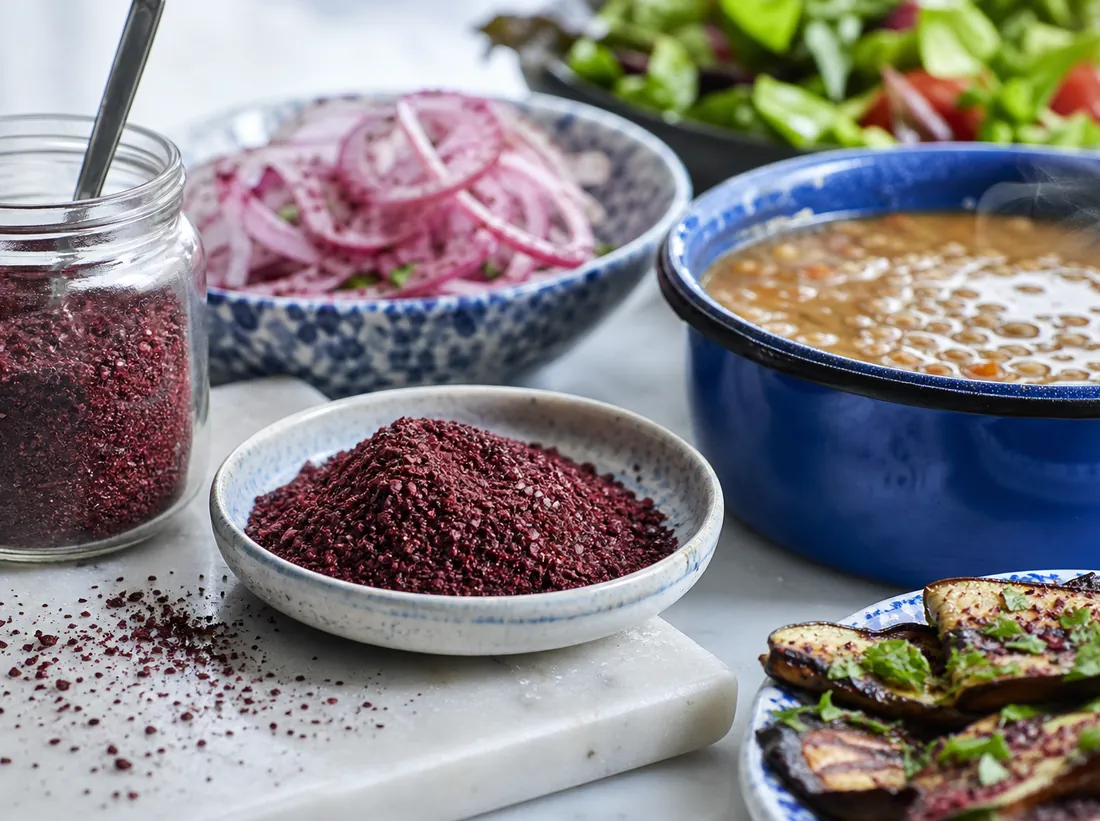 Illustration
What is Sumac
Tanner's sumac is a shrub that grows wild in Israel and across the region, from Turkey and Iran to North Africa. In late summer it bears clusters of small, red, hairy berries. The clusters are picked and dried, the berries are ground and some of the hard seeds are sifted out. Much ground sumac has salt added, and sometimes a little oil that keeps the colour bright.
It tastes sour and fruity, part lemon and part red berry, with a light astringency at the end. In Lebanese, Syrian and Palestinian cooking it is in za'atar, fattoush and musakhan; in Turkey and Iran it is sprinkled on kebabs and onions; and in Israeli kitchens it goes into onion salad, shakshuka, meatballs and soups. The culinary shrub is not the poison sumac of North America, which is a different plant with white berries.
Price and where to buy
100 g
per kg
Where
Sumac is sold on the spice shelf of every Israeli supermarket chain and in every spice shop. Fresh, deep red sumac, salt free sumac and whole berries are at the spice shops of Carmel Market, Levinsky Market and Hatikva Market in Tel Aviv, Mahane Yehuda in Jerusalem, Wadi Nisnas in Haifa and the market of Old Acre, and at online spice shops.
Shelf prices, October 2026, VAT included.
Kinds of Sumac
Ground sumac with salt
The most common kind in shops. The salt lifts the flavour, so use a little less salt in the dish.
Ground sumac without salt
Cleaner and more sour, handy if you control the salt yourself or make za'atar and blends at home.
Whole sumac berries
Whole dried berries that keep a long time. Grind them yourself, or soak in cold water and strain for a sour liquid for dressings.
Za'atar with sumac
A blend of dried za'atar, sumac, sesame and salt. Not pure sumac, but where most people first meet it.
How to use Sumac
Sumac onions
Soak thinly sliced red onion in cold water for 10 minutes, drain and toss with a tablespoon of sumac, parsley and a little salt. Serve with kebabs, shawarma and grilled meat.
Fattoush and salads
One or two tablespoons of sumac for a large bowl of salad, with olive oil and lemon, or scatter it on top just before serving.
On lentil soup
Half a teaspoon of sumac over each bowl with a drop of olive oil. The soup stays thick, and the sourness arrives without thinning it.
Chicken and meat
A tablespoon of sumac per kilo of chicken or meat in a marinade with olive oil, garlic and salt, and a little more on top after grilling.
Homemade za'atar
Four tablespoons of dried za'atar, two of sumac, two of toasted sesame and a teaspoon of salt. Mix and keep in a jar.
How to choose Sumac
A deep red, almost purple burgundy. Brown or faded sumac is old or has been left in the light.
A sour, fruity smell when the bag opens, and a slightly moist, oily feel rather than a dry dust.
Read the label: sumac and salt, at most a little oil. If it lists food colouring, skip it.
Look for a kashrut mark on the pack; when buying loose at the market, you can ask about it.
What to use instead of Sumac
| Substitute | How, and what changes |
|---|---|
| Lemon zest and salt | Half a teaspoon of grated lemon zest and a pinch of salt for each teaspoon of sumac, plus a few drops of lemon juice if the dish can take liquid. No red colour and no fruity note. |
| Amchur (dried mango powder) | Same amount. Just as sour, but beige and with a tropical fruit taste. |
| Ground dried lime | Half the amount, since it is strong and slightly bitter. Smokier and deeper, very good on meat and in soups. |
How to store Sumac
In the pantry
In the fridge
In the freezer
The science of Sumac
Sourness without liquid
Sumac's sourness sits mostly on the hairs and outer skin of the berry, and most of it is malic acid, the acid of green apples. Scattered dry, it dissolves only in saliva and in the oil on the plate, so it adds sourness without thinning a sauce or soup.
The red colour
The red comes from anthocyanins, pigments that stay red in acid and darken or fade with heat, light and alkaline conditions. That is why sumac goes on at the end of cooking and lives in the dark.
Astringency and the name
Sumac is rich in tannins, the same compounds that make your mouth pucker with strong tea and pomegranate peel. The tannin rich leaves were once used for tanning leather, hence the name tanner's sumac.
Ask for Sumac
Looking for Sumac and cannot find it? Send a request and we will come back with a price and availability.
- Tell us how much you need and by when.
- We come back with a price, pack size and availability.
- Pick up at 99 Ibn Gabirol or delivery in Tel Aviv.
Frequently asked questions
What is sumac?
A red, tangy spice made from the dried, ground berries of the tanner's sumac shrub. It adds a lemony sourness without liquid.
What does sumac taste like?
Sour and fruity, like lemon with a hint of red berries, and slightly astringent.
Is sumac poisonous?
No. Culinary sumac comes from a shrub with red berries. Poison sumac is a different North American plant with white berries and is never sold as a spice.
How do you use sumac?
Scatter it at the end: on sliced onion, salads, grilled meat and chicken, and over lentil soup. In a marinade, a tablespoon per kilo of meat is enough.
What can I use instead of sumac?
Grated lemon zest with a pinch of salt, or amchur in the same amount. You lose the red colour.
How do I know sumac is fresh?
It is deep red, smells sour and fruity and feels slightly moist. Brown, bone dry sumac has lost most of its flavour.
The Complete99 pantry
Ingredients and kitchen gear, with prices and availability.
More from the pantry
Amba
Amba is a sour, spicy sauce of pickled green mango, yellow from turmeric with a strong smell of fenugreek. It…
Baharat
Baharat is a blend of warm, fragrant spices, and its name is simply the Arabic word for spices. In Iraqi,…
Bulgur
Bulgur is wheat that has been boiled, dried and cracked, so it is ready in minutes. Fine bulgur, which many…