Za'atar
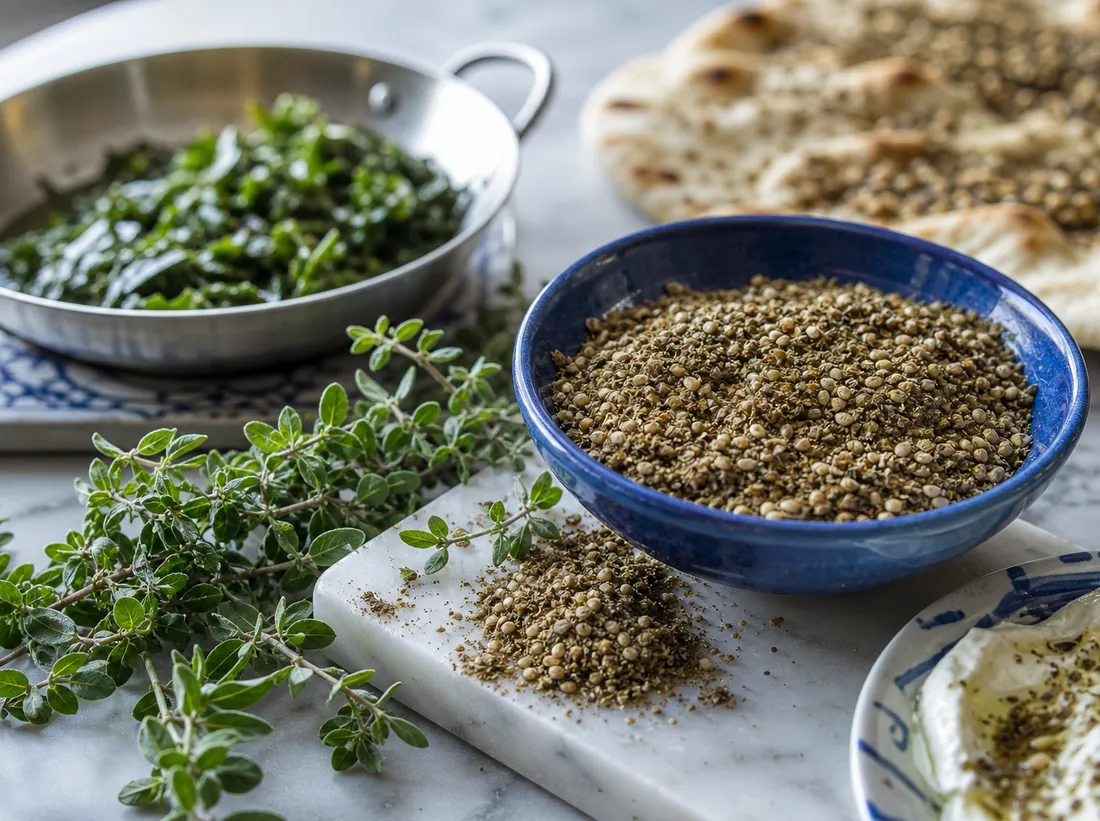
Za'atar is the name of a plant and of a spice. The plant is Syrian hyssop, a fragrant shrub with grey green leaves, and the spice is its dried, ground leaves, alone or blended with toasted sesame, sumac and salt. Spread it with olive oil on pitta, scatter it over labneh and salad, and fry the fresh leaves.
 Illustration
What is Za'atar
Syrian hyssop grows wild on the hills of the Galilee, Mount Carmel and the Jerusalem hills, and in Lebanon and Syria. The leaves smell sharp and herbal, somewhere between oregano and thyme, and taste slightly bitter and warm. Many identify it with the hyssop of the Bible. Today the za'atar sold in shops comes mostly from farms, and it is easy to grow in a pot.
The za'atar blend is the breakfast spice of Levantine cooking: dried, ground za'atar leaves, toasted sesame, tangy sumac and salt. Every family and every village mixes its own ratio. It is eaten with olive oil and bread, on labneh and cheeses, on pitta baked in a taboon oven and on vegetables. Elsewhere in the world za'atar sometimes means blends of thyme and oregano, but Israeli za'atar is the hyssop.
Price and where to buy
100 g
per kg
Where
Za'atar blend and ground za'atar are sold on the spice shelf of every Israeli supermarket chain. Fresh za'atar in bunches is at greengrocers and markets, especially in winter and spring. Fresh, high quality blends, za'atar baladi and sesame free za'atar are at the spice shops of Carmel Market, Levinsky Market and Hatikva Market in Tel Aviv, Mahane Yehuda in Jerusalem, Wadi Nisnas in Haifa and village spice shops in the Galilee and on Mount Carmel. Za'atar seedlings are sold at plant nurseries.
Shelf prices, October 2026, VAT included.
Kinds of Za'atar
Fresh za'atar
A bunch of grey green leaves, sold by greengrocers and at markets. For za'atar salad, a quick fry in oil, eggs and pastries.
Pure ground za'atar
Dried, ground leaves only, with no sesame or salt, which many shops call za'atar baladi. Bright green and strong, for cooks who want to season it themselves.
Za'atar blend
Ground leaves with toasted sesame, sumac and salt, sometimes with a little olive oil. This is the za'atar for pitta, labneh and the breakfast plate.
Sesame free za'atar
A blend of leaves, sumac and salt only, for anyone sensitive to sesame. Read the ingredients and check there is no sesame warning.
How to use Za'atar
Za'atar pitta
Three tablespoons of za'atar blend with four or five tablespoons of olive oil, stirred to a paste. Spread on rounds of pitta or pastry dough and bake in a very hot oven, 250°C, for 6 to 8 minutes until the edges are golden.
Labneh, olive oil and za'atar
A plate of labneh, a hollow in the middle, plenty of olive oil and a teaspoon of za'atar blend on top. Wipe it up with warm pitta, with olives, tomato and cucumber.
Fresh za'atar salad
A cup of fresh za'atar leaves, washed and dried well, with half a thinly sliced red onion, the juice of half a lemon, two tablespoons of olive oil and salt. Toss just before serving.
Roast potatoes and chicken
A tablespoon of za'atar blend per kilo of potatoes or chicken, with olive oil and salt, at 200°C. Add the za'atar for the last 10 minutes, since the sesame and leaves burn in long heat.
With soup
Pitta with za'atar and olive oil is the bread for spinach soup, lentil soup and vegetable soup. You can also scatter a pinch of za'atar blend over the bowl with a drop of olive oil.
How to choose Za'atar
In a blend look for a green colour rather than grey or brown, and a strong herbal smell when you open the bag. Brown za'atar with no smell is old.
Read the order of the ingredients: when za'atar comes first, the blend has more leaves. When sesame or salt comes first, the taste is weaker.
Choose fresh za'atar with lively leaves, no black spots and no yellow leaves, and wash and check it well before use.
Look for a kashrut mark on the pack, and anyone sensitive to sesame should buy sesame free za'atar and check the warnings.
What to use instead of Za'atar
| Substitute | How, and what changes |
|---|---|
| Oregano and thyme | Two parts dried oregano to one part dried thyme, in place of ground za'atar, same amount. For a blend add toasted sesame, sumac and salt. |
| Marjoram | A close relative of Syrian hyssop, gentler and sweeter. Same amount, with a pinch of oregano for sharpness. |
| Thyme | In place of fresh za'atar leaves for frying and eggs, same amount. A stronger, drier scent and less bitterness. |
How to store Za'atar
In the pantry
In the fridge
In the freezer
The science of Za'atar
Where the aroma comes from
Za'atar leaves hold an essential oil rich in carvacrol and thymol, the same aroma compounds found in oregano and thyme. That is why za'atar recalls both, while the balance between them and other compounds gives it its warm, slightly bitter taste.
Why sesame and sumac
Sumac adds a fruity sourness without liquid, which lifts the bitterness of the leaves. Toasted sesame adds fat and a nutty taste, and the fat carries the aroma compounds that dissolve in it. The olive oil stirred in before baking does exactly the same.
Why za'atar burns quickly
The dried leaves are very thin and sesame is rich in oil, and both brown and turn bitter in long, high heat. On pitta they are protected by a layer of olive oil and bake for only a few minutes, and in a long roast they go in only at the end.
Ask for Za'atar
Looking for Za'atar and cannot find it? Send a request and we will come back with a price and availability.
- Tell us how much you need and by when.
- We come back with a price, pack size and availability.
- Pick up at 99 Ibn Gabirol or delivery in Tel Aviv.
Frequently asked questions
What is za'atar?
It is both the plant Syrian hyssop and the spice: dried ground leaves, alone or blended with toasted sesame, sumac and salt.
Is za'atar hyssop?
Yes. Za'atar is Syrian hyssop, and many identify it with the hyssop of the Bible.
What is the difference between za'atar and oregano?
They are relatives with similar aroma compounds. Za'atar smells warm, slightly bitter and herbal, oregano sharper and sweeter. Without za'atar, oregano with a little thyme is the closest substitute.
What is in a za'atar blend?
Dried, ground za'atar leaves, toasted sesame, sumac and salt. The ratio changes from home to home, and sometimes a little olive oil is added.
Is there za'atar without sesame?
Yes. Pure ground za'atar, or a blend of leaves, sumac and salt only. Read the ingredients and the allergen warnings on the pack.
How do you grow za'atar in a pot?
In a pot with good drainage, light soil and at least five hours of sun. Water only when the top of the soil is dry, and pick the tips regularly so the shrub grows bushy. It is a perennial.
How do you make za'atar pitta?
Mix three tablespoons of za'atar blend with four or five tablespoons of olive oil, spread it on dough and bake at 250°C for 6 to 8 minutes.
The Complete99 pantry
Ingredients and kitchen gear, with prices and availability.
More from the pantry
Amba
Amba is a sour, spicy sauce of pickled green mango, yellow from turmeric with a strong smell of fenugreek. It…
Baharat
Baharat is a blend of warm, fragrant spices, and its name is simply the Arabic word for spices. In Iraqi,…
Bulgur
Bulgur is wheat that has been boiled, dried and cracked, so it is ready in minutes. Fine bulgur, which many…