The story of Cabbage soup
Cabbage was the winter vegetable of Eastern Europe: it grows in the cold, keeps for months in a cellar, and whatever was not eaten fresh was pickled in barrels. That gave the region its cabbage soups: Russian shchi, Polish kapuśniak made from sauerkraut, and Hungarian cabbage soups with paprika.
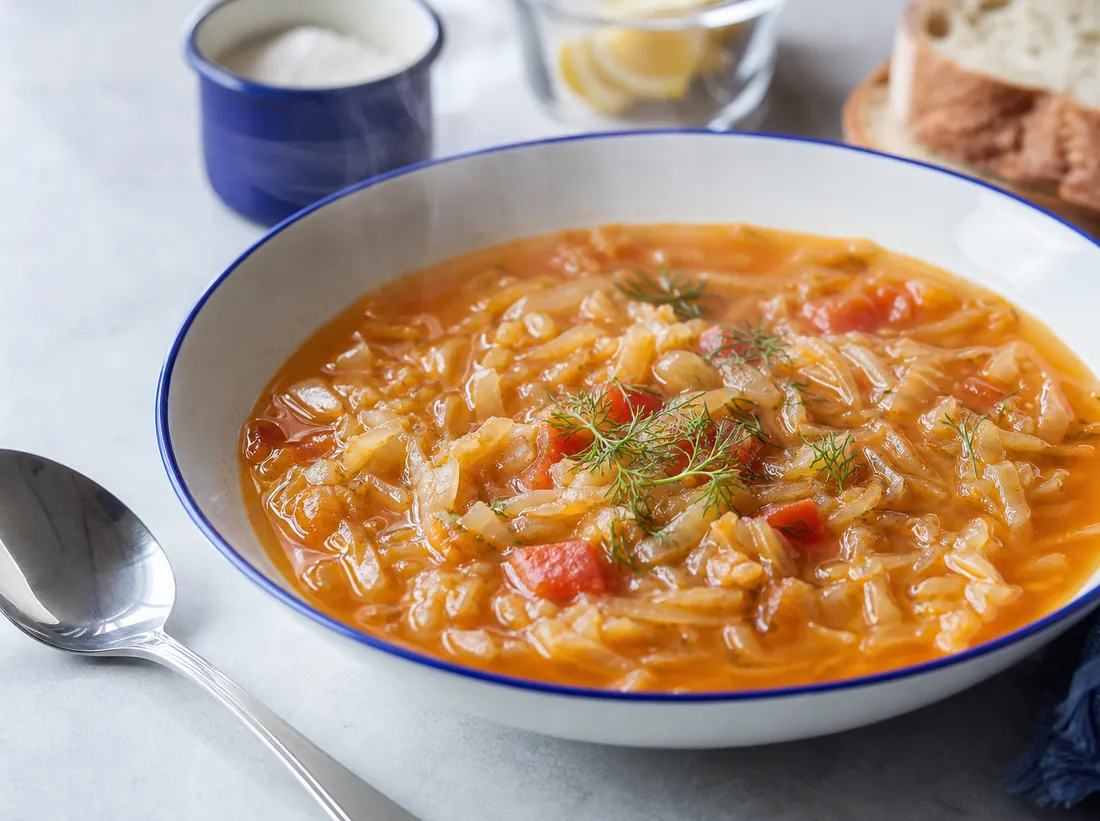
In the Ashkenazi Jewish kitchen cabbage took on a familiar taste, sweet and sour together, as in holishkes, stuffed cabbage. The soup cooked with tomatoes, lemon or sour salt, sugar and sometimes raisins, and on Shabbat and holidays with beef on the bone too. In Israel it is cooked in Polish, Romanian and Russian styles, and in recent years many look it up because of the cabbage soup diet.
What makes Cabbage soup itself
This soup is a balancing act. The cabbage brings sweetness and a gentle bitterness, the tomatoes and lemon bring sourness, and the sugar ties them together. When the balance is right, no single taste stands out and the soup simply tastes good. You strike the balance at the end, by the teaspoon, tasting, because every cabbage and every tomato is different.