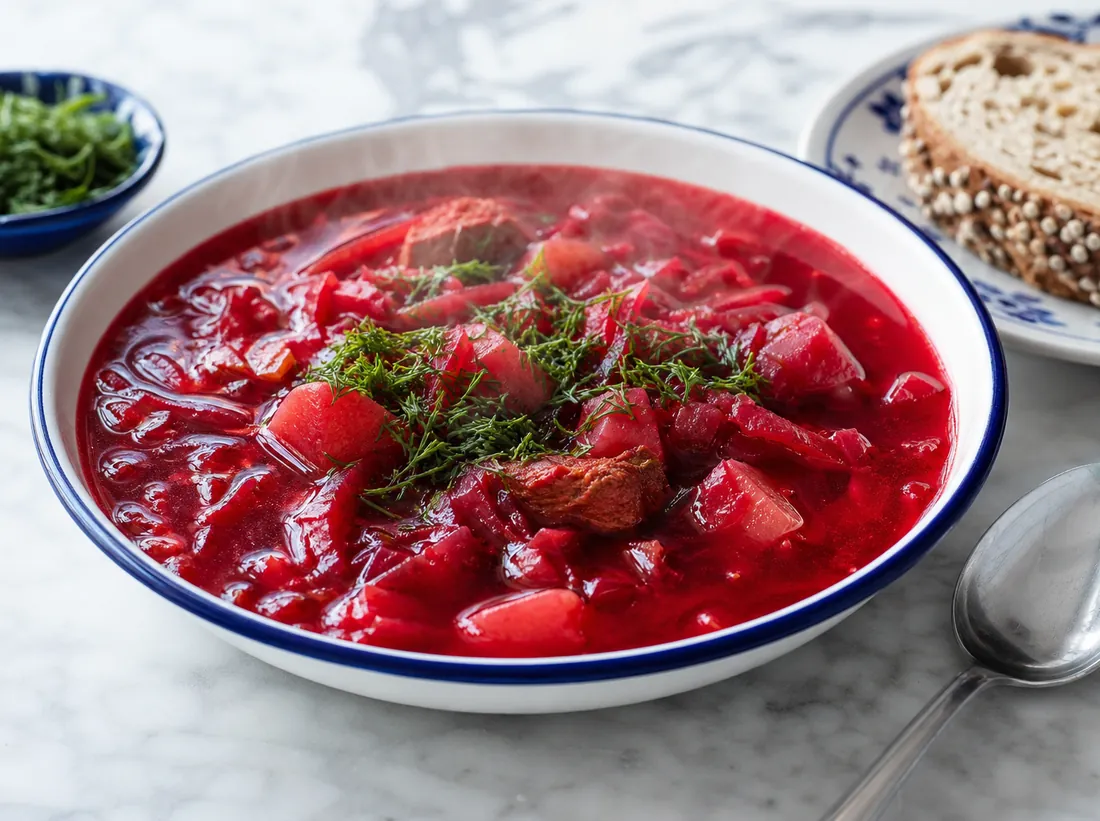
The story of Borscht
Borscht is cooked from Ukraine to Lithuania, and it changes along the way: in Ukraine it is a rich soup with all the vegetables in it, in Poland a clear red broth, in Lithuania a cold pink soup. In Ukraine it is a national dish, and in 2022 the culture of Ukrainian borscht cooking was added to UNESCO's list of intangible cultural heritage.
Eastern European Jews made borscht two ways: hot with meat for winter, and cold without meat, with sour cream, for summer and dairy meals. The cold version came to Israel with the first waves of immigration and was sold for years in bottles as hamitza, while hot borscht with beef and cabbage returned to Israeli tables in a big way with the immigration from the former Soviet Union. The Jewish resort hotels of the Catskill Mountains in New York were even nicknamed the Borscht Belt.
What makes Borscht itself
Three things make borscht: beets for colour and sweetness, sourness that balances the sweet and keeps the red, and dill and garlic added at the very end. In the Ukrainian method the beets are sautéed separately with tomato paste and vinegar and only then go into the broth. That way they skip the long cooking of the meat and keep their colour.