The story of Barley soup
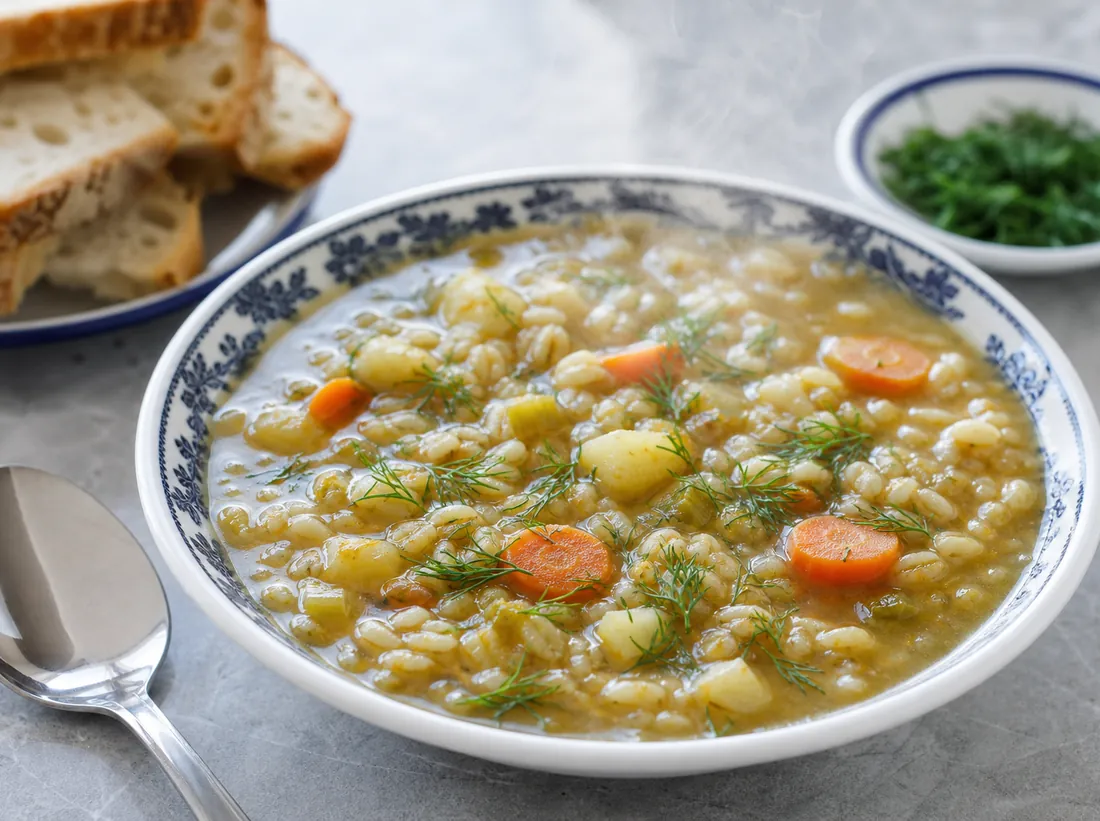
Barley was one of the first grains domesticated in this region, and in Eastern Europe it was a winter grain: cheap, filling, and able to grow in cold soil and a short season. In Poland it becomes krupnik, a barley soup with vegetables and potatoes whose name comes from the Polish word for groats. The Jews of Poland and Lithuania cooked it at home, and barley was a fixture of the Shabbat cholent pot.
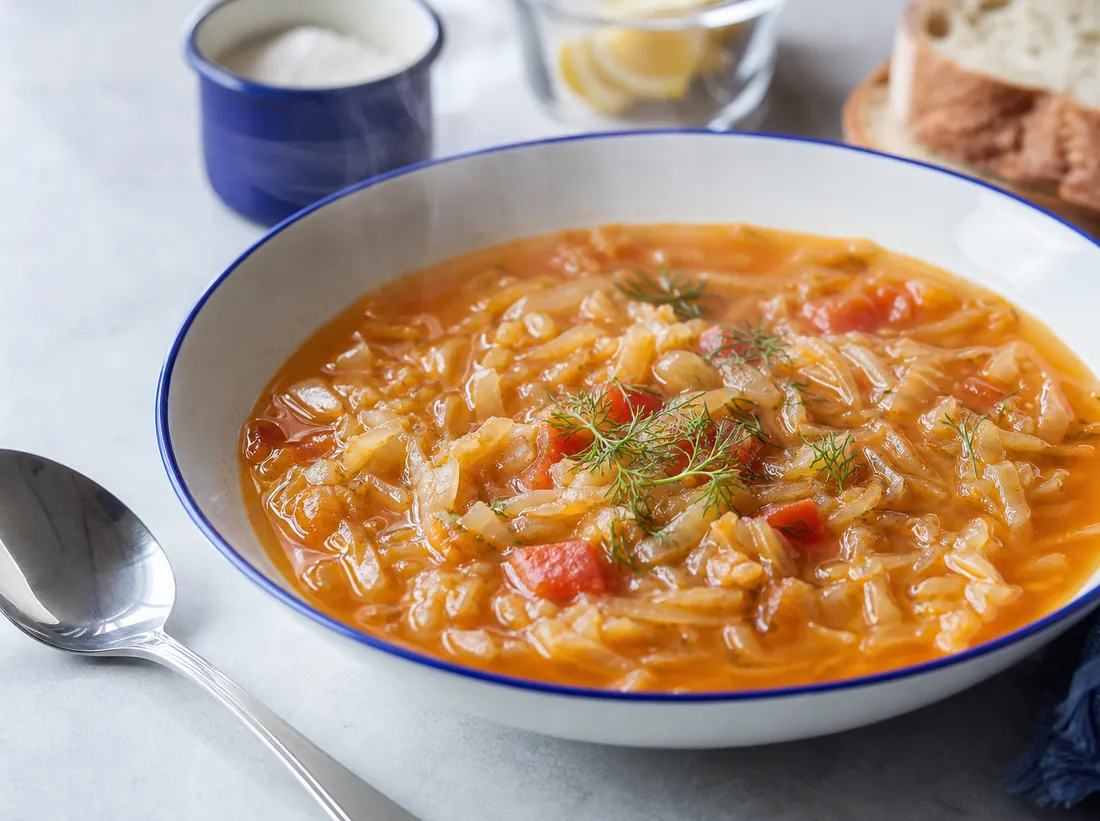
In Israel barley soup is a winter evening soup in almost every community: Ashkenazi homes add mushrooms and dill, Moroccan homes add turmeric, and in a red version tomato paste and paprika too, sometimes with chicken or turkey necks. The barley keeps absorbing liquid after the heat is off, so second-day barley soup is almost a stew.
What makes Barley soup itself
The barley is the heart of the soup. It gives a chewy bite and releases starch and soluble fibre into the liquid, turning it velvety with no flour and no cream. The vegetables are the classic Ashkenazi base of carrot, celery and potato, and the dill added at the end gives the smell you recognise from the stairwell.