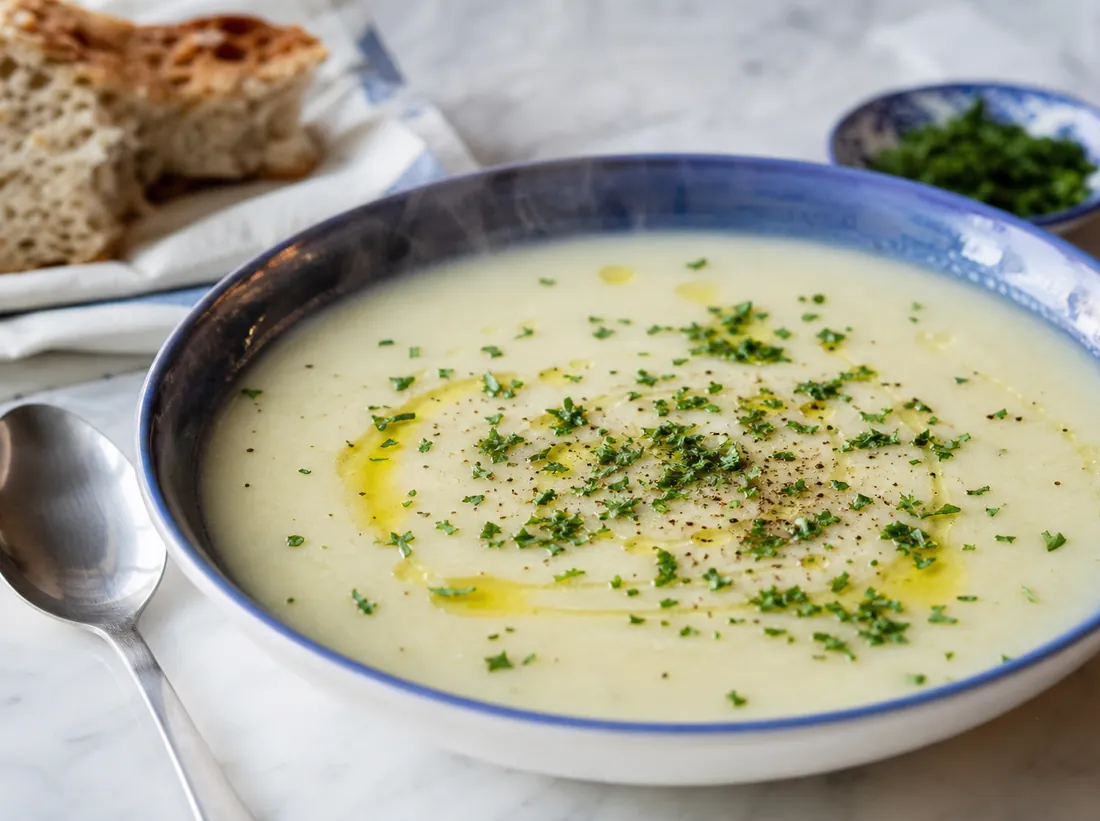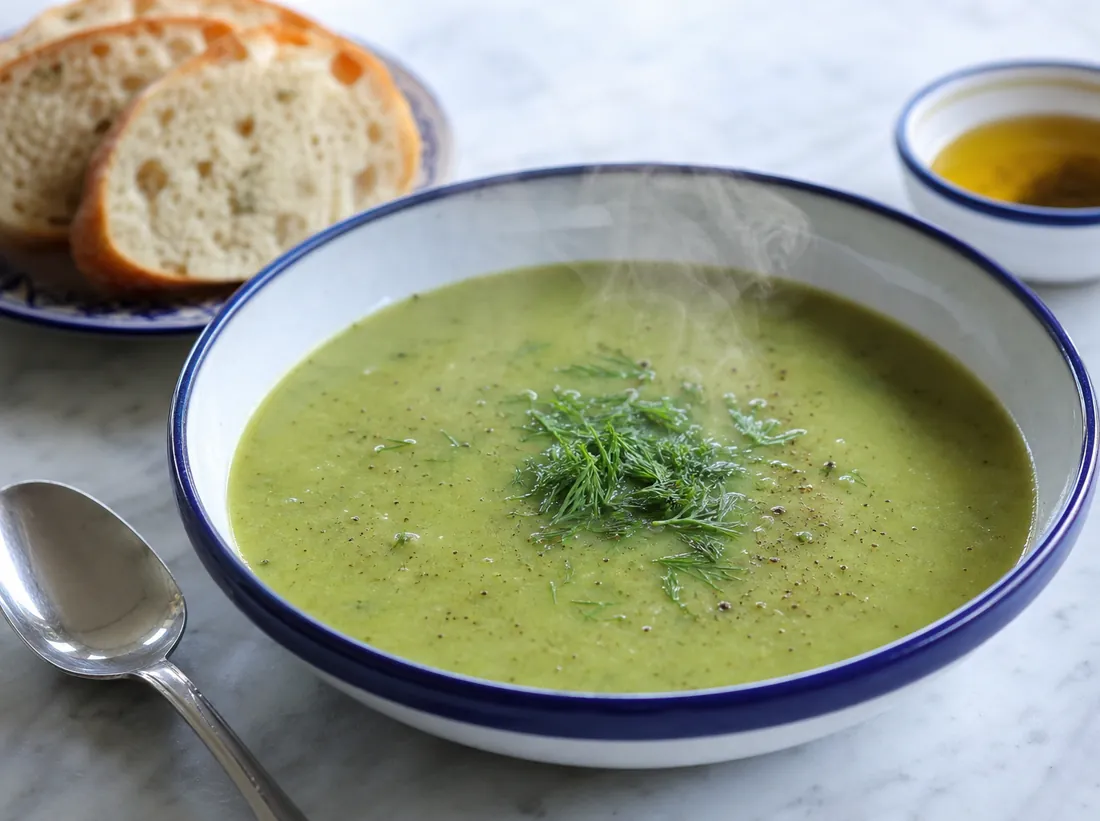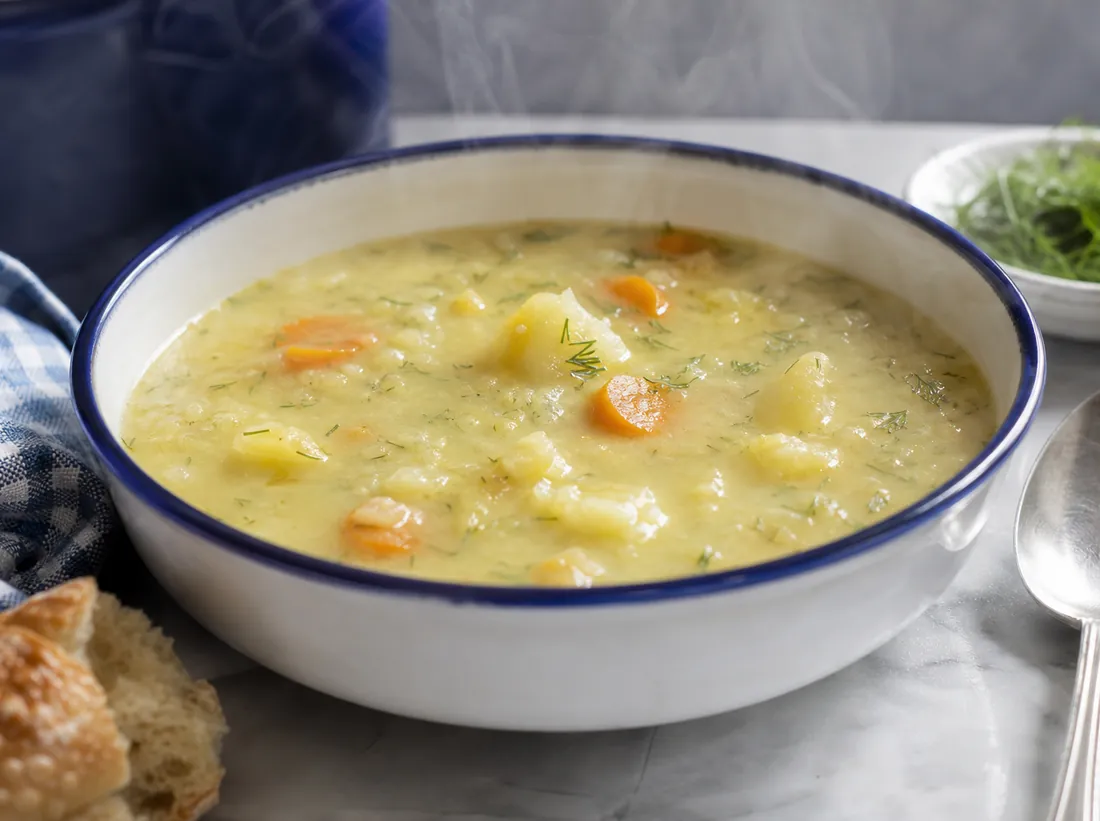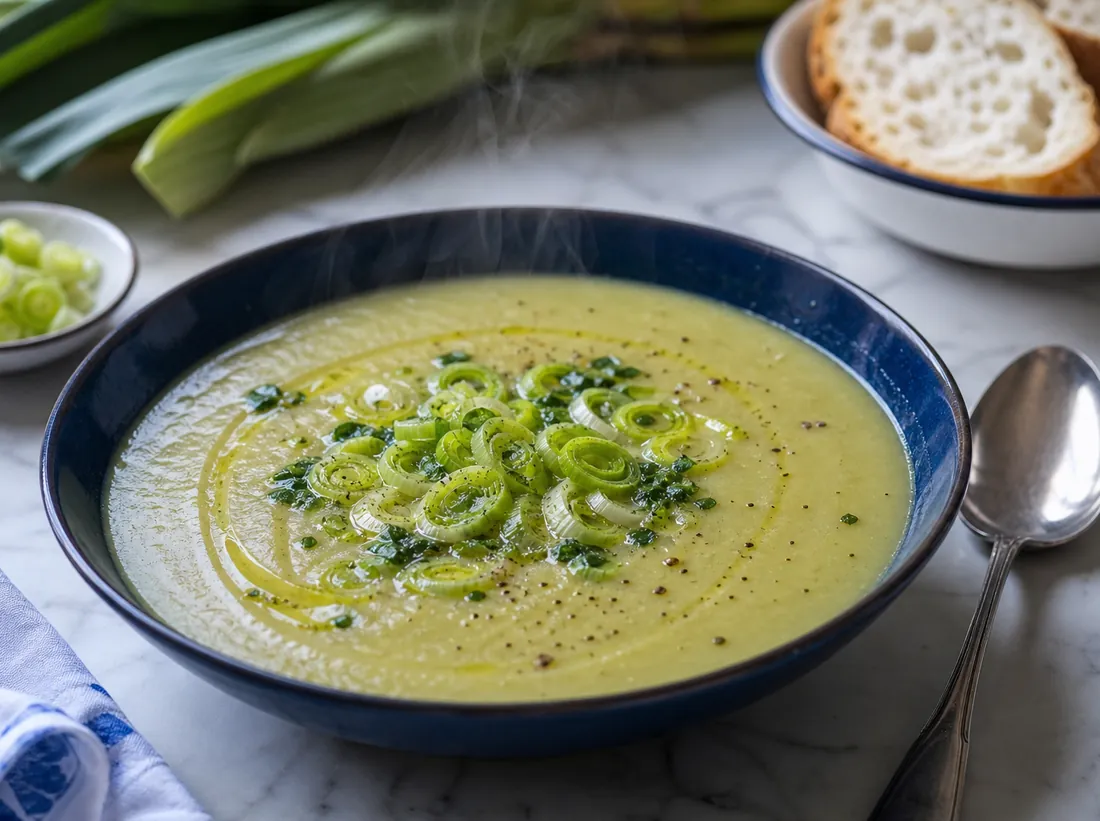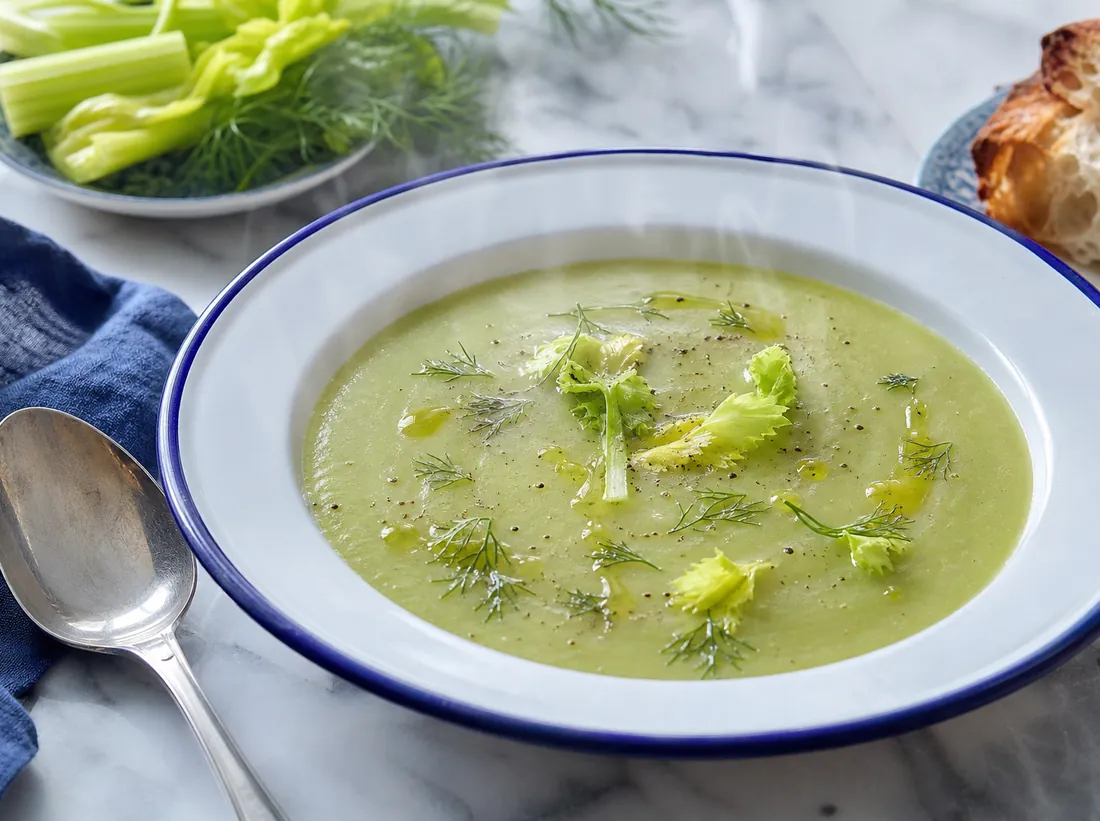
The story of Celery soup
Celery root and stalk celery are the same plant, bred in two directions: one for the swollen base below ground, the other for the stalks. In French cooking and the kitchens of Central Europe, celery root is a respected winter vegetable that reaches the table as a cream, a purée or a grated salad. In most of the world's soups celery works behind the scenes, in the base of a stock, and only here is it the star.
In Israel celery root is familiar to anyone who grew up on Friday chicken soup; it is a fixed part of the bundle of soup vegetables. The markets sell two kinds of celery: thick stalk celery, and the thin, fragrant leaf celery of Iraqi and Kurdish kitchens. As a soup in its own right, celery is mostly a winter cream soup, alone or with zucchini, potatoes or fennel.
What makes Celery soup itself
The secret of celery soup is the balance between root and stalk. Root alone gives a gentle, slightly sweet but flat soup; stalks alone give a sharp, green and stringy one. At roughly three parts root to one part stalk you get a soup with both body and aroma. The stalks are peeled of their strings before cooking, the root waits in lemon water so it does not darken, and the salt goes in only at the end, because celery is naturally a little salty.