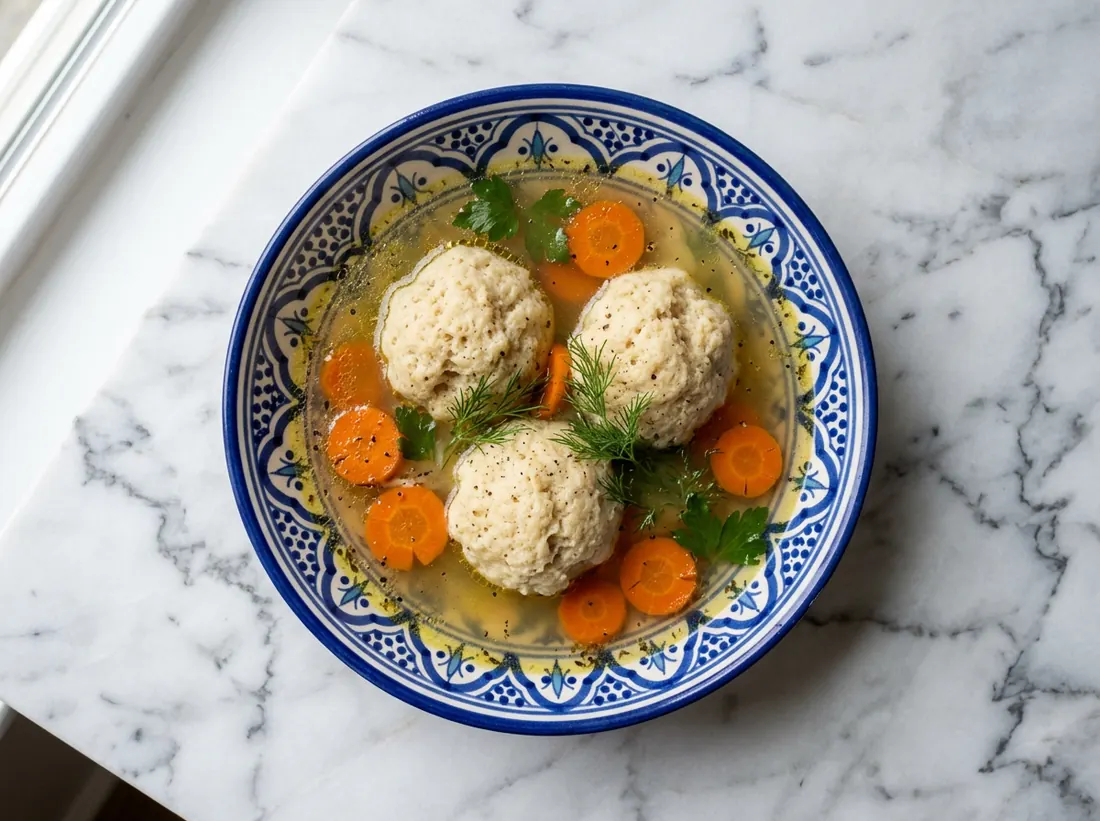
The story of Kneidlach
The word kneidel is Yiddish and close to the German Knödel, a dumpling. In the kitchens of Central and Eastern European Jews, dumplings were made from stale bread or flour, and at Passover, with no leavened food in the house, cooks switched to matzo meal. A simple ball became one of the symbols of the Ashkenazi Seder and stayed on the table the rest of the year.
Every family has the same argument: floaters, soft as a cloud, or sinkers, dense and chewy. Both are right, and everyone grew up on the version at home. Some Hasidic families do not eat matzo that has touched liquid during Passover, a custom called gebrochts, so in their homes there are usually no kneidlach during the festival.
What makes Kneidlach itself
Kneidlach are not a dough dumpling. Matzo meal is already baked, so it does not develop gluten like ordinary flour, and what holds the ball together is the egg. Fat makes it tender, and air from soda water or whipped whites makes it rise. That is what lets you control the texture: more egg and air give a light ball that floats, more matzo meal gives a dense one that sinks.