Dashi
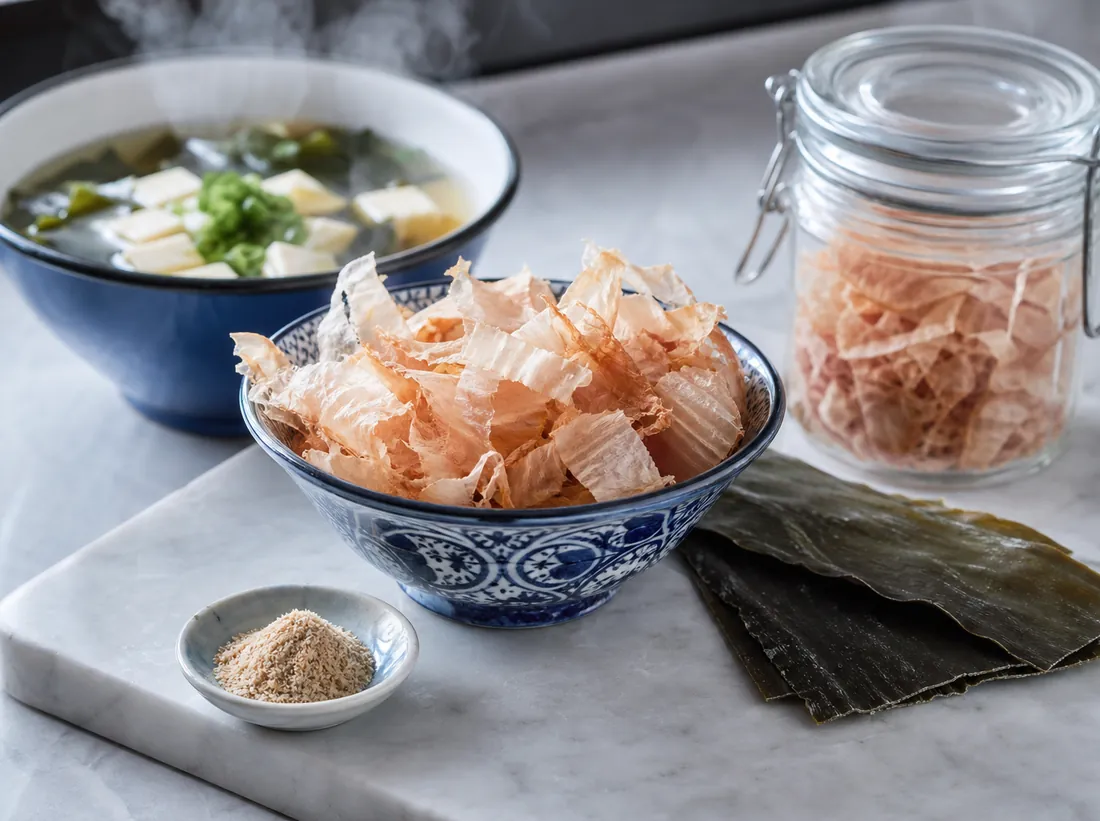
Dashi is the basic stock of Japanese cooking, clear and light, with a deep umami taste. It is made from kombu seaweed and dried bonito flakes called katsuobushi, or by dissolving dashi powder in hot water.
 Illustration
What is Dashi
Dashi is not a soup but a base. It becomes miso soup, the broth for udon and soba, delicate Japanese simmered dishes, dipping sauces and rolled Japanese omelette. The classic version is made from kombu, a thick brown kelp dried in the sun, and katsuobushi, a fillet of bonito tuna that is simmered, smoked and dried until it is as hard as wood, then shaved into paper thin flakes.
Good dashi is neither salty nor fishy. It tastes clean and slightly smoky, with a depth that fills the mouth, and that depth comes from pairing kombu with katsuobushi. Homemade dashi is ready in about half an hour, and dashi powder gets close in seconds. Dashi made from kombu alone is plant based and parve, while dashi with katsuobushi is a fish stock in every sense.
Price and where to buy
40 g dashi powder
per kg
Where
Kombu, katsuobushi and dashi powder are sold at the Asian supermarkets near the Central Bus Station and in Florentin in Tel Aviv, at the Asian shops near Carmel Market and at online Asian food shops. Kombu also turns up at natural food shops and on the Asian shelf of some supermarket chains. Katsuobushi and dashi powder with a kashrut mark are not always in stock, so it is worth asking ahead.
Shelf prices, October 2026, VAT included.
Kinds of Dashi
Awase dashi, kombu and katsuobushi
The classic dashi, for miso soup, udon and simmered dishes. 10 g kombu and 20 g katsuobushi per litre of water.
Kombu dashi
Only kombu and water, cold soaked or gently heated. Plant based and parve, mild and slightly sweet, for vegetable dishes, tofu and, in a kosher kitchen, soup with meat.
Shiitake dashi
Dried shiitake mushrooms, alone or with kombu. Plant based, earthier and darker, for vegan ramen and simmered dishes.
Dashi powder and dashi packs
Powder or granules that dissolve in hot water, or tea bag style packs of ground kombu and katsuobushi that simmer for a few minutes. Most powders contain fish, salt and often sugar and flavour enhancers.
How to use Dashi
Basic dashi, one litre
Soak 10 g kombu in a litre of cold water for at least 30 minutes. Heat slowly over medium low heat and lift out the kombu just before it boils. Add 20 g katsuobushi, bring to a gentle boil, turn off the heat and wait 2 to 3 minutes for the flakes to sink. Strain through cloth or a paper lined sieve without pressing.
Cold kombu dashi
10 g kombu in a litre of water in a jar, in the fridge for 8 to 12 hours. Lift out the kombu and that is it: an especially clear, delicate stock with no cooking at all.
Miso soup
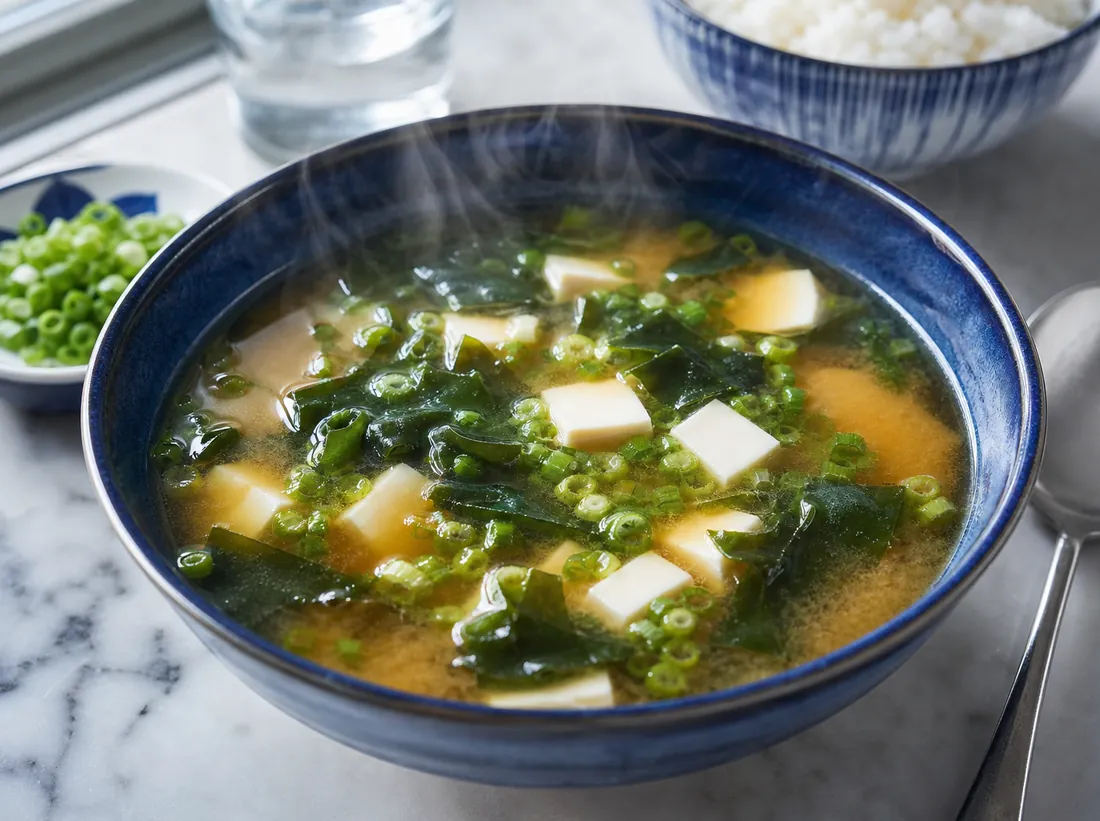
A litre of hot, not boiling, dashi and 60 to 70 g miso, first dissolved in a ladle with a little stock. Once the miso is in, do not boil again, or its aroma fades.
Second dashi
Simmer the kombu and katsuobushi left in the sieve again in half a litre of water for 10 minutes on low heat, then strain. It is lighter and suits simmered dishes, rice and cooked vegetables.
Dashi powder
Dissolve in hot water, usually a teaspoon for a few cups, as the pack says. Add it gradually and taste, since most powders already contain salt.
How to choose Dashi
Good kombu is thick, dry and dark, green brown to black, sometimes with a white powder on it. The powder is part of the flavour, not mould; never wash it off, just wipe the kombu with a damp cloth.
Good katsuobushi is pinkish brown, in thin whole flakes, with a clean smoky smell. Dark brown flakes, crumbs or a sour smell mean it is old.
With dashi powder, read the ingredients: some are made from bonito, some only from kombu and shiitake, and some carry a lot of salt and sugar.
Look for a kashrut mark on every pack, kombu, katsuobushi and powder. Dashi with fish is never cooked with meat in a kosher kitchen; for a soup with meat or chicken use kombu only.
What to use instead of Dashi
| Substitute | How, and what changes |
|---|---|
| Kombu and shiitake | 10 g kombu and three or four dried shiitake per litre of water, cold soaked overnight in the fridge. Plant based and parve, earthier and without the smoky note. |
| Dashi powder | As the pack says, in place of homemade dashi. Very quick, saltier and sharper, so cut the salt in the recipe. |
| Kombu alone | 10 to 20 g kombu per litre, no katsuobushi. Mild and slightly sweet, and fine for soup with meat or chicken. |
| Vegetable stock and soy sauce | A litre of light vegetable stock and a teaspoon of soy sauce. Far from dashi, but it works in miso soup when there is nothing else. |
How to store Dashi
In the pantry
In the fridge
In the freezer
The science of Dashi
Why kombu and katsuobushi go together
Kombu is rich in glutamate and katsuobushi in inosinate. Each gives umami on its own, but together they amplify each other and the taste is far stronger than the two added up. That is why a clear, light dashi tastes so full.
Why kombu is never boiled
Glutamate leaves the kombu in hot water, and around 60°C it comes out well. At a boil the kelp also releases slimy compounds and a bitter, sea like taste, and the stock turns thick and cloudy. So the kombu comes out before the boil, or soaks in cold water.
Why you never squeeze the katsuobushi
The flakes are paper thin and give up most of their flavour within minutes. Long cooking or squeezing also pushes out proteins and fine particles that cloud the stock, along with bitter, fishy notes. A short steep and a free strain give a clear, clean dashi.
Ask for Dashi
Looking for Dashi and cannot find it? Send a request and we will come back with a price and availability.
- Tell us how much you need and by when.
- We come back with a price, pack size and availability.
- Pick up at 99 Ibn Gabirol or delivery in Tel Aviv.
Frequently asked questions
What is dashi?
A clear Japanese stock, usually made from kombu and dried bonito flakes. It is the base of miso soup, udon broth and Japanese simmered dishes.
What is dashi made of?
Water, kombu and katsuobushi. For vegan dashi, replace the katsuobushi with dried shiitake, or make dashi from kombu alone.
What is dashi powder?
Dried, ground dashi that dissolves in hot water. Most powders contain fish and salt, and there are plant based powders made from kombu and shiitake.
What can I use instead of dashi?
Kombu and shiitake for a vegan dashi, dashi powder, or as a last resort a light vegetable stock with a teaspoon of soy sauce.
Can dashi go into a soup with meat?
Dashi with katsuobushi is a fish stock, and in a kosher kitchen it is not cooked with meat or chicken. For soup with meat use kombu and shiitake only.
How long does dashi keep in the fridge?
About three days in a closed jar. For longer, freeze it in ice cube trays for up to a month.
The Complete99 pantry
Ingredients and kitchen gear, with prices and availability.